Tag: Conductor

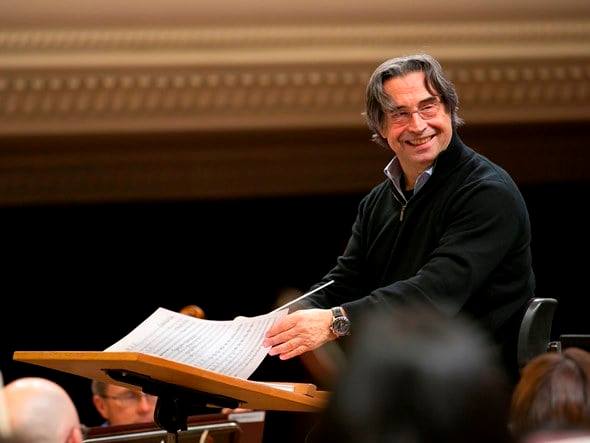
  • Riccardo Muti at 80 A Maestro’s Legacy

    Riccardo Muti at 80 A Maestro’s Legacy

    Aloof. Self-serious. Inordinately proud of his hair. In many ways, he’s like the anti-Yannick. You would never catch him in his workout clothes. Though, come to think of it, it would have been very interesting had Riccardo Muti been music director of the Metropolitan Opera while he held the reins of the Philadelphia Orchestra.

    Like there’s not enough drama at the opera.

    Muti served as music director at La Scala, one of the world’s most venerable opera houses, for 19 years (from 1986 to 2005). By the end of his tenure, the collective mood of the musicians and administration was as black and thick as a Milanese espresso. Following his departure, he would not set foot in the theater again for eleven years, tensions thawing only for the occasion of his 75th birthday. That was in 2016.

    In May of this year, he returned – to lead the Vienna Philharmonic, no less, not the resident orchestra – to mark the 75th anniversary of La Scala’s reopening following World War II. But in-house conflict was still brewing.

    When, after the performance, the opera’s current music director, Riccardo Chailly, came to congratulate Muti – to whom he’d lent his own dressing room for the occasion – Muti reacted by telling Chailly to get lost. (More specifically, to “get off my balls.”) At first, those present thought Muti had to be kidding. But he had already eviscerated a television crew, there to document the concert, mistaking them for intrusive journalists, and torn into La Scala’s press officer. Later, he claimed not to have recognized Chailly, because Chailly was wearing a mask.

    Don’t ever change, Maestro.

    Muti is 80 years old today. If he has mellowed, it is perhaps only in the voltage of his performances. His ego is intact, his temper is in good health, and his hair has lost none of its bounce. And I say this as a Muti “fan.”

    This is not an artist without his flaws. There are those who contend that he dismantled the “Philadelphia sound,” cultivated for nearly seven decades by Leopold Stokowski and Eugene Ormandy. A more objective assessment would be that he brought the orchestra up to modern standards of adapting performance practice to suit the given repertoire, as opposed to applying the same overarching technique to, say, Mozart and Mahler.

    He certainly didn’t make any friends by dressing down his audience. If someone applauded at the wrong time, he or she would be met with, at the very least, a withering gaze. But it was also not unheard of for him to literally stop a performance to deliver a stern reprimand. I shudder to think how he would have reacted had it been the era of cell phones.

    Muti was never accessible or touchy-feely in the manner of Yannick, Philadelphia’s current music director, who has gone out of his way to be the people’s conductor. Dressed down and tattooed. Loquacious. A smile for everyone. Muti maintained the maestro mystique, with a fair amount of old school contempt perched coolly beneath a veneer of civility. There was always something of the aristocrat about him, a high priest ever-alert to the threat of profanation in his Temple of High Art.

    Now, nearly four decades later, Muti is one of classical music’s old lions. And I find I can’t help but agree with him on some points regarding the state of the art, as expressed in his interviews. I confess I haven’t really followed his career in Chicago. They seem to love him there. He currently commands the highest salary of any conductor (at roughly $3.5 million per annum).

    This has turned out to be a harder-edged post than I intended, certainly more so than the one I wrote a few years ago, on the occasion of Muti’s 76th birthday. I don’t want to give the impression that I am not forever grateful for all the thrilling performances I attended at Philadelphia’s Academy of Music, throughout the 1980s and into the ‘90s. In many ways, for me, these concerts have never been surpassed. Part of it must be attributable to the intimate nature of the hall, since abandoned for the cavernous Kimmel Center for the Performing Arts. At the Academy, Muti was like an uncaged lion in a miniature Coliseum.

    Muti wanted his new hall, and it frustrated him no end that it was so long coming. It’s no secret that the delays contributed to his departure from Philadelphia. As with La Scala, there was always the sense that the break was not entirely amicable. If memory serves, he has returned to conduct in Philadelphia only once.

    He has his vanities and shortcomings, to be sure, but it is evident he sincerely loves music. And he believes in the integrity of his art. He may not be the greatest conductor since Toscanini, whom he professes to emulate in his claimed deference to “the score.” But in concert, very few of Muti’s performances are museum pieces – or at least they weren’t, in Philadelphia. There was always plenty of passion roiling beneath the ermine cloak of “authenticity.”

    For the countless hours of thrilling performances, I thank you, Maestro Muti. Happy 80th birthday.


    Since I have painted him as such a horrible person, here’s a speech he delivered, in acceptance of the honor of Musician of the Year from Musical America. It shows that Muti is capable of exhibiting a sense of humor, if only on his own terms.

    Muti having the time of his life rehearsing – and singing! – “Nabucco” at La Scala:

    Muti demonstrates some of that Philadelphia electricity in this live performance of Elgar’s concert overture “In the South”

    A Muti specialty and an old favorite – Martucci’s “Notturno.” Good to see the old crew again – Norman Carol, William de Pasquale, Luis Biava, Joseph de Pasquale, Richard Woodhams, Anthony Gigliotti. A great orchestra. Although I do hate it when local news personalities are brought in to host these telecasts. They never can seem to talk enough. Totally stomps the enchantment woven by the music.

    https://www.youtube.com/watch?v=Etl4QqVN2sc

    “Va, pensiero” at the Rome Opera:

    The Maestro allowing a rare encore, with audience participation:

    https://www.youtube.com/watch?v=G_gmtO6JnRs

  • George Szell Autocrat Genius Cleveland Orchestra

    George Szell Autocrat Genius Cleveland Orchestra

    All’s Szell that ends well.

    A notorious autocrat from an era when autocrats were tolerated, respected, and even revered on the podium, George Szell was a formidable perfectionist, even to the extent of lecturing the Severance Hall custodians on the proper way to mop a floor and what kind of toilet paper they should be supplying in the restrooms.

    When he took over as music director in Cleveland in 1946, straight off, he fired 12 of the orchestra’s 97 players and signed the rest to short-term contracts. His aim was to rebuild the ensemble into a force to be reckoned with. “A new leaf will be turned over with a bang,” he declared. By the time of his death in 1970, 40 percent of his musicians were seeing psychiatrists.

    Dietrich Fischer-Dieskau noted “his compulsive need to always have an opinion different from others and his considerable paranoia when it came to the orchestra’s ill-will.” Just because you’re paranoid doesn’t mean they don’t hope you fall down the stairs and break your neck.

    He may have been a bit of a martinet and a world-class S.O.B., but Szell’s goal was a lofty one. He whipped Cleveland into one of the country’s top orchestras – which is to say, one of the best in the world. If he expected much of his musicians, he himself never phoned-in a performance. He was always hyper-prepared, and in rehearsals, nothing escaped his notice. It was not unusual for him to take everything apart and rebuild it from the ground up, even at the expense of his musician’s nerves. Sometimes it backfired, and the orchestra was so wrung out, it had nothing left for the actual performance.

    While the uncanny precision of Szell’s Clevelanders was often praised, many of their performances were criticized for a perceived lack of warmth. Certainly, there is enough documentary evidence to prove that on occasion Szell could indeed catch fire and inspire his players. He is much kinder in filmed rehearsals than his reputation would suggest.

    He may have been a little tightly wound, but you can’t quibble with the results. Thank your lucky stars you didn’t have to work for him, but boy, he certainly could conduct!

    Happy birthday, George Szell.


    Szell’s benchmark modern orchestra Haydn:

    While on tour with the Cleveland Orchestra in Tokyo, and with only two months to live (he was terminally ill with cancer), Szell conducted what may very well be the most thrilling performance of Sibelius’ Symphony No. 2 I have ever heard, certainly on a par with the classic Barbirolli account with the Royal Philharmonic Orchestra:

    Szell as a Mozart pianist:

    One of Szell’s own, early compositions, “Variations on an Original Theme”:

    Szell speaks!

    Szell on “The Bell Telephone Hour” on NBC. These days, you won’t even find something like this on PBS.

    Szell rehearses Beethoven

    Szell conducts Beethoven and Bruckner in Vienna

    https://www.youtube.com/watch?v=vuXODojyfME

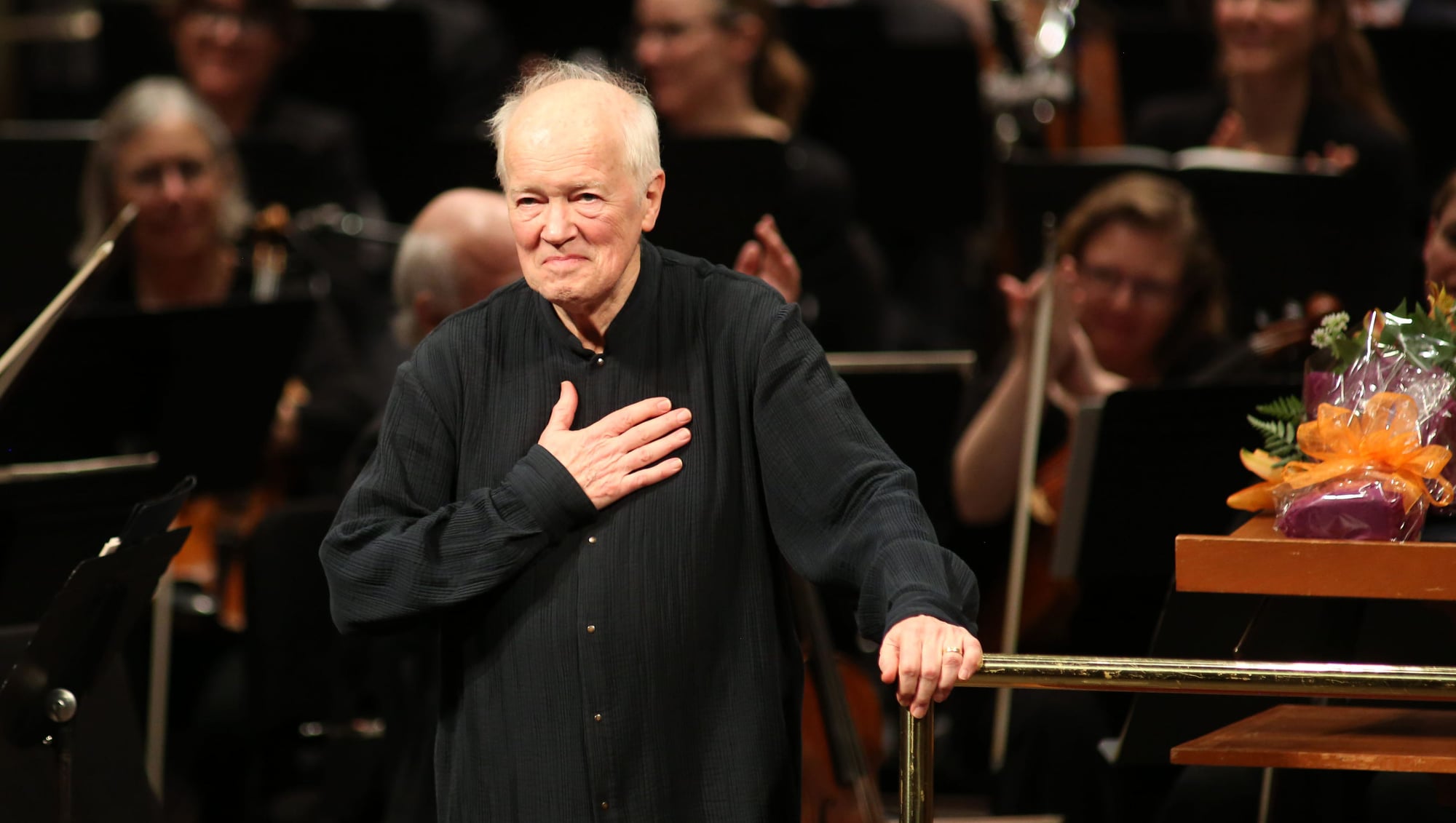
  • Edo de Waart at 80 A Conducting Celebration

    Edo de Waart at 80 A Conducting Celebration

    Today is the day Edo counts to 80.

    Edo de Waart was born in 1941, fourscore years ago today. Once assistant conductor of the Concertgebouw Orchestra under Bernard Haitink (he had originally played as an oboist there), De Waart has gone one to enjoy a long and enviable career himself, both in the concert hall and in the recording studio.

    Of course, he’s had more music directorships than he’s had wives (barely), including positions with the Rotterdam Philharmonic (1973-79), the San Francisco Symphony (1977-85), the Minnesota Orchestra (1986-95), the Netherlands Radio Philharmonic (1989-2004), the Sydney Symphony (1993-2003), the Hong Kong Philharmonic (2004-12), the Milwaukee Symphony (2009-17), the Antwerp Symphony (2011-16), and the New Zealand Symphony (2016-21). He is now principal guest conductor of the San Diego Symphony (2019- ).

    De Waart, who was born in Amsterdam, has made the trip to the altar six times. He currently resides in Maple Bluff, Wisconsin.

    Among his achievements, he has been a notable champion of the music of John Adams and Steve Reich. Ellen Taaffe Zwilich dedicated her Symphony No. 2 to him.

    This disc has always been a favorite:

    De Waart conducting one of Adams’ better pieces:

    A candid interview, with an appearance by Adams:

    De Waart conducting Brahms’ in advance of his 80th birthday:

    Happy birthday, Edo de Waart!

  • Otto Klemperer A Life of Genius and Madness

    Otto Klemperer A Life of Genius and Madness

    You were an associate, friend and disciple of Gustav Mahler. You championed new works by Schoenberg, Stravinsky, and Hindemith. You stood 6-foot-6 and wore a look of granitic intensity. You tolerated no coughing or sneezing from your audience. You suffered from severe cyclothymic bipolar disorder. You answered the door to your dressing room in your boxers and covered in lipstick. You were horsewhipped at the Hamburg Opera for stealing a man’s wife (the soprano Elisabeth Schumann). You underwent surgery to remove a brain tumor “the size of a small orange.” You were placed in an institution, only to escape. You took a severe spill, requiring you to conduct from a chair. You set yourself on fire and tried to douse the flames with spirits of camphor. You sired the actor who became Colonel Klink. When you weren’t offered the music directorship of the New York Philharmonic, you fired off a scathing rebuke, then moved to London where a new orchestra (the Philharmonia) was founded for you. You embarked on a glorious Indian Summer that spanned 20 years. Somehow, incredibly, you made it to the age of 88. In all, you lived a life worthy of one of the 20th century’s great conductors.

    Happy birthday, Otto Klemperer!


    Klemperer in Philadelphia: I love how, as soon as this video gets taken down, somebody else just puts it right back up.

    Live Bruckner from 1947, quite at variance with recordings of the elder Klemperer:

    Klemp conducting Beethoven’s 7th at 85:

    Good Klemperer documentary

    https://www.youtube.com/watch?v=Mqz-qUiCgbQ

    “Klemperer the Immoralist”

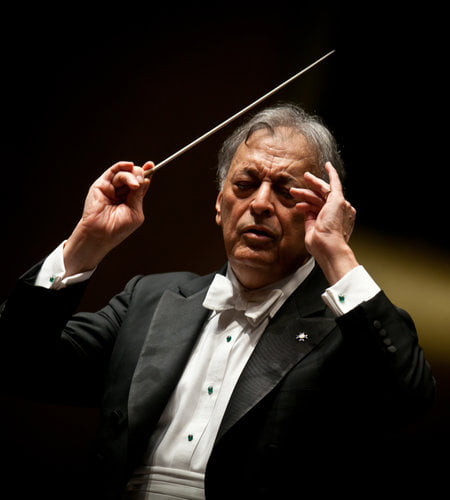
  • Zubin Mehta Underrated Maestro?

    Zubin Mehta Underrated Maestro?

    It’s funny how perceptions change. All those years of slight regard during his time at the New York Philharmonic and eyeball rolling for his association with The Three Tenors – and here it turns out, the whole while, a genuine world-class maestro was living among us!

    Zubin Mehta is 85. In many ways underrated in his prime – handily eclipsed in an era when so many of his colleagues championed the very repertoire that existed within his wheelhouse – Mehta is ripe for reassessment. In particular, he excelled in late Romantic/early 20th century music. It’s only now, when we’re up to our ears in mediocre performances of the “same old, same old,” that perhaps we can truly appreciate just how good we had it.

    Of course, it didn’t help his cause that he was tied to so many media events. He became linked in many people’s minds to the New Year’s Concerts from Vienna. He conducted “Turandot” at the Forbidden City. He played stooge to the Tenors. Eventually, it seemed like every time Mehta was up to something, it was a publicity stunt. But how are these any worse than the excesses of Bernstein or Stokowski? Money is money, and you can’t blame a conductor for trying to generate interest.

    His immediate predecessors in New York were Boulez and Bernstein. And before Bernstein, Mitropoulos. He would have been mincemeat even without New York politics and personality clashes. New York didn’t even like Barbirolli or Mahler! But Mehta flourished in Los Angeles and he made beautiful music with the Israel Philharmonic for five decades.

    Furthermore, generations of instrumental soloists have wanted him as their accompanist. There is something to be said for that level of trust. In the words of Jacqueline Du Pre, “He provides a magic carpet for you to float on.” Du Pre was part of a staggeringly talented circle of musicians – including Mehta, Daniel Barenboim, Itzhak Perlman, and Pinchas Zukerman – who met on their way up and remained lifelong friends.

    Born in Bombay in 1936, Mehta grew up surrounded by Western music. His father was a violinist who had studied in New York, then returned home to establish the Bombay Symphony. He taught his son violin and piano and allowed him opportunities to conduct during rehearsals of the orchestra. To appease his mother, the younger Mehta began to study medicine, but two years in, he dropped all pretense and was off to pursue music in Vienna. His teacher there, conductor Hans Swarowsky, described his talent as “demoniac.” And he meant it as a compliment.

    When Mehta was hired by the Montreal Symphony Orchestra in 1961, he became the youngest music director ever to lead a major orchestra in North America. In 1962, he added the Los Angeles Philharmonic, which he led concurrently. In 1969, he became music advisor to the Israel Philharmonic. In 1981, he was named its music director for life. He was in New York from 1978 to 1991. Since 1985, he’s been chief conductor of the Maggio Musicale Florentino, in Florence, Italy.

    When Mehta was appointed assistant conductor in L.A., Sir Georg Solti, the orchestra’s music director, resigned in protest over not having been consulted. Ironically, after Mehta’s promotion to the top spot, he might very well have been the philharmonic’s most consistently satisfying music director in modern times – sorry, Gustavo – at least on the merits of his recordings. It’s clear that he had the measure of the orchestra’s temperament and knew the secret to harnessing its dynamic potential.

    Mehta’s position in the pantheon could be – and undoubtedly is – argued among passionate music lovers. The competition was stiff, especially in his early days. It’s hard to shine next to Bernstein, Karajan, or Stokowski. But when the alchemy was right, he certainly knew how to get what he wanted out of an orchestra.

    Happy birthday, Zubin Mehta. Better to be recognized late than never. Thank you for a lifetime devoted to great music.

    Listen to any of the following and see if the work doesn’t speak for itself:

    Liszt symphonic poems (Battle of the Huns, Orpheus, Mazeppa)

    Also sprach Zarathustra

    Schoenberg, Chamber Symphony No. 1

    Franz Schmidt, Symphony No. 4

    “Star Wars” and “Close Encounters”

    “The Rite of Spring” (live performance with video)

    https://www.youtube.com/watch?v=DKwszNzO8lc

    An extended conversation with Mehta

    https://www.youtube.com/watch?v=M7XZYQyrKD4

    “I feel that as a musician, I am one of the few that is blessed that every morning, when I wake up, I touch genius. I never let myself forget this. I’m not the genius. It’s the people’s music that I perform – whether it’s Bach, whether it’s Mozart, whether it’s Richard Strauss, Stravinsky, Arnold Schoenberg. We are constantly in the presence of greatness. I tell my musicians that, in the orchestra. I say don’t take this for granted. Look around you. How many people have this fortune of being surrounded by this greatness?”

Tag Cloud

Aaron Copland (92) Beethoven (95) Composer (114) Film Music (123) Film Score (143) Film Scores (255) Halloween (94) John Williams (187) KWAX (229) Leonard Bernstein (101) Marlboro Music Festival (125) Movie Music (138) Opera (202) Philadelphia Orchestra (89) Picture Perfect (174) Princeton Symphony Orchestra (106) Radio (87) Ralph Vaughan Williams (85) Ross Amico (244) Roy's Tie-Dye Sci-Fi Corner (290) The Classical Network (101) The Lost Chord (268) Vaughan Williams (103) WPRB (396) WWFM (881)

DON’T MISS A BEAT

Receive a weekly digest every Sunday at noon by signing up here


RECENT POSTS