Tag: Conductor

  • William Kraft Composer Performer Conductor

    William Kraft Composer Performer Conductor

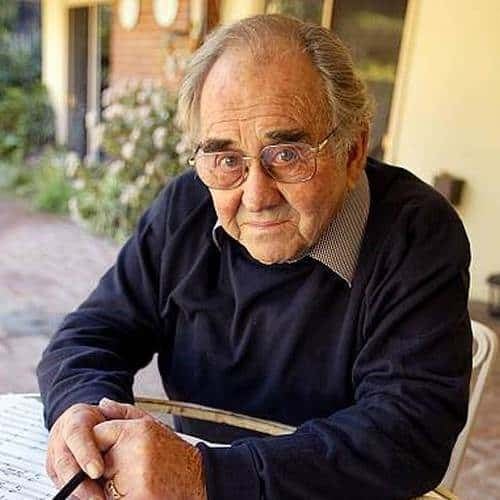
    Whether as a composer, a performer, or a conductor, he was all Kraft.

    William Kraft, a triple threat, died on Saturday at the age of 98.

    Born in Chicago in 1923, he was raised in Santa Barbara, and it was on the West Coast that he made his greatest mark for over 40 years.

    Already as a young man and freelance musician in Manhattan, he was rubbing shoulders with some of the most remarkable musicians of his day.

    He studied composition at Columbia with Otto Luening, Vladimir Ussachevsky, and Jack Beeson. Closer to home, he also took lessons with Henry Cowell. He learned orchestration from Henry Brant, percussion with Morris Goldenberg, and timpani with Saul Goodman, for 50 years principal timpanist of the New York Philharmonic. He also studied conducting with Rudolph Thomas and Fritz Zweig.

    After a brief stint with the Dallas Symphony Orchestra, he returned to California, where from 1955 to 1985, he served as percussionist with the Los Angeles Philharmonic. He later became its first composer-in-residence. For several seasons, he also served as regular guest conductor and assistant conductor. In 1991, he began teaching at the University of California.

    He organized and directed the Los Angeles Percussion Ensemble, a group that gave first performances and made first recordings of works by Alberto Ginastera, Lou Harrison, Ernst Krenek, Igor Stravinsky, and Edgard Varèse.

    Kraft was in charge of all percussion activities for Stravinsky in Los Angeles and appeared on some of the composer’s own recordings, including “L’Histoire du soldat.” As a soloist, Kraft performed in the American premieres of Karlheinz Stockhausen’s “Zyklus” and Pierre Boulez’ “Le marteau sans maître.”

    Also, as one of the more unlikely composers to score a success with the Boston Pops, Kraft was enlisted alongside Sir Peter Maxwell Davies, Oliver Knussen, Joseph Schwantner, and John Adams to write works to be premiered under the baton of John Williams. Come to think of it, these Boston Pops commissions would make a terrific album! (To my knowledge only Maxwell Davies’ “An Orkney Wedding with Sunrise” was ever recorded by them and issued commercially.)

    Kraft composed “Vintage Renaissance” for the Pops in 1989. The work incorporates two Renaissance melodies: “Danza” by Francesco de la Torre, and an anonymous “bransle” (pronounced “brawl”).

    Like Williams, Kraft sometimes worked in film, although his projects as composer tended to be a little less prestigious. He wrote music for the slasher flick “Psychic Killer” (1975), the risible “Avalanche” (1978), and Ralph Bakshi’s “Fire and Ice.”

    However, was also active in the music departments on more reputable fare, appearing as a percussionist on the soundtracks to “North by Northwest,” “None But the Brave” (scored by Williams), “Inside Daisy Clover,” “The War Wagon,” “A Man Called Horse,” “The Life and Times of Judge Roy Bean,” and “The Great Santini.” As a conductor, he led studio orchestras in recording the music for “Dead Again,” “Indochine,” and “Carlito’s Way.”

    Kraft was chair of the composition department at USC. He retired in 2002.


    “Vintage Renaissance”

    Concerto for Four Percussion Soloists and Orchestra

    “French Suite”

    Bakshi’s “Fire and Ice”

    Kraft on percussion in Stravinsky’s “The Soldier’s Tale”

    An interview with Bruce Duffie
    http://www.bruceduffie.com/wm-kraft.html

  • Everett Lee, Pioneering Conductor, Dies at 105

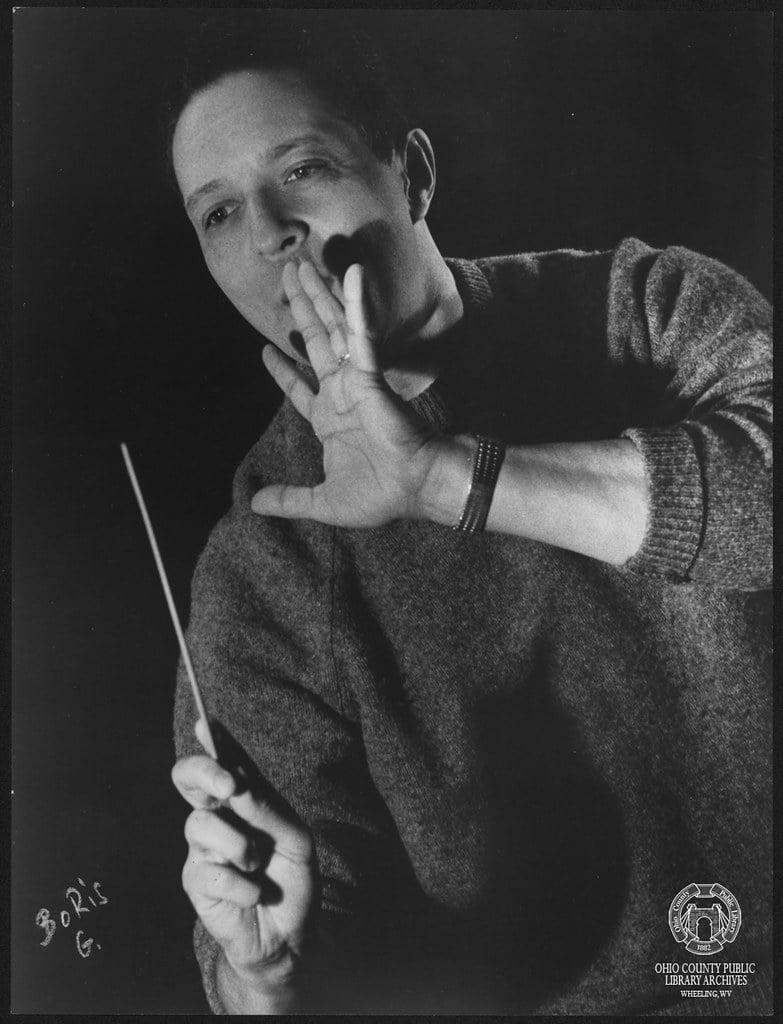
    Everett Lee, Pioneering Conductor, Dies at 105

    Pioneering conductor Everett Lee has died at the age of 105. And what a lot he must have seen!

    Lee was the first African American to conduct on Broadway, rising from the pit orchestra as a substitute to direct “Carmen Jones,” and then employed by Leonard Bernstein as full-time conductor of “On the Town.” That was in 1945.

    Lee was also the first Black conductor of an established symphony orchestra below the Mason-Dixon Line (while guesting with the Louisville Orchestra) and the first to conduct a major American opera company (“La traviata” at New York City Opera in 1955, returning the following season to conduct “La bohème”).

    Lee received encouragement especially from Bernstein and Artur Rodzinski, and worked with such conductors as Leopold Stokowski and Serge Koussevitzky.

    Though regular employment seems not to have been an issue, Lee found that many of the best opportunities were closed to him on account of his race. Once, he was considered by Rodgers and Hammerstein to lead a national tour of one of their shows, but in the end, fearing trouble in the South, they decided to go with somebody else.

    To maintain his presence as a conductor, Lee organized the Cosmopolitan Symphony Orchestra. The orchestra, interracial and multiethnic, was staffed with underdogs in the field – Jews, Chinese, Slavs, Italians, and women.

    Eventually, like African American conductor Dean Dixon (born in 1915), Lee left America to seek better opportunities abroad. He moved to Munich in 1957 and was hired as music director in Norköpping, Sweden, in 1962.

    He returned to the U.S. to conduct the New York Philharmonic – orchestra of his former mentors Rodzinski and Bernstein – for the first time on January 15, 1976, a concert given in honor of Martin Luther King’s birthday. On the program was Sibelius’ Violin Concerto, Rachmaninoff’s Piano Concerto No. 3, and “Kosbro” by African American composer David Baker (Baker revealed the title was short for “Keep on Stepping, Brothers”).

    Lee’s first wife, Sylvia, was hired by the Met in 1953, becoming the first African American on the house’s staff. (Of course, Marian Anderson would be the first on stage, in 1955.) But for Everett Lee, despite invitations to guest conduct, a permanent position with a major orchestra in the United States or Europe remained elusive.

    In 1979, he became music director of the Bogata Philharmonic Orchestra of Colombia.

    Lee died on December 12 in Malmö, Sweden.


    A must-read account of Lee’s life and accomplishments:

    http://www.brooklyn.cuny.edu/web/academics/centers/hitchcock/publications/amr/v43-1/oja.php

    Everett Lee tribute, including footage of him conducting:

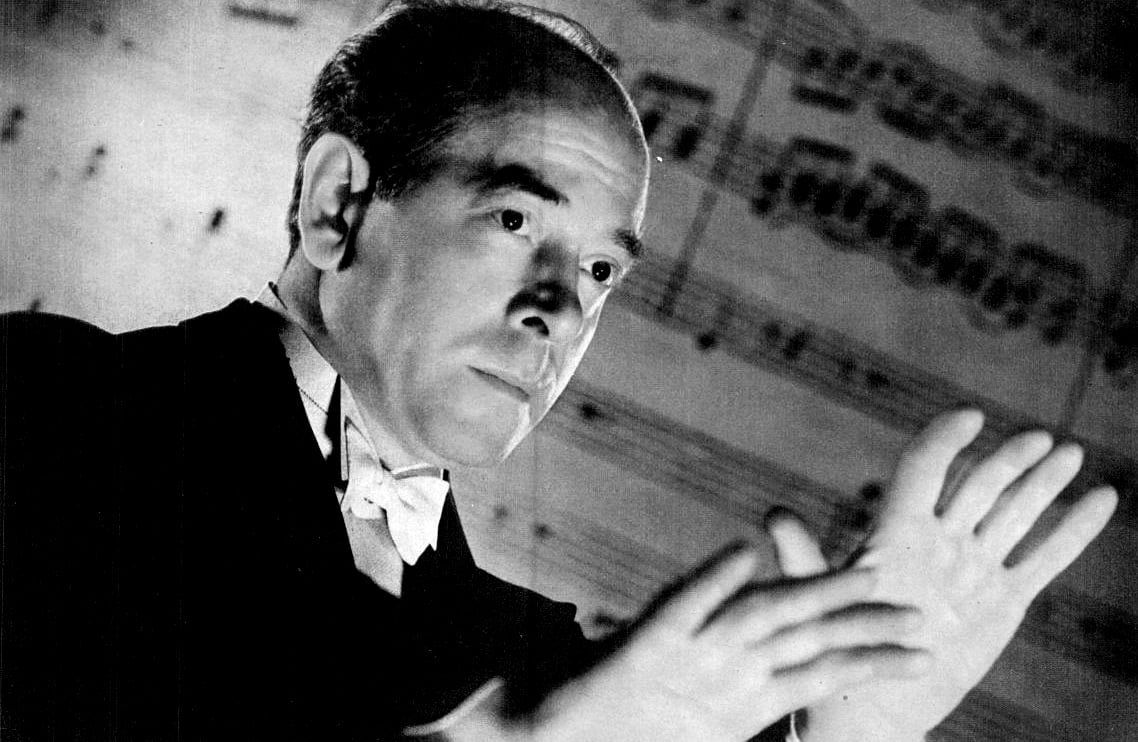
  • Fritz Reiner Birthday The Tyrant Conductor

    Fritz Reiner Birthday The Tyrant Conductor

    December 5th is when Krampus, the Christmas demon, descends from his Alpine lair to flog fearful girls and boys. And December 19th is the birthday of Fritz Reiner.

    From a musician’s standpoint, Reiner was one of the most dreaded conductors, in an era when tyrants of the podium still very much roamed the earth. With a glower that could make Bela Lugosi quake – and sporting quite the similar hairline – Reiner was forged in Hungary at the twilight of the Austro-Hungarian Empire. Hungary at the time had quite the reputation for churning out great conductors. George Szell, Eugene Ormandy, Antal Doráti, Ferenc Fricsay, Sir Georg Solti, and István Kertész all achieved considerable international success.

    Among Reiner’s own teachers was Béla Bartók, with whom he studied piano. Reiner would later repay the favor with what many consider to be the benchmark recording of Bartók’s “Concerto for Orchestra.” He also worked closely with Richard Strauss in Dresden, and his recordings of Strauss’ works are equally revered. All in all, the Chicago Symphony under Fritz Reiner was a surefire choice to give the ol’ hi-fi a good workout in the early days of stereo.

    In 1928, Reiner became a naturalized American citizen. He began to teach conducting at the Curtis Institute of Music in Philadelphia, where among his pupils was Leonard Bernstein. His first American post was as principal conductor of the Cincinnati Symphony. He took over the Pittsburgh Symphony for a decade, beginning in 1938. Then he spent several years at the Met. But it was as music director of the Chicago Symphony that he attained legendary status.

    For a master interpreter of some of the largest and most challenging works in the repertoire, his baton technique was notable for its precision and economy. Much of what he achieved, unfortunately, was through the brutality he exuded in rehearsals. Reiner emerged from an Old World steeped in aristocratic privilege. At the top of their profession, conductors then were regarded as gods-on-earth. When drive and ego were bolstered by absolute power, working conditions could become downright perilous. Before strong musicians’ unions, conductors exercised the authority to fire anyone on a whim. So when musicians played for Reiner, they played as if their lives depended on it – or at the very least their livelihoods.

    Did it make for better musicmaking? You can’t argue with the excellence of Reiner’s Chicago Symphony.

    Read this account of the day Reiner finally gave his “perfect concert.”

    https://csosoundsandstories.org/125-moments-101-fritz-reiners-perfect-concert/?fbclid=IwAR1XCI9gDY-L5-Z-wSxZyYMlWjDU2IbhvhlVSgZ17SA0ekYHWECHuQw4L3A

    Even autocrats have their soft side. Happy birthday, Fritz Reiner.


    Reiner conducts Beethoven

    Big band Bach

    Benchmark Bartók

    Strauss’ “Salome”

    And, to keep it seasonal, “Waltz of the Flowers” from “The Nutcracker”

    https://www.youtube.com/watch?v=mgaS9CZ7KsQ

  • Eugene Ormandy Rediscovered

    Eugene Ormandy Rediscovered

    What’s the big deal about this guy, Jenő Blau? Well, you probably know him better by his adopted name, Eugene Ormandy.

    Ormandy, a Hungarian-born violinist who studied with Jenő Hubay (for whom he was named), became a naturalized American citizen in 1927. Ultimately, he wound up directing The Philadelphia Orchestra for 44 years. In that capacity, he became one of the world’s most-recorded conductors.

    However, in some respects, he remains a vastly underrated one.

    In May, I breathlessly announced my acquisition of “Eugene Ormandy: The Columbia Legacy,” a 13-pound box set of 120 compact discs, newly remastered from original analogue sources, recorded between 1944 and 1958. I am just over halfway through my first, attentive journey through its contents, and I have no hesitation in proclaiming it the release of the year.

    At worst, there a handful of performances that never take flight as perhaps they should, and one or two interpretive misfires (I hasten to add, the execution is always impeccable), but by a staggering margin, the quality of the music-making documented in this set is both stunning and revelatory.

    It astounds me that any of the old saws about Ormandy being “workman-like,” a mere custodian of Stokowski’s “Philadelphia sound,” and too commercially successful ever to be taken seriously have not been exploded, once and for all.

    However, it remains obvious that, even with the evidence now freshly before their ears, some critics remain blinded by their preconceptions. How else to explain the blinkered, damning-with-faint-praise reception in the venerable British music magazine Gramophone and in The New York Times?

    The box is a knockout. Yes, the recordings are in mono, but there’s a vitality to the music-making that lights up the room. I’d be first in line for a sequel, in the form of an authorized box of Ormandy’s Columbia stereo recordings.

    But take your time, Sony Classical. There’s still plenty here for me to enjoy.


    One of my favorite Ormandy records was also one of his later ones, this one made for EMI. Throughout his career Ormandy succeeded in selling Sibelius’ “Four Legends from the Kalevala,” a collection of tone poems inspired by the Finnish national epic the “Kalevala,” for the early masterpiece that it is.

    The legendary Philadelphia strings in Vaughan Williams’ “Fantasia on a Theme by Thomas Tallis”

    Hindemith, “Concert Music for Strings and Brass” (the movements uploaded individually into a playlist)

    Ivan Davis joins Ormandy and the Philadelphians for Liszt’s “Hungarian Fantasy,” slightly abridged:

    Bruckner “Te Deum” with Temple University Choir

    World premiere performance of Samuel Barber’s Violin Concerto

    Shostakovich Symphony No. 4

    Reinhold Glière’s “Russian Sailor’s Dance”

    Rachmaninoff Piano Concerto No. 2, with Eugene Istomin

    Ormandy conducts “Scheherazade” (complete). This is the Philly Orchestra I remember from my college years.

    Debussy, “Reverie”

    Saint-Saens’ Symphony No. 3 “Organ”


    Happy birthday, Eugene Ormandy (1899-1985)!

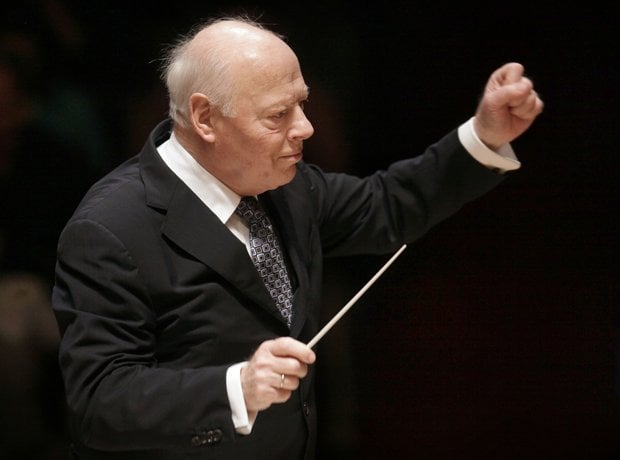
  • Remembering Bernard Haitink

    Remembering Bernard Haitink

    By the time I learned last night of the death of Bernard Haitink, there was little I could do about it. I had had a late dinner and watched a movie, and it was all I could do to brush my teeth and struggle through a chapter in bed.

    With the dawn of another day, I can share my recollection of working as a clerk at Sam Goody in the 1980s – essentially signing my paycheck back over to the company in exchange for CDs – and the piecemeal acquisition of my first Shostakovich cycle, with Haitink conducting. Really, in the early days of compact disc, if you wanted all the symphonies, there weren’t any other options. I’ve since acquired complete cycles by Kondrashin and Barshai, and powerful one-offs by any number of other conductors, but I’ve always hung on to Haitink. He also took a remarkable interest in Vaughan Williams, recording all the symphonies, unusual for a major conductor outside of England – especially so for someone from mainland Europe.

    For many, Haitink’s memory will be indivisible from his long association with the Concertgebouw Orchestra of his native Amsterdam. He also held important conducting posts with the London Philharmonic Orchestra (1967-1989), Glyndebourne Opera (1978-1988), the Royal Opera House, Covent Garden (1987-2002), the Staatskapelle Dresden (2002-2004), and the Chicago Symphony (2006-2010). Chicago wanted him longer, but he declined, citing his advancing age. His final concert was in Lucerne, on September 6, 2019, with the Vienna Philharmonic.

    As a music-lover, concertgoer, and record collector for over 40 years, I am sorry to lose anyone as prominent as Haitink has been. He was one of the last lions of the podium of his generation. It’s funny that he received so much recognition for his performances of the core Germanic repertoire (especially Brahms and Beethoven), since I mostly found his recordings in this department to be rather uninteresting. He did, however, often deliver in unexpected places.

    He received nine Grammy nominations, for a complete Beethoven cycle, Beethoven’s “Missa solemnis,” Brahms’ “A German Requiem,” and Mozart’s “Don Giovanni,” but also for recordings of Vaughan Williams’ “A Sea Symphony” and “Sinfonia Antartica” and Holst’s “The Planets.” He won twice, for Janacek’s opera “Jenufa” in 2003 and again in 2008 for a later recording of Shostakovich’s Symphony No. 4.

    Here are some links to a few of my favorite Haitink recordings:

    A live performance of Shostakovich Symphony No. 15

    Debussy’s “Images”

    A concert broadcast of John McCabe’s “Chagall Windows”

    Since today is Liszt’s birthday, from Haitink’s complete recordings of the symphonic poems, “Die Ideale”

    Finally, the European Union Youth Orchestra giving its all in a Haitink specialty, Bruckner’s Symphony No. 7

    Bernard Haitink was 92 years-old. Thank you, Maestro, and R.I.P.

Tag Cloud

Aaron Copland (92) Beethoven (95) Composer (114) Film Music (123) Film Score (143) Film Scores (255) Halloween (94) John Williams (187) KWAX (229) Leonard Bernstein (101) Marlboro Music Festival (125) Movie Music (138) Opera (202) Philadelphia Orchestra (89) Picture Perfect (174) Princeton Symphony Orchestra (106) Radio (87) Ralph Vaughan Williams (85) Ross Amico (244) Roy's Tie-Dye Sci-Fi Corner (290) The Classical Network (101) The Lost Chord (268) Vaughan Williams (103) WPRB (396) WWFM (881)

DON’T MISS A BEAT

Receive a weekly digest every Sunday at noon by signing up here


RECENT POSTS