Tag: Darius Milhaud

  • Milhaud’s King René’s Chimney

    Milhaud’s King René’s Chimney

    Darius Milhaud, the French composer who rose to prominence in the late ’teens and 1920s, as part of that loose collective known as Les Six, died 50 years ago today.

    Milhaud was such an insanely prolific composer – in common with Telemann and Heitor Villa-Lobos – that he’s often hard to pin down. An enlightened and fair-minded individual of leisure might make it a point to try to listen to everything Milhaud ever wrote before passing judgment. The rest of us content ourselves with parroting the assessments of the gatekeepers, in the assumption that anything beyond the five or six pieces that always get played must be somehow inferior.

    Be that as it may, every once in a while, I’ll stumble across a perfectly delightful Milhaud creation. Some of these have languished in obscurity; others flitter around the periphery.

    I’ve always had a special fondness for “La cheminée du roi René” (“King René’s Chimney”), the multi-movement work for woodwind quintet that grew out of a film score. The anthology “Cavalcade d’amour” (1939), directed by Raymond Bernard, portrays three love stories from three different eras – the 15th century, 1830, and 1930. Milhaud opted for the former, a segment set at the court of René I. (Arthur Honegger and Roger Désormière provided music for the other two.) Milhaud felt a certain affinity with the subject, as he himself grew up in Aix-en-Provence, the location of René’s castle and court.

    The title alludes to a Provençal proverb that plays on words for “fireplace,” “chimney,” and “promenade,” as the king is said to have enjoyed his walks in the winter sun. The phrase “se chauffer à la cheminée du roi René,” then, means to warm oneself at “King René’s chimney” (i.e. by basking in the heat of the sun).

    Okay, so it’s a winter piece, maybe. But I don’t hear it that way. In fact, it strikes me as the perfect music for a lazy summer afternoon. A good example of how imprecise musical impressions can be and why the concept of program music – music intended to suggest extra-musical concepts and even objects – has always stirred controversy.

    The woodwind quintet was first performed in 1941 at Mills College in Oakland, CA, where Milhaud would go on to teach for nearly a quarter-century.

    I first encountered the piece as signature music for the Friday-night-at-11:00 radio program “Music through the Centuries,” hosted by George Diehl, on the late, lamented WFLN, for nearly 50 years Philadelphia’s classical music station. Diehl was on the faculty of LaSalle University. He wrote program notes for the Philadelphia Orchestra and, if I’m not mistaken, was once the station’s program director. Every week, he would use the hour as a platform to explore unusual and neglected repertoire. In fact, I credit him as a source of inspiration for my own weekly show, “The Lost Chord.”

    I suspect Diehl used the classic recording of “La cheminée du roi René” by the Philadelphia Woodwind Quintet. I also like this one, by the Athena Ensemble.

    Remembering Darius Milhaud on the 50th anniversary of his death. How many more riches are left to discover beyond the treasure room of King René?


    PHOTO: Milhaud on a typical morning, completing his third piece before breakfast

  • Burt Bacharach’s Lost Sonatina & Milhaud’s Advice

    Burt Bacharach’s Lost Sonatina & Milhaud’s Advice

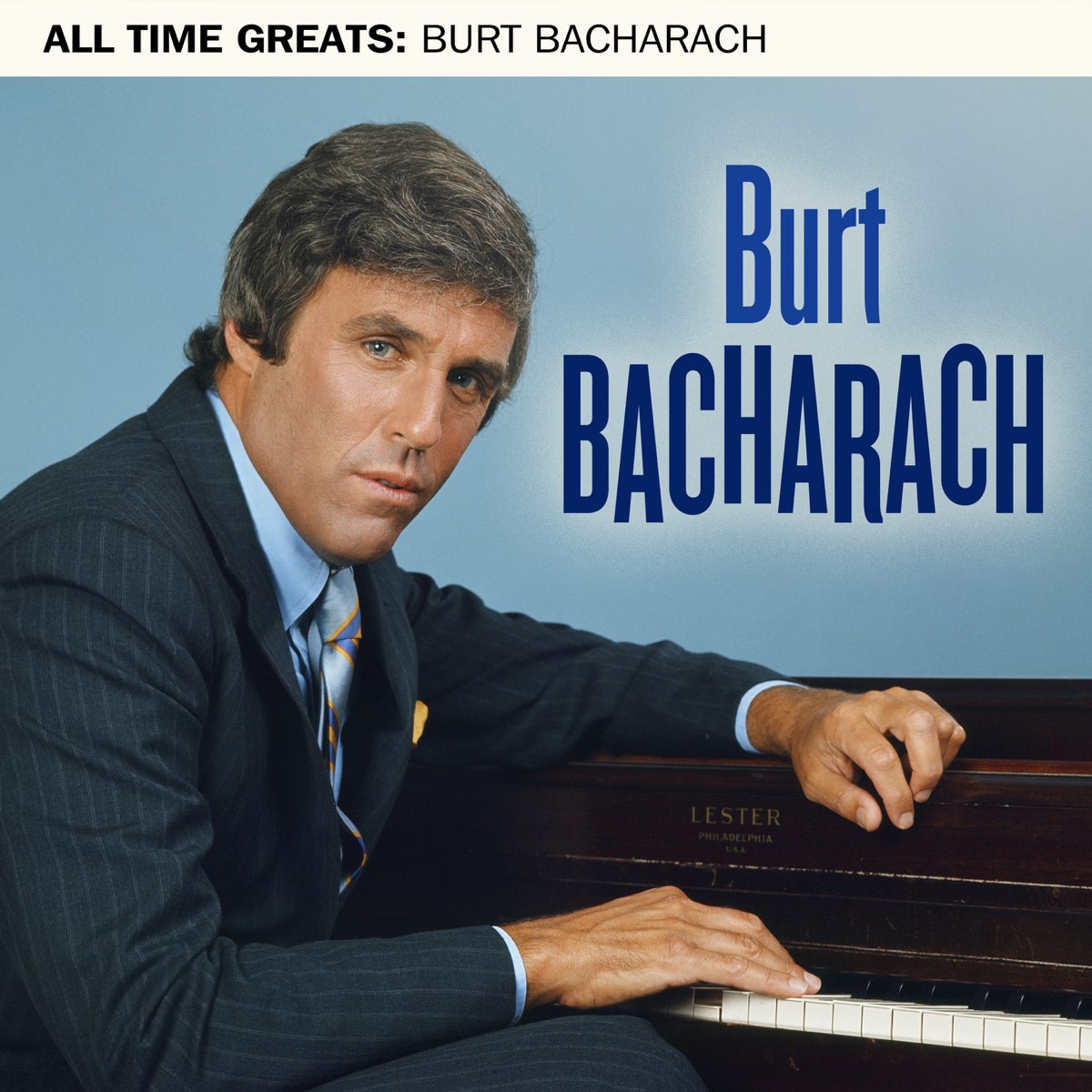
    Earlier today, I posted that the late Burt Bacharach was a pupil of Darius Milhaud. He also studied with Henry Cowell and Bohuslav Martinu. For Milhaud, he wrote a Sonatina for Violin, Oboe and Piano. I don’t know that the work has ever been recorded. At any rate, I’ve never been able to locate a copy. Bacharach talks a bit more about it in this excerpt from an interview he gave with NPR back in 2014.

    “Darius Milhaud taught me at the Music Academy of the West, and he’s this brilliant French composer, wonderful man. I’m taking this composition class with him where I’d written a piece, a sonatina, for violin, oboe and piano. You know, it was very extreme music that people were writing – we were all influenced by 12-tone music, Alban Berg.

    “I had this one piece at the end of the semester that I got to play for Milhaud – not with violin, not with the oboe; I just had to just do it at the piano. I was very, very reluctant when it came to the second movement, because it was quite melodic instead of being harsh and dissonant [and] avant-garde. And he took me aside afterward, and maybe he sensed what I felt or maybe just his observation was: Never be ashamed of something that’s melodic, one could whistle. I said, ‘Wow.’ So that was a valuable lesson I learned from him. Never forgot that one. Never be afraid of something that you can whistle.”

    It’s advice that served him well. R.I.P.

    Coincidentally, today is Alban Berg’s birthday!

  • Burt Bacharach Legendary Composer Dies at 94

    Burt Bacharach Legendary Composer Dies at 94

    Burt Bacharach, perhaps the least likely pupil of Darius Milhaud, has died. Bacharach, the award-winning composer of such indelible hits as “(There’s) Always Something There to Remind Me,” “Don’t Go Breakin’ My Heart,” “Alfie,” “Casino Royale” (1966), “I Say a Little Prayer,” “Raindrops Keep Fallin’ on My Head,” “Arthur’s Theme (Best That You Can Do),” “Heartlight,” “That’s What Friends Are For” and, yes, the theme to “The Blob” (1958), among many others, also studied with Henry Cowell and Bohuslav Martinu. Under Milhaud’s supervision, he composed a Sonatina for Violin, Oboe and Piano. Obviously, his destiny – and his fortune – lay elsewhere. Bacharach was 94 years-old. R.I.P.

    https://variety.com/2023/film/obituaries-people-news/burt-bacharach-dead-american-music-1235517943/

  • Fall of the House of Atreus: Music & Myth

    Fall of the House of Atreus: Music & Myth

    For some of us living here in the Northeast, autumn brings with it the pleasures of baked goods, homemade soups, colored leaves, moody skies, carved pumpkins, black-and-white horror movies, used book shopping, sweaters, Brahms, and cozy cups of tea. But for the House of Atreus, “fall” meant something completely different.

    This Sunday night on “The Lost Chord,” we’ll hear music inspired by “The Oresteia,” a trilogy of surviving plays by Aeschylus that relates the impact of a curse on the House of Atreus. Dating from the 5th century B.C., the overall story arc reflects the shift from perpetual vengeance to the formation of a rational social justice system – the thinking being that man cannot hope to build a progressive civilization if he is engaged in unremitting bloodshed.

    However, along the way to that all-important message, the audience gets to have its cake and eat it, too, as it is treated to such lurid incidentals as human sacrifice, incest, adultery, filicide, fratricide, mariticide, matricide, and cannibalism. The name of the cycle derives from Orestes, who avenges the murder of his father, Agamemnon, who in turn was killed by his wife, Clytemnestra, and her lover, Aegisthus.

    The subject was a popular one with the playwrights of antiquity – it was also treated by Sophocles and Euripides – and it continues to have resonance in the present day. It is certainly very well represented in the classical music world.

    Darius Milhaud treated all three surviving plays in the Aeschylus cycle, as “The Oresteia of Aeschylus,” which he composed over a ten year span. Combined, the cycle runs to three hours and involves over 300 singers and players. Allegedly, Milhaud considered it his greatest work.

    The second part is titled “Les Choéphores,” or “The Libation-Bearers,” referring to the women who offer up ritual sacrifices at Agamemnon’s grave. The story, the familiar one, concerns the victorious Agamemnon returning from the Trojan War, only to be murdered in his bathtub by Clytemnestra and Aegisthus.

    They go on to rule a resentful populace, with Agamemnon’s daughter, Electra, consumed by her thirst for vengeance, which is delivered eventually, upon the secret return of her brother, Agamemnon’s son, Orestes. In the meantime, Clytemnestra, racked by guilt and haunted by nightmares, attempts to appease her husband’s ghost and avert her fate by sending an offering of libations to his tomb.

    Milhaud worked with poet, playwright and frequent collaborator Paul Claudel to structure Aeschylus’ play, the second of the trilogy, into seven scenes, beginning with a threnody and concluding with a plea for justice.

    We’ll round out the hour with incidental music written by Dutch composer Alphons Diepenbrock, inspired by Sophocles’ “Electra.”

    Comedy tomorrow, tragedy tonight! Join me for “Fall at the House of Atreus.” That first step’s a doozy, this Sunday night at 10:00 EDT, on WWFM – The Classical Network and wwfm.org.


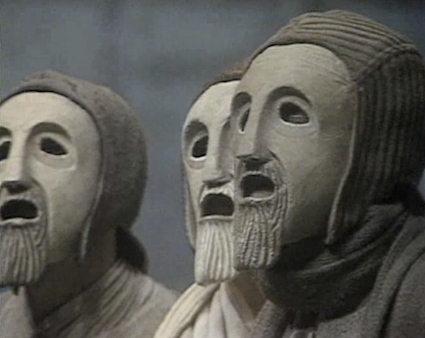
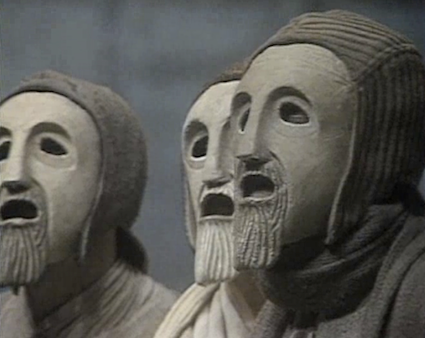
    PHOTO: The fall has seldom been so grim

  • Atreus’ Fall: Music from Greek Tragedy

    Atreus’ Fall: Music from Greek Tragedy

    For some of us living here in the Northeast, autumn brings with it the pleasures of baked goods, homemade soups, colored leaves, moody skies, carved pumpkins, black-and-white horror movies, used book shopping, sweaters, Brahms, and cozy cups of tea. But for the House of Atreus, “fall” meant something completely different.

    This Sunday night on “The Lost Chord,” we’ll hear music inspired by “The Oresteia,” a trilogy of surviving plays by Aeschylus that relates the impact of a curse on the House of Atreus. Dating from the 5th century B.C., the overall story arc reflects the shift from perpetual vengeance to the formation of a rational social justice system – the thinking being that man cannot hope to build a progressive civilization if he is engaged in unremitting bloodshed.

    However, along the way to that all-important message, the audience gets to have its cake and eat it, too, as it is treated such lurid incidentals as human sacrifice, incest, adultery, filicide, fratricide, mariticide, matricide, and cannibalism. The name of the cycle derives from Orestes, who avenges the murder of his father, Agamemnon, who in turn was killed by his wife, Clytemnestra, and her lover, Aegisthus.

    The subject was a popular one with the playwrights of antiquity – it was also treated by Sophocles and Euripides – and it continues to have resonance in the present day. It is certainly very well represented in the classical music world.

    Darius Milhaud treated all three surviving plays in the Aeschylus cycle, as “The Oresteia of Aeschylus,” which he composed over a ten year span. Combined, the cycle runs to three hours and involves over 300 singers and players. Allegedly, Milhaud considered it his greatest work.

    The second part is titled “Les Choéphores,” or “The Libation-Bearers,” referring to the women who offer up ritual sacrifices at Agamemnon’s grave. The story, the familiar one, concerns the victorious Agamemnon returning from the Trojan War, only to be murdered in his bathtub Clytemnestra and Aegisthus.

    They go on to rule a resentful populace, with Agamemnon’s daughter, Electra, consumed by her thirst for vengeance, which is delivered eventually, upon the secret return of her brother, Agamemnon’s son, Orestes. In the meantime, Clytemnestra, racked by guilt and haunted by nightmares, attempts to appease her husband’s ghost and avert her fate by sending an offering of libations to his tomb.

    Milhaud worked with poet, playwright and frequent collaborator Paul Claudel to structure Aeschylus’ play, the second of the trilogy, into seven scenes, beginning with a threnody and concluding with a plea for justice.

    We’ll round out the hour with incidental music written by Dutch composer Alphons Diepenbrock, inspired by Sophocles’ “Electra.”

    Comedy tomorrow, tragedy tonight! Join me for “Fall at the House of Atreus.” That first step’s a doozy, this Sunday night at 10:00 EDT, on WWFM – The Classical Network and wwfm.org.


    PHOTO: The fall has seldom been so grim

Tag Cloud

Aaron Copland (92) Beethoven (95) Composer (114) Film Music (123) Film Score (143) Film Scores (255) Halloween (94) John Williams (187) KWAX (229) Leonard Bernstein (101) Marlboro Music Festival (125) Movie Music (138) Opera (202) Philadelphia Orchestra (89) Picture Perfect (174) Princeton Symphony Orchestra (106) Radio (87) Ralph Vaughan Williams (85) Ross Amico (244) Roy's Tie-Dye Sci-Fi Corner (290) The Classical Network (101) The Lost Chord (268) Vaughan Williams (103) WPRB (396) WWFM (881)

DON’T MISS A BEAT

Receive a weekly digest every Sunday at noon by signing up here


RECENT POSTS