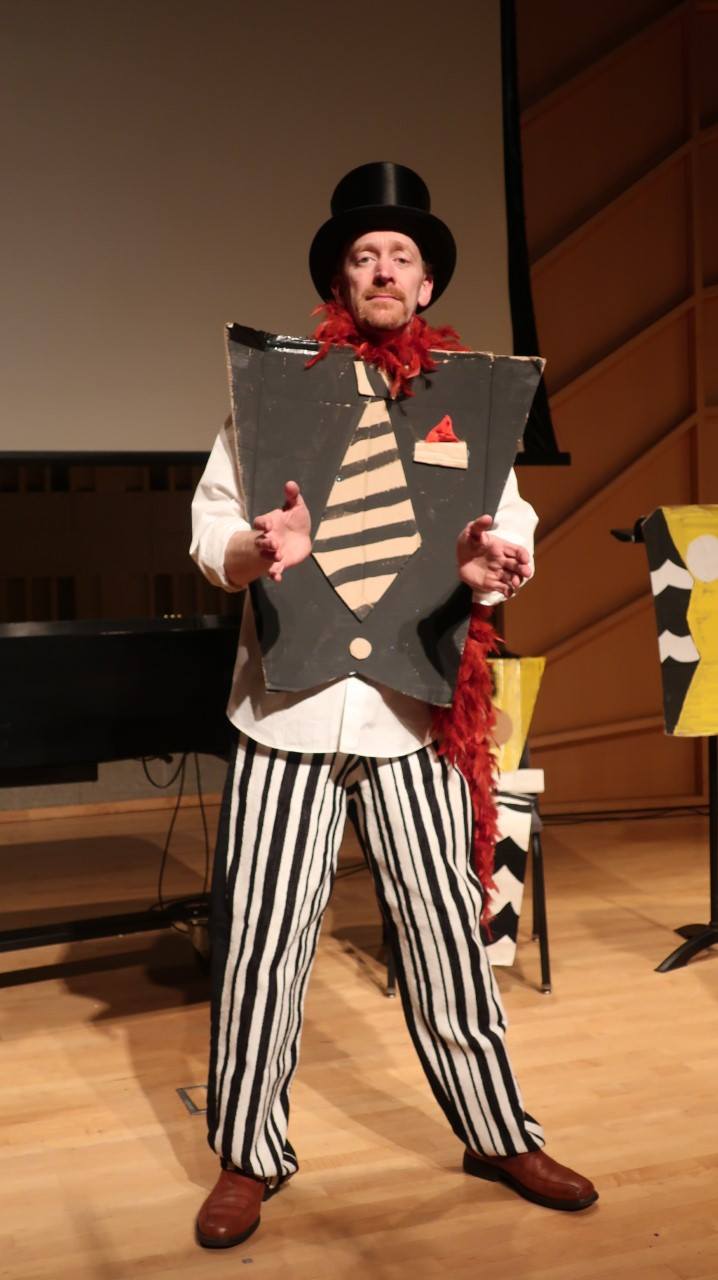
Check all rationality at the door. Coming up on today’s Noontime Concert: “Dada at the Movies” – music by Erik Satie, Darius Milhaud, and George Antheil – with pianist Guy Livingston, on WWFM – The Classical Network and wwfm.org.
Tag: Darius Milhaud
-
Brubeck’s Bridge: Jazz, Faith, and Justice
We all recognize Dave Brubeck as one of the titans of jazz. What is perhaps not so widely known is that Brubeck (like Burt Bacharach and the Grateful Dead’s Phil Lesh) was a pupil of Darius Milhaud. He also took a few private lessons with Arnold Schoenberg, though ultimately they didn’t see eye to eye.
When Brubeck disbanded his famous Quartet at the end of 1967, it allowed him more time to focus on extended orchestral and choral works. In 1968, he composed an oratorio, “Light in the Wilderness.” The next year, he wrote “The Gates of Justice,” a cantata on Biblical and Hebrew liturgical texts and excerpts from the speeches of Martin Luther King, Jr. African-American spirituals also provided inspiration, as did the words of the Jewish sage Hillel. Brubeck’s wife, Iola, supplied additional lyrics.
Brubeck was distressed in the late 1960s by what he saw as strained relations between blacks and Jews, after all that had been accomplished by the Civil Rights Movement. Following the assassination of Martin Luther King, there was much anger, fear and distrust. In general, it was a turbulent time, with the war in Vietnam and riots on university campuses lending fuel to political, generational and racial tensions in American society.
Brubeck described “The Gates of Justice” as humanistic and universal, his plea for tolerance and understanding. Brubeck himself was not Jewish, but rather a devout Catholic, from 1980 onward. However, it was his experiences in the Second World War that really triggered a spiritual awakening. He believed profoundly in the brotherhood of man, and set himself the mission of building a musical bridge between what he saw as parallel cultures.
This Sunday night on “The Lost Chord,” we’ll hear a recording of “Gates of Justice,” from the Milken Archive of American Jewish Music, on the Naxos label. Brubeck himself appears as pianist, in improvisatory passages with the rhythm section of his quartet.
There are obvious Hebraic flourishes all over the piece, including several shofar blasts at the work’s opening. It was Brubeck’s desire that, whenever possible, the tenor should be sung by a cantor, and the baritone by a black singer steeped in the tradition of spirituals and blues. The Milken recording features Cantor Alberto Mizrahi and baritone Kevin Deas.
I hope you’ll join me for “Just Brubeck” – Dave Brubeck’s “The Gates of Justice” – this Sunday night at 10:00 EST, on WWFM The Classical Network and wwfm.org.
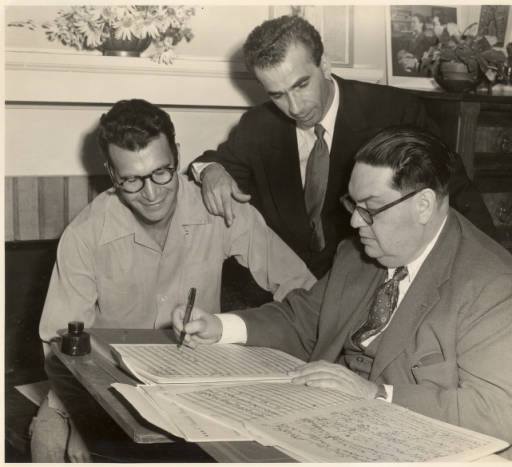
PHOTO (left to right): Dave Brubeck, Michael Random, and Darius Milhaud
-
Atreus’ Fall: Music of Vengeance & Justice
For some of us living here in the Northeast, autumn brings with it the pleasures of baked goods, homemade soups, colored leaves, moody skies, carved pumpkins, black-and-white horror movies, used book shopping, sweaters, Brahms, and cozy cups of tea. But for the House of Atreus, “fall” meant something completely different.
This Sunday night on “The Lost Chord,” we’ll hear music inspired by “The Oresteia,” a trilogy of surviving plays by Aeschylus that relates the effects of a curse on the House of Atreus. Dating from the 5th century B.C., the overall story arc follows the shift from perpetual vengeance to the formation of a rational social justice system – the thinking being that man cannot hope to build a progressive civilization if he is engaged in unremitting bloodshed.
However, along the way to that all-important message, the audience gets to have its cake and eat it, too, as it is treated such lurid incidentals as human sacrifice, incest, adultery, filicide, fratricide, mariticide, matricide, and cannibalism. The name of the cycle derives from Orestes, who avenges the murder of his father, Agamemnon, who in turn was killed by his wife, Clytemnestra, and her lover, Aegisthus.
The subject was a popular one with the playwrights of antiquity – it was also treated by Sophocles and Euripides – and it continues to have resonance in the present day. It is certainly very well represented in the classical music world.
French composer Darius Milhaud treated all three surviving plays in the Aeschylus cycle, as “The Oresteia of Aeschylus,” composed over a ten year span. Combined, the cycle runs to three hours and involves over 300 singers and players. Allegedly, Milhaud considered it his greatest work.
The second part is titled “Les Choéphores,” or “The Libation-Bearers,” referring to the women who offer up ritual sacrifices at Agamemnon’s grave. The story, the familiar one, concerns the victorious Agamemnon returning from the Trojan War, only to be murdered in his bathtub Clytemnestra and Aegisthus.
They go on to rule a resentful populace, with Agamemnon’s daughter Electra, consumed by her thirst for vengeance, which is delivered eventually, upon the secret return of her brother, Agamemnon’s brother, Orestes. In the meantime, Clytemnestra, racked by guilt and haunted by nightmares, attempts to appease her husband’s ghost and avert her fate by sending an offering of libations to his tomb.
Milhaud worked with poet, playwright and frequent collaborator Paul Claudel to structure Aeschylus’ play, the second of the trilogy, into seven scenes, beginning with a threnody and concluding with a plea for justice.
We’ll round out the hour with incidental music written by Dutch composer Alphons Diepenbrock, inspired by Sophocles’ “Electra.”
That’s comedy tomorrow, tragedy tonight. Join me for “Fall at the House of Atreus,” music inspired by “The Oresteia,” this Sunday night at 10:00 EDT, on WWFM – The Classical Network and wwfm.org.
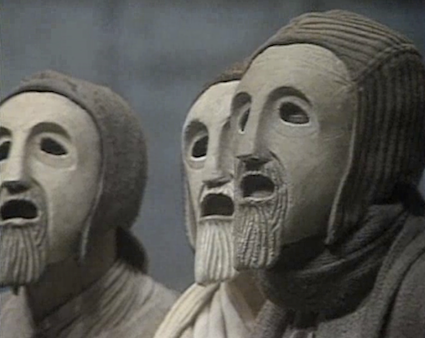
PHOTO: The fall has seldom been so grim
-
Medieval French Music on The Classical Network
Pardon my French. You’ll hear a lot of it – and medieval French, no less – as the Noontime Concerts return to The Classical Network.
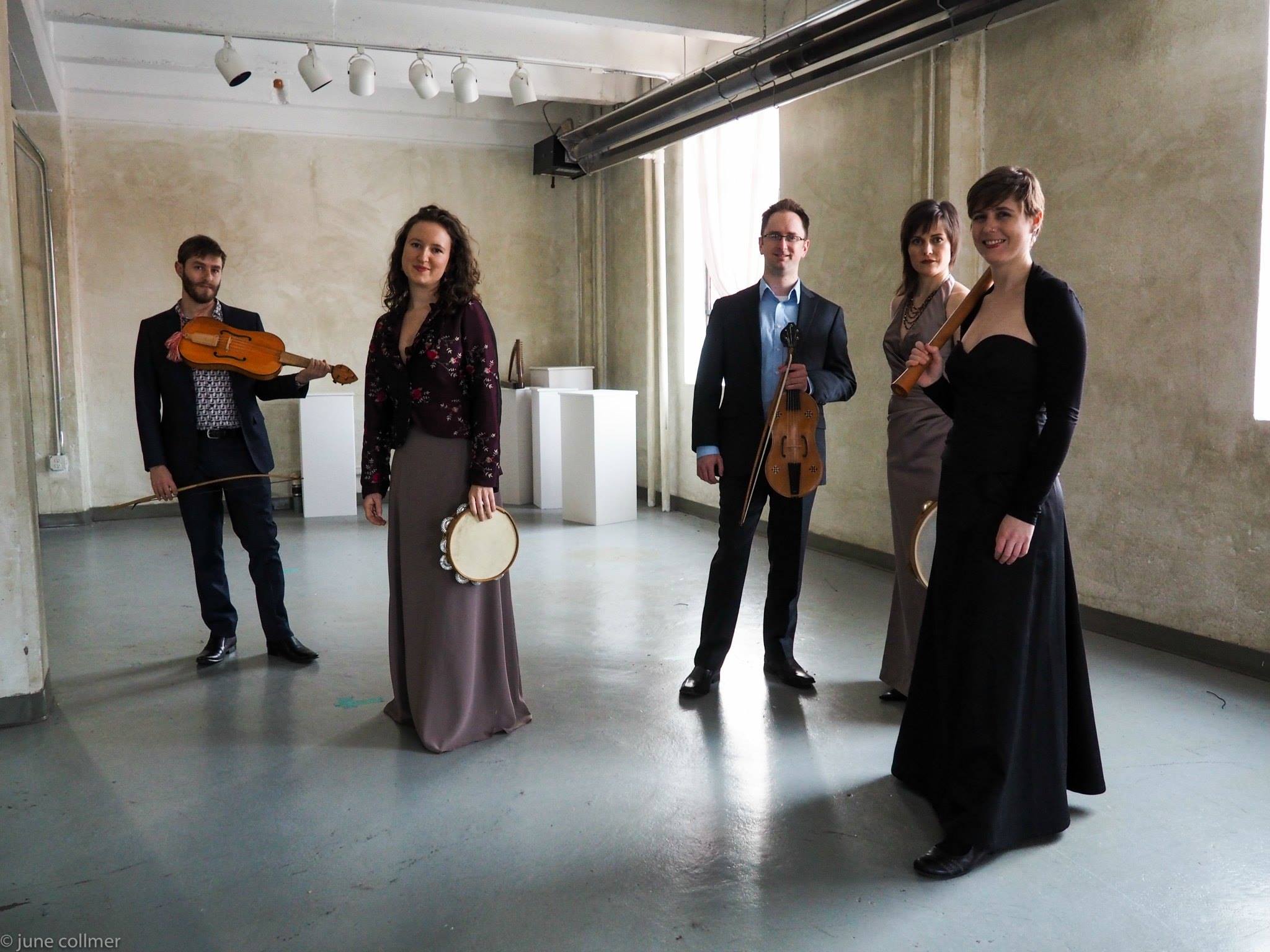
We continue our partnership with Gotham Early Music Scene (GEMS) with a program titled “Love to My Liking: Refrains of Desire in Gothic France.” The ensemble Alkemie will present music on anonymous texts of the 13th century.
Alkemie is made up of Tracy Cowart, mezzo-soprano, harp and percussion; David McCormick, vielle; Elena Mullins, soprano and percussion; Sian Ricketts, soprano and recorders; and Niccolo Seligmann, vielle and percussion.
The concert took place on May 18 at St. Bartholomew’s Church, 50th St. and Park Avenue, in midtown Manhattan. More information about the upcoming season of free lunchtime performances in GEMS’ Midtown Concerts series may be found at midtownconcerts.org.
Then stick around for a belated birthday celebration for French composer Darius Milhaud, who got lost in the shuffle of American music yesterday for Labor Day. We’ll also have a symphony by Anton Bruckner, also born on yesterday’s date.
That’s over 600 years of music history, from 12 to 4 p.m., on WWFM The Classical Network and wwfm.org.
-
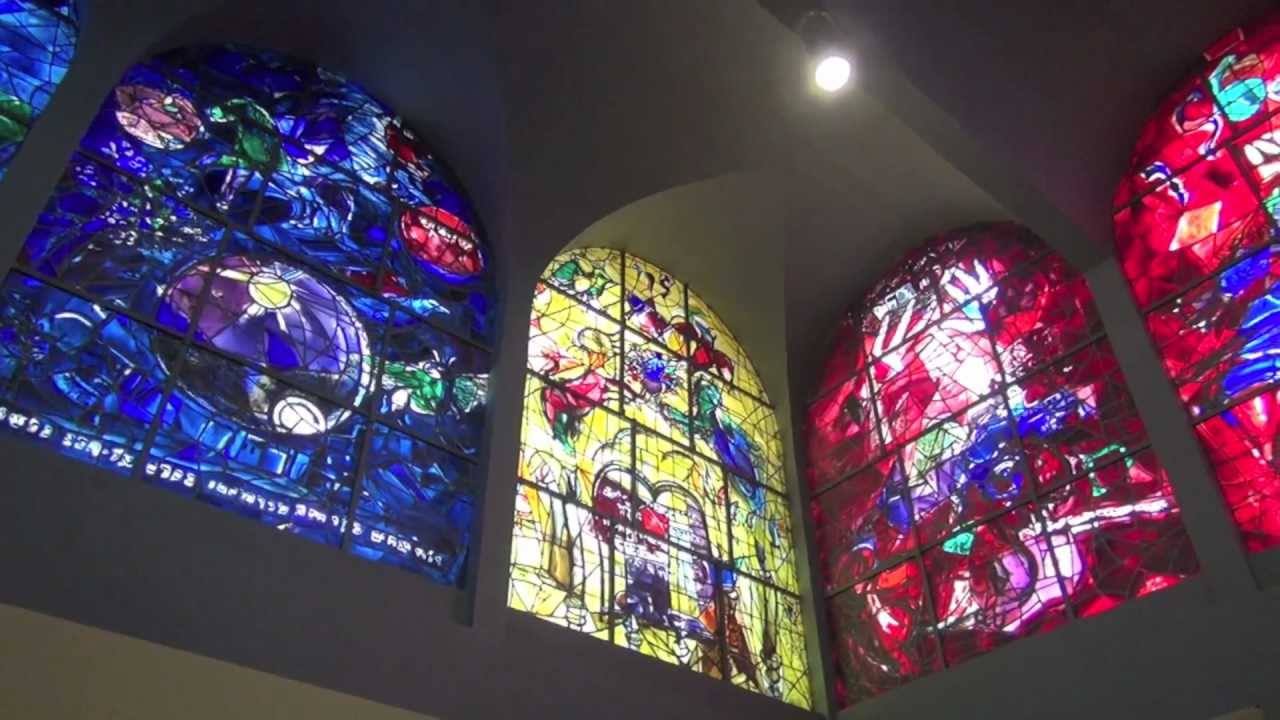
High Holy Days Music on WPRB
Coming up in the next hour will be “The Chagall Windows,” English composer John McCabe’s luminous, strange and beautiful impressions of the stained glass tableaux located at the synagogue of the Hadassah Medical Center in Jerusalem.
We’ll also hear Darius Milhaud’s studies for string quartet on themes from the Rosh Hashanah and Yom Kippur liturgies, as he knew them in his native Provence, and David Stock’s “Yizkor.”
It’s all music by Jewish composers or on Jewish themes for the High Holy Days this morning until 11 EDT, on WPRB 103.3 FM and at wprb.com.
Tag Cloud
Aaron Copland (94) Beethoven (95) Composer (114) Film Music (148) Film Score (143) Film Scores (255) Halloween (97) John Williams (196) KWAX (232) Leonard Bernstein (105) Marlboro Music Festival (125) Movie Music (163) Mozart (91) Opera (215) Philadelphia Orchestra (90) Picture Perfect (174) Princeton Symphony Orchestra (110) Radio (90) Ross Amico (244) Roy's Tie-Dye Sci-Fi Corner (290) The Classical Network (101) The Lost Chord (269) Vaughan Williams (107) WPRB (397) WWFM (881)