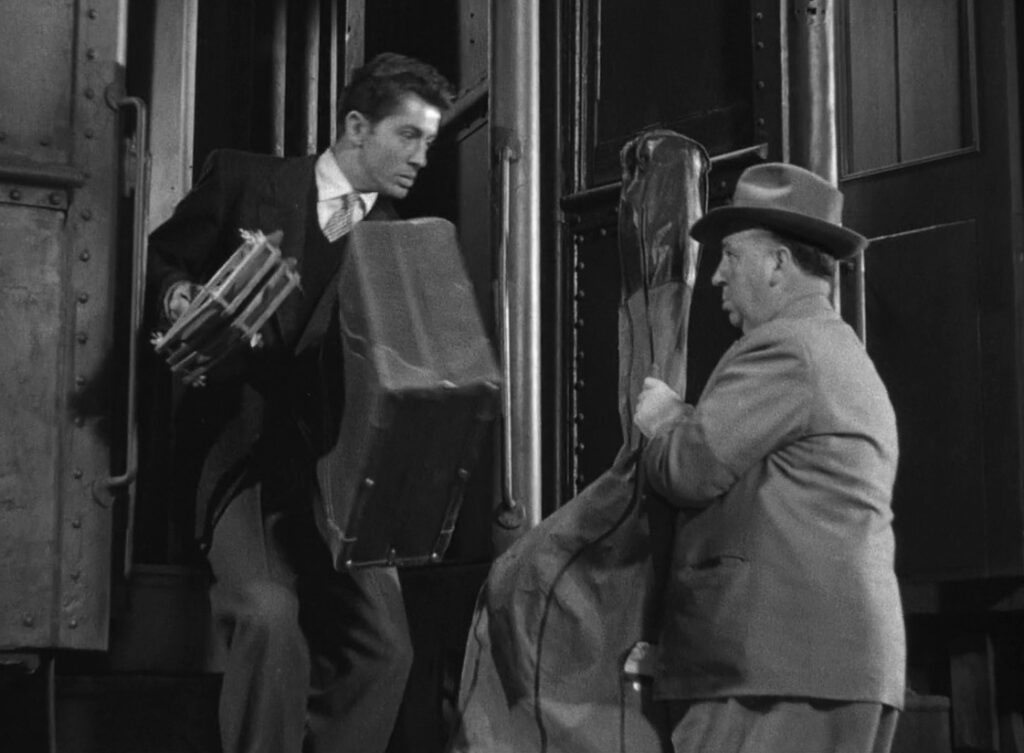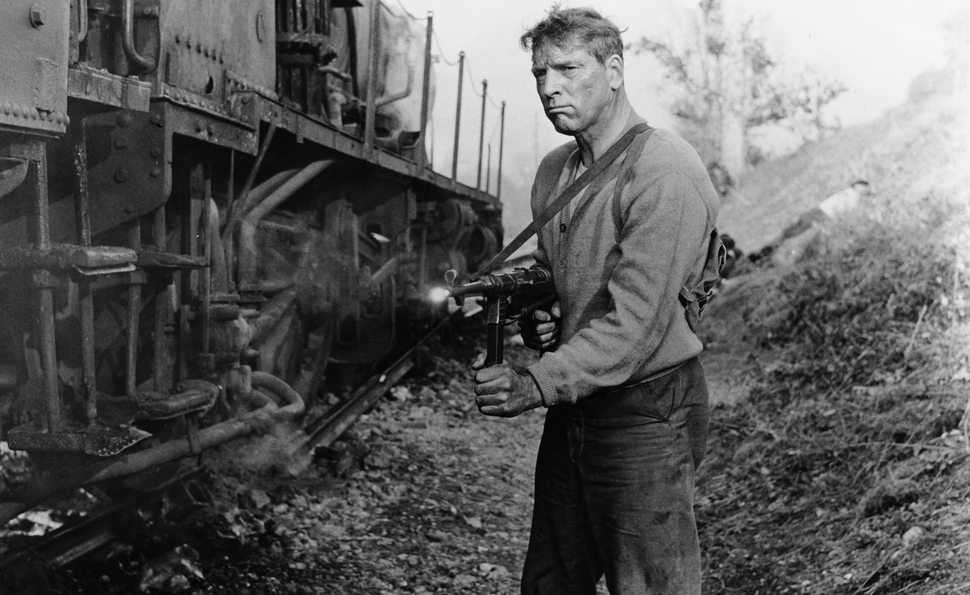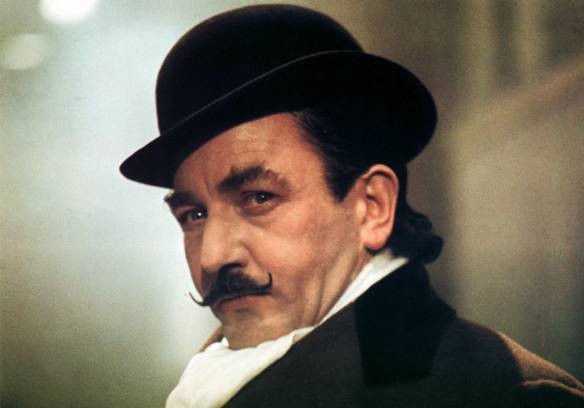
Tag: Dimitri Tiomkin

  • Lost Worlds Movie Music on KWAX

    Lost Worlds Movie Music on KWAX

    It’s a shame you’ve got to stream all the way from the West Coast now to enjoy “Picture Perfect,” but there it is. Dropped from its natal station, the show can now be heard only in syndication (distributed exclusively by me). Stream it today on KWAX, the radio station of the University of Oregon.

    It seems only appropriate that the focus of such a fine show, so ignominiously dismissed, should be “Lost Worlds and Lands That Time Forgot.”

    While the concept of the “Lost World” dates at least as far back as Plato’s Atlantis, it wasn’t until the Victorian Era that the idea really blossomed in the public consciousness. At the time, of course, lost civilizations were genuinely being discovered – which might help to explain, in part, the incredible of success of “King Solomon’s Mines.” The author, H. Rider Haggard, wrote the book on a bet that he could churn out an adventure story half as good as Robert Louis Stevenson’s “Treasure Island,” which had been published two years earlier.

    “King Solomon’s Mines” became the literary sensation of 1885. Its protagonist, Allen Quatermain, is a direct ancestor of Indiana Jones. The book inspired reams of sequels and at least five film adaptations.

    The two best known of these starred Stewart Granger and Princeton-born Paul Robeson, respectively. Robeson, who played Umbopa, a king in disguise, received top billing in 1937. It’s music for THAT version that we’ll be sampling. There was no score for the 1950 Granger version, beyond some tribal drumming (although Miklós Rózsa did provide a cue for the film’s trailer). The score for the 1937 adaptation is by Mischa Spoliansky.

    Haggard achieved another “Lost World” hit with “She,” first issued in book form two years later, in 1887 – another adventure about Europeans in Africa, who meet a seemingly immortal white queen, known as the all-powerful “She” or “She-Who-Must-Be-Obeyed.”

    “She” has been adapted to film six times. The 1965 version starred Ursula Andress, Peter Cushing, and Christopher Lee. The music is by Hammer Studios house composer, James Bernard. It’s nice to hear Bernard, who wrote mostly horror scores for the likes of Dracula and Frankenstein, provide something a little more nuanced for a change. She’s theme is so sensuous, it sounds as if it could have been cast off from Ravel’s “Daphnis and Chloe.”

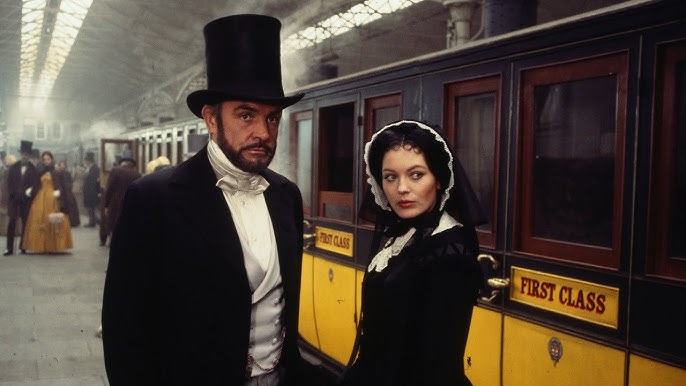
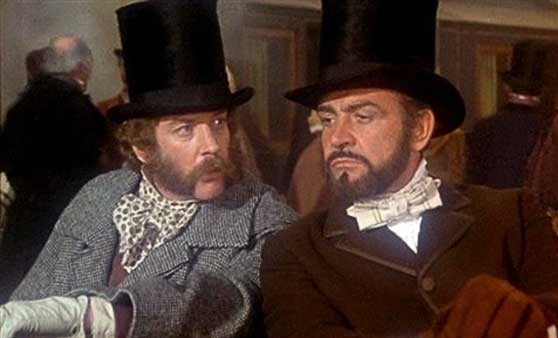
    Rudyard Kipling’s “The Man Who Would Be King,” published in 1888, was clearly influenced by the writings of Haggard. In this case, two British adventurers in India strike out for a remote corner of Afghanistan to set themselves up as kings. The story was made into one of the great adventure films of the 1970s, directed by John Huston, and starring Sean Connery and Michael Caine. That Christopher Plummer appears as Kipling himself is only icing on the cake. Maurice Jarre wrote the rousing score.

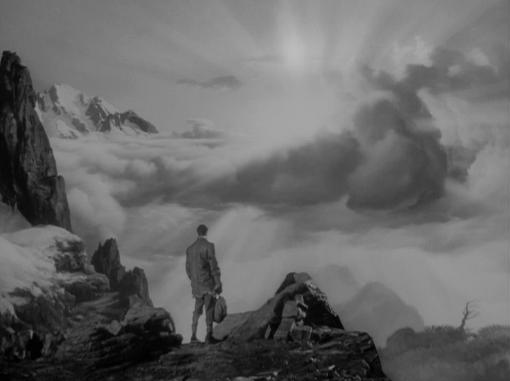
    Finally, James Hilton’s “Lost Horizon,” published in 1933, imagines Shangri-La, a Utopian society nestled in a sheltered valley somewhere in the mountains of Tibet. A British diplomat is one of a handful of passengers who survives a plane crash to be taken into the lamasery.

    “Lost Horizon” was made into a film twice. The less said about the 1973 version, a musical with songs by Burt Bacharach, the better. Frank Capra directed the classic 1937 version, which starred Ronald Colman, Jane Wyatt, and outstanding character actors of the day – actors like Edward Everett Horton, Thomas Mitchell, Sam Jaffe, and H.B. Warner.

    The score, Dimitri Tiomkin’s first major contribution, was also one of his most ambitious. Seldom was it so obvious that he had studied at the St. Petersburg Conservatory under Alexander Glazunov.

    I say unto to you what my former employers said unto to me: Get lost! I hope you’ll join me for music for lost civilizations this week, on “Picture Perfect” – music for the movies – this Friday evening, now on KWAX!

    See below for streaming information.


    Keep in mind, KWAX is on the West Coast, so there’s a three-hour difference for the Trenton-Princeton area. Here are the respective air-times of my shows (with East Coast conversions in parentheses):

    PICTURE PERFECT – Friday on KWAX at 5:00 PACIFIC TIME (8:00 PM EDT)

    THE LOST CHORD – Saturday on KWAX at 4:00 PACIFIC TIME (7:00 PM EDT)

    Stream them here!

    https://kwax.uoregon.edu/


    PHOTO: Connery (right) with the man who would be Caine

  • Max Steiner & Dimitri Tiomkin Birthday Film Scores

    Max Steiner & Dimitri Tiomkin Birthday Film Scores

    May 10th is bursting with birthday energy! Turn down the lights for a celebration of those two silverbacks of the silver screen, Max Steiner and Dimitri Tiomkin.

    Steiner (1888-1971), the literal godson of Richard Strauss, was instrumental in transplanting the sound of fin de siècle Vienna to the realm of cinematic dreams. He composed over 300 film scores for RKO and Warner Brothers, earning 24 Academy Award nominations and winning three – for “The Informer,” “Now, Voyager” and “Since You Went Away” – though he is unquestionably better remembered today for his work on “King Kong,” “Gone with the Wind” and “Casablanca.”

    Tiomkin (1894-1979), a pupil of Alexander Glazunov, was born in Ukraine. He settled in the United States, where he composed music for films in all genres, though in the 1950s he enjoyed particular success writing for Westerns, including the Academy Award-winning “High Noon.” When asked why this would be the case, that a composer born halfway around the world would have such a command of this distinctly American idiom, Tiomkin replied, “A steppe is a steppe is a steppe.”

    Tiomkin was honored with four Academy Awards – three for Best Original Score (for “High Noon,” “The High and the Mighty” and “The Old Man and the Sea”) and one for Best Original Song (“The Ballad of High Noon”).

    Here’s a transcript of his acceptance speech, delivered after being handed the Oscar for “The High and the Mighty” in 1955:

    “Lady and gentlemen, because I working in this town for twenty-five years, I like to make some kind of appreciation to very important factor what make me successful to lots of my colleagues in this town. I’d like to thank Johannes Brahms, Johann Strauss, Richard Strauss, Beethoven, Mozart, George Gershwin, Jerome Kern, Wagner, Tchaikovsky, Rimsky-Korsakov. Thank you.”

    You can watch it here:

    Though Steiner and Tiomkin were both very well-connected in the wider musical world, comparatively speaking, neither left very much in the way of classical concert music. In 2019, Intrada Records put out a diverting 2-CD set of Tiomkin’s brightly-scored ballet music, dances composed in Paris for his wife, Albertina Rasch, in 1927-1932, prior to his work in film. It would be wonderful for afternoon drive-time – if only I had a live air shift! You can sample some of it by following the link. Already detectable is Tiomkin’s trademark snarling brass, in a number titled “Mars” (the second track in this YouTube playlist):

    In 2020, Oxford University Press published a book by Steven C. Smith, “Music by Max Steiner: The Epic Life of Hollywood’s Most Influential Composer.” Read my impressions of this authoritative biography, unbelievably the first full-length treatment of Steiner’s life and achievements, here. Then get yourself a copy!

    Also in 2020, while I was twiddling my thumbs, waiting to get back to work, I put together a Steiner-Tiomkin crossword puzzle. The clues not only allude to specifics of their respective lives and careers, but they should also be of ample interest, I hope, to classic movie buffs. So even if you’re convinced you don’t know a lot about music, do check it out if, like me, you happen to watch a lot of movies from the ‘30s, ‘40s, and ‘50s.

    To fill out the puzzle, follow the link and select “solve online” at the bottom of the page. You’ll then be able to type directly into the squares. Once you feel you’ve exhausted the puzzle, you’ll find the solutions by clicking on “Answer Key PDF.”

    https://www.armoredpenguin.com/crossword/Data/2020.05/1007/10071219.977.html?fbclid=IwAR1pIAkaVZccK4LXQ5yTMtwJ7kzNlQeOPjgyn3Fkx4X4NcAvd1Cxp52iahw

    Happy birthday to Max Steiner and Dimitri Tiomkin, two composers who enriched generations of movie lovers by keeping it “reel!”

    Steiner’s “Now, Voyager”

    Tiomkin’s “Land of the Pharaohs”

    A great, two-part interview with Steiner:

    Part 1 https://www.youtube.com/watch?v=eQuNnzH6_g8
    Part 2 https://www.youtube.com/watch?v=jmJLTn_6UOY

    The official Dimitri Tiomkin website:

    Welcome to DimitriTiomkin.com


    PHOTOS (counter-clockwise from top): Screen credits for their work on “Lost Horizon” (1937); Steiner conducting; Frank Capra (in coat) with Steiner and Tiomkin on the podium; Tiomkin composing

  • Westerns from the Old World

    Westerns from the Old World

    Before American composers like Jerome Moross and Elmer Bernstein made the western distinctly their own, the task of scoring the genre fell largely to European émigrés. This week on “Picture Perfect,” we’ll take a look at some outside perspectives on how the West was won.

    Literally the godson of Richard Strauss, Max Steiner came from Vienna, where he studied with Johannes Brahms and Robert Fuchs. In Hollywood, he wound up scoring such classics as “King Kong,” “Gone with the Wind” and “Casablanca.”

    Among his over 300 film projects were a number of westerns. One of these was “They Died with Their Boots On” (1941), which starred Errol Flynn as George Armstrong Custer and Olivia de Havilland as Libby, the woman who becomes his wife. Steiner’s score features familiar folk material, some old-fashioned faux “Indian” music, and one of his characteristically lush love themes.

    Born in Ukraine in 1894, Dimitri Tiomkin was a pupil of Alexander Glazunov. He came to revolutionize the sound of the American West, when he wrote the music for “High Noon,” the first of his “ballad” scores. Advanced word, based on an early screening for the press, was that the picture would be a failure. However, Tiomkin had such faith in the theme song, sung in the film by Tex Ritter, that he hired Frankie Laine to record it, and the record became a world-wide hit. In fact, his score is largely credited with having saved the film.

    Tiomkin was recognized with two Academy Awards: one for Best Original Song, and one for the score itself. It was the first time a composer won two Oscars for his work on the same movie. It also changed the way western scores were done. In the 1950s, Tiomkin became THE western composer of choice. He produced a number of subsequent ballad scores, including that for “Gunfight at the O.K. Corral” (1957). Asked how it was that a composer from Ukraine could write so convincingly for the American West, Tiomkin quipped, “A steppe is a steppe is a steppe.”

    Another unexpected source of classic western music, Franz Waxman was born in Upper Silesia. He arrived in the U.S. by way of Germany. Nonetheless, as part of the composer’s varied and prolific output, he did indeed score a number of films in the genre, including “The Furies” (1950), a peculiar noir-western hybrid. Walter Huston, in his final film, plays a cattle baron who remarries and throws his empire into jeopardy. Barbara Stanwyck is his strong-willed daughter.

    Hungarian-born composer Miklós Rózsa scored many films with historical settings – “Quo Vadis,” “Ben-Hur,” and “King of Kings,” among them. However, to my knowledge, his only western was “Tribute to a Bad Man” (1956). James Cagney stars as a rancher who doles out some frontier justice.

    Finally, we’ll hear music by Ennio Morricone, from arguably the most operatic of all spaghetti westerns, “Once Upon a Time in the West” (1968). As a reaction to Tiomkin’s ballad scores and the neo-Coplandisms of Elmer Bernstein and the rest, Morricone brings his own quirky sensibility to bear on the classic western iconography. Get ready for indelible motifs for harmonica and banjo, but also an unexpectedly moving elegiac arioso, underscoring the close of the American West with the arrival of the railroad.

    Better wind your pocket watches. Old World composers go west this week on “Picture Perfect,” music for the movies. The train arrives this Saturday evening at 6:00 EDT, on WWFM – The Classical Network and wwfm.org.

  • Max Steiner & Dimitri Tiomkin Crossword Puzzle

    Max Steiner & Dimitri Tiomkin Crossword Puzzle

    A couple of years ago, I was generating Classic Ross Amico crosswords to post on Sundays. This one celebrates film composers Max Steiner and Dimitri Tiomkin, both of whom happened to be born on this date (Steiner in 1888 and Tiomkin in 1894).

    The clues not only allude to specifics of their respective lives and careers, but they should also be of ample interest, I hope, to classic movie buffs. So even if you’re convinced you don’t know a lot about music, do check it out if, like me, you happen to watch a lot of movies from the ‘30s, ‘40s, and ‘50s.

    To fill out the puzzle, follow the link and select “solve online” at the bottom of the page. You’ll then be able to type directly into the squares. Once you feel you’ve exhausted the puzzle, you’ll find the solutions by clicking on “Answer Key PDF.”

    https://www.armoredpenguin.com/crossword/Data/2020.05/1007/10071219.977.html?fbclid=IwAR3W2NilybJ5EtGNfb-pBLT5MAza6xsC1IU5NZdd8mFV-GneV_oXIvwnfz0

    There’s enough distance now that even I was able to fill it out and enjoy the challenge. I probably should have indicated in the clues that some of the answers require full names or, in the case of titles, multiple words.

    Open up a box of Sno-Caps, and try not to get buttered popcorn all over your keyboard. Happy birthday, Max Steiner and Dimitri Tiomkin!

  • It’s a Wonderful Life Turns 75!

    It’s a Wonderful Life Turns 75!

    75 years ago today, “It’s a Wonderful Life” opened at the Globe Theatre in New York. It had been slated for a January premiere, but was bumped up to qualify for Academy Awards consideration. The film would be nominated in five categories, including those for Best Picture, Best Director (Frank Capra), and Best Actor (James Stewart).

    It’s amazing that nobody involved in the making or distribution of the film seemed to regard it, from the start, as a Christmas movie. “It’s a Wonderful Life” received mixed reviews and was something of a box office disappointment. However, decades later, it attained classic status through incessant television broadcasts around the holidays, back when the film was still in the public domain.

    When Republic Pictures finally realized the value of what it had lost, after having allowed the copyright to lapse in 1974 (opening the floodgates for anyone to exhibit the film without having to pay them a fee), the studio was determined to regain control of the property, which it did in 1993. It accomplished this by pushing its ownership of both the original story, upon which the film was based, and the film’s music score, by Dimitri Tiomkin. Now, legally, no one is allowed to show “It’s a Wonderful Life” without the studio’s express permission, as long as those components are intact. Republic wasted no time in signing a long-term agreement with NBC, which holds onto its broadcast rights like grim death.

    Capra himself thought the film his finest achievement. Interestingly, while many would be inclined to agree with him, “It’s a Wonderful Life” has also generated its share of backlash, with some finding it too dark, and others put off by its sentimentality. Too bad for them. It’s a fascinating movie, full of heartwarming snapshots of a world that probably never was. But damn it, I’m in love with the vision (and also with Donna Reed).

    It was a novel approach, to turn “A Christmas Carol” on its head and have the idealistic hero (as opposed to Old Man Potter) be the one who winds up desperately in need of redemption. The explosion of joy at the film’s climax would leave Alastair Sim winded.

    Tiomkin’s original score, which even alludes to Beethoven’s “Ode to Joy” (not heard in the final film), was issued only last month on La-La Land Records. The restoration is fabulous, considering the source material, like the film, is now 75 years-old. The album contains Tiomkin’s original thoughts, which were butchered in the editing and looping of the film. The release also contains a number of bonus tracks, including alternate takes, source music, music for the film’s trailer, and a “single,” with vocals, of the movie’s love theme, proposed for broadcast. A missed opportunity, for sure, as it was only six years later that Tiomkin would kick off the mania for main title songs with his Academy Award winning “The Ballad of High Noon.”

    “It’s a Wonderful Life” is not my favorite Tiomkin score, by a long shot. I much prefer the music he wrote for Capra’s “Lost Horizon,” which didn’t have all the shotgun, cartoony allusions to classical, pop, patriotic, and folk melodies that were the stock-in-trade for Capra’s populist fantasies (like “You Can’t Take It with You,” “Mr. Smith Goes to Washington,” and “Meet John Doe”). Only Tiomkin would juxtapose “Ave Maria” with “Twinkle, Twinkle, Little Star.”

    Even so, the score works great on record. There are many differences from what we’ve become familiar with from the film, since entire sequences of Tiomkin’s original conception were jettisoned as the movie was repositioned for a Christmas release. Heartbreakingly for the composer, the film’s music editor began to draw heavily on pre-existing cues from the RKO music library, in spackling together the soundtrack for certain key sequences.

    Tiomkin called the finished project “an all-around scissors job.” Though he and Capra would remain friends, they kept their distance for a year and a half, and then they never worked together again.

    There’s no question this release of the film’s original score is evocative. It’s at its most interesting when it plunges into the dark side, and then swings back hard to the light. You really get a sense of the scope of Tiomkin’s vision as he brings the love theme to its apotheosis. As an unapologetic fan of the film, La-La Land’s soundtrack release is one I wouldn’t want to be without.

    https://lalalandrecords.com/its-a-wonderful-life-75th-anniversary-remastered-limited-edition/

    Believe it or not, I once owned one of the 200 original copies of “The Greatest Gift,” the 4,100-word story upon which “It’s a Wonderful Life” is based. It was self-published by Philip Van Doren Stern in 1943 to be distributed to his friends as a kind of Christmas card. For years, I was living hand-to-mouth as a young book dealer in Philadelphia, and regrettably I wound up having to sell it in order to pay the rent. It’s now listed, if you can find a copy, for thousands. Not that I’d ever sell it now. It’s one of my life’s great regrets – of those that don’t involve other people – to have had to part with it. I sold it to a real creep, too. But at least he paid cash.

Tag Cloud

Aaron Copland (92) Beethoven (95) Composer (114) Film Music (119) Film Score (143) Film Scores (255) Halloween (94) John Williams (185) KWAX (229) Leonard Bernstein (99) Marlboro Music Festival (125) Movie Music (134) Opera (198) Philadelphia Orchestra (87) Picture Perfect (174) Princeton Symphony Orchestra (106) Radio (87) Ralph Vaughan Williams (85) Ross Amico (244) Roy's Tie-Dye Sci-Fi Corner (290) The Classical Network (101) The Lost Chord (268) Vaughan Williams (102) WPRB (396) WWFM (881)

DON’T MISS A BEAT

Receive a weekly digest every Sunday at noon by signing up here


RECENT POSTS