Tag: Dimitri Tiomkin

  • Theremin Sounds from Outer Space & Classic Film

    Theremin Sounds from Outer Space & Classic Film

    What is that… THING?

    Why, it’s the theremin!

    This week on “Picture Perfect,” thrill to the distinctive extraterrestrial timbre of this whooping, whistling, wailing electronic instrument invented by Leon Theremin in 1928. The theremin may be unique of its kind in that it is played without actual physical contact. Pitch and volume are determined by the proximity of a player’s hands to two antennae. You won’t find any frets on this one!

    That said, it can certainly generate fret. Brace yourself for eerie, at times otherworldly selections from “The Thing” by Dimitri Tiomkin (great music for cooking carrots), “Ed Wood” by Howard Shore (Tim Burton’s love letter to the director of “Plan 9 from Outer Space”), “Rocketship X-M” by Ferde Grofé (composer of the “Grand Canyon Suite”), and, one week after the death of Rhonda Fleming, Alfred Hitchcock’s “Spellbound” (with Academy Award winning music by Miklós Rózsa).

    If you’ve got a THING for theremins, you’ll want to be on “hand” (or maybe not). I hope you’ll join me for madness, monsters, and Martians, on “Picture Perfect,” this Saturday evening at 6:00 EDT, on WWFM – The Classical Network and wwfm.org.


    PEOPLE OF EARTH: WWFM is in the midst of its fall fundraiser. If, like me, you find great film music to be out of this world, please consider supporting it. Your donation online at wwfm.org allows us to continue to bring you stellar specialty programs like “Picture Perfect.” Thank you for your part in maintaining quality film music on the astral airwaves!

  • Lost Worlds in Film Music on WWFM

    Lost Worlds in Film Music on WWFM

    It’s the second day of WWFM’s end-of-the-fiscal-year membership campaign, and we’re hoping you don’t get lost! We’ll be looking for your pledges of support from noon to 6 p.m., at 1-888-232-1212. Or join us anytime at wwfm.org.

    At 6:00, reward yourself with a trip into the unknown. This week on “Picture Perfect,” it’s music from movies about lost worlds and forgotten civilizations.

    While the concept of the “Lost World” dates at least as far back as Plato’s Atlantis, it wasn’t until the Victorian Era that the idea really blossomed in the public consciousness. At the time, of course, lost civilizations were genuinely being discovered – which might help explain, in part, the incredible success of “King Solomon’s Mines.” The author, H. Rider Haggard, wrote the book on a bet that he could churn out an adventure story half as good as Robert Louis Stevenson’s “Treasure Island,” which had been published two years earlier.

    “King Solomon’s Mines” became the literary sensation of 1885. Its protagonist, Allen Quatermain, is a direct ancestor of Indiana Jones. The book inspired reams of sequels and at least five film adaptations.

    The two best known starred Stewart Granger, in 1950, and Paul Robeson, in 1937. Robeson, who played Umbopa, a king in disguise, received top billing. Mischa Spoliansky wrote the music
    .

    Haggard achieved another “Lost World” hit with “She,” first issued in book form in 1887 – another adventure about Europeans in Africa, who meet a seemingly immortal white queen known as the all-powerful “She,” or “She-Who-Must-Be-Obeyed.”

    “She” has been adapted to film six times. The 1965 version starred Ursula Andress, Peter Cushing and Christopher Lee. The music was by Hammer Studios house composer, James Bernard. It’s nice to hear Bernard, who mostly wrote horror scores for the likes of Dracula and Frankenstein, provide something a little more nuanced for a change.

    Rudyard Kipling’s “The Man Who Would Be King,” published in 1888, was clearly influenced by the writings of Haggard. In this case, two British adventurers in India strike out for a remote corner of Afghanistan to set themselves up as kings. The story was made into one of the great adventure films of the 1970s, directed by John Huston, and starring Sean Connery and Michael Caine. That Christopher Plummer appears as Kipling himself is only icing on the cake. Maurice Jarre wrote the rousing score.

    Finally, James Hilton’s “Lost Horizon,” published in 1933, imagines Shangri-La, a Utopian society nestled in a sheltered valley somewhere in the mountains of Tibet. A British diplomat is one of a handful of passengers who survives a plane crash to be taken into the lamasery.

    “Lost Horizon” was made into a film twice. The less said about the 1973 version, a musical with songs by Burt Bacharach, the better. Frank Capra directed the classic 1937 version, which starred Ronald Colman, Jane Wyatt, and outstanding character actors of the day, people like Edward Everett Horton, Thomas Mitchell, Sam Jaffe, and H.B. Warner.

    The score, Dimitri Tiomkin’s first major contribution, was also one of his most ambitious. Seldom was it so obvious that he had studied at the St. Petersburg Conservatory under Alexander Glazunov.

    Let music be your map, this week. The journey is the destination, on “Picture Perfect,” music for the movies, this Friday evening at 6:00 EDT.

    Remember, this program is made possible in part through YOUR support of WWFM – The Classical Network and wwfm.org. Thank you for your contribution by June 30th!

    https://wwwfm.secureallegiance.com/wwfm/WebModule/Donate.aspx?P=DEFAULT&PAGETYPE=PLG&CHECK=vOU2bz5JCWmgCDbf53nm9ezWDeZ%2BeA1M&fbclid=IwAR14UCd7VY5wZ1F7yKcFbu2VLPzehKCqvunBZCAZirehbC2OwYyT1C8TNTI


    PHOTO: Connery (right) with the man who would be Caine

  • Steiner & Tiomkin Movie Music Crossword Puzzle

    Steiner & Tiomkin Movie Music Crossword Puzzle

    Today marks the dual birthdays of film composers Max Steiner and Dimitri Tiomkin. Since I am not on the radio, I’ve put together a crossword puzzle to celebrate their achievements. The clues not only allude to specifics of their respective lives and careers, but they should also be of ample interest, I hope, to classic movie buffs. So even if you’re convinced you don’t know a lot about music, do check it out if, like me, you happen to watch a lot of movies from the ‘30s, ‘40s, and ‘50s.

    To fill out the puzzle, follow the link and select “solve online” at the bottom of the page. You’ll then be able to type directly into the squares. Once you feel you’ve exhausted the puzzle, you’ll find the solutions by clicking on “Answer Key PDF.”

    https://www.armoredpenguin.com/crossword/Data/2020.05/1007/10071219.977.html


    If you’re having a slow Sunday, here are links to additional puzzles from the past two weeks. They’re great for Mom, too!

    CAFFEINATED CLASSICS

    https://www.armoredpenguin.com/crossword/Data/2020.04/2606/26063743.014.html?fbclid=IwAR1hVDkahxxccD4EPyI0conCbo92RWhyNIiaLwnd5JYm05WtzOSUQ0kWSrk

    SPRING INTO MUSIC

    https://www.armoredpenguin.com/crossword/Data/2020.05/0305/03054400.876.html?fbclid=IwAR07w4LOBxeHU7TuVbhkeruH_BXGo4cKZ_oZ1IoRhyHBL44v6ie1cOTRtJ4

  • Thanksgiving Movie Music

    Thanksgiving Movie Music

    “Do any human beings ever realize life while they live it? Every, every minute?”

    This poignant observation, from Thornton Wilder’s “Our Town,” stands as a timely reminder that there are things we should all be thankful for, while they – and we – are here to appreciate them.

    This week on “Picture Perfect,” we’ll set the table for Thanksgiving.

    None other than Aaron Copland wrote the music for the big screen adaptation of Wilder’s Pulitzer Prize winning play. The composer was at the height of his “populist” period. “El Salon Mexico” and “Billy the Kid” had already been written, and “Fanfare for the Common Man,” “Lincoln Portrait,” “Rodeo” and “Appalachian Spring” would follow within just a few years. Clearly, there was no better choice in capturing the essence of small town America.

    The concert version of “Our Town” has been in circulation for decades, but it was only in 2011 that a complete recording of the score was made available, briefly, as a digital download.

    Gary Cooper and Dorothy McGuire star in “Friendly Persuasion” (1956), based on the novel by Jessamyn West. The film’s portrayal of family and the resolution of moral conflict, as pacifist Quakers deal with issues both big and small – from the American Civil War, to the introduction of a “sinful” musical instrument into the household – make “Friendly Persuasion,” in my opinion, a good choice for this time of year.

    The film was up for six Oscars, with Dimitri Tiomkin’s score nominated twice. The title song went on to become the popular hit “Thee I Love.” Only Dimitri Tiomkin would use balalaikas to depict Quaker life!

    “Witness” (1985) may seem like an unusual choice for Thanksgiving, with its themes of police corruption and violence, but when honest cop Harrison Ford goes on the lam, he experiences the “plain” lifestyle of a close-knit Amish community. The highlight of Maurice Jarre’s score is a sequence called “Building the Barn,” in which the community comes together to raise a barn for a newly married couple.

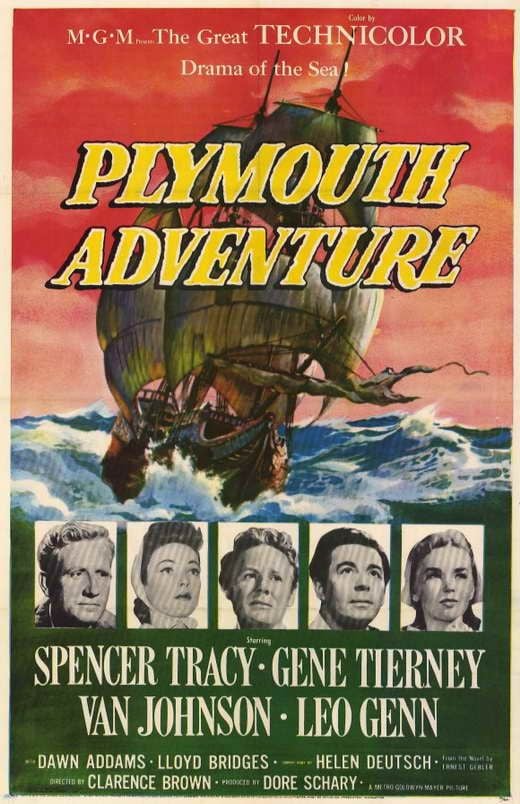
    Finally, we’ll hear selections from “Plymouth Adventure” (1952), with its depictions of William Bradford, John Alden, Miles Standish and Priscilla Mullins. Spencer Tracy stars as the cynical captain of The Mayflower, Gene Tierney is his forbidden love interest, Van Johnson appears as Alden, and Lloyd Bridges is the first mate.

    The music is by Miklós Rózsa, who already, at this stage of his career, was MGM’s go-to composer for historical drama. Seven years later, Rózsa would take home his third Academy Award for his classic score to “Ben-Hur.”

    It’s never too early to give thanks. There’s not a turkey among them, this Friday evening at 6:00 EST, on WWFM – The Classical Network and wwfm.org.


    Martha Scott and William Holden in “Our Town” (1940)

  • How European Composers Won the West

    How European Composers Won the West

    Before American composers like Jerome Moross and Elmer Bernstein made the western distinctly their own, the task of scoring the genre fell largely to European émigrés. This week on “Picture Perfect,” to coincide with the birthdays today of Max Steiner and Dimitri Tiomkin, we’ll take a look at some outside perspectives on how the West was won.

    Steiner, who was literally the godson of Richard Strauss, came from Vienna, where he studied with Johannes Brahms and Robert Fuchs. He scored such classic films as “King Kong,” “Gone with the Wind” and “Casablanca.”

    Among his over 300 film projects were a number of westerns. One of these was “They Died with Their Boots On” (1941), which starred Errol Flynn as George Armstrong Custer and Olivia de Havilland as Libby, the woman who becomes his wife. Steiner’s score features familiar folk material, some old-fashioned “faux” Indian music, and one of his characteristically lush love themes.

    Tiomkin was a pupil of Alexander Glazunov. Born in Ukraine in 1894, he became a fresh voice of the American West, when he wrote the music for “High Noon,” the first of his western “ballad” scores. Advanced word, based on an early screening for the press, was that the picture would be a failure. However, Tiomkin had such faith in the theme song, sung in the film by Tex Ritter, that he hired Frankie Laine to record it, and the record became a world-wide hit. In fact, his score is largely credited with having saved the film.

    Tiomkin was recognized with two Academy Awards: one for Best Original Song, and one for the score itself. It is the first time a composer won two Oscars for his work on the same movie. It also changed the way western scores were done. In the 1950s, Tiomkin became THE western composer of choice. He produced a number of subsequent western ballad scores, including that for “Gunfight at the O.K. Corral” (1957). Asked how it was that a composer from Ukraine could write so convincingly for the American West, Tiomkin quipped, “A steppe is a steppe is a steppe.”

    Franz Waxman, perhaps another unexpected source for classic western music, was born in Upper Silesia. He arrived in the U.S. by way of Germany. Nevertheless, as part of the composer’s varied and prolific output, he did indeed score a number of films in the genre, including “The Furies” (1950), a peculiar noir-western hybrid. Walter Huston, in his final film role, plays a cattle baron who remarries and throws his empire into jeopardy. Barbara Stanwyck is his strong-willed daughter.

    Hungarian-born composer Miklós Rózsa scored many films with historical settings – “Quo Vadis,” “Ben-Hur,” and “King of Kings,” among them. However, to my knowledge, his only western was “Tribute to a Bad Man” (1956). James Cagney stars as a rancher who doles out some frontier justice.

    Finally, we’ll have music by Ennio Morricone, from arguably the most operatic of all spaghetti westerns, “Once Upon a Time in the West” (1968). As a reaction to Tiomkin’s ballad scores and the neo-Coplandisms of Elmer Bernstein and the rest, Morricone brings his own quirky sensibility to bear on the classic western iconography. Get ready for indelible motifs for harmonica and banjo, but also an unexpectedly moving elegiac arioso, underscoring the close of the American West with the arrival of the railroad.

    Set your pocket watches for “Picture Perfect,” music for the movies. The next coach leaves this Friday evening at 6:00 EDT, on WWFM – The Classical Network and wwfm.org.

Tag Cloud

Aaron Copland (92) Beethoven (95) Composer (114) Film Music (119) Film Score (143) Film Scores (255) Halloween (94) John Williams (185) KWAX (229) Leonard Bernstein (99) Marlboro Music Festival (125) Movie Music (134) Opera (198) Philadelphia Orchestra (87) Picture Perfect (174) Princeton Symphony Orchestra (106) Radio (87) Ralph Vaughan Williams (85) Ross Amico (244) Roy's Tie-Dye Sci-Fi Corner (290) The Classical Network (101) The Lost Chord (268) Vaughan Williams (102) WPRB (396) WWFM (881)

DON’T MISS A BEAT

Receive a weekly digest every Sunday at noon by signing up here


RECENT POSTS