Thanks to the support of listeners like you, we were able to make our 7-day goal of $70,000 yesterday, and the WWFM fall fund drive has concluded. Thank you again for your continued generosity! Here’s to a holiday season full of inspiring and cozy classics.
My movie music show, “Picture Perfect,” ordinarily broadcast on Saturdays at 6 p.m. EST, was to have been preempted this past week, because of fundraising obligations. But then we wound up making our quota for the day, and the show aired after all!
Due to the last-minute change in plans, the announcement wasn’t posted on Facebook until 6:00. I suspect very few people, beyond those actually listening to the station at the time, knew to tune-in in to be able to hear it.
Therefore, here’s a link to the webcast, which might serve as an appropriate soundtrack to your Thanksgiving preparations. Enjoy selections from “Friendly Persuasion” (Dimitri Tiomkin), “Our Town” (Aaron Copland), “Plymouth Adventure” (Miklós Rózsa), and the building-the-barn sequence from “Witness” (Maurice Jarre). And if you’re so inclined, save me a piece of pie.
Today’s membership drive wrapped up a little early – which means that “PICTURE PERFECT” is on the air!! Pull up a chair and join me for a Thanksgiving feast of Americana film scores.
None other than Aaron Copland wrote the music for a big screen adaptation of Thorton Wilder’s Pulitzer Prize winning play “Our Town.” The composer was at the height of his “populist” period. “El Salón México” and “Billy the Kid” had already been written, and “Fanfare for the Common Man,” “Lincoln Portrait,” “Rodeo” and “Appalachian Spring” would follow within just a few years. Clearly, there was no better choice in capturing the essence of small-town America.
The concert version of “Our Town” has been in circulation for decades, but it was only in 2011 that a complete recording of the score was made available, briefly, as a digital download.
Gary Cooper and Dorothy McGuire star in “Friendly Persuasion” (1956), based on the novel by Jessamyn West. The film’s portrayal of family and the resolution of moral conflict, as pacifist Quakers deal with issues both big and small – from the American Civil War, to the introduction of a “sinful” musical instrument into the household – make “Friendly Persuasion,” in my opinion, a good choice for this time of year.
The film was up for six Oscars, with Dimitri Tiomkin’s score nominated twice. The title song went on to become the popular hit “Thee I Love.” Only Dimitri Tiomkin would use balalaikas to depict Quaker life!
“Witness” (1985) may seem like an unusual choice for Thanksgiving, with its themes of police corruption and violence, but when honest cop Harrison Ford goes on the lam, he experiences the “plain” lifestyle of a close-knit Amish community. The highlight of Maurice Jarre’s score is a sequence called “Building the Barn,” in which the community comes together to raise a barn for a newly married couple.
Finally, we’ll hear selections from “Plymouth Adventure” (1952), with its depictions of William Bradford, John Alden, Miles Standish and Priscilla Mullins. Spencer Tracy stars as the cynical captain of The Mayflower, Gene Tierney is his forbidden love interest, Van Johnson appears as Alden, and Lloyd Bridges is the first mate.
The music is by Miklós Rózsa, who already, at this stage of his career, was MGM’s go-to composer for historical drama. Seven years later, Rózsa would take home his third Academy Award for his classic score to “Ben-Hur.”
It’s never too early to give thanks. There’s not a turkey among them, on “Picture Perfect,” music for the movies, this Saturday evening at 6:00 EST, on WWFM – The Classical Network and wwfm.org!
Martha Scott and William Holden in “Our Town” (1940)
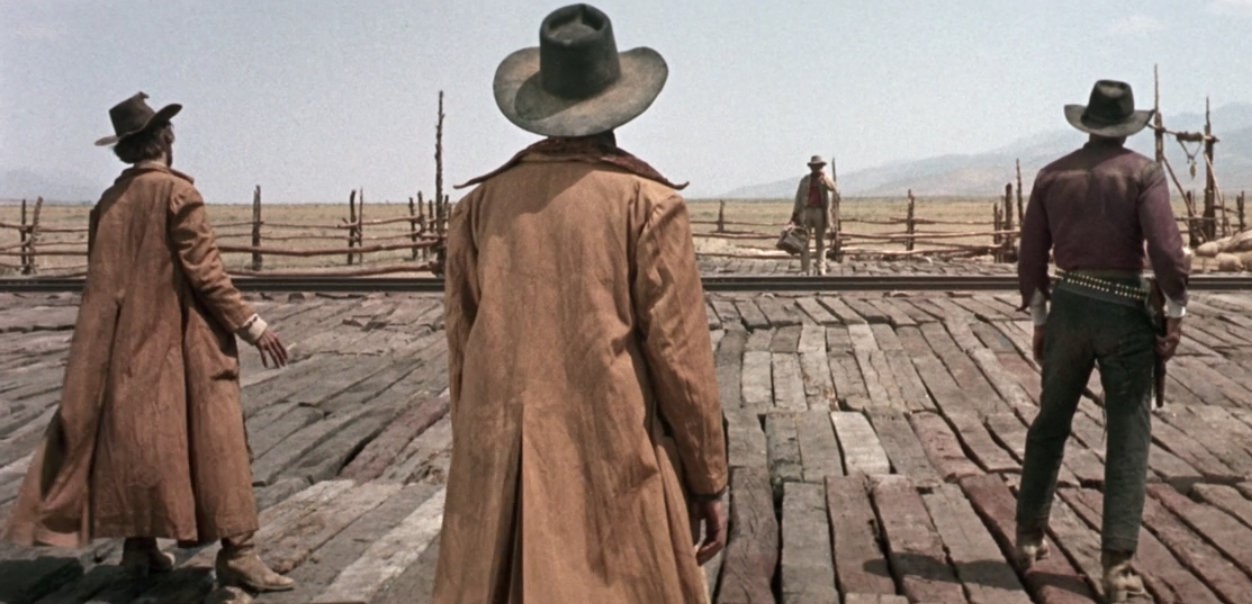
This week on “Picture Perfect,” hit the sundrenched plains and wide-open spaces, with music from outsized movies set in the American West.
We’ll be living large with selections from “The Big Country” (Jerome Moross), “The Big Sky” (Dimitri Tiomkin), “Big Jake” (Elmer Bernstein), and “Silverado” (Bruce Broughton).
It’s all BIG, on “Picture Perfect,” this Saturday evening at 6:00 EDT, on WWFM – The Classical Network and wwfm.org.
Big thanks to everyone who contributed to our recent end-of-the-fiscal-year fundraiser. I am happy to report that we exceeded our goal of $75,000. Here’s looking forward to another year of great music on the radio. Thank you, listener-members, for stepping up and aiming high!
On Friday, May 7, the classical music world celebrated the dual birthdays of Johannes Brahms and Peter Ilych Tchaikovsky. But for those who care about film music, there’s May 10 – the anniversary of the births of Max Steiner and Dimitri Tiomkin.
Steiner (1888-1971), the literal godson of Richard Strauss, was instrumental in transplanting the sound of fin de siècle Vienna to the realm of cinematic dreams. He composed over 300 film scores for RKO and Warner Brothers, earning 24 Academy Award nominations and winning three – for “The Informer,” “Now, Voyager” and “Since You Went Away” – though he is unquestionably better remembered today for his work on “King Kong,” “Gone with the Wind” and “Casablanca.”
Tiomkin (1894-1979), a pupil of Alexander Glazunov, was born in Ukraine. He settled in the United States, where he composed music for films in all genres, though in the 1950s he enjoyed particular success writing for Westerns, including the Academy Award-winning “High Noon.” When asked why this would be the case, that a composer born halfway around the world would have such a command of this distinctly American idiom, Tiomkin replied, “A steppe is a steppe is a steppe.”
Tiomkin was honored with four Academy Awards – three for Best Original Score (for “High Noon,” “The High and the Mighty” and “The Old Man and the Sea”) and one for Best Original Song (“The Ballad of High Noon”).
Here’s a transcript of his acceptance speech, delivered after being handed the Oscar for “The High and the Mighty” in 1955:
“Lady and gentlemen, because I working in this town for twenty-five years, I like to make some kind of appreciation to very important factor what make me successful to lots of my colleagues in this town. I’d like to thank Johannes Brahms, Johann Strauss, Richard Strauss, Beethoven, Mozart, George Gershwin, Jerome Kern, Wagner, Tchaikovsky, Rimsky-Korsakov. Thank you.”
You can watch it here:
Though Steiner and Tiomkin were both very well-connected in the wider musical world, comparatively speaking, neither left very much in the way of classical concert music. In 2019, Intrada Records put out a diverting 2-CD set of Tiomkin’s brightly-scored ballet music, dances composed in Paris for his wife, Albertina Rasch, in 1927-1932, prior to his work in film. It’s good mid-morning music, but would also be wonderful for afternoon drive-time – if only I had a live air shift! You can sample some of it by following the link. Already detectable is Tiomkin’s trademark snarling brass, in a number titled “Mars” (the second track in this YouTube playlist):
In 2020, Oxford University Press published a book by Steven C. Smith, “Music by Max Steiner: The Epic Life of Hollywood’s Most Influential Composer.” Read my impressions of this authoritative biography, unbelievably the first full-length treatment of Steiner’s life and achievements, here. Then get yourself a copy!
Also last year, while I was twiddling my thumbs, waiting to get back to work, I put together a Steiner-Tiomkin crossword puzzle. The clues not only allude to specifics of their respective lives and careers, but they should also be of ample interest, I hope, to classic movie buffs. So even if you’re convinced you don’t know a lot about music, do check it out if, like me, you happen to watch a lot of movies from the ‘30s, ‘40s, and ‘50s.
To fill out the puzzle, follow the link and select “solve online” at the bottom of the page. You’ll then be able to type directly into the squares. Once you feel you’ve exhausted the puzzle, you’ll find the solutions by clicking on “Answer Key PDF.”
This week on “Picture Perfect,” rise above your earthly concerns and keep looking up, with an hour of music about flight and aviation.
We’ll begin with selections from “The High and the Mighty” (1954). John Wayne, Claire Trevor, Laraine Day, and Robert Stack star in this high-altitude drama about a harrowing flight from Honolulu to San Francisco. Dimitri Tiomkin supplied the Academy Award-winning music for William Wellman’s thriller, a forerunner to the airborne disaster craze of the 1970s.
James Stewart may have been a little long-in-the-tooth for “The Spirit of St. Louis” (1957). Stewart was 22 years older than his subject, Charles Lindbergh, at the time of his historic flight across the Atlantic. But Billy Wilder’s film was a passion project for the actor, who, as a USAAF pilot during World War II, attained the rank of Brigadier General. Franz Waxman composed the ageless score.
“Airport” (1970), after the best-selling novel of Arthur Hailey, kicked-off the most enduring of all-star disaster franchises. Burt Lancaster heads the cast, and Helen Hayes won her second Oscar as a spirited stowaway. It also marked the first appearance in the series by George Kennedy, who rose through the ranks during all the subsequent “Airport” films. The score was the last by Alfred Newman, rounding off an illustrious career. Newman supplied original music for over 200 films – on TOP of his duties as music director at 20th Century Fox, a position he held for 20 years. In all, Newman earned seven Academy Awards.
Finally, we’ll turn to “The Blue Max” (1966). George Peppard, James Mason, and Ursula Andress star in this movie about a German pilot’s quest for glory, as he strives for the titular reward – a decoration for valor – during the First World War. In order to attain it, he must shoot down 20 aircraft. Obviously, in a film heavy with dogfighting, there is much aerial photography and stunt piloting. The score, a comparatively early one for Jerry Goldsmith, has always been a fan favorite.
Get a bird’s-eye view of flight and aviation, this week, on “Picture Perfect,” music for the movies. Classic film music is the wind beneath our wings, this Saturday evening at 6:00 EST, on WWFM – The Classical Network and wwfm.org.