Tag: Dimitri Tiomkin

  • Golden Age Film Score Titans Steiner and Tiomkin

    Golden Age Film Score Titans Steiner and Tiomkin

    There are only so many days in a year, so it should come as little surprise that two giants in a particular field would share a birthday anniversary. Hence, we have Heifetz and Kreisler on February 2, Rachmaninoff and Busoni on April 1, and of course Brahms and Tchaikovsky on May 7. May 10 marks the birthdays of twinned titans of the Golden Age of film-scoring, Max Steiner and Dimitri Tiomkin.

    Steiner (1888-1971), the literal godson of Richard Strauss, helped transplant the sound of fin de siècle Vienna to the realm of cinematic dreams. He composed over 300 film scores for RKO and Warner Brothers, earning 24 Academy Award nominations and winning three – for “The Informer,” “Now, Voyager” and “Since You Went Away” – though he is unquestionably better remembered today for his work on “King Kong,” “Gone with the Wind” and “Casablanca.”

    Tiomkin (1894-1979), a pupil of Alexander Glazunov, was born in Ukraine. He settled in the United States, where he composed music for films in all genres, though in the 1950s he enjoyed particular success writing for Westerns, including the Academy Award-winning “High Noon.” When asked why this would be the case, that a composer born half a world away would have such a command of this distinctly American idiom, Tiomkin replied, “A steppe is a steppe is a steppe.”

    Tiomkin was honored with four Academy Awards – three for Best Original Score (for “High Noon,” “The High and the Mighty” and “The Old Man and the Sea”) and one for Best Original Song (“The Ballad of High Noon”).

    Here’s a transcript of his acceptance speech, when winning the Oscar for “The High and the Mighty” in 1955:

    “Lady and gentlemen, because I working in this town for twenty-five years, I like to make some kind of appreciation to very important factor what make me successful to lots of my colleagues in this town. I’d like to thank Johannes Brahms, Johann Strauss, Richard Strauss, Beethoven, Mozart, George Gershwin, Jerome Kern, Wagner, Tchaikovsky, Rimsky-Korsakov. Thank you.”

    You can watch here:

    Steiner’s “Now, Voyager”:

    Tiomkin’s “Land of the Pharoahs”:


    PHOTOS: Steiner conducts (top); Tiomkin composes

  • Movie Music for New Beginnings

    Movie Music for New Beginnings

    This week on “Picture Perfect,” we greet the new year with music from movies about renewal, starting over, new beginnings, and second chances – including “The Natural” (by Randy Newman), “The Best Years of Our Lives” (Hugo Friedhofer), “The Accidental Tourist” (John Williams), and “It’s a Wonderful Life” (Dimitri Tiomkin).

    We look to the future with hope and fortitude, this Friday evening at 6:00 EST, on WWFM – The Classical Network and wwfm.org.
  • Classical Music Birthdays Princeton Composers on WWFM

    Classical Music Birthdays Princeton Composers on WWFM

    Our chests swell with local pride this afternoon, as we hear music by Princeton composers Steven Mackey, Paul Lansky, and Milton Babbitt (on his birthday). Then things turn all cinematic, as we sample from some classic film scores by two titans of Hollywood’s Golden Age, Max Steiner and Dimitri Tiomkin, also born on May 10. Maxim Shostakovich, whose birthday it is, will conduct music by his father, and we’ll enjoy music by Baroque violinist Jean-Marie Leclair, born on this date in 1697.

    That’s a lot of birthday cards to fill out, but we’ll manage, from 4 to 7 p.m. EDT, on WWFM – The Classical Network and wwfm.org.
  • Trains in Movies Music from Hitchcock and More

    Trains in Movies Music from Hitchcock and More

    Traditionally, trains have been very good for drama. They are symbols of departures and arrivals. They are conveyors of prisoners and vehicles of escape. They are objects of romance and objects to “hobo around” on. They are the harbingers of civilization, and they are transports be robbed. You can fight on top of them. You can make out with Eva Marie Saint, or you can protect Marie Windsor so that she can testify against the mob. You can shuffle off to Buffalo.

    For decades, trains have provided good escapist fun at the movies. This week on “Picture Perfect,” we’ve got an hour of music from four memorable films in which trains play an important role.

    In “Strangers on a Train” (1951), arguably Alfred Hitchcock’s most underrated film of the 1950s, Farley Granger plays a tennis pro who unwittingly becomes involved in a double-murder plot through a chance encounter on a passenger train with a psychopath named Bruno (probably Robert Walker’s finest performance). The music is by Dimitri Tiomkin, who scored four films for Hitch – including “Shadow of a Doubt,” “I Confess,” and “Dial M for Murder.”

    Burt Lancaster stars in a film titled, simply, “The Train” (1964), as a reluctant railroad inspector who is persuaded to join the French Underground’s efforts to delay the transport of masterpieces looted from the museums of Paris by the Nazis, since Allied liberation of France is imminent. Paul Scofield plays the art-loving German officer determined to move the art at all costs. Real trains were destroyed in the making of the film, real dynamite was used, and Lancaster, as was often the case, did all his own stunts. The score is by Maurice Jarre.

    “Murder on the Orient Express” (1974) is based on one of the best-known Agatha Christie vehicles conceived for her recurring character, the celebrated detective Hercule Poirot. Albert Finney plays Poirot most memorably in this, the first and best of the all-star Christie thrillers, set on a long-distance passenger train connecting Paris to Istanbul. He’s joined by Lauren Bacall, Martin Balsam, Ingrid Bergman, Sean Connery, John Gielgud, Anthony Perkins, Richard Widmark, and Michael York. The unforgettable score is by Richard Rodney Bennett.

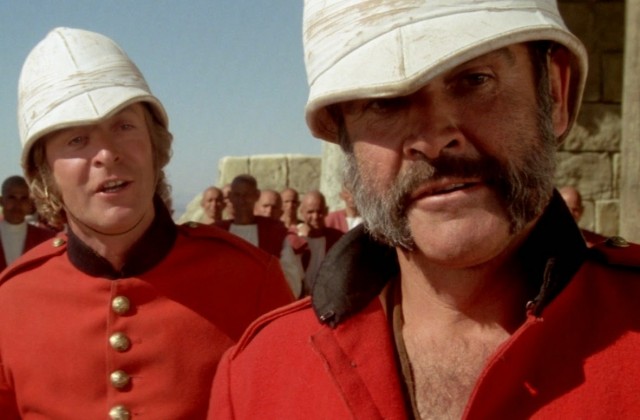
    Finally, we turn to the lighthearted caper film “The Great Train Robbery” (1979), starring Sean Connery, Donald Sutherland, and Leslie-Anne Down. Michael Crichton wrote the screenplay, after his own novel, which in turn was based on an actual historical incident – an 1855 heist, in which an unbelievable amount of gold disappeared from a moving train. Crichton also directed the film. The music is by Jerry Goldsmith.

    We’ll be taking the train today, on “Picture Perfect,” this Friday evening at 6:00 EST, on WWFM – The Classical Network.


    Since today happens to be Jerry Goldsmith’s birthday, join me a little early, as I’ll be cueing up a medley of some of his greatest film themes, to help get you in the mood, starting around 5:30.

  • Steiner and Tiomkin Hollywood Giants

    Steiner and Tiomkin Hollywood Giants

    There are only so many days in a year, so it shouldn’t come as a surprise that two giants in a particular field would share a birthday anniversary. Hence, we have Rachmaninoff and Busoni on April 1, and Heifetz and Kreisler on February 2. May 10 marks the birthdays of Max Steiner and Dimitri Tiomkin.

    Steiner (1888-1971), the literal godson of Richard Strauss, helped transplant the sound of fin de siècle Vienna to the realm of cinematic dreams. He composed over 300 film scores for RKO and Warner Brothers, earning 24 Academy Award nominations and winning three – for “The Informer,” “Now, Voyager” and “Since You Went Away” – though he is unquestionably better remembered today for his work on “King Kong,” “Gone with the Wind” and “Casablanca.”

    Tiomkin (1894-1979), a pupil of Alexander Glazunov, was born in Ukraine. He settled in the United States, where he composed music for films in all genres, though in the 1950s he enjoyed particular success writing for Westerns, including the Academy Award-winning “High Noon.” When asked why this would be the case, that a composer born half a world away would have such a command of this distinctly American idiom, Tiomkin replied, “A steppe is a steppe is a steppe.”

    Tiomkin was honored with four Academy Awards – three for Best Original Score (for “High Noon,” “The High and the Mighty” and “The Old Man and the Sea”) and one for Best Original Song (“The Ballad of High Noon”).

    Here’s a transcript of his reception speech, when winning the Oscar for “The High and the Mighty” in 1955:

    “Lady and gentlemen, because I working in this town for twenty-five years, I like to make some kind of appreciation to very important factor what make me successful to lots of my colleagues in this town. I’d like to thank Johannes Brahms, Johann Strauss, Richard Strauss, Beethoven, Mozart, George Gershwin, Jerome Kern, Wagner, Tchaikovsky, Rimsky-Korsakov. Thank you.”

    You can watch here:

    Steiner’s “Now, Voyager”:

    Tiomkin’s “Land of the Pharoahs”:

    If you have an interest in Hollywood composers and what they achieved on screen and in the concert hall, you might want to set aside your Thursday morning this week to join me on WPRB 103.3 FM and at wprb.com. I’ll tell you a little more about it tomorrow.


    PHOTOS: Steiner conducts (top); Tiomkin composes

Tag Cloud

Aaron Copland (92) Beethoven (95) Composer (114) Film Music (119) Film Score (143) Film Scores (255) Halloween (94) John Williams (185) KWAX (229) Leonard Bernstein (99) Marlboro Music Festival (125) Movie Music (134) Opera (198) Philadelphia Orchestra (87) Picture Perfect (174) Princeton Symphony Orchestra (106) Radio (87) Ralph Vaughan Williams (85) Ross Amico (244) Roy's Tie-Dye Sci-Fi Corner (290) The Classical Network (101) The Lost Chord (268) Vaughan Williams (102) WPRB (396) WWFM (881)

DON’T MISS A BEAT

Receive a weekly digest every Sunday at noon by signing up here


RECENT POSTS