Tag: Dvořák

  • Dvořák’s Spectre’s Bride Too Long? Try This!

    Dvořák’s Spectre’s Bride Too Long? Try This!

    If, like me, you think Dvořák’s “The Spectre’s Bride” is too long – with not enough puppets! – then this should be the very thing for you.

    At 43, Dvořák was at the peak of his creative powers (he had only just completed the Symphony No. 7) when he composed his dramatic cantata, and its premiere, in London, in 1885, was an astonishing success. In fact, Dvořák claimed it was the greatest success he had enjoyed up to that time. The Victorians always were rather mad for their oratorios.

    I have listened to “The Spectre’s Bride” a number of times on recordings and have found it to be only fitfully interesting. This is especially surprising to me, since the story is so lurid it should grip my inner eight year-old and not let go. The tale may be a familiar one from many European folk tales: a maiden is abducted by the ghost of her fiancé, who gallops off with her, through the air and across a forbidding landscape, with the aim of reaching the phantom’s “castle” – in reality, a graveyard. At the work’s macabre climax, the maiden wrests free and bolts herself inside a cottage, spirits howling at the door. Inside, a corpse, prepared for burial, stirs to do their bidding.

    Admittedly, this is an effective setpiece, but until then, I must say, it’s not just the graves that are yawning. And I offer this as someone who generally admires Dvořák. No doubt there are those who have sung the work who could be of a different opinion, and perhaps hearing it in concert is a more compelling experience than listening to it at home.

    Dvořák’s setting is based on a poem by Karel Jaromir Erben. Erben, who lived from 1811 to 1870, was an important figure in the development of a Czech national identity. He served as a kind of Brothers Grimm to the Czech people, synthesizing works based on traditional and folkloric themes, into gruesome ballads full of witches, goblins and ghosts. So far, so good.

    In my opinion, however, Dvořák was much more inspired when writing his other, more colorful, Erben-influenced pieces, including the comparatively compact symphonic poems “The Water Goblin,” “The Noon Witch,” “The Golden Spinning Wheel,” and “The Wild Dove,” and the enchantingly melancholy, ceaselessly melodic opera “Rusalka.”

    Therefore it is with great relief that I stumble across this lean, 29-minute distillation. From its fragmentary nature, I assume that it was designed to be projected at certain key moments during live performance. Maybe that’s what a guy like me needs. Visual aids. But I don’t think so. I just think it’s not that interesting a piece, to demand an investment of 80 minutes. It seems like a miscalculation by a less experienced composer. And I offer this as someone who is generally captivated by Dvořák’s operas, or at least the ones I have seen and own. Of those, “Rusalka” must be near the top of my list of favorites, by any composer.

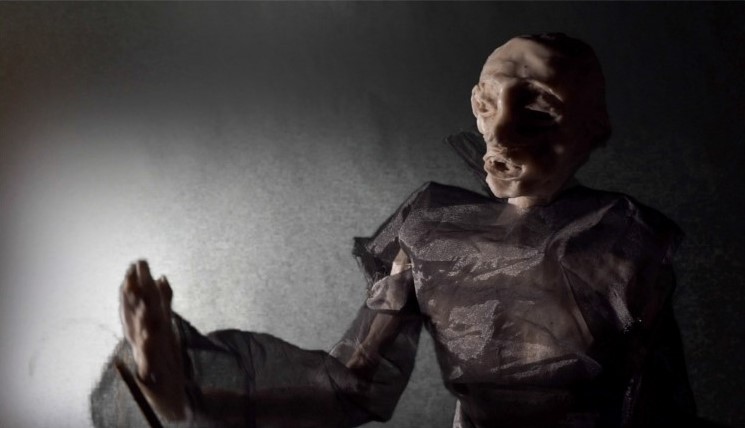
    The puppets are designed by Francesca Borgatta, and they’re all crafted from “recycled objects and materials taken from nature.” Good. If you’re going have them dragged into the gaping maw of Hell, it’s best that they’re biodegradable.

    You can learn more about Borgatta at her website, puppetfigures.com.

  • Dvořák’s Symphony No. 8: A Celebration of Life

    Dvořák’s Symphony No. 8: A Celebration of Life

    This is one of those works that just makes you feel like it’s great to be alive.

    Antonin Dvořák composed his Symphony No. 8 over two months, from the end of August to the beginning of November, in happy seclusion at his country home of Vysoká, in 1889. The symphony is his most bucolic, cheery, and lyrical, steeped in the Bohemian folk song he adored.

    Dvořák himself conducted its first performance, at the National Theater in Prague, in 1890. He then took it to Frankfurt and Cambridge, where he was awarded an honorary doctorate. The symphony became a great favorite in England. In fact, it was published there, by the London firm of Novello, after the usual disagreements with Simrock, Dvořák’s regular publisher. Simrock preferred shorter, snappier works and insisted on marketing them in German. Dvořák, a proud Bohemian, found this increasingly annoying. Not incidentally, Simrock had also low-balled him on the price (offering one thousand marks, as opposed to the three thousand marks he had paid for the Symphony No. 7).

    In 1893, Dvořák was in America, as director of the National Conservatory of Music in New York, when he brought his new symphony to the World’s Columbian Exposition. At the time, the symphony was promoted as his Fourth. It was only in the 1950s, with the publication of Dvořák’s earlier works in the form, that the symphonies were renumbered, which is why there are now nine Dvořák symphonies, as opposed to five. At the world’s fair, Dvořák conducted his Eighth with an expanded Chicago Symphony Orchestra. According to the Chicago Tribune, the performance was met with enthusiasm, marked by “tremendous outbursts of applause.”

    The composer claimed that in its writing the melodies simply poured out of him. Here’s my favorite recording of the piece, made with the Columbia Symphony Orchestra, assembled specifically for the great Bruno Walter.

    Všechno nejlepší k narozeninám! Happy birthday, Dvořák!


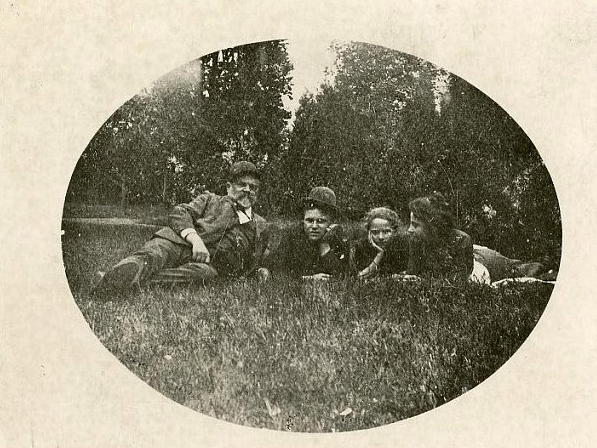
    PHOTO: Composer and family, relaxing at Vysoká

  • Dvořák Symphony No 8 Princeton Symphony Orchestra

    Dvořák Symphony No 8 Princeton Symphony Orchestra

    Chase away the rainy-day blues with Dvořák’s sunniest symphony!

    The Princeton Symphony Orchestra continues its “At Home with the PSO” series, as music director Rossen Milanov introduces the Symphony No. 8. Escape into a world of birdsong, uplifting fanfares, and continuous melody, influenced by the Czech countryside. The live performance took place at Richardson Auditorium on March 24, 2019.

    “At Home with the PSO” is a gateway to original online content – performance webcasts, musicians’ recipes, photo albums, and more – with fresh material being introduced weekly.

    While you’re over there, at the PSO website, check out the new Virtual Gallery. Explore artwork and creative writing by student participants of the PSO Bravo program by navigating a 3-D space. Click on the speakers located throughout the gallery to hear Saad Haddad’s Clarinet Concerto, the PSO co-commission that inspired the works adorning the virtual walls.

    Then search under “Cooking with the PSO” to learn how to bake Chunky Chocolate Drops with concertmaster Basia Danilow. Rossen Milanov’s Maple Soy Sauce Glazed Tofu is archived at the bottom of the page. A new recipe on the way on Wednesday!

    To hear Dvořák’s Symphony No. 8, look online at princetonsymphony.org, search under “At Home with the PSO,” and click on “Play it Forward.”


    PHOTO: Dvořák and family, making the most of a lovely day

  • Thanksgiving Classical Music WWFM

    Thanksgiving Classical Music WWFM

    It is my hope that you’re just about off the roads by the time I’m on the air this afternoon. But in the event that you are stuck in traffic, there’s no reason you should endure it in silence. Drown out your invective, or that of your loved ones, with three hours of musical reminders of why we should all give thanks.

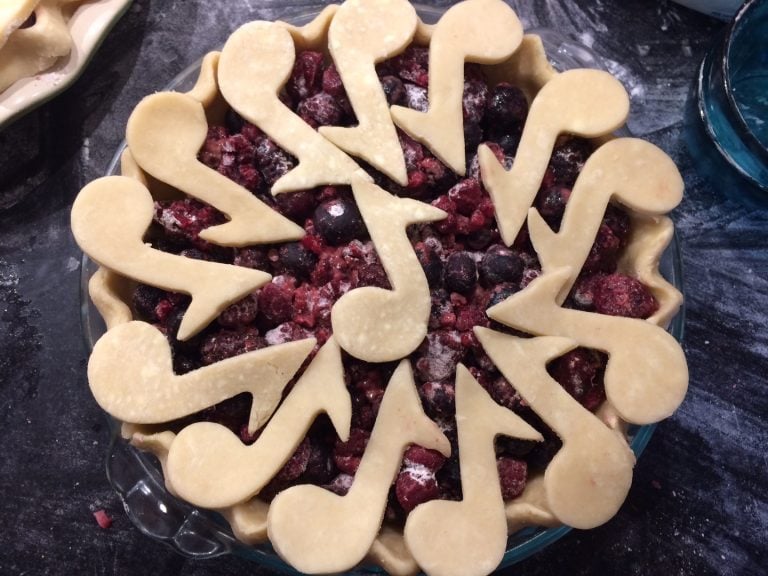
    If you’re lucky enough already to be home, perhaps you’re trying to get a leg up on tomorrow’s meal – or a drumstick, as the case may be. I’ve got plenty of music for you, too, to set the mood, while you’re in the process of setting the table. If the music makes your preparations that much more pleasurable, you can always send me a piece of pie.

    Either way, I am thankful to have you in the audience. There is no radio without somebody there to appreciate it. If you’ve supported The Classical Network recently with a financial contribution, thank you. If something I’ve played has touched you or caught your interest, thank you for that, as well. It’s important to me that these composers and these recordings endure.

    At 6:00, it’s another “Music from Marlboro.” I’ll supply a little cranberry sauce, with Antonin Dvořák’s “American” String Quintet (not to be confused with his more famous “American” QUARtet), along with some potatoes-and-gravy Vincent Persichetti and Elliot Carter.

    I hope you’ll join me for a late afternoon/early evening full of harvest, hymns and pilgrims, from 4 to 7 p.m. EST. It’s my way of wishing you a happy Thanksgiving, on WWFM – The Classical Network and wwfm.org.

  • Thanksgiving Classical Music: Dvořák & More

    Thanksgiving Classical Music: Dvořák & More

    Over the river and through the wood, to grandmother’s house we go…

    Who are we kidding? We’re not going anywhere.

    While you’re whiling away the hours in Thanksgiving traffic, I hope you’ll join me on The Classical Network, on this busiest travel day of the year, as I crown a late afternoon of American music with an hour calculated to put you in a thankful frame of mind.

    Sure, in the amount of time it takes you to get where you’re going, Antonin Dvořák very likely was able to cross the Atlantic, to assume the directorship of the newly-minted National Conservatory of Music in New York. Some of the composer’s most beloved works had their genesis in his stay in the United States – the “New World” Symphony and the Cello Concerto in B minor, among them.

    Of his chamber music, I imagine none of it is more frequently encountered than his “American” String Quartet in F major, Op. 96. Written during the summer of 1893, while the composer was on holiday in the Czech community of Spillville, Iowa, the work is beautiful and ingratiating to an extraordinary degree. What’s puzzling is why the composer’s equally beautiful and ingratiating String Quintet in E-flat major, Op. 97, composed in Spillville immediately after – and also sometimes identified as the “American” – has not achieved the same degree of popularity.

    We’ll get to enjoy it this evening, in a performance featuring a young Joshua Bell, who joins violinist Felix Galimir, violists Ulrich Eichenauer and Judith Busbridge, and cellist Wendy Sutter, at the 1989 Marlboro Music Festival.

    Dvořák’s underrated quintet will be flanked by two works by American composers.

    We’ll begin with Vincent Persichetti, who was born in Philadelphia in 1915. (He died there in 1987.) Although Persichetti seems to have had more of a lasting influence as a teacher – having molded legions of budding composers through his work at Combs College of Music, the Philadelphia Conservatory, and the Juilliard School – his own compositions are invariably well-crafted and certainly well worth listening to.

    Persichetti composed 15 serenades for a variety of instrumental combinations. We’ll hear the Serenade No. 10, from 1961. It was performed at Marlboro, by flutist Julia Bogorad and harpist Rita Tursi, in 1976.

    The hour will conclude with an 8-minute Woodwind Quintet by the dread Elliot Carter. Carter is the kind of composer who, for the six decades or so that comprised his artistic maturity, had a tendency to get lost in his own head. (He lived to 103 and wrote right up to the very end.) Not to worry: in 1948, he still had one foot in Audience Land.

    We’ll hear Carter’s quintet performed in 2006 by flutist Valérie Tessa Chermiset, oboist Winnie Cheng-Wen Lai, clarinetist Charles Neidich, bassoonist Martin Garcia, and hornist Wei-Ping Chou.

    Classic Ross Amico will be your co-pilot, on the next “Music from Marlboro.” Misery loves company, this Wednesday evening at 6:00 EST, on WWFM – The Classical Network and wwfm.org.

    Happy Thanksgiving, and safe travels!

    Marlboro School of Music and Festival: Official Page

Tag Cloud

Aaron Copland (92) Beethoven (95) Composer (114) Film Music (123) Film Score (143) Film Scores (255) Halloween (94) John Williams (187) KWAX (229) Leonard Bernstein (101) Marlboro Music Festival (125) Movie Music (138) Opera (202) Philadelphia Orchestra (89) Picture Perfect (174) Princeton Symphony Orchestra (106) Radio (87) Ralph Vaughan Williams (85) Ross Amico (244) Roy's Tie-Dye Sci-Fi Corner (290) The Classical Network (101) The Lost Chord (268) Vaughan Williams (103) WPRB (396) WWFM (881)

DON’T MISS A BEAT

Receive a weekly digest every Sunday at noon by signing up here


RECENT POSTS