Tag: Dvořák

  • Smetana’s Syphilis a Composer’s Life in Music

    Smetana’s Syphilis a Composer’s Life in Music

    Nothing says May Day like syphilis. Fa la la la la la la, fa la la la la la la!

    The disease was something of an occupational hazard for the great composers. This week on “Music from Marlboro, we’ll examine the sad case of Bohemian master Bedřich Smetana.

    Smetana had already lost his hearing at the time he embarked on his String Quartet No. 1 in E minor, in 1876, at the age of 52. Understandably, his malady would have been much on his mind, and the work bears considerable autobiographical influence – so much so, that he subtitled it “From My Life.”

    Allegedly, the first movement is representative of the composer’s romantic ideals in life and music; the second, a recollection of the happiness of youth; and the third, a paean to love.

    But it is the fourth movement that contains the most dramatic stroke, as the first violin shatters a mood of artistic fulfillment through the intrusion of a high, sustained harmonic E, suggestive of a ringing in the composer’s ears he experienced prior to going deaf. Syphilis would claim Smetana’s sanity and eventually his life, in 1884.

    We’ll hear a performance of the quartet, from the 2007 Marlboro Music Festival, featuring violinists Hye-Jin Kim and Karina Canellakis, violist David Kim, and cellist David Soyer.

    Antonin Dvořák played the viola in the private premiere of the work in 1878. We’ll open the hour with Dvořák’s own, unpretentious “Serenade for Winds,” which was given its first performance the very same year, when the composer was 37 years-old.

    The serenade is written in the tried-and-true “Slavonic style” that established Dvořák’s fame. Its instrumentation and emphasis on melody recall occasional and ceremonial serenades of the 18th century.

    We’ll enjoy it in a recording made in 1957, with oboists Alfred Genovese and Earl Shuster, clarinetists Harold Wright and Richard Lesser, bassoonists Anthony Cecchia and Roland Small, hornists Myron Bloom, Richard Mackey, and Christopher Earnest, cellists Yuan Tung and Dorothy Reichenberger, and double bassist Raymond Benner, all under the direction of Louis Moyse.

    Marlboro musicians balance their Czechs, on the next “Music from Marlboro,” this Wednesday evening at 6:00 EDT, on WWFM – The Classical Network and wwfm.org.

    Marlboro School of Music and Festival: Official Page


    NOTE: Following today’s broadcast, I hope you’ll stick around for tonight’s Exploring Music with Bill McGlaughlin (at 7:00), as Bill continues his week-long celebration of Marlboro Music with performances of works by Jacques Ibert, Shulamit Ran, Mozart, and Beethoven.


    PHOTOS: Czech out Dvořák (left) and Smetana
  • Alexander Quartet’s NYC Concert: Mozart Penderecki Dvořák

    Alexander Quartet’s NYC Concert: Mozart Penderecki Dvořák

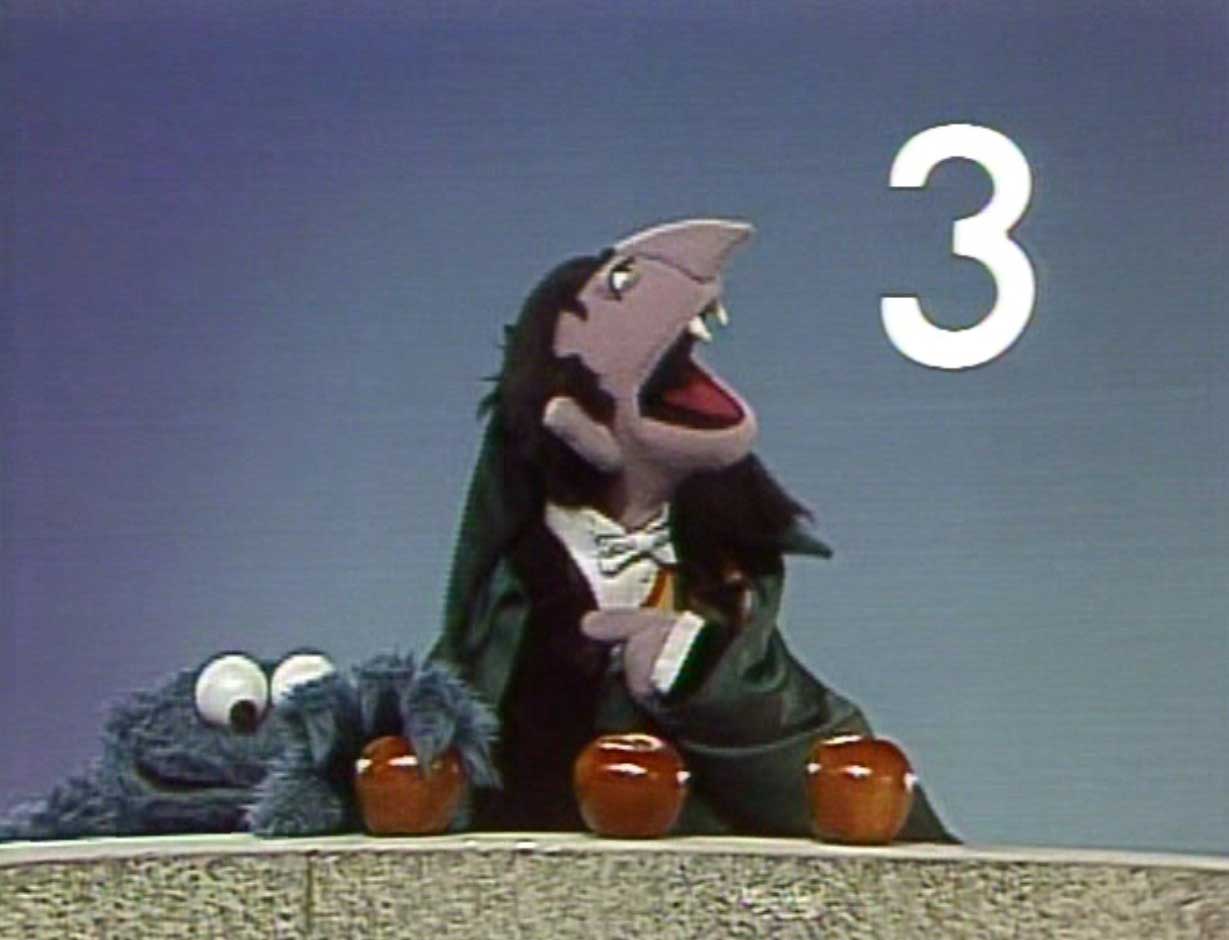
    There must be something in human nature that pleases us in the idea that good things come in threes.

    Even so, this afternoon on The Classical Network, I’ll be interviewing violinist Frederick Lifsitz, one of four musicians that comprise the very fine Alexander String Quartet.

    The Alexander Quartet will appear on Thursday at 8 p.m. at the Baruch Performing Arts Center in New York City. On the program will be works of Mozart, Penderecki, and Dvořák. The concert will cap a day of lectures and panel discussions on the topic of Poland and the Jewish people, to coincide with the observation of Yom HaShoah, Holocaust Remembrance Day in Israel. The Alexander’s recital will include Penderecki’s poignant String Quartet No. 3 “Leaves of an Unwritten Diary.”

    The Alexander Quartet has been Baruch’s quartet-in-residence since 1986. My interview with Lifsitz will take place at 5:00 this afternoon.

    But if “three” is indeed your thing, then there will be plenty else to satisfy your organizational impulses, including the observations of the birthdays today of three notable conductors – Sir Thomas Beecham, Sir Malcolm Sargent, and Zubin Mehta – and three American composers – Wallingford Riegger, Harold Shapero, and Duke Ellington.

    I hope you’ll join me today from 4 to 7 p.m. EDT (that’s THREE hours), with the interview at 5. We’ll take the time to count our musical blessings, on WWFM – The Classical Network and wwfm.org.

  • Marlboro Music’s Czech Gems & Dvořák Preview

    Marlboro Music’s Czech Gems & Dvořák Preview

    Each summer, the Marlboro Music School and Festival becomes a destination for chamber music performers and enthusiasts. But periodically, throughout the year, Marlboro also takes it show on the road.

    The next Marlboro tour will take place from March 17-24, with stops in Greenwich, CT, New York City (at Carnegie Hall’s Weill Recital Hall), Philadelphia (at the Kimmel Center for the Performing Arts’ Perleman Theater), Washington, DC, and Boston.

    Capping a program of music by Franz Joseph Haydn, Henry Purcell, and Benjamin Britten will be Antonin Dvořák’s String Quintet in A major, Op. 48. On this week’s “Music from Marlboro,” I’ll offer a preview of this attractive work, in the context of an all-Czech hour.

    Dvořák’s sextet was composed largely in May of 1878, making it contemporaneous with the “Slavonic Dances,” Op. 46. It’s hardly surprising, then, that the work betrays a similarly nationalist character. The sextet’s two inner movements, in fact, bear overtly Czech names: dumka and furiant.

    In music, dumka (literally, “thought”) signifies a kind of melancholy introspection. A furiant is a rapid and fiery Czech dance.

    The sextet holds an important place in Dvořák’s development. Thanks to a government subsidy, Dvořák was able to concentrate solely on composition, and he was determined to confirm his worth. The sextet proved to be the first of Dvořák’s works to receive its premiere outside of Bohemia. It was given its first public performance in Berlin, headed up by the famed violinist Joseph Joachim.

    We’ll hear it performed at the Marlboro Music Festival in 2017 by violinists Stephen Tavani and Scott St. John, violists Rosalind Ventris and Rebecca Albers, and cellists Alice Yoo and Judith Serkin. Serkin, the daughter of Marlboro co-founder Rudolf Serkin, will also appear on the Marlboro tour.

    By way of introduction, we’ll have a hell of bonus in the form of Leoš Janáček’s “Concertino,” a chamber concerto of sorts, composed in 1925. Amusingly, the composer added descriptive notes to the program of the piece, comparing the theme of the first movement to a “grumpy hedgehog,” the clarinet in the second movement to a “fidgety squirrel,” the atmosphere of the third movement to “a night owl and other night animals,” and the character of the fourth movement to a “scene from a fairy tale, where everybody is arguing.” It’s worth noting, perhaps, that Janáček had written his opera “The Cunning Little Vixen” between 1921 and 1923.

    We’ll hear a 1982 performance of the “Concertino,” with violinists Elena Barere and Mei-Chen Liao, violinist Steven Tenenbom, clarinetists Cheryl Hill (E-flat) and Steven Jackson (B-flat), bassoonist Stefanie Przybylska, and hornist Robin Graham.

    The pianist is none other than Rudolf Firkušný. Firkušný, born in Moravia in 1912, was a living link to the composer. He also studied with Josef Suk, the pupil and son-in-law of Dvořák, and with Alfred Cortot and Artur Schnabel. That’s quite a pedigree!

    You’re not going to want to miss this one. Czech it out, on the next “Music from Marlboro,” this Wednesday evening at 6:00 EDT, on WWFM – The Classical Network and wwfm.org.

    To learn more about the Marlboro Music School and Festival – its history, its tours, and its summer concerts – visit marlboromusic.org.

    Marlboro School of Music and Festival: Official Page


    PHOTOS (clockwise from left): Dvořák, Janáček, Firkušný, hedgehog

  • Dvořák’s New World Symphony Goes Home for Yom Kippur

    Dvořák’s New World Symphony Goes Home for Yom Kippur

    Everyone knows the “New World” Symphony, right? You know, THE musical blueprint laid out by Antonin Dvořák, through which, as an outside observer, while visiting director of the National Conservatory in New York, he hoped to reveal to American artists the raw material on which could be built a uniquely national identity. In particular, Dvořák found fascination in African-American spirituals and Native American dances.

    Except on today’s Noontime Concert on The Classical Network, the “New World” is goin’ home. In an interesting feat of cross-fertilization, the Alba Consort will weave iconic themes from Dvořák’s most famous symphony into a program of early Sephardic, Iberian, French, Italian, Cypriot, Armenian, and North African music.

    The imaginative and revelatory venture is Alba’s response to an invitation from the New York Philharmonic as part of the orchestra’s “New World Initiative,” which encouraged fresh perspectives on the “New World” Symphony. The result is like the discovery of a lost bridge from the Old Country to a brave New World.

    The concert was made possible in part by Gotham Early Music Scene, or GEMS, one of its free lunchtime offerings presented on Thursdays at 1:15 p.m, at St. Bartholomew’s Church, 50th Street and Park Avenue, in Midtown Manhattan.

    GEMS is a non-profit corporation that supports and promotes artists and organizations in New York City devoted to Early Music – music of the Middle Ages, Renaissance, Baroque, and early Classical periods. For more information on its upcoming midday concerts and other GEMS’ events, look online at gemsny.org.

    Then stick around for more music reflective of a journey from the Old World to the New – with works by Dvořák and his colleague at the National Conservatory, Victor Herbert – and some musical presentiments of Yom Kippur.

    The holiest day on the Jewish calendar begins at sunset. Get ready to mark the occasion with, among others, Enest Bloch’s moving “Israel Symphony,” Joseph Joachim’s “Hebrew Melodies,” David Stock’s “Yizkor,” and Emil Nikolaus von Reznicek’s set of unpredictable variations on “Kol Nidre.”

    We’ll sail the ocean blue and set the tone for atonement, between 12 and 4 p.m. EDT, on WWFM – The Classical Network and wwfm.org.


    “Yom Kippur” (1969), by Chaim Gross

  • Dvořák & Janáček: Czech Masterworks from Marlboro

    Dvořák & Janáček: Czech Masterworks from Marlboro

    What’s a party without a little Czechs Mix?

    On the next “Music from Marlboro,” for your Wednesday cocktail hour, we’ll snack on two masterworks by Antonin Dvořák and Leoš Janáček.

    Dvořák’s unpretentious “Serenade for Winds” was given its premiere in 1878. The composer was 37 years-old. The serenade is written in the tried-and-true “Slavonic style” that established Dvořák’s fame. Its instrumentation and emphasis on melody recall occasional and ceremonial serenades of the 18th century.

    We’ll hear a recording made in 1957, with oboists Alfred Genovese and Earl Shuster, clarinetists Harold Wright and Richard Lesser, bassoonists Anthony Cecchia and Roland Small, hornists Myron Bloom, Richard Mackey, and Christopher Earnest, cellists Yuan Tung and Dorothy Reichenberger, and double bassist Raymond Benner, all under the direction of Louis Moyse.

    Janáček String Quartet No. 2 is a serenade of a different sort. The composer’s remarkably prolific Indian summer can be attributed in part to the sublimated passion he felt for Kamila Stösslová, a married woman some 38 years his junior. The quartet, composed in 1928, when the composer was about 74 years-old, was inspired by their long and intimate – though unconsummated – relationship, detailed in their more than 700 letters. The work has been described as a “manifesto on love.”

    We’ll hear Janáček’s “Intimate Letters” performed at the 2002 Marlboro Music Festival by violinists Nicholas Kendall and Hiroko Yajima, violist Richard O’Neill, and cellist Alexis Pia Gerlach.

    You bring the drinks; I’ll supply the music – on the next “Music from Marlboro,” this Wednesday evening at 6:00 EDT, on WWFM – The Classical Network and wwfm.org.

    Marlboro School of Music and Festival: Official Page

Tag Cloud

Aaron Copland (92) Beethoven (95) Composer (114) Film Music (123) Film Score (143) Film Scores (255) Halloween (94) John Williams (187) KWAX (229) Leonard Bernstein (101) Marlboro Music Festival (125) Movie Music (138) Opera (202) Philadelphia Orchestra (89) Picture Perfect (174) Princeton Symphony Orchestra (106) Radio (87) Ralph Vaughan Williams (85) Ross Amico (244) Roy's Tie-Dye Sci-Fi Corner (290) The Classical Network (101) The Lost Chord (268) Vaughan Williams (103) WPRB (396) WWFM (881)

DON’T MISS A BEAT

Receive a weekly digest every Sunday at noon by signing up here


RECENT POSTS