Tag: Dvořák

  • Dvořák Wagner & Marlboro Music Festival

    Dvořák Wagner & Marlboro Music Festival

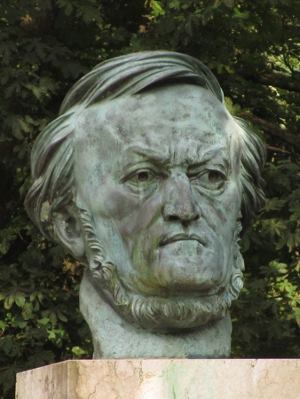
    In an interview granted in 1885, Bohemian composer Antonin Dvořák expressed his early admiration for Richard Wagner. Wagner visited Prague in 1863. Dvořák recalled, “I was perfectly crazy about him, and recollect following him as he walked along the streets to get a chance now and again of seeing the great little man’s face.” General opinion seems to be that the Czech master outgrew his infatuation by the 1870s – but perhaps not entirely.

    The two composers will be reunited in spirit on this week’s “Music from Marlboro.” Tying in with The Classical Network’s end-of-the-fiscal-year fundraiser, “Play It Again,” I’ve selected two works from the lists of favorites submitted last week by WWFM hosts and listeners. These will be performed, in their entirety, by musicians from the legendary Marlboro Music Festival.

    So as not to spoil the surprise(s), I won’t tell you what they are in advance, but I do hope you’ll tune in, and I hope you’ll support us with your financial contribution at 1-888-232-1212, or online at wwfm.org.

    We’re now in our second day of sharing YOUR playlists. You never know from one moment to the next what we’ll be playing. In the spirit of the occasion, I won’t know from one moment to the next what I’m doing – but you’re guaranteed I will execute it with such grace, beginning this afternoon at 4 p.m. EDT. “Music from Marlboro” starts at 6.

    Thank you for supporting WWFM – The Classical Network!

    Marlboro School of Music and Festival: Official Page
  • Freehold Concert Dvořák Piazzolla and More

    Freehold Concert Dvořák Piazzolla and More

    Even an uptown listener like you will want to tune in for today’s Noontime Concert from the Downtown Concert Series in Freehold.

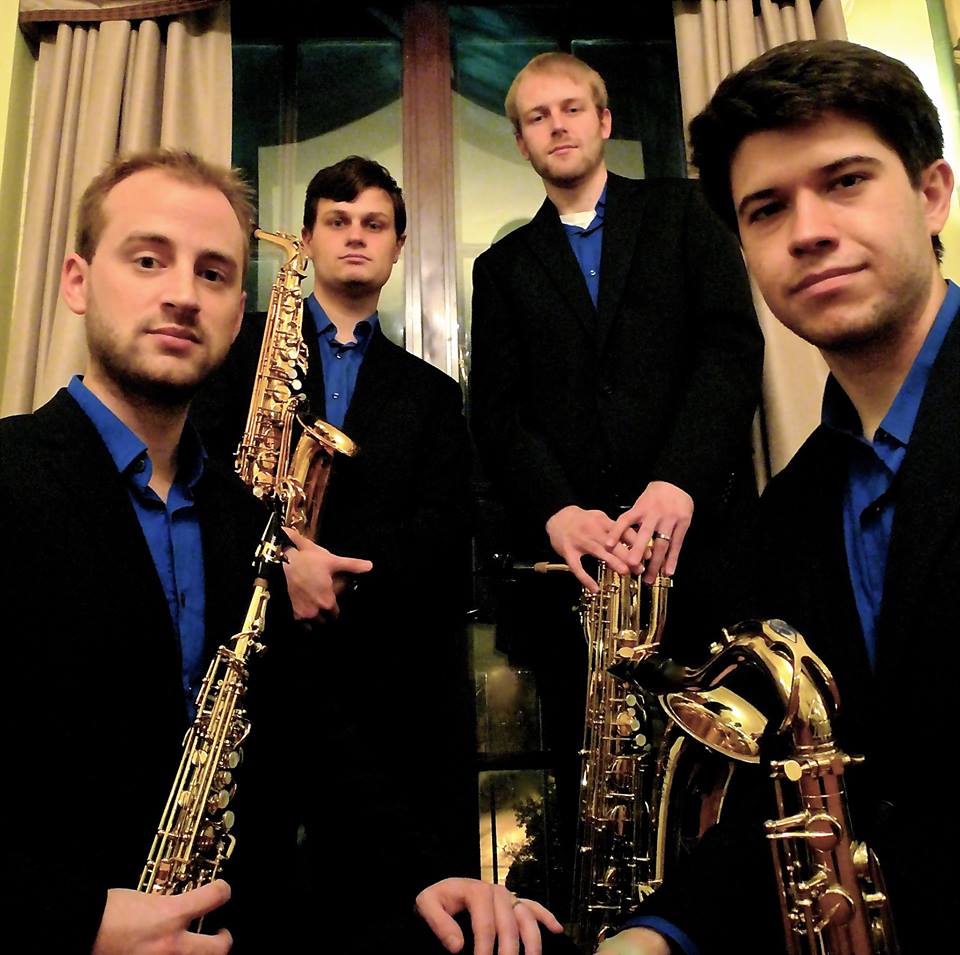
    The East End Quartet (made up of saxophonists Jonathan Wintringham, Myles Boothroyd, Matthew Amedio, and Timothy Harris) will join pianist Szu-Yi Li to present an eclectic and engaging program of music, including a fresh interpretation of Antonin Dvořák’s beloved Piano Quintet in A major, Op. 81.

    Also featured will be two of “Las Cuatros Estaciones Porteñas” (“The Four Seasons of Buenos Aires”), Astor Piazzolla’s response to Antonio Vivaldi’s masterwork, though of course from Piazzolla’s perspective, living as he did in the Southern Hemisphere, the significance of the individual seasons can be quite different.

    In between will be Graham Lynch’s “Symphony Cocteau,” a tribute to the multifaceted artist, who produced poetry, plays, films, novels, and visual art. Perhaps you were on hand for “Picture Perfect” on Friday, when I presented selections from George Auric’s score for Cocteau’s “La belle et la bête” (posted as a webcast here: http://wwfm.org/post/picture-perfect-may-11-cinematic-fairy-tales). Cocteau is also credited with having coined the name by which Auric and his colleagues – Francis Poulenc, Darius Milhaud, Arthur Honegger, Germaine Tailleferre, and Louis Durey – are collectively known, “Les six.”

    The concert took place on February 17 at historic St. Peter’s Church in downtown Freehold, NJ. The Downtown Concert Series is curated by Mark Hyczko. Hyczko will conduct the New Brunswick Chamber Orchestra in music by Christopher Cerrone, Howard Hanson, Mason Bates, and Bela Bartok in Freehold this Saturday at 7:30 p.m. The program will be repeated on Sunday at 5 p.m. at Christ Church in New Brunswick. For more information, visit downtownconcertseries.org and newbrunswickchamberorchestra.org.

    Following today’s Noontime Concert broadcast, I hope you’ll stick around for more music, beginning with two works by Piazzolla compatriot Alberto Ginastera, including his Harp Concerto, with soloist Ann Hobson Pilot. (Pilot was Rachel Katz’s guest on “A Tempo” this past Saturday; you can listen to the webcast here: http://wwfm.org/post/tempo-interviews-cleveland-institute-music-honorees-pilot-huang.) I’ll be spinning the platters until 4 p.m. EDT, on WWFM – The Classical Network and wwfm.org.

  • Czech Music at Marlboro: Janáček & Dvořák

    Czech Music at Marlboro: Janáček & Dvořák

    Czech, please!

    On this week’s “Music from Marlboro,” it’s an all-Czech affair.

    Legendary pianist Rudolf Firkušný, born in Moravia in 1912, was a living link to composers Leoš Janáček and Josef Suk (the pupil and son-in-law of Antonin Dvořák). Firkušný studied with both and with pianists Alfred Cortot and Artur Schnabel. What a pedigree!

    Despite a very long and remarkable career, Firkušný was likely recognized by more Americans because of an unlikely venture – selling Nike sneakers alongside David Robinson of the San Antonio Spurs:

    Firkušný was 78 years-old at the time of his television “15 minutes-of-fame” in 1990. He was about to make his triumphant return to Czechoslovakia, which he had fled ahead of the Nazi occupation in 1939 and then shunned during Communist rule. Firkušný had not performed in his homeland since 1946. He has been described by author, radio personality, and noted pedagogue David Dubal as “the preeminent Czech pianist of the 20th century.”

    We’ll hear Firkušný at the 1982 Marlboro Music Festival, performing Janáček’s “Concertino,” a chamber concerto of sorts, written in 1925. He’ll be joined by violinists Elena Barere and Mei-Chen Liao, violist Steven Tenenbom, clarinetists Cheryl Hill (E-flat) and Steven Jackson (B-flat), bassoonist Stefanie Przybylska, and hornist Robin Graham.

    Then we’ll turn to Dvořák’s String Quintet No. 2 in G major, Op. 77. Dvořák’s quintet is unusual in several regards. First, rather than doubling the violas or cellos, as you’ll find in most quintets for strings, Dvořák adds a double bass. Second, the piece originally included five movements, two of them slow. The composer second-guessed its length and removed one of them, which he later reworked as his “Nocturne for Strings” in B major.

    Dvořák dedicated the quintet, a competition winner, “To my Nation.” It was originally composed in 1875, then slightly revised and published in 1888.

    We’ll hear it performed at the 1985 Marlboro Music Festival by violinists Isidore Cohen and Ralph de Souza, violist Benjamin Simon, cellist Astrid Schween, and double bassist Peter Lloyd.

    That’s music by Janáček and Dvořák on this week’s “Music from Marlboro.” Czech it out, this Wednesday evening at 6:00 EST, on WWFM The Classical Network and wwfm.org.

    Marlboro School of Music and Festival: Official Page


    Firkušný knows… Nike and Janáček

  • Dvořák’s Hiawatha Melodrama Premiere

    Dvořák’s Hiawatha Melodrama Premiere

    If, like me, you’re of the opinion that Dvořák never wrote a bad note, or if you are a particular fan of the “New World” Symphony, you might be interested to tune in tonight to hear the “Hiawatha Melodrama.”

    Dvořák composed what is now commonly numbered his Symphony No. 9 (for decades it was known as the Symphony No. 5) in 1893, while he was director of the National Conservatory of Music in New York City. The work was influenced by Native American music and African American spirituals. The composer intimated that certain sections were inspired by his reading of “The Song of Hiawatha.” In fact, he intended the famous Largo as a sketch for a later opera or cantata on the theme, and the third movement scherzo was suggested by a dance at Hiawatha’s wedding feast.

    Beginning in the early 1990s, cultural historian Joseph Horowitz and Dvořák scholar Michael Beckerman began experimenting with presentations involving portions of Longfellow’s text with music from Dvořák’s symphony. These developed into a 35-minute work, which achieved its final form in 2013. (In musical terms, a melodrama is the marriage of music with spoken word.) The arrangers also lifted passages from Native American-influenced music from Dvořák’s Sonatina, Op. 100 (the composer sketched the theme for the Larghetto on his starched cuff during a visit to Minnehaha Falls in Minnesota), and his “American Suite.”

    We’ll hear the world premiere recording, on the Naxos label, featuring as the narrator bass-baritone Kevin Deas.

    To round out the hour, I’ve programmed selections from “Hiawatha’s Wedding Feast,” one of three cantatas that comprise “Scenes from the Song of Hiawatha,” by the English composer of African descent, Samuel Coleridge-Taylor. Coleridge-Taylor composed the work five years after Dvořák completed his “New World” Symphony.

    “Hiawatha’s Wedding Feast,” became a cultural phenomenon. By the time it was taken up by Sir Malcolm Sargent, it was given annually, from 1928 to 1939, in a costumed, semi-ballet version, featuring close to a thousand performers. Unfortunately, this was among the works the composer had sold outright, his heirs thereby missing out on the royalties. By the time of Sargent’s advocacy, the short-lived Coleridge-Taylor had already been dead for 16 years.

    The recording, released on the Argo label back in 1991, is one of the earliest of rising star Bryn Terfel.

    I hope you’ll join me for “Indian Summer” – works inspired by Longfellow’s “The Song of Hiawatha” – this Sunday night at 10:00 EST, on WWFM – The Classical Network and at wwfm.org.


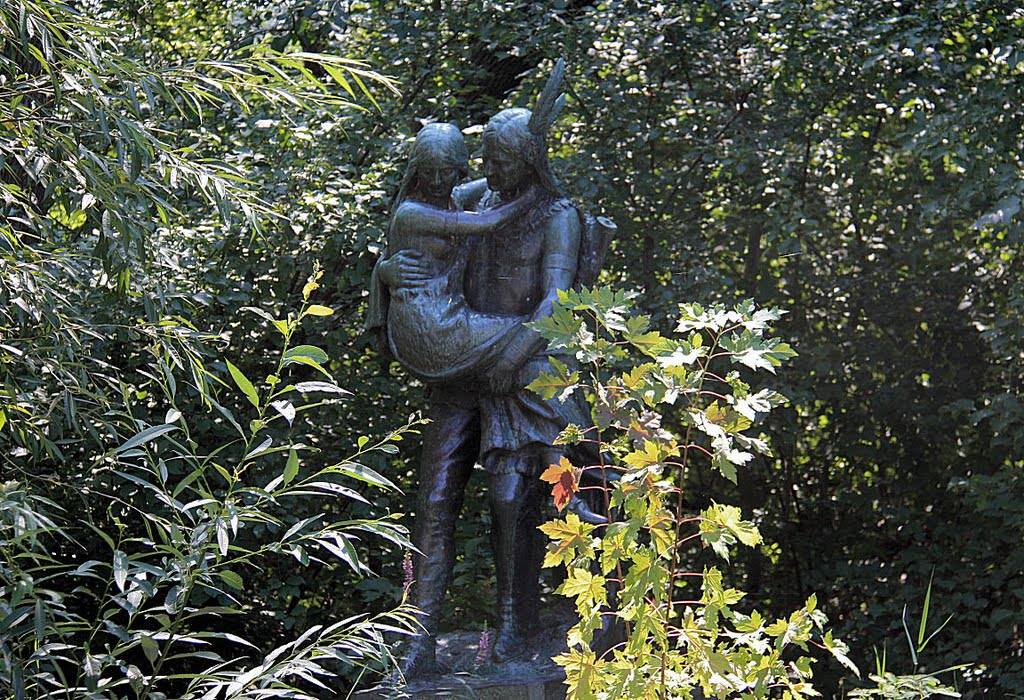
    PHOTO: “Hiawatha and Minnehaha” by Jacob Fjelde, Minnehaha Park, Minneapolis

    More about it here: http://www.mnopedia.org/thing/hiawatha-and-minnehaha-jacob-fjelde

  • Dvořák’s Dark Tales Erben’s Haunting “Bouquet”

    Dvořák’s Dark Tales Erben’s Haunting “Bouquet”

    Hallowe’en comes early, this Sunday night on “The Lost Chord,” as we listen to music inspired by stories from Karel Jaromir Erben’s “Kytice,” or “Bouquet.”

    Like the Brothers Grimm in Germany, Erben synthesized native folk tales into often gruesome fairy stories. In doing so, he became an important figure in the establishment of a Czech national identity. His stories are recited by Czech schoolchildren and recalled proudly by the Czech people. Despite its influence, “Kytice” did not appear in a complete English translation until 2013.

    Antonin Dvořák was particularly fond of Erben’s tales. In 1896, he composed a series of symphonic poems after Erben ballads, including “The Water Goblin,” “The Noon Witch” and “The Wood Dove.” Erben’s influence also hangs over Dvořák’s most famous opera, “Rusalka.”

    We’ll salute Erben with two Dvořák works: the symphonic poem “The Golden Spinning Wheel,” and the final scene from the dramatic cantata “The Spectre’s Bride.”

    “The Golden Spinning Wheel” is a Cinderella story gone very, very wrong, as a wicked stepmother and stepsister not only murder but dismember an unfortunate maiden favored by the king. Not to give too much away, but the titular appliance proves their undoing.

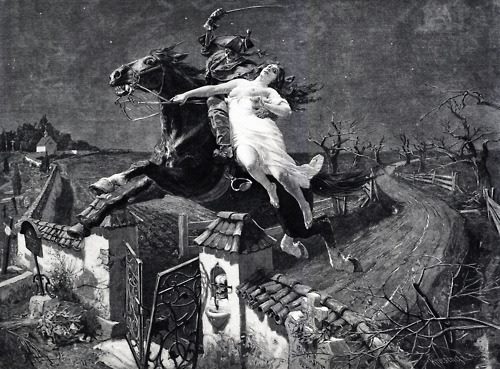
    “The Spectre’s Bride” is another in the seemingly infinite variations on the tale of a young woman being swept off by the ghost of her lover. The climax of Dvořák’s cantata places the heroine in a cottage besieged by howling spirits, as a corpse on the table, prepared for burial, stirs to do their bidding.

    Forget Dvořák’s “Slavonic Dances.” Join me for “Erben Legends,” as we celebrate Karel Jaromir Erben, this Sunday night at 10 EDT, on WWFM – The Classical Network and at wwfm.org.

Tag Cloud

Aaron Copland (92) Beethoven (95) Composer (114) Film Music (123) Film Score (143) Film Scores (255) Halloween (94) John Williams (187) KWAX (229) Leonard Bernstein (101) Marlboro Music Festival (125) Movie Music (138) Opera (202) Philadelphia Orchestra (89) Picture Perfect (174) Princeton Symphony Orchestra (106) Radio (87) Ralph Vaughan Williams (85) Ross Amico (244) Roy's Tie-Dye Sci-Fi Corner (290) The Classical Network (101) The Lost Chord (268) Vaughan Williams (103) WPRB (396) WWFM (881)

DON’T MISS A BEAT

Receive a weekly digest every Sunday at noon by signing up here


RECENT POSTS