Tag: Dvořák

  • Dvořák & Bartók at Marlboro: Serenades & Divertimenti

    Dvořák & Bartók at Marlboro: Serenades & Divertimenti

    This week on “Music from Marlboro,” two Central European composers look back to the 18th century – in a sense. We’ll hear a serenade by Czech master Antonin Dvořák, and then a divertmento by Hungarian master Béla Bartók.

    I say in a sense, because both designations, “serenade” and “divertimento,” have their roots in the 18th century as entertainment music. The classical prototypes, as they were originally intended, avoided weighty arguments, profound introspection, and showy virtuosity of the type one might expect of more substantial forms, like the symphony, the concerto, or the string quartet.

    Dvořák’s unpretentious “Serenade for Winds” was given its first performance in 1878, when the composer was 37 years-old. The serenade is written in the tried-and-true “Slavonic style” that established Dvořák’s fame. Its instrumentation and emphasis on melody recall occasional and ceremonial serenades of the 18th century.

    We’ll hear a recording made in 1957, by Marlboro wind players directed by Louis Moyse.

    In addition to being one of the greatest composers of the 20th century, Bartók was a pioneering ethnomusicologist, who did much to expand and deepen our musical understanding, through his documentary journeys and insights into the cultures of Eastern Europe and North Africa.

    He also happened to be one of the most innovative of musical thinkers, beating an alternative route to modernism through the assimilation of folk music and forging a highly personal idiom that owes little to either Stravinsky or Schoenberg.

    Bartók’s “Divertimento for String Orchestra,” from 1939, is a fascinating chimera. It takes its name from an 18th century form (appropriate for its neo-classical ambitions), shares qualities with the Baroque concerto grosso (with its small group of soloists at times contrasting with the greater body of strings), and yet remains distinctly of its time. Even here, the composer’s love of folk music is evident.

    The “Divertimento” was Bartók’s final composition before fleeing Nazi Europe for the United States. He was 58 years-old. He completed the piece in only fifteen days, while a guest at the Swiss chalet of conductor Paul Sacher, who had commissioned the work. Though it was composed very quickly, as befits a divertimento, Bartók left meticulous instructions for its performance.

    We’ll hear it played at Marlboro in 1974, by a string orchestra conducted by Sándor Végh. Végh actually knew Bartók. He participated in the first Hungarian performance of the composer’s String Quartet No. 5.

    I hope you’ll join me for a diverting hour, on the next “Music from Marlboro.” If you’re Hungary for worthwhile music, Czech it out, this Wednesday evening at 6:00 EST, on WWFM – The Classical Network and wwfm.org.

    Marlboro School of Music and Festival: Official Page


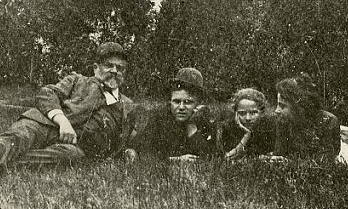
    PHOTOS: Dvořák and Bartók go al fresco

  • Dvořák & Bartók at Marlboro: Serenades Reimagined

    Dvořák & Bartók at Marlboro: Serenades Reimagined

    This week on “Music from Marlboro,” two Central European composers look back to the 18th century – in a sense. We’ll hear a serenade by Czech master Antonin Dvořák, and then a divertmento by Hungarian master Béla Bartók.

    I say in a sense, because both designations, “serenade” and “divertimento,” have their roots in the 18th century as entertainment music. The classical prototypes, as they were originally intended, avoided weighty arguments, profound introspection, and showy virtuosity of the type one might expect of more substantial forms, like the symphony, the concerto, or the string quartet.

    Dvořák’s unpretentious “Serenade for Winds” was given its first performance in 1878, when the composer was 37 years-old. The serenade is written in the tried-and-true “Slavonic style” that established Dvořák’s fame. Its instrumentation and emphasis on melody recall occasional and ceremonial serenades of the 18th century.

    We’ll hear a recording made in 1957, by Marlboro wind players directed by Marcel Moyse. Moyse co-founded the Marlboro Music Festival in 1951.

    In addition to being one of the greatest composers of the 20th century, Bartók was a pioneering ethnomusicologist, who did much to expand and deepen our musical understanding, through his documentary journeys and insights into the cultures of Eastern Europe and North Africa.

    He also happened to be one of the most innovative of musical thinkers, beating an alternative route to modernism through the assimilation of folk music and forging a highly personal idiom that owes little to either Stravinsky or Schoenberg.

    Bartók’s “Divertimento for String Orchestra,” from 1939, is a fascinating chimera. It takes its name from an 18th century form (appropriate for its neo-classical ambitions), shares qualities with the Baroque concerto grosso (with its small group of soloists at times contrasting with the greater body of strings), and yet remains distinctly of its time. Even here, the composer’s love of folk music is evident.

    The “Divertimento” was Bartók’s final composition before fleeing Nazi Europe for the United States. He was 58 years-old. He completed the piece in only fifteen days, while a guest at the Swiss chalet of conductor Paul Sacher, who had commissioned the work. Though it was composed very quickly, as befits a divertimento, Bartók left meticulous instructions for its performance.

    We’ll hear it played at Marlboro in 1974, by a string orchestra conducted by Sándor Végh. Végh actually knew Bartók. He participated in the first Hungarian performance of the composer’s String Quartet No. 5.

    I hope you’ll join me for a diverting hour, on the next “Music from Marlboro.” If you’re Hungary for worthwhile music, Czech it out, this Wednesday evening at 6:00 EST, on WWFM – The Classical Network and wwfm.org.

    Marlboro School of Music and Festival: Official Page


    PHOTOS: Dvořák and Bartók go al fresco

  • Dvořák & Bartók at Marlboro: Serenades & Divertimento

    Dvořák & Bartók at Marlboro: Serenades & Divertimento

    This week on “Music from Marlboro,” two Central European composers look back to the 18th century – in a sense. We’ll hear a serenade by Czech master Antonin Dvořák, and then a divertmento by Hungarian master Béla Bartók.

    I say in a sense, because both designations, “serenade” and “divertimento,” have their roots in the 18th century as entertainment music. The classical prototypes, as they were originally intended, avoided weighty arguments, profound introspection, and showy virtuosity of the type one might expect of more substantial forms, like the symphony, the concerto, or the string quartet.

    Dvořák’s unpretentious “Serenade for Winds” was given its first performance in 1878, when the composer was 37 years-old. The serenade is written in the tried-and-true “Slavonic style” that established Dvořák’s fame. Its instrumentation and emphasis on melody recall occasional and ceremonial serenades of the 18th century.

    We’ll hear a recording made in 1957, by Marlboro wind players directed by Louis Moyse.

    In addition to being one of the greatest composers of the 20th century, Bartók was a pioneering ethnomusicologist, who did much to expand and deepen our musical understanding, through his documentary journeys and insights into the cultures of Eastern Europe and North Africa.

    He also happened to be one of the most innovative of musical thinkers, beating an alternative route to modernism through the assimilation of folk music and forging a highly personal idiom that owes little to either Stravinsky or Schoenberg.

    Bartók’s “Divertimento for String Orchestra,” from 1939, is a fascinating chimera. It takes its name from an 18th century form (appropriate for its neo-classical ambitions), shares qualities with the Baroque concerto grosso (with its small group of soloists at times contrasting with the greater body of strings), and yet remains distinctly of its time. Even here, the composer’s love of folk music is evident.

    The “Divertimento” was Bartók’s final composition before fleeing Nazi Europe for the United States. He was 58 years-old. He completed the piece in only fifteen days, while a guest at the Swiss chalet of conductor Paul Sacher, who had commissioned the work. Though it was composed very quickly, as befits a divertimento, Bartók left meticulous instructions for its performance.

    We’ll hear it played at Marlboro in 1974, by a string orchestra conducted by Sándor Végh. Végh actually knew Bartók. He participated in the first Hungarian performance of the composer’s String Quartet No. 5.

    I hope you’ll join me for a diverting hour, on the next “Music from Marlboro.” If you’re Hungary for worthwhile music, Czech it out, this Wednesday evening at 6:00 EST, on WWFM – The Classical Network and wwfm.org.

    Marlboro School of Music and Festival: Official Page


    PHOTOS: Dvořák and Bartók go al fresco

  • Dvořák’s Early Genius at Marlboro Music Festival

    Dvořák’s Early Genius at Marlboro Music Festival

    It was in the autumn of 1877 that a 36 year-old Antonin Dvořák included his “Moravian Duets” with his application for an Austrian State grant for “young, talented and poor artists.” Still little known outside of his native Bohemia, Dvořák caught the interest of Johannes Brahms, who sat on the board of adjudication. Recognizing the younger man’s talent, Brahms recommended Dvořák to his German publisher, Fritz Simrock.

    Simrock’s edition of Dvořák’s duets proved to be so popular that it went into a second printing. (Even so, he did not pay the composer!) When that sold out, he requested that Dvořák write something akin to Brahms’ wildly successful “Hungarian Dances.” The resultant “Slavonic Dances” cemented Dvořák’s international fame.

    On this week’s “Music from Marlboro,” Dvořák pays his dues, with two early works that reveal his genius in utero.

    The Piano Quartet No. 1 in D major, Op. 23, was composed over a span of just eighteen days during the summer of 1875. Dvořák was 33 and probably already at work on the “Moravian Duets.”

    Though a product of his early maturity, Dvořák’s quartet is already imbued with the composer’s soon-to-be familiar “Czech national sound.” Not nearly as well known as the “American” String Quintet or the Piano Quintet in A major, it is nevertheless unmistakably from the same pen, with no shortage of memorable melodies and brimming with his indelible charm. The work didn’t hit print until 1880 (around the time of the second run of the “Moravian Duets”). Tellingly, it was not published by Simrock, but rather by Schlesinger, a Berlin rival.

    We’ll hear it performed at the 1969 Marlboro Music Festival by pianist and Marlboro co-founder Rudolf Serkin, violinist Shmuel Ashkenasi, violist Martha Strongin Katz, and cellist Robert Sylvester.

    The “Moravian Duets” grew out of songs Dvořák wrote specifically for domestic performance by a wealthy merchant and his wife, who also happened to be amateur singers. At the merchant’s request, Dvořák began by arranging Moravian national songs, but quickly segued into providing wholly original music for the traditional folk texts.

    Delighted with the results, the merchant paid for the duets’ first printing in Prague, prior to Christmas 1876. Further songs followed. The complete cycle of 23, for two voices and piano accompaniment, appeared as three separate sets, assigned to different vocal ranges, between 1875 and 1881.

    We’ll round out the hour with the four songs of the first of these, collected under Op. 20, in its final form, performed in Czech by soprano Mary Burgess and tenor John Humphrey, with pianist Luis Batlle – a commercial recording made for Columbia Masterworks as an offshoot of the 1966 Marlboro Music Festival.

    One of the advantages of being a “provincial” composer is that Dvorak was already a master by the time he was discovered. Discover these works from his early maturity on the next “Music from Marlboro,” this Wednesday evening at 6:00 EDT, on WWFM – The Classical Network and wwfm.org.

    Marlboro School of Music and Festival: Official Page

  • Dvořák’s Dark Side Erben’s Spooky Tales

    Dvořák’s Dark Side Erben’s Spooky Tales

    Hot on the heels of Rusalka Week – a time when Slavic naiads roam free, luring unsuspecting men to a watery grave – we cast a wary eye upon Karl Jaromir Erben.

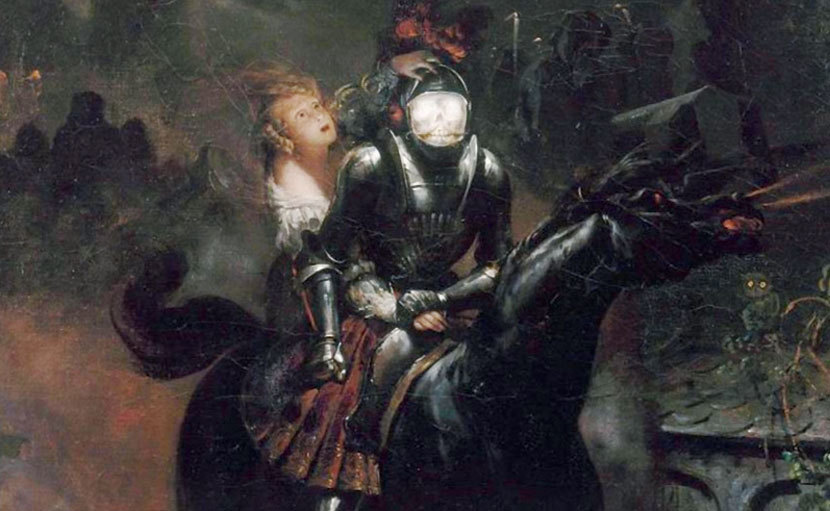
    Erben (1811-1870) served as a kind of Brothers Grimm to the Czech people, synthesizing works based on folkloric themes into gruesome ballads full of witches, goblins, and ghosts. Most of these were collected into a lurid, if poetic, little volume titled “Kytice,” or “Bouquet.” The tales, recited by generations of schoolchildren, were embraced as a kind of celebration of Czech national identity.

    Antonín Dvořák was most susceptible. Bohemia’s greatest composer wrote a surprising number of pieces inspired by Erben’s grisly tales, including the symphonic poems “The Water Goblin,” “The Noon Witch,” and “The Wood Dove.” Erben’s influence also looms over Dvořák’s most famous opera, “Rusalka.”

    This Sunday night on “The Lost Chord,” we’ll salute Erben with two selections by Dvořák: the symphonic poem “The Golden Spinning Wheel” and the spine-tingling graveyard scene from the dramatic cantata “The Spectre’s Bride.”

    “The Golden Spinning Wheel” is a Cinderella story gone very, very wrong, as a wicked stepmother and stepsister not only murder, but dismember an unfortunate maiden favored by the king. Naturally – or perhaps supernaturally – they overplay their hand, and the titular appliance proves their undoing.

    “The Spectre’s Bride” is another of the seemingly infinite variations on the tale of a young woman borne away by the ghost of her lover. The climax of Dvořák’s cantata deposits the heroine in a cottage besieged by howling spirits, as a corpse on the table, prepared for burial, stirs to do their bidding.

    It’s a long, long way from Dvořák’s “Slavonic Dances.” Join me for “Erben Legends” – a celebration of Karel Jaromir Erben – this Sunday night at 10:00 EDT, on WWFM – The Classical Network and wwfm.org.

Tag Cloud

Aaron Copland (92) Beethoven (95) Composer (114) Film Music (123) Film Score (143) Film Scores (255) Halloween (94) John Williams (187) KWAX (229) Leonard Bernstein (101) Marlboro Music Festival (125) Movie Music (138) Opera (202) Philadelphia Orchestra (89) Picture Perfect (174) Princeton Symphony Orchestra (106) Radio (87) Ralph Vaughan Williams (85) Ross Amico (244) Roy's Tie-Dye Sci-Fi Corner (290) The Classical Network (101) The Lost Chord (268) Vaughan Williams (103) WPRB (396) WWFM (881)

DON’T MISS A BEAT

Receive a weekly digest every Sunday at noon by signing up here


RECENT POSTS