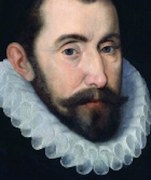
English madrigalist John Wilbye was baptized on this date 450 years ago. Anticipate spring with “Sweet Honey-Sucking Bees.”
Tag: English Composer
-
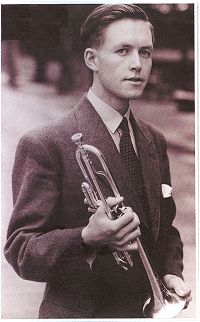
Arthur Butterworth Centenary Rediscovered
I so often observe musical birthdays and anniversaries on this page, especially round ones, but from time to time one will slip past, either because I’d already done a post about one of my shows or there simply weren’t enough hours in the day.
During my interminable wait for jury consideration in a Zoom antechamber the past couple of mornings, I passed the time in part by running my eyes across my CD shelves, which not surprisingly, in a collection containing some 10,000 specimens, yielded a number of curiosities and a few discs I had never even listened to. One is a 2-CD set on the Dutton label of music by Arthur Butterworth, whose centenary, I noted, as I read the liner notes, commenced on August 4.
I was familiar with Butterworth (no relation to Vaughan Williams’ friend George Butterworth) only from a recording of his Symphony No. 1 of 1957, coupled on another album, on the Classico label, with the Symphony No. 2 of Ruth Gipps. The Dutton program also includes Butterworth’s 1st, conducted by Sir John Barbirolli, along with the 4th Symphony and the Viola Concerto, both conducted by the composer. Butterworth, a brass player, took up the instrument for a better understanding of how to write for strings.
Prior to that, like the composer Malcolm Arnold, he acquired ample experience of the orchestra from the inside, as a trumpeter in the Scottish National Orchestra, from 1949-55, and in the Hallé Orchestra, from 1955-62. He was also closely associated with the brass band movement, working with Besses o’ th’ Barn (of which he was a member) and the Black Dyke Band and writing test pieces for various brass championships.
In common with so many other English composers, Butterworth clearly revered Sibelius. His musical language is conservative and broadly tonal; accessible, if not exactly tunefully ingratiating. It can be dark and at times rather desolate, but also blistering and exhilarating. In addition, the 4th Symphony recalls Carl Nielsen, the great Dane, whose distinctive sound also pervades the works of Butterworth’s compatriot, Robert Simpson.
Many composers can be somewhat bashful about admitting to extramusical influences on their work, insisting that their music should be regarded as just that – absolute music, rigorously argued by putting it through abstract forms. Above all, it should not be interpreted as evocative of anything else. But Butterworth was a nature poet, clearly prone to introspection, and he credits his slow movements, especially, to the impressions he received while on walks with his dog across the forests and beaches of Scotland.
Butterworth also had a Vaughan Williams connection, taking lessons with RVW, beginning in 1950, when his mentor was in his late 70s.
Interestingly, Butterworth is not the only composer from the vicinity of Manchester to have gravitated to Scotland and pick up on its Nordic vibe. Peter Maxwell Davies was born outside Manchester 11 years later. Max kept a home in the Orkney Islands for some 45 years. For me, the latter’s symphonies, for as much as I enjoy some of his other music, have been tough nuts to crack – and it’s not been for want of trying!
Also included in the Butterworth set is a 27-minute spoken lecture, in which the composer talks about his life, work, and influences.
He died as recently as 2014, like Sibelius, attaining the venerable age of 91.
If you’re interested in mid-century English music and you are fascinated by Sibelius at his most austere and strangely beguiling, this music might be for you. No doubt there is worth in this butter, but it doesn’t exactly melt in your mouth!
Happy belated 100th, Arthur Butterworth!
The individual movements of the Dutton album have been posted separately as a YouTube playlist at the link:
Dutton Vocalion Records
-

Vaughan Williams Buried a Commoner Honored
65 years ago today, the foremost English composer of his time, and one of the great composers of the 20th century, Ralph Vaughan Williams was interred in Westminster Abbey. He was the first commoner to be so honored in almost 300 years – since the death of Henry Purcell, in fact.
Rightly or wrongly, England’s musical reputation had taken a nosedive in the interim (the country’s cultural standing was derided in Germany as “Das Land ohne Musik”), with most of its musical luminaries imports (especially Handel and Mendelssohn), until the nation reclaimed its own with Sir Edward Elgar and his contemporaries around the turn of the 20th century. But Vaughan Williams did more than anyone for the development of an English national sound. What’s more, he was deeply committed to making music with and for his compatriots. He had a generous heart, and by all accounts he was a kind man. It was near Purcell, in Westminster’s north choir aisle, that his ashes were laid to rest.
Vaughan Williams requested that two of his works be included in the service: his anthem “O taste and see” and his setting of the hymn “All people that on earth do dwell” (OLD 100TH), both written for the coronation of Queen Elizabeth II – which took place at the Abbey five years earlier, in 1953. Vaughan Williams’ hymn “Come down, o love divine” (DOWN AMPNEY) accompanied his funeral procession. The composer’s great champion, Sir Adrian Boult, conducted “Five Variants of Dives and Lazarus” and selections from “Job,” along with Bach’s Concerto for Two Violins, for a commemoration, held immediately prior to the funeral service.
The funeral was broadcast live on the BBC. Here’s a very brief extract:
And a copy of the complete program:
https://www.westminster-abbey.org/media/12534/ralph-vaughan-williams-funeral-1958.pdf
Vaughan Williams remains, alas, one of the most underappreciated of the great composers. His body of work, for anyone who cares to look beyond the “Fantasia on a Theme by Thomas Tallis” and “The Lark Ascending,” is stunning. The most common image we hold is of a rustic artist who perfected slovenly chic. Yet he was perhaps unsuspectedly cosmopolitan, uncommonly energetic, and uncannily productive. In reading Eric Saylor’s recent biography of the composer (“Ralph Vaughan Williams,” Oxford University Press, 2022), I was astounded to realize that, once he found his mature voice, he basically churned out one masterpiece after another, in quick succession, for decades. Alas, outside the UK, it’s as if Vaughan Williams sleeps undisturbed with all his treasures in the Valley of the Kings. Mark my words, someday they will be rediscovered!
“O taste and see,” at Elizabeth II’s funeral in 2022
“All people that on earth do dwell,” at the Queen’s Diamond Jubilee in 2012
-
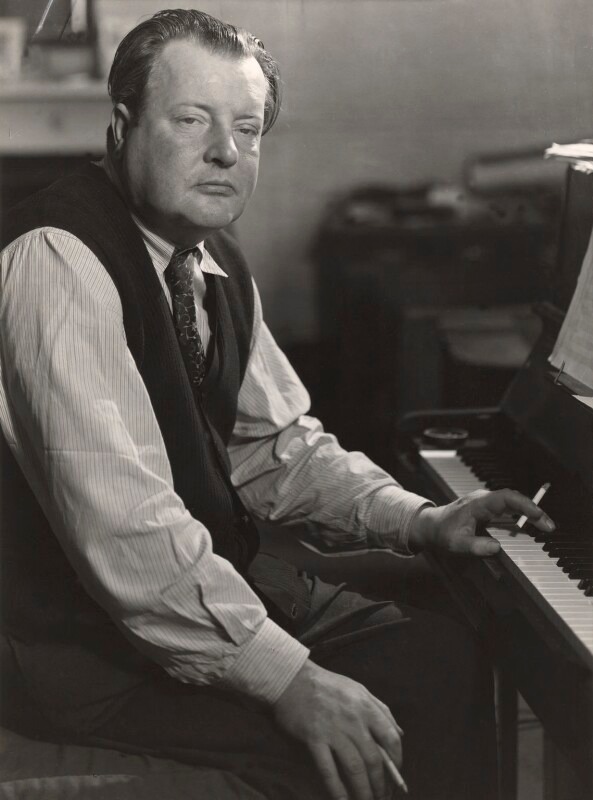
Constant Lambert: A Versatile English Composer
As composer, conductor, critic, scintillating conversationalist, and connoisseur of European culture, Constant Lambert proved himself to be one of the most versatile figures in English music.
Born on this date in 1905, Lambert emerged from an introverted childhood, marred by illness, and blossomed into a preternaturally-gifted musician. At 13, he was writing orchestral works. At 20, he composed a ballet, “Romeo and Juliet,” for Serge Diaghilev and the Ballets Russes.
He gained further notoriety as a reciter of Edith Sitwell’s patter verses for William Walton’s “Façade” (which was dedicated to him). His piano concerto with voice and orchestra, “The Rio Grande,” unashamedly incorporated jazz elements, at a time when such a thing could still provoke scandal. He also directed the first recording of Peter Warlock’s “The Curlew.”
His book, “Music, Ho!,” written at the age of 28, offers incisive and witty commentary on the “decline” of modern music. In it, he favors jazz and popular idioms, praises the music Liszt and Sibelius, savages Stravinsky and Les Six, lauds the Marx Brothers, and pokes holes in what he perceives as an artificial “symphonic folk” tradition.
In 1931, he was appointed music director of the Vic-Wells Ballet, soon to become the Sadler’s Wells. While he achieved great acclaim in this capacity, his responsibilities cut into his activities as a composer. Instead, he became largely occupied with the arranging of others’ music. An exception, his gloomy and sardonic choral work, “Summer’s Last Will and Testament,” was coolly received, following as it did so closely on the death of George V. Lambert took the failure to heart, and began to have serious doubts about his talent.
Moreover, the outbreak of war, alcoholism, and undiagnosed diabetes all took their toll on his vitality and creativity. A long-held fear of doctors, stemming from his childhood experiences, only hastened his decline. Lambert died on August 21, 1951, two days shy of his 46th birthday.
At Sadler’s Wells, he was integral to the planning of each new production, in many cases providing arrangements of lesser-known works by worthy composers. He also became something of an artistic mentor to dancers Margot Fonteyn and Robert Helpmann. In the case of Fonteyn, their relationship developed beyond teacher-pupil. In defiance of his personal demons and deteriorating health, Lambert’s conducting – like his celebrated conversation – remained buoyant and inspired.
Happy birthday, Constant Lambert. You burned your candle, like your cigarettes, at both ends.
Lambert and Edith Sitwell in the first recording of Walton’s “Façade” from 1929
“The Rio Grande” (text by Sacheverell Sitwell)
Conducting selections from his ballet “Horoscope”
“Concerto for Piano and Nine Instruments”
His arrangements of Meyerbeer into the ballet “Les Patineurs”
https://www.youtube.com/watch?v=e15W-6FwEb4
Footage of Lambert conducting Tchaikovsky’s “Romeo and Juliet Fantasy Overture”
“Music Ho!,” thanks to Project Gutenberg
https://gutenberg.ca/ebooks/lambert-music/lambert-music-00-h.html
-

John Foulds Rediscovered Composer
Though steeped in the comparatively conservative milieu of the English musical renaissance at the turn of last century, John Foulds possessed a physical, intellectual, spiritual, and creative wanderlust.
Foulds moved to India in 1935. There, he collected native folk tunes. He became director of European music for All-India Radio in Delhi, created an orchestra from scratch, and labored tirelessly to fulfill his vision of a synthesis between Eastern and Western music. He also composed works for traditional Indian instruments. His efforts on behalf of the radio were so successful that he was asked to open a satellite branch in Calcutta. Unfortunately, he contracted cholera and died within a week of his arrival, at the age of 58.
Because of the remote location and the fact that a number of the pieces of his maturity have been lost, or the manuscripts extensively compromised, Foulds’ slight reputation has rested for the most part on his “light music” (especially “Keltic Lament”). But Foulds was definitely ahead of his time, as the gradual rediscovery of his works has revealed, with the composer’s fascination with quarter-tones and, occasionally, a tendency toward an almost proto-minimalism.
So diverse were Foulds’ output and enthusiasms that it is difficult, if not impossible, to encapsulate the scope of his achievements within a single hour. Nevertheless, this Sunday night on “The Lost Chord,” we will endeavor to do our best, by sharing his light concert overture “April – England,” “Three Mantras” from the abandoned Sanskrit opera, “Avatara,” and selections from “A World Requiem.”
It’s a Foulds paradise! Join me for “April Foulds,” this Sunday night at 10:00 EDT, on WWFM – The Classical Network and wwfm.org.
PHOTO: Foulds (right), sitting in on an Indian jam session
Tag Cloud
Aaron Copland (94) Beethoven (95) Composer (114) Film Music (148) Film Score (143) Film Scores (255) Halloween (97) John Williams (196) KWAX (232) Leonard Bernstein (105) Marlboro Music Festival (125) Movie Music (163) Mozart (91) Opera (215) Philadelphia Orchestra (90) Picture Perfect (174) Princeton Symphony Orchestra (110) Radio (90) Ross Amico (244) Roy's Tie-Dye Sci-Fi Corner (290) The Classical Network (101) The Lost Chord (269) Vaughan Williams (107) WPRB (397) WWFM (881)