Tag: English Composer

  • John Ireland: English Enigma

    John Ireland: English Enigma

    John Ireland was no more Irish than (Finnish composer) Einar Englund was English. In fact, he was born in Bowdon, in Greater Manchester, into a family of Scottish descent. Ireland lost both parents in his mid-teens. Recollections of a melancholy childhood were said to have dogged him for the remainder of his days.

    He studied composition at the Royal College of Music under Sir Charles Villiers Stanford (who also taught Gustav Holst, Ralph Vaughan Williams, Frank Bridge, and Sir Arthur Bliss, among others). Ever self-effacing, Ireland preferred to live his life outside the limelight. You might say he was modest to a fault. Benjamin Britten, who was an Ireland pupil, described him as possessing “a strong personality but a weak character.”

    Even so, the premiere of Ireland’s Violin Sonata No. 2 in 1917 made the English musical establishment sit up and take notice. One can imagine the composer’s mixed emotions on the occasion. His awkwardness likely contributed to a very brief marriage, which is rumored to have been unconsummated. Ireland was 47; his bride was a 17 year-old pupil. Beyond that comparative moment of madness, the composer remained a bachelor for the rest of his life.

    Ireland’s other students included E.J. Moeran, Geoffrey Bush, and Richard Arnell. The composer attained enough of a degree of prominence that he was offered the award of Commander of the Order of the British Empire (which naturally he declined). His 70th birthday was celebrated with a special Prom concert, with a performance of his Piano Concerto as the centerpiece.

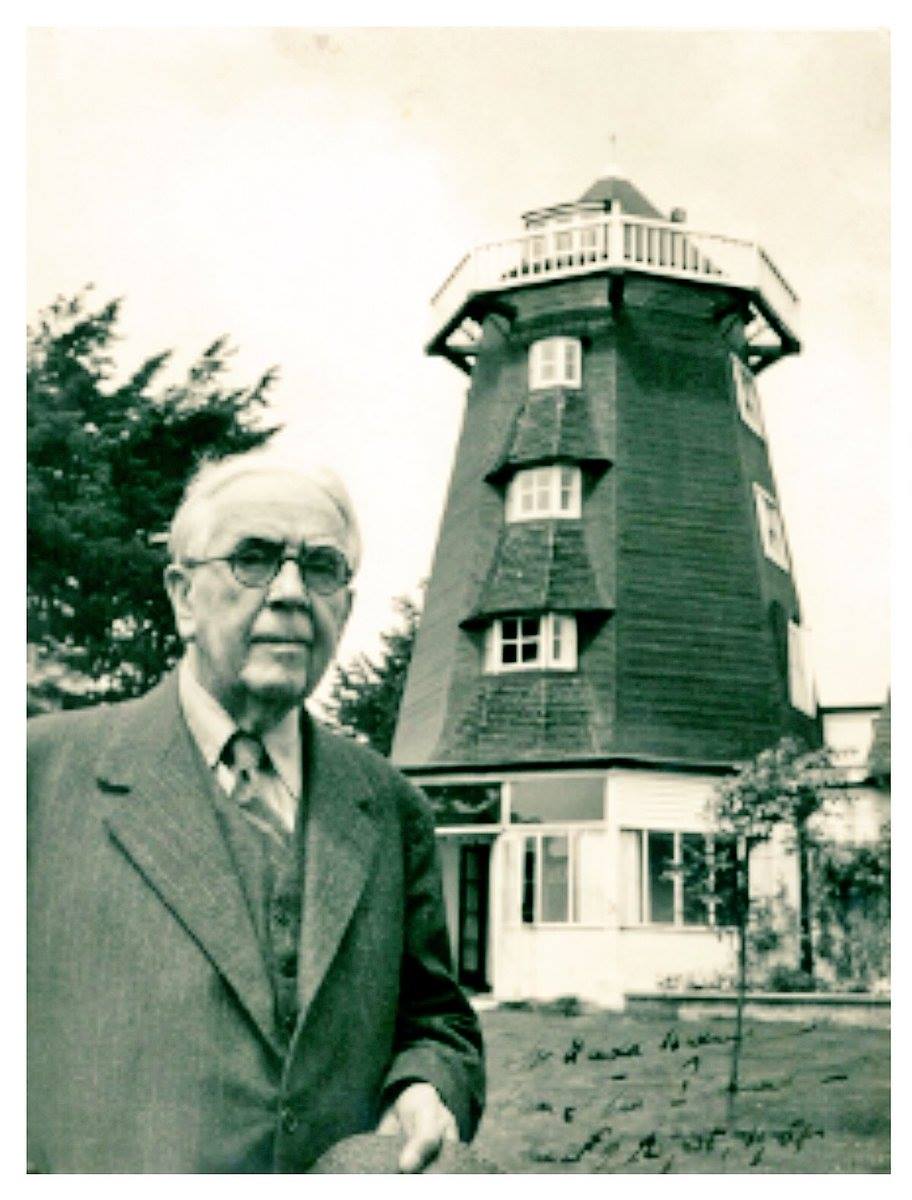
    Ireland frequently visited the Channel Islands and drew inspiration from the native landscape. In 1939, he actually moved to Guernsey. He was evacuated from the islands ahead of the imminent German invasion during World War II. In 1953, he retired to a converted windmill in the hamlet of Rock in Sussex. He died in 1962 at the age of 82.

    While there is plenty of wistfulness to be found in Ireland’s music – his is a fascinating alternative to the folk song-inflected style of many of his peers – there are also moments of pageantry that can stand toe-to-toe with the swaggering pomp of Elgar and Walton at their most imperial.

    I hope you’ll join me for music of John Ireland, among my featured highlights, between 4 and 7 p.m. EDT, on WWFM – The Classical Network and wwfm.org.

    Happy birthday, John Ireland!


    PHOTO: Ireland in retirement at his windmill

  • John Foulds Composer Rediscovered

    John Foulds Composer Rediscovered

    Though steeped in the comparatively conservative milieu of the English musical renaissance at the turn of last century, John Foulds possessed a physical, intellectual, spiritual, and creative wanderlust.

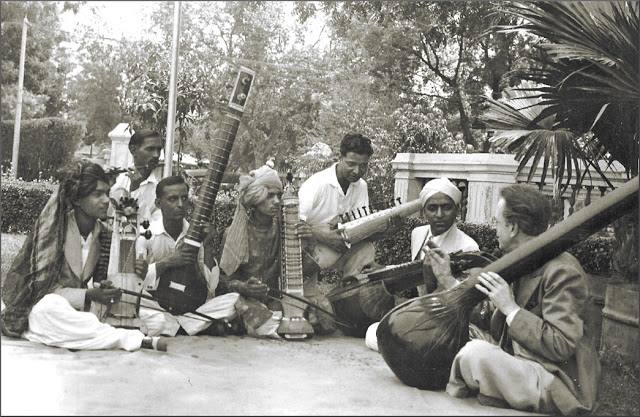
    Foulds moved to India in 1935. There, he collected native folk tunes. He became director of European music for All-India Radio in Delhi, created an orchestra from scratch, and labored tirelessly to fulfill his vision of a synthesis between Eastern and Western music. He also composed works for traditional Indian instruments. His efforts on behalf of the radio were so successful that he was asked to open a satellite branch in Calcutta. Unfortunately, he contracted cholera and died within a week of his arrival, at the age of 58.

    Because of the remote location and the fact that a number of the pieces of his maturity have been lost, or the manuscripts extensively compromised, Foulds’ slight reputation has rested for the most part on his “light music.” But Foulds was definitely ahead of his time, as the gradual rediscovery of his works has revealed, with the composer’s fascination for quarter-tones and, occasionally, a tendency toward an almost proto-minimalism.

    So diverse were Foulds’ output and enthusiasms that it is difficult, if not impossible, to encapsulate the scope of his achievements within a single hour. Nevertheless, this Sunday night on “The Lost Chord,” we will endeavor to do our best, by sharing his light concert overture “April – England,” “Three Mantras” from the abandoned Sanskrit opera, “Avatara,” and selections from “A World Requiem.”

    It’s a Foulds paradise! Join me for “April Foulds,” this Sunday at 10 p.m. EDT, on WWFM – The Classical Network and wwfm.org.


    PHOTO: Foulds (right), sitting in on an Indian jam session

  • Ralph Vaughan Williams Birthday Celebration

    Ralph Vaughan Williams Birthday Celebration

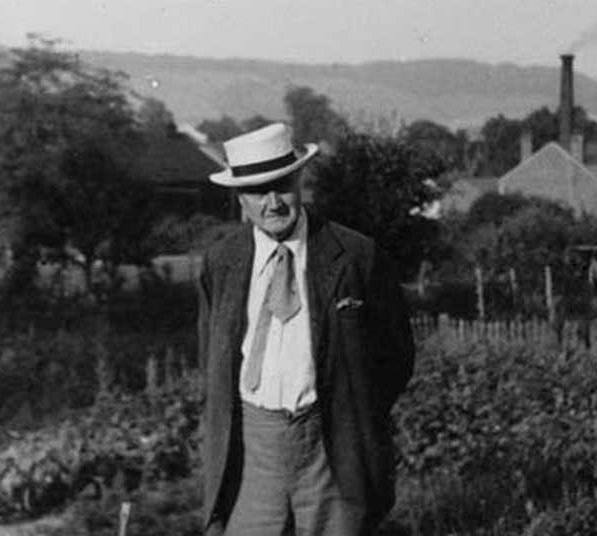
    It’s never truly autumn until we can celebrate the birthday of Ralph Vaughan Williams. One of England’s greatest composers, Vaughan Williams looked back to his country’s agrarian roots as a roundabout way of securing the future of its cultural identity. This Thursday morning on WPRB, we will salute the great man in all his rumpled glory by sampling from a broad cross-section of his multifaceted output.

    As did so many composers who were caught in the wildfire of nationalism that swept across Europe from the mid-19th century forward, Vaughan Williams rebelled against the prevailing academicism that stretched its tendrils all the way from Germany to choke the musically “provincial” outlands. He emerged from an environment that had produced far too many knock-offs of Mendelssohn and Brahms. Vaughan Williams would revolutionize his compatriots’ perception of art music by embracing the sounds of the English countryside.

    However, much like Béla Bartók, he was no simplistic, twee purveyor of folk music. On the contrary, the rhythms and inflections of his native land were already in his DNA. The songs he documented while roaming the fields and fens with his colleague, Gustav Holst, merely brought to the surface what was already innate. What he expressed in his original music was thoroughly digested and deeply personal.

    Some of Vaughan Williams’ best loved works are imbued with nostalgia for a faded world, but the composer pushed forward, as well, through two world wars and into the Great Beyond. He was not a conventionally religious man, but mysticism seems to color a fair amount of his music. Other pieces stare desolation unflinchingly in the face. His lessons with Maurice Ravel made him a thoughtful orchestrator, so that throughout his life he deployed his instrumental forces with considerable creativity and expertise. Given the proper attention, there is much to engage on all levels of his music.

    I hope you’ll join me as we salute this fascinating composer with five hours of lesser-known works and recordings of historic significance. While you might not want to take his instruction on the best way to tie ties, musically you will be in the hands of a master, this Thursday morning from 6 to 11 EDT on WPRB 103.3 FM and wprb.com. You can put your faith in Ralph (pronounced “Rafe”), on Classic Ross Amico.


    Ralph Vaughan Williams Society

  • Richard Arnell: A Centenary Celebration

    Richard Arnell: A Centenary Celebration

    Patrick Jonathan has been most generous with his anecdotes about Richard Arnell.

    If it hasn’t registered yet, I’ll be presenting an all-Arnell marathon, in honor of the 100th anniversary of the composer’s birth, on WPRB 103.3 FM and wprb.com, this Thursday morning from 6 to 11 EDT.

    My guest will be Warren Cohen, music director of the MusicaNova Orchestra, who has conducted a good many of Arnell’s works, including all of the symphonies. In fact, MusicaNova will be performing Arnell’s Symphony No. 6, as part of an all-English program, which will be presented in Phoenix, AZ, on October 29. You can find out more at http://musicanovaaz.com/tickets/.

    Here is a little background on how Patrick got to know “Tony.”

    “One of the things that was remarkable about Tony was his self-awareness and honesty. When I first met him he was 66 years old, still very actively teaching at Trinity College and London International Film School, but really in a compositional slump. His Who’s Who biographical listing had, under current occupation, ‘vegetating’!

    “I met Tony in 1982/3 when I was a student at Goldsmiths College, London University. I had taken as one of my electives ‘Music and Theatre’. Everyone was studying Opera or Ballet, but I was determined to do original research and asked whether I could study music and film. At that time there was little academic material devoted to this field. My lecturer, Keith Potter, also lectured part-time at Trinity College, where Tony was a colleague, and knew he was Music Tutor at the London International Film School, so set up an introduction for me so I could go and pick his brain.

    “I was a very conscientious student, so – out of respect for this composer I hadn’t really heard of – before meeting him I visited the BMIC and listened to every recording (on reel to reels in those days) they had, and visited Senate House Library and read every article and periodical that mentioned him. I was astonished that a composer of such power and beauty was unknown to me (even in those days I had a wide and deep musical knowledge). Incidentally, the first piece I listened to was the fifth symphony and Roger Wright, later to become top dog at BBC radio three and the Proms was the person who threaded the reels for me, conducting music he knew well as it bled out of my headphones!

    “Anyhow, Tony was very flattered and impressed that I turned up so well prepared. As I said earlier, he was in a bit of a slump at the time and feeling particularly neglected. As well as questioning him about topics I was interested in, I also listened as he talked about the mishandling, neglect and downright disrespect he felt many of his publishers had been showing him (pulping warehoused copies, etc.) so I decided that I would thank him for his time and wisdom by researching all of his published compositions.

    “I contacted him a few weeks later with a report I’d compiled on availability and a briefcase full of everything I’d actually been able to buy. He was impressed. At the time he was married to wife number seven, Audrey, who was making an effort to put his affairs in order. He got us together and we started cataloguing everything we could. They started a self-publishing scheme (A plus A) for which I played an integral role.

    “In the meantime, we’d become very friendly. He liked to drink and tell anecdotes. I liked to sit and listen! Everywhere he went and everything he did he invited me along as his guest. By the time I graduated I was working for Schott and Co. and was a skilled copyist and editor. I hand copied all the parts for his compositions from the mid-80s onwards. Although I’d studied composition at Goldsmiths it was the experience of copying his music that really taught me how to orchestrate.

    “I have wonderful memories of when he was composing Six Lawrence Songs for the DH Lawrence Centenary in Nottingham. He was so late meeting this commission that I spent days at his flat in Elstree: he was composing upstairs in the study; Audrey was the go between, up and down the stairs passing the pages to me as they were completed while I was sitting at the counter in the kitchen making the parts!

    “I sat in on the rehearsals in a practice room at Trinity with the soprano, and the narrator (who was a very famous tv news reader – Richard Baker); and travelled with them up to Nottingham for the performance. Great memories.

    “He was old enough to be my grandfather, but somehow we just hit it off. We were on the same wavelength. He was the sort of friend who, for instance, if you were going out of town for an interview or meeting would ask if you wanted company and would travel with you on the train then wait in a bar, pub or cafe while you had your appointment, have a drink with you afterwards then accompany you back on the train.

    “Luckily our friendship was in the pre-internet age and I have about 150 letters that he wrote to me during my time in Malaysia. His was a friendship I really treasure and the fact that he described me as his friend when he named me musical executor in his will was a very great honour. His daughter, Jennifer, has been a fantastic protector of his legacy since he died. I hope your tribute promotes much interest in his work.”


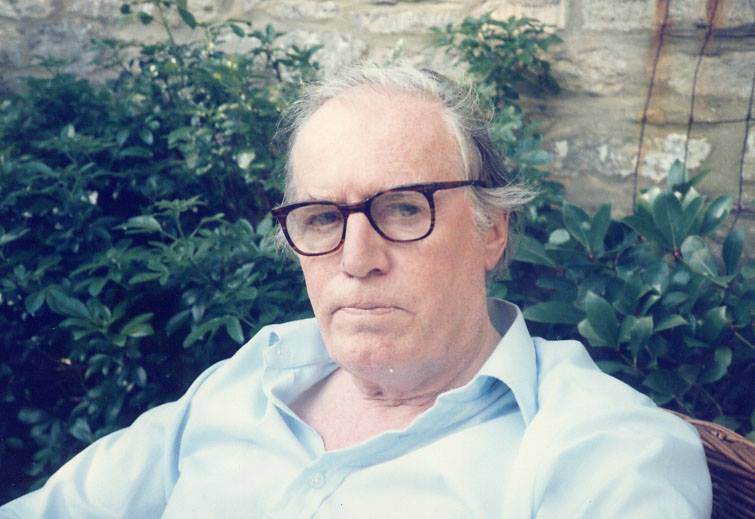
    PHOTO: Richard Arnell at 70, looking very much as he did when he and Patrick first met
Tag Cloud

Aaron Copland (92) Beethoven (95) Composer (114) Film Music (123) Film Score (143) Film Scores (255) Halloween (94) John Williams (187) KWAX (229) Leonard Bernstein (101) Marlboro Music Festival (125) Movie Music (138) Opera (202) Philadelphia Orchestra (89) Picture Perfect (174) Princeton Symphony Orchestra (106) Radio (87) Ralph Vaughan Williams (85) Ross Amico (244) Roy's Tie-Dye Sci-Fi Corner (290) The Classical Network (101) The Lost Chord (268) Vaughan Williams (103) WPRB (396) WWFM (881)

DON’T MISS A BEAT

Receive a weekly digest every Sunday at noon by signing up here


RECENT POSTS