Tag: English music

  • English Pastoral Piano Music

    English Pastoral Piano Music

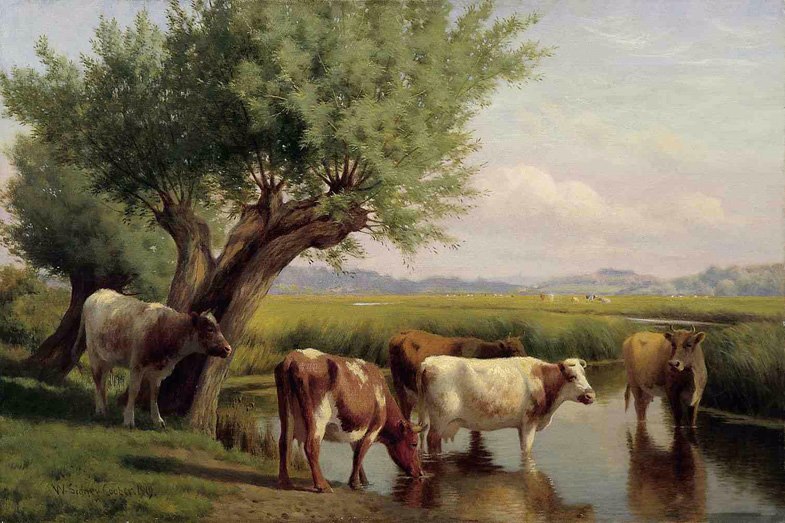
    According to a certain school of thought, folk music – music of the land – embodies the spirit of a nation. And no nation’s composers milked that cow quite as soulfully as the English.

    This Sunday night on “The Lost Chord,” we’ll have an hour of bucolic reflections for the keyboard of a time lost to technology and industrialization.

    We’ll begin with Gerald Finzi’s “Eclogue” for piano and string orchestra. Originally drafted in the mid-‘20s as the projected slow movement of a piano concerto, the material was later reshaped by the composer, who was content to let it stand on its own. In case you’re not familiar with the term, an eclogue is a short pastoral poem.

    If you find yourself transported by this, I think you will also really enjoy Cyril Rootham’s “Miniature Suite” of 1921. Rootham, better known for his choral music, was a friend of Ralph Vaughan Williams and Gustav Holst. His work at Cambridge University exerted a significant influence over English musical life. Like the “Eclogue,” the “Miniature Suite” is scored for piano and strings.

    In between, I’ll provide a palette cleanser in the form of E.J. Moeran’s “Summer Valley.” Moeran was one of the last composers to really thrive on English folk music. “Summer Valley,” composed for solo piano in 1925, was dedicated to Frederick Delius.

    Finally, we’ll engage in a bit of musical time travel. In addition to the whole folk song perspective, England is justifiably proud of its formal musical past. The legacy of the Tudors was a particular influence on works such as Benjamin Britten’s “Gloriana,” Gordon Jacob’s “William Byrd Suite,” and Vaughan Williams’ “Fantasia on a Theme by Thomas Tallis.”

    In the case Herbert Howells – like Rootham, a composer better recognized for his choral endeavors – he fell under the spell of the clavichord, after he was lent one by one Herbert Lambert, a photographer with a passion for building replicas of early keyboard instruments.

    The fortuitous encounter led to the composition of three suites, written in different periods of Howells’ life, which hark back to the glory days of the “Fitzwilliam Virginal Book.” All three sets are characterized by an inventive blend of Tudor and English folk influences. Each of the individual movements are dedicated to a friend or colleague of the composer. We’ll hear the first set, titled “Lambert’s Clavichord,” written in 1927, which was sanctioned for performance on the modern piano.

    I hope you’ll join me for an hour of musical escapes to the countryside and the golden musical past. That’s “Idyll Thoughts” – pastoral English works for piano – this Sunday night at 10:00 EDT, on WWFM – The Classical Network and wwfm.org.
  • Remembering Richard Hickox Champion of English Music

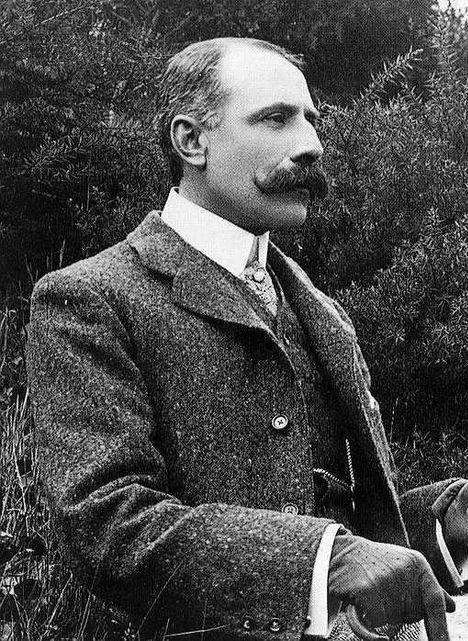
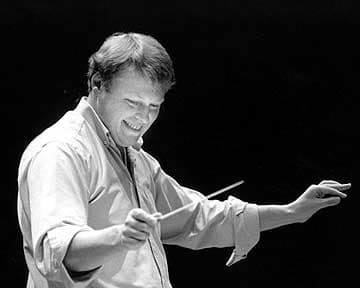
    Remembering Richard Hickox Champion of English Music

    It’s sobering to think that Richard Hickox would have been 70 years-old today. Hickox, one of the great champions of English music, died of a dissecting thoracic aneurysm, suffered while recording Gustav Holst’s “First Choral Symphony,” in 2008.

    For decades, Hickox applied his indefatigable zeal to filling out the catalogue with fine recordings of established classics and poor stepchildren. His early passing came especially hard at the end of what seemed like a run on great British conductors – Bryden Thomson (died in 1991), Sir Alexander Gibson (1995), and Vernon Handley (2008, only two months before) – that kept alive a venerable tradition too often dismissed abroad.

    Hickox was the founder of the City of London Sinfonia and Collegium Musicum 90. He was also choral director of the London Symphony Orchestra, artistic director of the Northern Sinfonia, and principal conductor of the BBC National Orchestra of Wales. At the time of his death, he was music director of Opera Australia.

    Hickox recorded prolifically – orchestral works, oratorios, and operas – for the EMI and Chandos labels. The recipient of many honours and awards, he was also president of the Elgar Society. He was the only conductor ever to program the complete symphonies of Ralph Vaughan Williams as a series in concert. Who knows how much more he would have accomplished had he lived another 20 or 25 years?

    This afternoon on The Classical Network, we’ll remember Hickox and the Spanish conductor Jesús López-Cobos, who died on Friday at the age of 78. López-Cobos will conduct music of Heitor Villa-Lobos on the anniversary of the birth of Brazil’s most famous composer. I hope you’ll join me from 4 to 7 p.m. EST, on WWFM – The Classical Network and wwfm.org.
  • Vaughan Williams Symphony No 5 Hope Amidst Wartime

    Vaughan Williams Symphony No 5 Hope Amidst Wartime

    Oh, Ralph, you’re such the contrarian. You wrote that embodiment of English pastoralism, “The Lark Ascending,” in response to the War to End All Wars. Then in peacetime, in the early 1930s, you composed your most turbulent symphony, the Symphony No. 4. Some say that already you sensed the impending cataclysm of World War II. Then when the war finally hit, you turned around and wrote your most serene symphony.

    On this date in 1943, you unveiled your Symphony No. 5. Queen’s Hall lay in ruins from German bombs, so you conducted the London Philharmonic at Royal Albert Hall. Perhaps unexpectedly, the audience that day found itself awash in hope and optimism. In place of the seemingly obligatory bluster of a “wartime symphony,” there was a sense of affirmation in a musical celebration of humanity and tradition. London may be rocked by air raids today, but England, the country and its people, would endure.

    You had already long been flirting with your pet project, the opera “The Pilgrim’s Progress,” for decades. The symphony shares the same sense of faith and optimism in the face of seemingly implacable adversity. The audience emerged into the sunlight on that summer afternoon feeling refreshed and ready to face the future.


    The Symphony No. 5 (dedicated, by the way, to Jean Sibelius):

    https://www.youtube.com/watch?v=q9YoEETzYsE

    PHOTO: Vaughan Williams and Foxy in 1942

  • English Music Marathon on WPRB Today

    English Music Marathon on WPRB Today

    I’d heed John Bull if I were you. Yet to come this morning: the Symphony No. 3 by Edmund Rubbra, the Violin Sonata No. 4 by Cyril Scott, the ballet “The Angels” by Richard Arnell, the Symphony No. 4 by William Alwyn, and more. It’s a full morning of English music until 11 ET on WPRB 103.3 FM and at wprb.com.

  • Britannia Rules Waves WPRB English Music

    Britannia Rules Waves WPRB English Music

    Rule, Britannia! Britannia rules the waves – the air waves, at any rate, as this morning on WPRB we present a full playlist of English music.

    The show will be anchored by three English symphonies: George Lloyd’s 6th, Edmund Rubbra’s 3rd, and William Alwyn’s 4th. What’s that you say? You don’t know them? Then the greater should be your enjoyment at their acquaintance.

    We’ll also hear ballet music by Richard Arnell, film music by Sir Malcolm Arnold, and a world premiere recording of a violin sonata by Cyril Scott (with Westminster Conservatory faculty member Clipper Erickson at the keyboard). In between, we’ll fill in with some British Light Music and some early English dances.

    It’s a varied menu of ham, lamb and strawberry jam, from 6 to 11 ET, on WPRB 103.3 FM and at wprb.com. Join me for a spot of tea, won’t you, on Classic Ross Amico.

Tag Cloud

Aaron Copland (92) Beethoven (95) Composer (114) Film Music (123) Film Score (143) Film Scores (255) Halloween (94) John Williams (187) KWAX (229) Leonard Bernstein (101) Marlboro Music Festival (125) Movie Music (138) Opera (202) Philadelphia Orchestra (89) Picture Perfect (174) Princeton Symphony Orchestra (106) Radio (87) Ralph Vaughan Williams (85) Ross Amico (244) Roy's Tie-Dye Sci-Fi Corner (290) The Classical Network (101) The Lost Chord (268) Vaughan Williams (103) WPRB (396) WWFM (881)

DON’T MISS A BEAT

Receive a weekly digest every Sunday at noon by signing up here


RECENT POSTS