Tag: Film Score

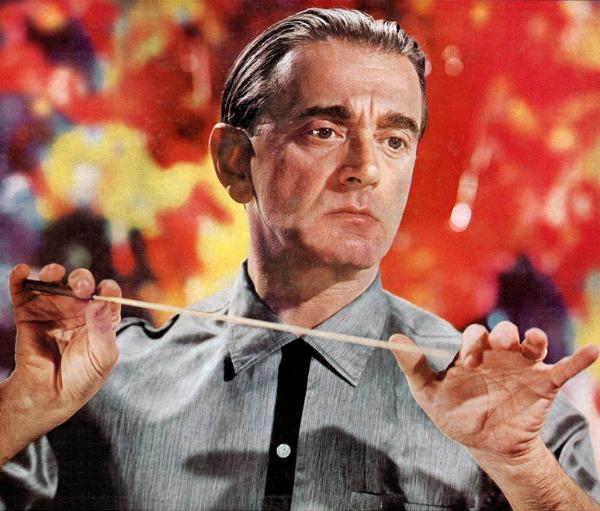
  • Miklós Rózsa Ben-Hur Composer Birthday

    Miklós Rózsa Ben-Hur Composer Birthday

    “Who the hell wants foxtrots? I want serious music!”

    So says Miklós Rózsa, in this 30-minute documentary.

    Enjoy it, and then join me this Friday evening at 6:00 EDT, as I present Rózsa’s magnum opus, “Ben-Hur,” among my featured selections, on “Picture Perfect” – music for the movies – on WWFM – The Classical Network and wwfm.org.

    Happy birthday, Miklós Rózsa!

  • Superman Soundtrack Definitive Edition Review

    Superman Soundtrack Definitive Edition Review

    It’s a bird! It’s a plane! It’s John Williams Nirvana!

    My copy of La-La Land Records’ 40th anniversary edition of Williams’ classic score for “Superman” (1978) arrived the other day. The 3-CD set is remastered from the newly-discovered original elements. A previous release of the complete score on Rhino Entertainment sounded disappointingly flat; a redo was available only as part of an 8-disc box set devoted to music from all the Christopher Reeve Superman films, on Film Score Monthly. Williams scored only the first film, which is all I’m interested in, so as far as I’m concerned, this should be the definitive “Superman” release.

    The set includes not only the complete score as heard in the film, but also the original soundtrack release, alternate and/or additional bonus cues, and a 44-page booklet with extensive liner notes.

    I am looking forward to being 12 again for a few hours, as soon as I remove the shrinkwrap. The set is limited to 5000 copies. You can find out more about it here:

    https://lalalandrecords.com/superman-the-movie-40th-anniv-remastered-limited-edition-3-cd-set/

    Not included in the set:

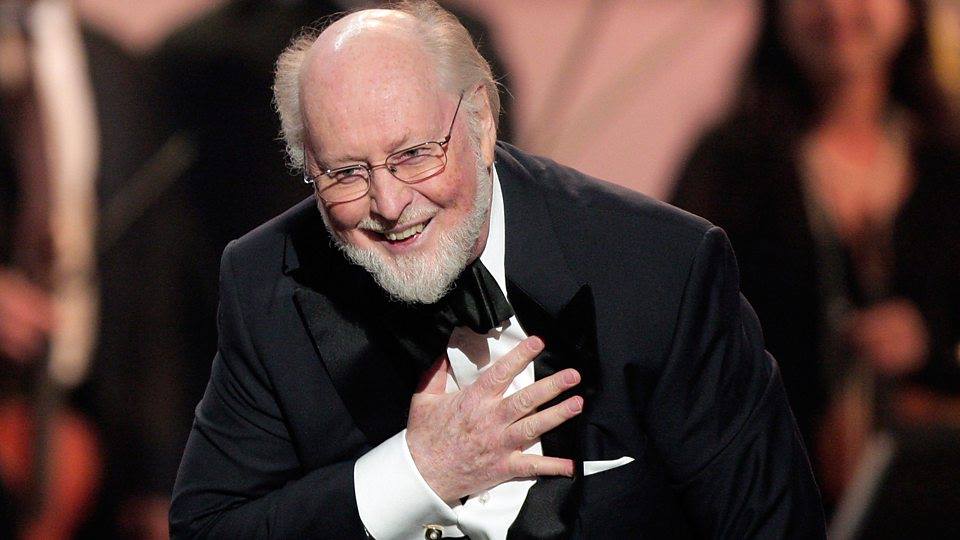
  • Happy 87th Birthday John Williams Tune In!

    Happy 87th Birthday John Williams Tune In!

    Happy birthday, John Williams!

    Williams is 87 today. We’ll hear a suite from his lovely and rarely-heard score to “Jane Eyre” on “Picture Perfect” tonight at 6:00 EST, part of an anti-Valentine’s program devoted to doomed love and Gothic romances.

    But tune in a little earlier – between 4 and 6 – to enjoy a few additional Williams surprises. I’ll have something for you in each of my three hours on the air, from 4 to 7 p.m. EST, on WWFM – The Classical Network and wwfm.org.

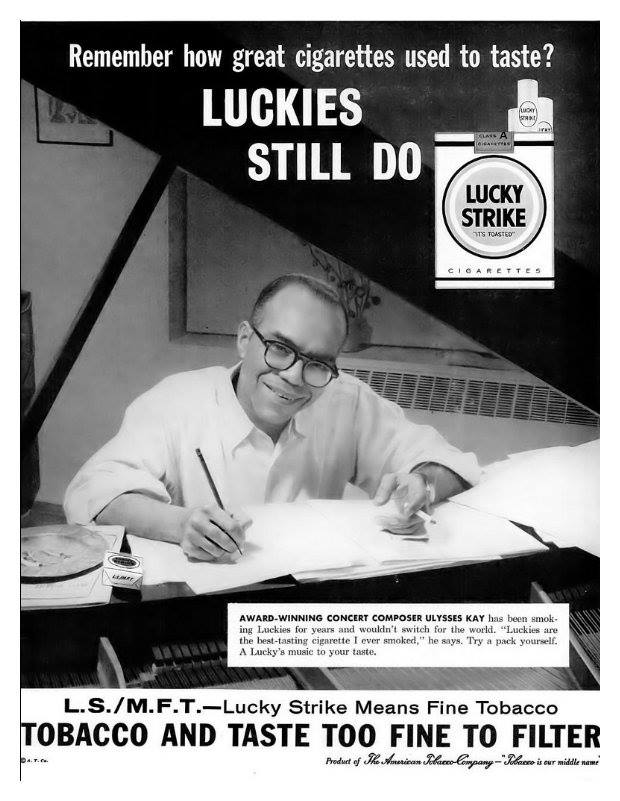
  • Rediscovering Ulysses Kay: A Neglected American Voice

    Rediscovering Ulysses Kay: A Neglected American Voice

    Regrettably, the music of Ulysses Kay is under-represented in the current catalogue. His delightful “Six Dances for String Orchestra,” probably the lightest music he ever wrote, has been available sporadically on the Vox label, though always badly in need of a new recording. This Sunday night on “The Lost Chord,” we’ll hear one of those dances as part of an hour devoted to Kay’s music.

    Born in Tuscon, AZ, in 1917, Kay was the nephew of jazz musician King Oliver. His uncle encouraged him to study music formally. Likewise, he received moral support from William Grant Still, then recognized as the “Dean of Afro-American Composers.” Kay attended the University of Arizona, before heading on to the Eastman-School, where he studied with Howard Hanson and Bernard Rogers. Also influential were studies with Paul Hindemith at the Berkshire Music Center, and then Yale.

    Kay served in the United States Navy during World War II. He then continued his studies at Columbia with Otto Luening. A recipient of multiple scholarships, grants and awards, he was able to live and study abroad, in Rome, where he attended the American Academy, for several years.

    From 1953 to 1968, he worked for BMI. He was then appointed professor at Lehman College of the City University of New York, where he remained until his retirement, two decades later. A longtime resident of Teaneck, NJ, he composed orchestral, chamber, choral and instrumental works, and five operas. He died in 1995 at the age of 88.

    In addition to that dance for strings, we’ll also hear Kay’s work for trumpet and piano, “Tromba,” from 1985; a long out-of-print LP of his “Concerto for Orchestra,” recorded in 1953; and a suite from his film score to “The Quiet One,” from 1947. A quasi-documentary about an abused African American child and his subsequent coming of age, “The Quiet One” received an Oscar nomination for Best Story and Screenplay, and was listed by the New York Times and the National Board of Review as one of the ten best movies of 1948.

    I hope you’ll join me for “Giving Kay His Say,” this Sunday night at 10:00 EST, on WWFM – The Classical Network and wwfm.org.


    An interview with Kay conducted by Bruce Duffie:
    http://www.bruceduffie.com/kay.html


    PHOTO: Kay gets Lucky!
  • Alfred Newman’s Tyrone Power Swashbucklers

    Alfred Newman’s Tyrone Power Swashbucklers

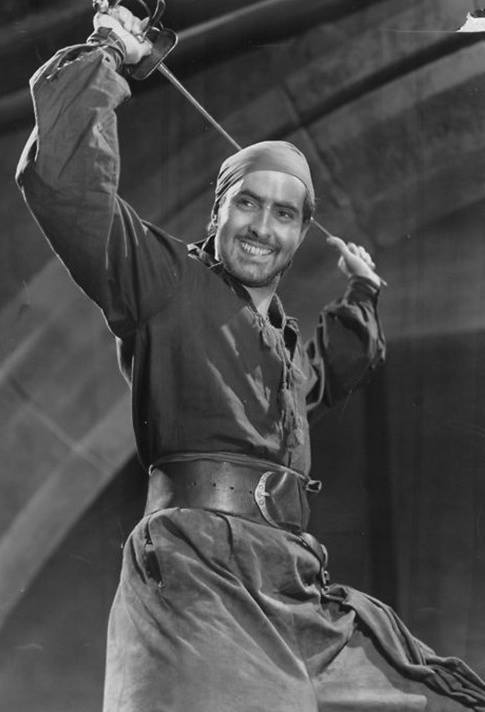
    This week on “Picture Perfect,” experience the Power of Alfred Newman – TYRONE Power, that is. It’s all music from Power swashbucklers made at 20th Century Fox, where Newman served as music director for 20 years.

    “Captain from Castile” (1947) was one of Power’s most opulent vehicles. Based on the novel by Samuel Shellabarger, the film relates Pedro de Vargas’ escape from persecution at the hands of the Inquisition and his accompaniment of Hernán Cortéz in the conquest of Mexico. Also starring Jean Peters and Cesar Romero (as Cortéz), the film capitalizes on the happenstance of a real-life erupting volcano. The climactic march, known as “Conquest,” went on to become one of Newman’s greatest hits. It’s entered the marching band repertoire and has been recorded many times.

    “The Black Swan” (1942) costars Maureen O’Hara and Laird Cregar (as Henry Morgan). Also, if you ever wanted to see George Sanders in a red beard, then this is the movie for you. This time the source material is a novel by Rafael Sabatini, who also created “Captain Blood,” “The Sea Hawk,” and “Scaramouche.”

    Of course, it was “The Mark of Zorro” (1940) that solidified Power’s reputation as 20th Century Fox’s resident swashbuckler. In its own way, the remake manages to match the delights of Douglas Fairbanks’ 1920 original, which was one of the silent era’s most thrilling adventures.

    Finally, it’s back to Shellabarger for “Prince of Foxes” (1949). This time, the setting is the Italian Renaissance. Orson Welles is Cesare Borgia, with an oddly cast Everett Sloane playing an assassin. Sloane was a veteran of Welles’ Mercury Theatre. You may remember him as Mr. Bernstein from “Citizen Kane,” or perhaps from the famous funhouse finale from “The Lady from Shanghai.”

    It’s interesting that all of the films represented this week were inspired by books. (Zorro was introduced in “The Curse of Capistrano” by Johnston McCully.) It was another day, as they say.

    I hope you’ll join me for music by Alfred Newman, written for the swashbucklers of Tyrone Power, on “Picture Perfect” – music for the movies – this Friday evening at 6:00 EST, on WWFM – The Classical Network and wwfm.org.


    A fun reminiscence of Newman (“the best conductor who ever picked up a baton in Hollywood”) by composer David Raksin:

    http://www.americancomposers.org/raksin_newman.htm

Tag Cloud

Aaron Copland (92) Beethoven (95) Composer (114) Film Music (123) Film Score (143) Film Scores (255) Halloween (94) John Williams (187) KWAX (229) Leonard Bernstein (101) Marlboro Music Festival (125) Movie Music (138) Opera (202) Philadelphia Orchestra (89) Picture Perfect (174) Princeton Symphony Orchestra (106) Radio (87) Ralph Vaughan Williams (85) Ross Amico (244) Roy's Tie-Dye Sci-Fi Corner (290) The Classical Network (101) The Lost Chord (268) Vaughan Williams (103) WPRB (396) WWFM (881)

DON’T MISS A BEAT

Receive a weekly digest every Sunday at noon by signing up here


RECENT POSTS