Happy birthday, John Williams, 86 years-old today.
Here’s a clip of Williams conducting at a recording session for “Star Wars: The Last Jedi” in December of 2016. Note the the opening crawl on the monitor in front of the podium.
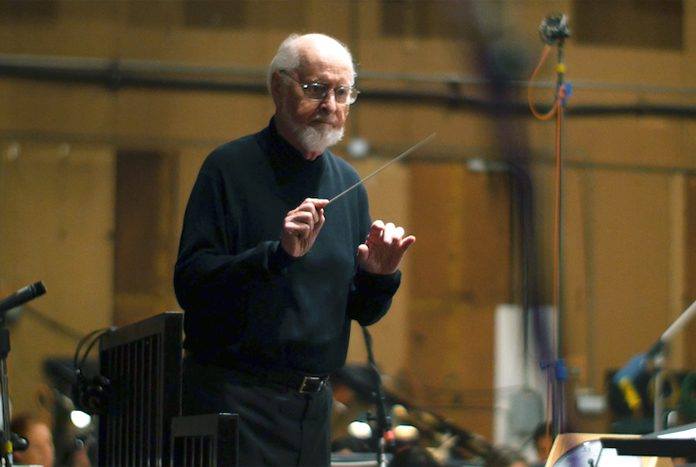
Happy birthday, John Williams, 86 years-old today.
Here’s a clip of Williams conducting at a recording session for “Star Wars: The Last Jedi” in December of 2016. Note the the opening crawl on the monitor in front of the podium.
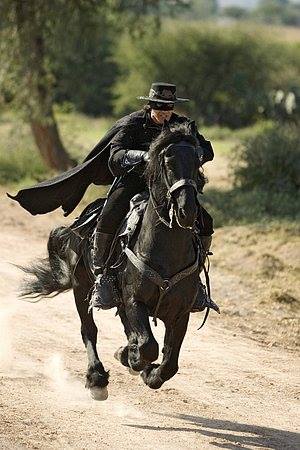
Frigid temperatures got you down? Put some swagger back into your step with an hour of music from Latin swashbucklers.
Alfred Newman gets the blood pumping with his virile soundtrack for “Captain from Castile” (1947), in which Tyrone Power flees persecution at the hands of the Inquisition to join Cortés’ expedition to conquer Mexico. The film was shot on location with one sequence set against the backdrop of an erupting volcano!
Power, of course, was one of the screen’s great Zorros. However, with “The Mask of Zorro” (1998), Antonio Banderas becomes the Zorro for our time. He’s aided and abetted by Anthony Hopkins, as the elder Zorro who mentors him. (TWO Zorros in one film! I could expire of joy.) Catherine Zeta-Jones is radiant, and the music by James Horner literally hits all the right notes.
This film was already a throw-back upon release, with plenty of real-life, real-time swordplay and stunts galore, with the barest minimum of computer-generated bells and whistles. I wish to God popcorn entertainment could still be like this. As it was, “The Mask of Zorro” was like a belated last gasp of the 1980s. It was easily the best swashbuckler of the ‘90s – though, really, was there much competition?
Banderas got a chance to send-up his image in the Dreamworks’ computer-animated feature, “Puss in Boots” (2011), a spin-off from the Shrek series, which actually turned out to be a better sequel than “The Legend of Zorro” (2005).
The film sports plenty of Zorro in-jokes, which extend even to Henry Jackman’s entertaining score. How is it that animated movies are just about the only movies these days that seem to keep up the great symphonic tradition of classic film scoring?
Finally, Errol Flynn has one last swash left in his buckle for “The Adventures of Don Juan” (1948), his last wholly satisfying period adventure. Equally, Max Steiner rises to the occasion and provides one of his best scores, just about on the same level as those of the master of the genre, Erich Wolfgang Korngold.
I hope you’ll join me for an hour of Latin swords, on “Picture Perfect,” this Friday evening at 6:00 EST, on WWFM – The Classical Network and wwfm.org.

Not that I’m crazy about the latest “Star Wars” score, but it’s been announced that John Williams has been assigned to compose the theme for an upcoming film about Han Solo’s formative years. John Powell will write the rest of the music, which will incorporate Williams’ theme. “Solo” is scheduled to open on May 25. Williams will be 86 on February 8.
http://variety.com/2017/film/news/john-williams-star-wars-composer-han-solo-movie-theme-1202650282/
“It’s time for the Jedi to end!”
Yeah, right. Not while these things continue to make billions of dollars.
Be that as it may, any new score by John Williams is worth hearing, and any new “Star Wars” music is an event. Return to a long time ago in a galaxy far, far away. Join me for a spoiler-free “Picture Perfect,” featuring music from “Star Wars: The Last Jedi,” released today.
The Force is with us, this Friday evening at 6:00 EST, on WWFM – The Classical Network and wwfm.org.

This afternoon on The Classical Network, we are North-bound, as we celebrate the anniversary of the birth of composer Alex North.
North was born in Chester, Pennsylvania (just outside of Philadelphia), on December 4th, 1910. His journey took him from a working class background to the Curtis Institute of Music, the Juilliard School, and the Moscow Conservatory. He also studied with Aaron Copland and Ernst Toch.
He became involved with the Federal Theatre Project. He worked in the ballet, especially with Martha Graham and Anna Sokolow. He accompanied the latter to Mexico, where he had an opportunity to study with Silvestre Revueltas. Perhaps not coincidentally, his three North American teachers, Copland, Toch, and Revueltas, had all worked in film.
North wrote his first film score as far back as the 1930s, around the time he met up with director Elia Kazan. North was drafted during the war, and put his talent to use writing music for the Office of War Information documentaries.
With the cessation of hostilities, he returned to the theater. He also composed some concert pieces. It was his theatre scores for plays like “A Streetcar Named Desire” that earned him an invitation to Hollywood, where he wrote the music for Kazan’s classic film adaptation. It was the first time jazz would be fully integrated into an onscreen drama, as opposed to merely play in the background of a given scene. Its success opened the door to a new “film score” sensibility, paving the way for composers like Elmer Bernstein, Henry Mancini, and his beloved Duke Ellington.
In all, North wrote 50 film scores, racking up 15 Academy Award nominations, yet never taking home the prize. In 1986, he received lifetime achievement recognition from the Academy, the first composer to be so honored.
There were times, during the course of his career, when his music took on an independent life, distinct from the films for which it was written. He scored major hits with “Unchained Melody” (originally written for the film “Unchained” and recorded some 500 times), and the love theme from “Spartacus.” The original soundtrack to “A Streetcar Named Desire” also sold extremely well.
His acclaimed contribution to “Spartacus” didn’t keep the film’s director, Stanley Kubrick, from rejecting North’s score for “2001: A Space Odyssey” – without telling him. (North found out only at the film’s premiere.) But director John Huston was very happy to have him. Later in his career, North became Huston’s composer of choice, for films like “The Misfits,” “Under the Volcano,” “Prizzi’s Honor,” and “The Dead.”
This afternoon, we’ll enjoy North’s rarely-heard Concerto for Piano and Orchestra with Trumpet Obbligato, and yes, selections from “Spartacus,” among our featured works, as we’ll also observe the birthdays of André Campra and Sir Hamilton Harty. We’ll face true North, between 4 and 7 p.m. EST, on WWFM – The Classical Network and wwfm.org.
BETTER LATE THAN NEVER: North with his honorary Oscar
Aaron Copland (94) Beethoven (95) Composer (114) Film Music (149) Film Score (143) Film Scores (255) Halloween (97) John Williams (197) KWAX (232) Leonard Bernstein (105) Marlboro Music Festival (125) Movie Music (164) Mozart (91) Opera (215) Philadelphia Orchestra (90) Picture Perfect (174) Princeton Symphony Orchestra (110) Radio (90) Ross Amico (244) Roy's Tie-Dye Sci-Fi Corner (290) The Classical Network (101) The Lost Chord (269) Vaughan Williams (107) WPRB (397) WWFM (881)