Tag: Film Score

  • Titanic Soundtrack & More Ocean Music

    Titanic Soundtrack & More Ocean Music

    This week on “Picture Perfect,” with “Titanic” back in theaters for its 20th anniversary, we’ll hear selections from James Horner’s most famous score. The “Titanic” soundtrack sold over 30 million copies, making it the highest-selling primarily orchestral soundtrack of all time.

    We’ll round out the hour with more oceanic agony, with music from “Raise the Titanic” (John Barry), “The Perfect Storm” (James Horner), “A Night to Remember” (William Alwyn), and “The Poseidon Adventure” (John Williams).

    “Titanic” is just the tip of the iceberg, this Friday at 6:00 EST, on WWFM – The Classical Network.

  • Korngold’s Kings Row Star Wars Influence

    Korngold’s Kings Row Star Wars Influence

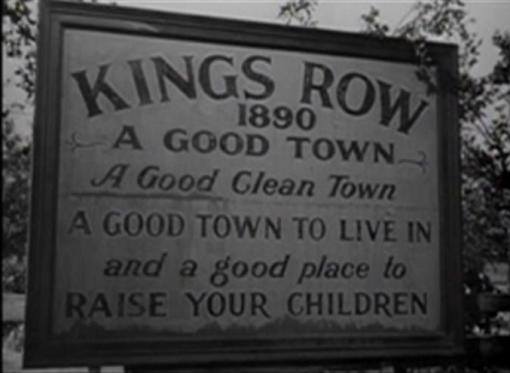
    This week on “Picture Perfect, with a new “Star Wars” right around the corner, we’ll hear an extensive suite from one of John Williams’ acknowledged influences, Erich Wolfgang Korngold’s “Kings Row” (1942). The settings of the two films couldn’t be more different – “Kings Row’s” struggle of decency against sinister impulses takes place in a small Midwestern town – but Korngold’s opulently orchestrated score brims with romance and heroism. Check out that opening fanfare!

    Although he was one of the great musical prodigies – celebrated in Vienna in his teens and 20s, especially for his operas – Korngold’s name was kept alive for decades after his death largely because of his work on a number of classic Warner Brothers films of the 1930s and ’40s. His music for the Errol Flynn swashbucklers has been particularly well-loved.

    He had already written music for “Captain Blood,” “The Prince and the Pauper,” “The Adventures of Robin Hood,” “The Private Lives of Elizabeth and Essex” and “The Sea Hawk” by the time he was offered work on “Kings Row.” Without knowing anything more about the project than the title, he commenced writing music for the main theme, on the assumption that the film was going to be another costume picture. In reality, it was a turn-of-the-century soap opera based in America’s heartland.

    Korngold’s approach couldn’t have been more fortuitous, since it led him to compose one of his grandest themes. It punctuates the action of the film like a cinematic “Ein Heldenleben” – which should come as little surprise, since Korngold actually knew Richard Strauss.

    “Kings Row” was based on the bestseller by Henry Bellamann. The book reveals a kind of dark underbelly to the civility of small town American life. The subject matter was ahead of its time, laying the groundwork for the novel “Peyton Place,” the film “Blue Velvet,” and television series such as “Twin Peaks” and “Desperate Housewives.” Yet at its core is the fundamental decency of its protagonist, Parris Mitchell, and his circle of friends. It is Mitchell’s ambition to become a doctor, and he heads to Vienna to study a new branch of science known as psychology.

    Mitchell was played in the film by Robert Cummings, his best friend Drake by Ronald Reagan, and Randy, a former tomboy from a family of railroad workers, by Ann Sheridan, who received top billing. The studio filled out the cast with a superb ensemble, including Claude Rains, Judith Anderson, Charles Coburn, Harry Davenport and even Maria Ouspenskaya, best known as Maleva the gypsy woman from “The Wolf Man.”

    It’s a grand piece of entertainment, if you can get into the spirit of it, depending on your tolerance for incest, sadism, involuntary amputation, wrongful commitment to an insane asylum and suicide. This is the film in which Reagan exclaims the immortal line, “Where’s the rest of me?”

    Thanks to the Hays Code, the screen adaptation was considerably toned down from – and more upbeat than – the novel. The emphasis is on Mitchell’s idealism in the face of a cruel, and at times horrifying, world. Along the way, there are several amusing (from our perspective) explanations of that mysterious new discipline, the study of the mind.

    I hope you’ll join me for an hour of music from “Kings Row,” by the King of Film Composers, Erich Wolfgang Korngold, this Friday evening at 6:00 EST, on WWFM – The Classical Network and wwfm.org.

  • Copland’s Hollywood Ice Cream Social

    Copland’s Hollywood Ice Cream Social

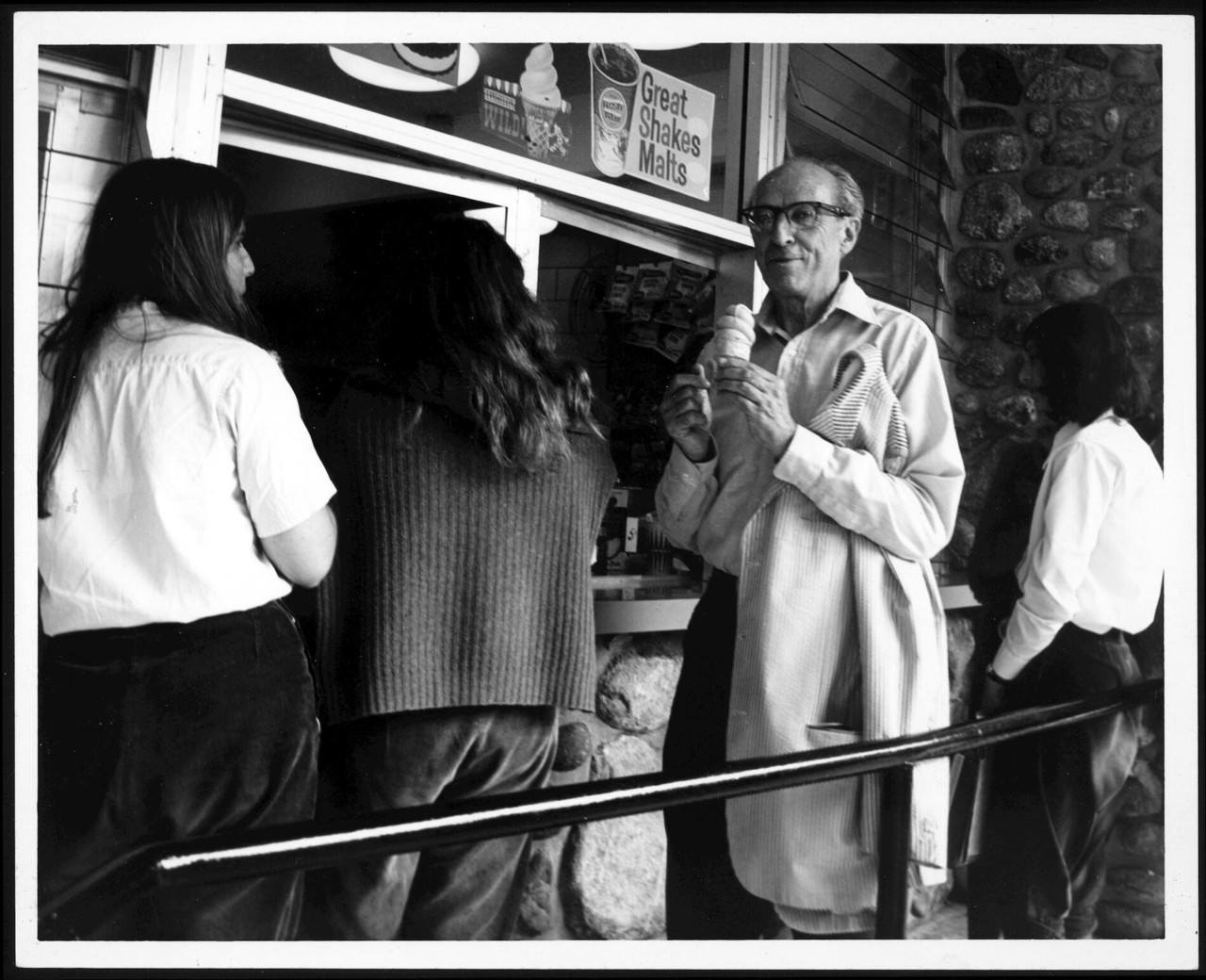
    Life isn’t so bad when there’s ice cream.

    Perhaps that was what was going through Aaron Copland’s head, decades after getting jerked around by Hollywood. After all, if you want to work in the film industry, you’ve got to expect that once in a while somebody’s going to mess with your things – even if you’re a Pulitzer Prize winner, lauded as the “Dean of American composers.”

    Copland was not very happy when his music for “The Heiress” was chopped to ribbons, dialed down and rescored without his approval. William Wyler (“Wuthering Heights,” “Friendly Persuasion,” “The Big Country,” “Ben-Hur”) was a brilliant director, but he had a tin ear. His films consistently sported the best scores of their era, and yet he mostly underappreciated, if not outright disliked, the music.

    “The Heiress” was made fresh off Wyler’s runaway success with “The Best Years of Our Lives.” The film, based on Henry James’ “Washington Square,” was nominated for eight Academy Awards, winning four, including Oscars for Olivia De Havilland and for Copland’s score, which is so strong it manages to maintain its integrity despite all of the studio tinkering.

    Wyler insisted Copland work the song “Plaisir d’Amour” into the fabric of his music, which he artfully did in three cues. But that wasn’t good enough. Without Copland’s knowledge, the main title was replaced with a garish arrangement of “Plaisir,” which was also looped in for some of the love music. André Previn, in 1949 already one of Hollywood’s bright young talents, likened the return of Copland’s original thoughts following these interpolations to “suddenly finding a diamond in a can of Heinz beans.”

    When Copland’s contribution was recognized by the Academy, it was the only instance up to that time of a score being honored after being shorn of its main title, the part of a score that generally makes the biggest impression. Copland never bothered to collect his award. “The Heiress” would be the last time he would work in Hollywood.

    He did compose one more film score, however, for the 1961 independent film, “Something Wild,” which contains some of his most insistently non-commercial music. Occasionally brutal and often thrilling, its character is worlds away from the pastoral tranquility of “Appalachian Spring.” It’s a brilliant piece of work, yet it did not receive a commercial release until 2003.

    This week on “Picture Perfect,” we’ll sample music from “The Heiress” and “Something Wild,” as well as from the controversial pro-Soviet film “The North Star.” We’ll even hear a little bit from the 1939 World’s Fair documentary “The City.”

    Get your Labor Day weekend off to a good start with a cold cone of Aaron Copland classics, this Friday evening at 6:00 EDT, on WWFM – The Classical Network and wwfm.org.
  • Thief of Bagdad Rozsa Score Rediscovered

    Thief of Bagdad Rozsa Score Rediscovered

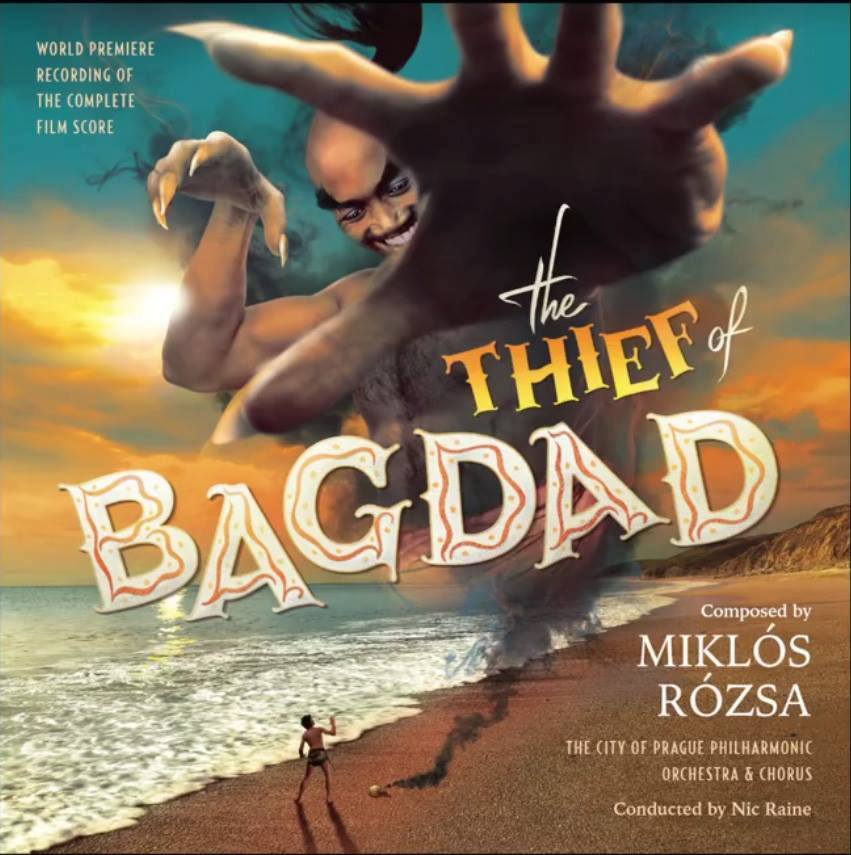
    If your three wishes would encompass a complete recording, in up-to-date sound, of one of the most enchanting film scores by Miklós Rózsa, you needn’t hold out for the discovery of a magic lamp. I hope you’ll join me for a recent release of a two-CD set, on the Prometheus label, of music from the classic 1940 fantasy-adventure “The Thief of Bagdad.” The City of Prague Philharmonic and Nic Raine have recorded the score, note-complete, with ample bonus material. Tune in to be transported. Take the magic carpet ride, this Friday at 6 p.m. EDT, on WWFM – The Classical Network and wwfm.org.
  • Jerry Goldsmith Hollywood Star Celebration

    Jerry Goldsmith Hollywood Star Celebration

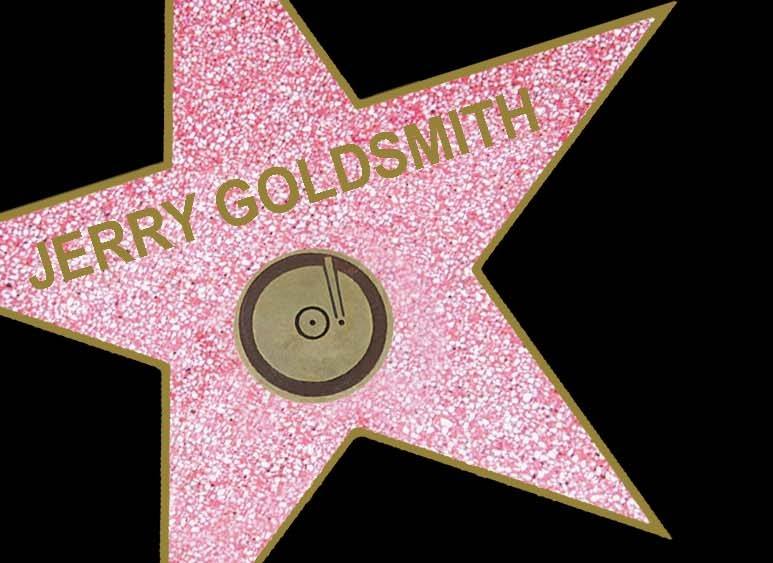
    On May 9, Jerry Goldsmith finally received his star on the Hollywood Walk of Fame. Goldsmith, the composer of over 200 film and television scores, died in 2004 at the age of 75.

    This week on “Picture Perfect,” we’ll hear selections from four of Goldsmith’s classic scores, including “Patton” (just in time for Memorial Day), “Chinatown” (composed in only ten days), “The Wind and the Lion” (like all of these, Oscar-nominated), and “Star Trek: The Motion Picture” (the theme really caught fire when used in the television series “Star Trek: The Next Generation”).

    Join me in celebrating “A Star for Jerry,” this Friday evening at 6 EDT, on WWFM – The Classical Network and wwfm.org.
Tag Cloud

Aaron Copland (92) Beethoven (95) Composer (114) Film Music (123) Film Score (143) Film Scores (255) Halloween (94) John Williams (187) KWAX (229) Leonard Bernstein (101) Marlboro Music Festival (125) Movie Music (138) Opera (202) Philadelphia Orchestra (89) Picture Perfect (174) Princeton Symphony Orchestra (106) Radio (87) Ralph Vaughan Williams (85) Ross Amico (244) Roy's Tie-Dye Sci-Fi Corner (290) The Classical Network (101) The Lost Chord (268) Vaughan Williams (103) WPRB (396) WWFM (881)

DON’T MISS A BEAT

Receive a weekly digest every Sunday at noon by signing up here


RECENT POSTS