Get out your Silly Putty! We’ll have plenty of vibrant colors for you to enjoy this week on “Picture Perfect,” when the focus will be on comic adventurers – as in heroes from the funnies.
We’ll hear music from “Prince Valiant” (1954), based on Hal Foster’s enduring Sunday strip about the exploits of a Viking prince at the court of King Arthur. The film stars Robert Wagner (in a page-boy haircut), Janet Leigh, James Mason, Sterling Haydn, and Victor McLaglen (as Val’s Viking pal Boltar). It also happens to feature one of Franz Waxman’s most rousing scores, clearly a prototype for the kind of music that later made John Williams a household name.
Then Billy Zane is “The Ghost Who Walks,” in a big screen version of Lee Falk’s “The Phantom” (1996). Like Batman, The Phantom harnesses personal tragedy – in this case, the murder of his father – to a thirst for justice. He is now part of an ancient lineage of Phantoms, who don the purple suit and fight crime from a cave in a remote African country, in part through the power of a magic ring. The memorable (though somewhat monothematic) score is by David Newman, one of the sons of legendary Hollywood composer Alfred Newman.
Warren Beatty helmed an amusing adaptation of Chester Gould’s “Dick Tracy” (1990), replete with primary color production design and meticulously applied make-up that transformed some of the most respected actors of the day (including Al Pacino, Dustin Hoffman and James Caan) into a live-action Rogue’s Gallery. Design and make-up were recognized with Academy Awards, as was Stephen Sondheim, for the original song “Sooner or Later (I Always Get My Man),” sung in the film by Madonna. We won’t hear Sondheim’s song, but we will hear some of Danny Elfman’s underscore, which harkens back to Hollywood’s Golden Age.
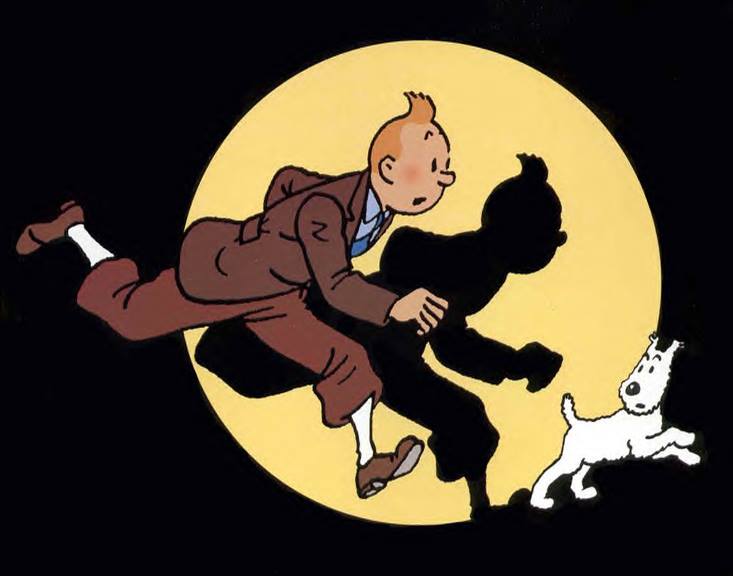
Finally, we turn from the American newspaper to the comic volumes of Belgian cartoonist Hergé, and his most famous creation, Tintin, a young journalist whose stories seem always to embroil him in globetrotting adventures. Developed for the screen by Steven Spielberg and Peter Jackson, “The Adventures of Tintin” (2011) was shot as 3-D motion capture animation.
After 50 years in the business, during which he wrote music for all manner of films, from across virtually every genre, John Williams finally got a crack at scoring an animated feature. The result was a double Academy Award nomination, as Williams had also written the music that year for Spielberg’s “War Horse.” Not bad for a 79 year-old composer.
Unfortunately, “Tintin” never gained the kind of traction with the public that the filmmakers had hoped for, otherwise the score would certainly be much better known, as it is cut from the same cloth – and is of the same high quality – as those for the “Star Wars,” Indiana Jones, and Harry Potter series.
I’ll see you in the funny pages this week, on “Picture Perfect” – music for the movies – this Friday evening at 6:00 EDT, on WWFM – The Classical Network and wwfm.org.
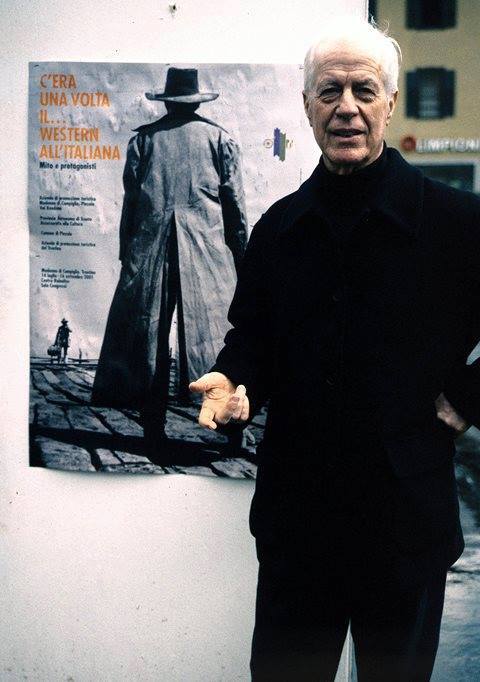
You may have heard him on “Picture Perfect” last Friday, on WWFM – The Classical Network, whistling the distinctive main title music for “A Fistful of Dollars.” Alessandro Alessandroni, whose talent, as a guitarist, mandolinist, sitarist, accordionist, pianist, and, yes, whistler, graced over 70 film scores, died on Sunday at the age of 92. Among his recent credits: “The Lego Movie.” He essentially whistled Ennio Morricone to international fame.
Hard to believe, John Williams is 85 years-old today. Oh Johnny, how do I love thee? Enough to go to battle with Norman Lebrecht on his blog, slippedisc.
I hope you’ll join me today, as I give Williams a more proper birthday salute, from 4 to 7 p.m. EST, on WWFM – The Classical Network and at wwfm.org.
Thank you, John, for all the great music. You’ve been an essential part of the soundtrack of my life for 40 years. Long may you reign.
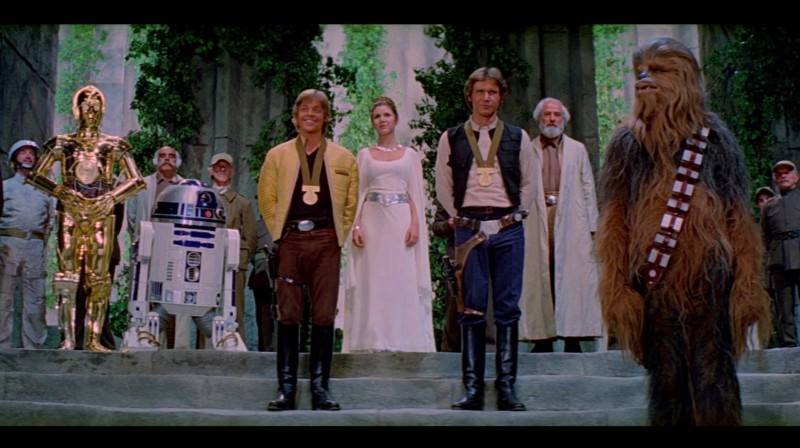
PHOTOS (clockwise from left): Williams with the 2016 AFI Lifetime Achievement Award, the first bestowed upon a composer; Williams with his “Star Wars” Oscar in 1978; Williams conducting sometime in the 1970s; Williams takes a bow.
2016 has been a bold year for remakes. Above and beyond a new “Ghostbusters,” which had so-called fanboys tied up in knots, Hollywood has brazenly taken on two beloved classics in “Ben-Hur” and “The Magnificent Seven.” Generally speaking, the originals excelled on all levels, which is why they are still fondly remembered, but the music for both has been especially indelible. In fact, I would argue “The Magnificent Seven” is as beloved as it is mostly because of Elmer Bernstein’s immortal score.
This week on “Picture Perfect,” you’ll have a chance to sample music from the remakes, alongside selections from their classic predecessors.
I’ve been listening to James Horner’s score for the new version of “The Magnificent Seven,” and while the result is not exactly top-shelf Horner – the composer was killed in a plane crash last year, not long after making some sketches after having merely read the script (an associate of his, Simon Franglen, who worked with the composer on “Titanic” and “Avatar,” was hired to flesh out the material) – it nonetheless serves as a painful reminder of exactly what’s been lost from the art of film-scoring.
Horner’s trademark use of the shakuhachi is invoked, as are “Mask of Zorro”-style handclaps and the inclusion of the all-pervasive Horner “Danger Motif” (which echoes the opening of Rachmaninoff’s Symphony No. 1 and is in just about every genre score Horner composed since at least “Star Trek II” in 1982). But what is most pertinent, and most refreshing, are the snippets of bona fide melody – and some of that melody is actually stirring and uplifting. After all, Horner hit his stride in the early ‘80s, when music still had something meaningful to add to movies, beyond simply acting as a moody drone or pumped-up bass-line.
Say what you will about Horner – he was a flawed artist who lifted freely from his own and others’ work – but he was always polished, professional and dramatically effective. I would go so far as to say he may very well have been the most naturally talented film composer of his generation. He was fatally limited by a lack of originality, but he always knew his way around an orchestra.
Furthermore, he had the ability to uplift. It’s a quality not at all common in film music today, or in movies at all for that matter. Movies may retain the ability to thrill, but the thrills, I find, such as they are, are mostly adrenaline-driven. When was the last time you experienced awe at the movies, or left the theater feeling elevated or elated? More commonly, it’s the sensation of having been wrung-out, triumph experienced vicariously only insofar as having survived the latest computer-generated assault. Where is the joy in that? Where is the hope?
Horner’s score in no way displaces Elmer Bernstein’s immortal music for the original “The Magnificent Seven.” Then again, how could it? But at least he doesn’t embarrass himself. The best I can say about Marco Beltrami, on the other hand, is that he is smart enough to know there is no way a new “Ben-Hur” is going to be able to top its predecessor. So instead, he tries for something completely different.
Tune in at 6:00 EDT and hear for yourself. We’ll enjoy a little “7” and “7” with two sides of “Ben-Hur,” on WWFM – The Classical Network and at wwfm.org.
Unfamiliar with Horner’s “Danger Motif?” These clips should give you an idea:
You can also it hear it here, in the first movement of Rachmaninoff’s First Symphony: