Tag: Film Score

  • Angelo Badalamenti Twin Peaks Composer Dies

    Angelo Badalamenti Twin Peaks Composer Dies

    While I wouldn’t ordinarily equate them with Sergei Prokofiev and Sergei Eisenstein, the symbiotic relationship of Angelo Badalamenti and David Lynch – and their working methods – were astonishingly similar. Badalamenti could never have done what Prokofiev did on “Alexander Nevsky,” but at the same time, Prokofiev, despite his fondness for the grotesque, could never have crafted the moody scores conjured by Badalamenti for “Blue Velvet” and “Twin Peaks.”

    Lynch’s musical good luck charm also appeared as an espresso-obsessed gangster in “Mulholland Drive” and accompanied Isabella Rossellini from the piano in her onscreen performance of “Blue Velvet.”

    Julee Cruise, with whom Badalamenti collaborated several times, including on the hit single “Falling” (her vocals overlaid onto the “Twin Peaks” theme music), died earlier this year, in June. Lynch can currently be seen in an amusing cameo, as crusty director John Ford, in Steven Spielberg’s “The Fabelmans.”

    Angelo Badalamenti died yesterday at the age of 85. R.I.P.

    https://www.hollywoodreporter.com/movies/movie-news/angelo-badalamenti-dead-david-lynch-composer-blue-velvet-1235280660/

    Badalamenti’s “Twin Peaks” theme (instrumental):

    With Cruise’s vocals:


    TOP: Badalamenti has Rossellini’s back

    BOTTOM: With Lynch and Cruise

  • Nino Rota Godfather Fellini Birthday

    Nino Rota Godfather Fellini Birthday

    An hour of music by Nino Rota is an offer you can’t refuse.

    Rota was born in Milan on this date in 1911. An extraordinarily prolific composer, he wrote some 150 film scores, from the 1930s until his death in Rome in 1979. That’s an average of three scores per year over a 46-year span. At the height of his productivity, from the late-40s to the mid-50s, he was writing up to ten scores a year, with a mindboggling 13 film scores to his credit in 1954.

    Yet somehow, in his spare time, he managed to write ten operas, five ballets, and dozens of other orchestral, choral, and chamber works, and incidental music for the stage. As if that weren’t enough, he also taught at the Liceo Musicale in Bari, Italy, of which he was the director for almost 30 years.

    This week on “Picture Perfect,” we remember him on his birthday, with some of his best-known film scores.

    For the 50th anniversary of its release, we’ll hear selections from Francis Ford Coppola’s “The Godfather” (1972) and what many regard as one of the greatest sequels ever made, “The Godfather Part II” (1974). Taken collectively, this is some of the best-known and best-loved movie music ever written.

    “The Godfather Part II” earned Rota his only Academy Award. But there was some controversy surrounding Rota’s contribution to its predecessor. His nomination for the original “The Godfather” was withdrawn at the eleventh hour, when it came to the Academy’s attention that the love theme had been used in a 1958 Italian comedy he had scored called “La Fortunella.” Puzzlingly, the music for the sequel went on to win the Oscar, although it featured the same theme that made the earlier score ineligible.

    It could be argued that Rota was so prolific that, as was the case with many of his Baroque forebears, a certain amount of recycling was inevitable. We’ll listen to a selection from Luchino Visconti’s “Rocco and His Brothers.” Hearing it directly on the heels of “The Godfather,” you may find it unexpectedly familiar.

    But lest we become too judgmental, remember Gioachino Rossini did much the same thing. And the Italian opera comparison is not inappropriate. Rota’s long-limbed melodies frequently evoke the heyday of Puccini and the Verismo School. This is most evident in his music written for another Visconti film, “The Leopard” (1963), after the poignant novel of Giuseppe di Lampedusa.

    At the same time, Rota was also clearly influenced by the commedia dell’arte, or perhaps simply the world of the circus, which made him the ideal composer for the films of Federico Fellini, in which the most poignant melodies might be swept away at any moment by off-the-rails funhouse music. There would be no Danny Elfman without Nino Rota!

    Rota’s association with Fellini began in 1952 with “The White Sheik.” It was the start of a working relationship that would span decades, until Rota’s death in 1979, and encompassed such classics as “La Strada” (1954), “Nights of Cabiria” (1957), “La Dolce Vita” (1960), and “8 ½” (1963). We’ll hear an impromptu suite made up of selections from all four. Such music could only be described as Felliniesque – or perhaps, more accurately, Fellini’s films should be described as Rotaesque.

    Leave the gun, take the cannoli. Nino Rota sucks down all the espresso on his birthday, on “Picture Perfect,” music for the movies, this Saturday evening at 6:00 EST, on WWFM – The Classical Network and wwfm.org.

  • Ennio Morricone Rome Mural Celebrates Maestro

    Big Ennio is watching you!

    Ennio Morricone mural dedicated in Rome yesterday on what would have been the composer’s 94th birthday.

  • Ennio Morricone Bittersweet Genius

    Ennio Morricone Bittersweet Genius

    There is something just so innately Italian about the music of Ennio Morricone. So often in his works the smiles and tears commingle. He really caught the bittersweet essence of what it is to be alive. If he had lived a hundred years earlier, he might have been one of the great opera composers. When he’s not in badass spaghetti western mode, that is.

    Happy birthday, Ennio Morricone, wherever you are.


    “Cinema Paradiso”

    “The Mission”

    “Once Upon a Time in the West”

    And, just so I don’t take the gas pipe, “The Ecstasy of Gold” from “The Good, the Bad and the Ugly”

    Which I would request to be played at my funeral, if not for “Navajo Joe”

  • English Documentary Music Vaughan Williams Britten

    English Documentary Music Vaughan Williams Britten

    What has often been regarded in the United States as “hack work,” in England has been accepted as just another aspect of what it means to be a working artist. There is no disgrace in a composer earning a living, and some of the nation’s greatest musicians – including those in the employ of the Royal Family – have contributed finely-crafted scores to its body of cinema.

    This week on “Picture Perfect,” it’s an hour of English documentary music. We’ll hear selections by Ralph Vaughan Williams, from “The People’s Land” (1941), Benjamin Britten, from “The King’s Stamp” (1935), William Alwyn, from “The Green Girdle” (1941), and Master of the Queen’s Music, Sir Arthur Bliss, from “The Royal Palaces of Britain” (1966). All four films are patriotic utterances on distinctly English themes.

    You may not have seen any of these shorts, but the music is beautiful. I hope you’ll join me for music from English documentaries, this Saturday evening at 6:00 EDT, on WWFM – The Classical Network and wwfm.org.


    In the meantime, if you’re having a slow day, why not get a taste of the films themselves?

    “The People’s Land,” score by Vaughan Williams:

    https://film.britishcouncil.org/resources/film-archive/the-peoples-land?fbclid=IwAR36nQXOBCTJGiE7HS217SKdZeblNZK1vuwUrvwIjJlUXvZO14pJ0IuU064

    “The King’s Stamp,” score by Benjamin Britten:

    “The Green Girdle,” score by William Alwyn:


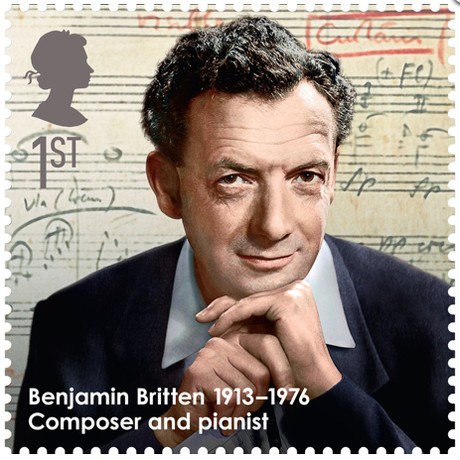
    PHOTOS: Britten’s stamp and the King’s stamp

Tag Cloud

Aaron Copland (92) Beethoven (95) Composer (114) Film Music (123) Film Score (143) Film Scores (255) Halloween (94) John Williams (187) KWAX (229) Leonard Bernstein (101) Marlboro Music Festival (125) Movie Music (138) Opera (202) Philadelphia Orchestra (89) Picture Perfect (174) Princeton Symphony Orchestra (106) Radio (87) Ralph Vaughan Williams (85) Ross Amico (244) Roy's Tie-Dye Sci-Fi Corner (290) The Classical Network (101) The Lost Chord (268) Vaughan Williams (103) WPRB (396) WWFM (881)

DON’T MISS A BEAT

Receive a weekly digest every Sunday at noon by signing up here


RECENT POSTS