Tag: Film Score

  • Bernstein’s Waterfront A Hollywood Contender

    Bernstein’s Waterfront A Hollywood Contender

    “I coulda had class. I coulda been a contender. I coulda been somebody – instead of a bum, which is what I am.”

    We’ve all had those kinds of days, haven’t we?

    Yet Leonard Bernstein’s score for “On the Waterfront” (1954) was always a contender, even if at times the composer found himself on the ropes.

    “On the Waterfront” was the only original film score composed by Bernstein (the screen adaptations of his stage musicals were adapted by other hands). Narrative film, of course, is a collaborative effort, in which music is usually the last to the table and the first to go. Bernstein’s score was edited and dialed down to suit the overall needs of the film.

    Unused to such rough treatment, Bernstein found his brush with Hollywood to be dispiriting, to say the least. He arranged his music into a concert suite, over which he had complete control, and the work has gone on to become one of his better-known pieces. That said, what can be heard in the film remains a powerful statement, and one of the great film scores.

    The original recordings, as they appear in the film, were long believed to have been lost. However, in the course of restoration of “On the Waterfront” for release on BluRay, it was discovered that audio had been preserved on acetate discs used for playback during the original recording sessions. Material from these were issued for the first time in 2014, on the Intrada label.

    Bernstein’s music would be nominated for an Academy Award, one of “On the Waterfront”s twelve nominations. The film would be recognized with wins in eight categories, including Best Picture, Best Actor (Marlon Brando), and Best Director (Elia Kazan). Bernstein may have lost out to Dimitri Tiomkin for his work on “The High and the Mighty.” However, like Brando’s Terry Malloy, his score to “On the Waterfront” proves itself a champion.

    We’ll hear selections, alongside some of Aaron Copland’s music for “The Red Pony” (1949), once again, from the film’s original elements; dances from the only film score ever to be awarded the Pulitzer Prize for Music, “Louisiana Story” (1948), by Virgil Thomson; and the music that lends “Picture Perfect” its signature tune, “They Came to Cordura” (1959), by Elie Siegmeister.

    It’s an hour of New York composers in Hollywood this week, on “Picture Perfect,” music for the movies, this Saturday evening at 6:00 EDT, on WWFM – The Classical Network and wwfm.org.
  • Vaughan Williams’ Antartica Symphony: Ice and Tragedy

    Think cool thoughts with Ralph Vaughan Williams’ “Sinfonia Antartica” – his Symphony No. 7 – spun off of his score for the Ealing Studios film “Scott of the Antarctic” (1948).

    The fatal polar expedition of Robert Falcon Scott and his companions enthralled the composer, who responded with music evocative of ice and wind, penguins and whales, and inexorable snows. Vaughan Williams wrote most of the score before even seeing the film.

    The symphony is scored for large orchestra, including vibraphone, pianoforte, organ, and wind machine, with wordless women’s chorus and soprano soloist.

    It falls into five movements – Prelude, Scherzo, Landscape, Intermezzo, and Epilogue – with the third movement leading directly into the fourth. The scherzo is propelled by whales and penguins. The “landscape” in question is the icy wasteland of Ross Island.

    The score itself includes brief literary quotations – from Shelley, the Biblical Book of Psalms, Coleridge, Donne, and Captain Scott’s Last Journal – at the head of each movement. These are sometimes declaimed in performance and recordings, though the composer did not indicate that they were intended to be spoken.

    The title of the work is frequently misspelled, since the composer opts for the Italian “Antartica” (spelled with only one “c”) – a decision he made at the last minute, so as to keep it consistent with his use of the Italian word “Sinfonia.”

    Vaughan Williams was 80 years-old when he completed the symphony in 1952. It received its first public performance on January 14, 1953. Sir John Barbirolli conducted the Hallé Orchestra.

    The tragic dimension of the overall tone of the symphony is unmistakable, with man’s endeavors insignificant in the face of implacable nature.

    Here’s hoping your reception is a chilly one!

  • Jerome Moross Frankie and Johnny Rediscovered

    Jerome Moross Frankie and Johnny Rediscovered

    Wow! Here’s a neat discovery. An actual performance of Jerome Moross’ ballet, “Frankie and Johnny.”

    You probably know the bluesy song, inspired by one or more sensational crimes of passion, in which a betrayed woman shoots her lover. (“He was her man, but he done her wrong.”) There are now so many variants that it’s taken on the quality of a folk song. Elvis sang it. Johnny Cash sang it. It’s been covered by innumerable jazz artists.

    Moross uses it as a kind of Greek chorus (sung by a trio Salvation Army sisters) in his brash and jazzy dance piece, which created a sensation at its premiere in 1938. The work predated Leonard Bernstein’s “Fancy Free” by six years and sent the censors into a moral panic.

    Though Moross was adept at writing music in many forms – including concert pieces (a symphony for Beecham), musical theater (the cult classic “The Golden Apple,” including the evergreen “Lazy Afternoon”), and opera (“Sorry, Wrong Number”) – he is best known for his classic film scores. He spent much of his career ping-ponging back and forth between New York and Hollywood.

    When “Porgy and Bess” concluded its New York run in 1935, George Gershwin invited Moross to join the show, on tour, as a pianist. It was while on a bus trip to Los Angeles to participate in “Porgy’s” west coast premiere that the 23 year-old made a stop in Albuquerque.

    “[A]s we hit the Plains I got so excited,” Moross recollected. “. . . [T]he next day I got to the edge of town and then walked out onto the flat land with a marvelous feeling of being alone in the vastness, with the mountains cutting off the horizon. The whole thing was just too much for me . . . it was marvelous, and I just fell in love with it.”

    The experience served him well. Moross drew on the memory of that trip in the writing of some of his most famous music, the Academy Award-nominated score for “The Big Country,” with its sense of wide-open excitement in the face of sweeping vistas. Western high-spirits and American jazz color most of Moross’ output.

    Happy birthday, Jerome Moross. You tackled everything with exuberance and vitality.


    One of the most thrilling credits sequences of all time?

    Surely one of the greatest film scores ever written

    Rare historic radio broadcast of the Symphony No. 1, with Moross himself at the piano

    “Lazy Afternoon” from “The Golden Apple,” sung by Kaye Ballard from the 1954 original cast recording

    Theme to “Wagon Train”

    Sonata in G major for Piano Duet and String Quartet

  • Lalo Schifrin Turns 90 A Scoring Legend

    Lalo Schifrin Turns 90 A Scoring Legend

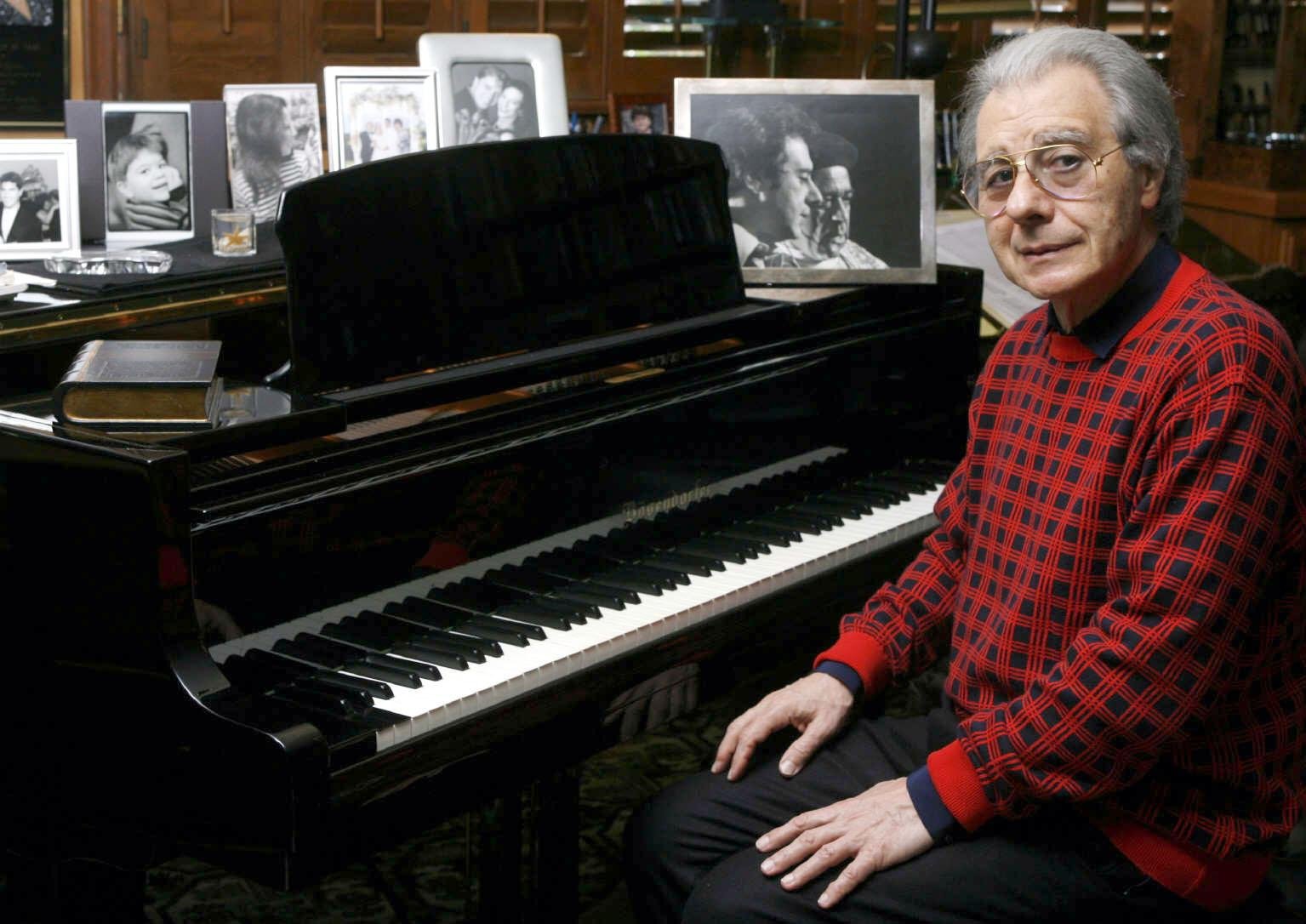
    On the first day of summer (winter in his native Argentina), Lalo Schifrin turns 90.

    Schifrin is the composer of over 100 film and television scores, including those for “Cool Hand Luke,” “Bullitt,” “Dirty Harry,” “Enter the Dragon,” “Mannix,” “Starsky and Hutch,” “Rush Hour,” and of course “Mission: Impossible.”

    Not everyone was a fan. Director William Friedkin was so displeased with Schifrin’s music for “The Exorcist,” he hurled the master tape out into the parking lot, in the presence of the composer. Schifrin had written music for the trailer, which had reportedly scared the pants off preview audiences, so the executives at Warner Bros. told Friedkin they wanted him to tone it down. Friedkin being Friedkin – this is, after all, the guy who fired guns on set to unnerve his actors and filmed the chase scene in “The French Connection” without a permit – he didn’t convey the message. Instead, he fired Schifrin and crammed his soundtrack with equally disturbing music by avant-garde masters Krzysztof Penderecki, George Crumb, Anton Webern, and Hans Werner Henze, not to mention Mike Oldfield.

    Happily, most of Schifrin’s other collaborators were more genial. A highly respected jazz pianist, he was discovered by Dizzy Gillespie, who hired him on the sight. Schifrin composed for Dizzy an extended work for big band, “Gillespiana,” in 1958. He worked frequently with Clint Eastwood and scored George Lucas’ first feature, “THX-1138.” In all, he earned 22 Grammy nominations (winning five), four Primetime Emmy nominations, and six Academy Award nominations. He received an honorary Oscar in 2018.

    Schifrin has lived in the United States since 1958, making a very healthy living arranging and composing across genres, including bossa nova, jazz, bebop, rock, and classical, all the while cashing those lucrative Hollywood paychecks – and collecting royalties for the continued use of his indelible theme in the “Mission: Impossible” film franchise.

    Happy birthday, Lalo Schifrin!


    “Concierto Caribeño” for flute and orchestra

    Lalo Schifrin and Dizzy Gillespie

    “Cool Hand Luke”

    Rejected score from “The Exorcist”

    https://www.youtube.com/watch?v=uVxZt_2qSCk

    The disturbing trailer

    https://www.youtube.com/watch?v=6XuB8DJ0AI8

    Lalo receives his honorary Academy Award from Eastwood

    Schifrin’s greatest hit

  • Francis Lai Love Story Composer

    Francis Lai Love Story Composer

    If we’re to believe Ali MacGraw and Ryan O’Neal, love means never having to say you’re sorry. And their box office success in “Love Story” (1970) means never having to try very hard to recall the music of Francis Lai.

    Lai died in 2018. He would have been 90 years-old today.

    Lai started out as an accordionist and songwriter in Marseille. His association with singer Claude Goaty brought him to Paris, where he fell in with Edith Piaf’s circle while still in his 20s. He accompanied her, as she championed some of his 600 songs. His works were also embraced by Juliette Greco and Yves Montand.

    After the international success of the film “A Man and a Woman” (1966), director Claude Lelouch made it a practice to send Lai an outline of the story to his subsequent movies before a frame was ever shot. Lai would then come up with a theme – invariably romantic and melancholy – and the films would then be crafted to suit the music. This unusual arrangement worked very well for them. They wound up collaborating on nearly 40 projects.

    Lai, who spoke no English, twice turned down the opportunity to work on “Love Story.” He was finally persuaded by actor Alain Delain, who flew to Paris in the company of Paramount studio executive Robert Evans and a rough cut of the film. Lai later recalled he was so moved by the movie that he sat down at the keyboard as soon as he got home and composed the haunting theme. “Love Story” was nominated for seven Academy Awards, but Lai was the only one to be recognized with a statuette.

    Andy Williams’ vocal spin-off of the tune, as “Where Do I Begin?,” recorded after the film, was a top-10 hit. The “Love Story” theme reached number 2 on the Billboard charts.

    In all, Lai’s soundtracks sold over 20 million copies. If nothing else, you’ve probably heard his music when sitting in the dentist’s chair. His poignant melodies continue to be played on easy listening services everywhere.

    Joyeux anniversaire, Francis Lai.


    With Edith Piaf

    https://www.youtube.com/watch?v=P2-jWuce62Y

    “A Man and a Woman”

    “Love Story”

    “Where Do I Begin?”

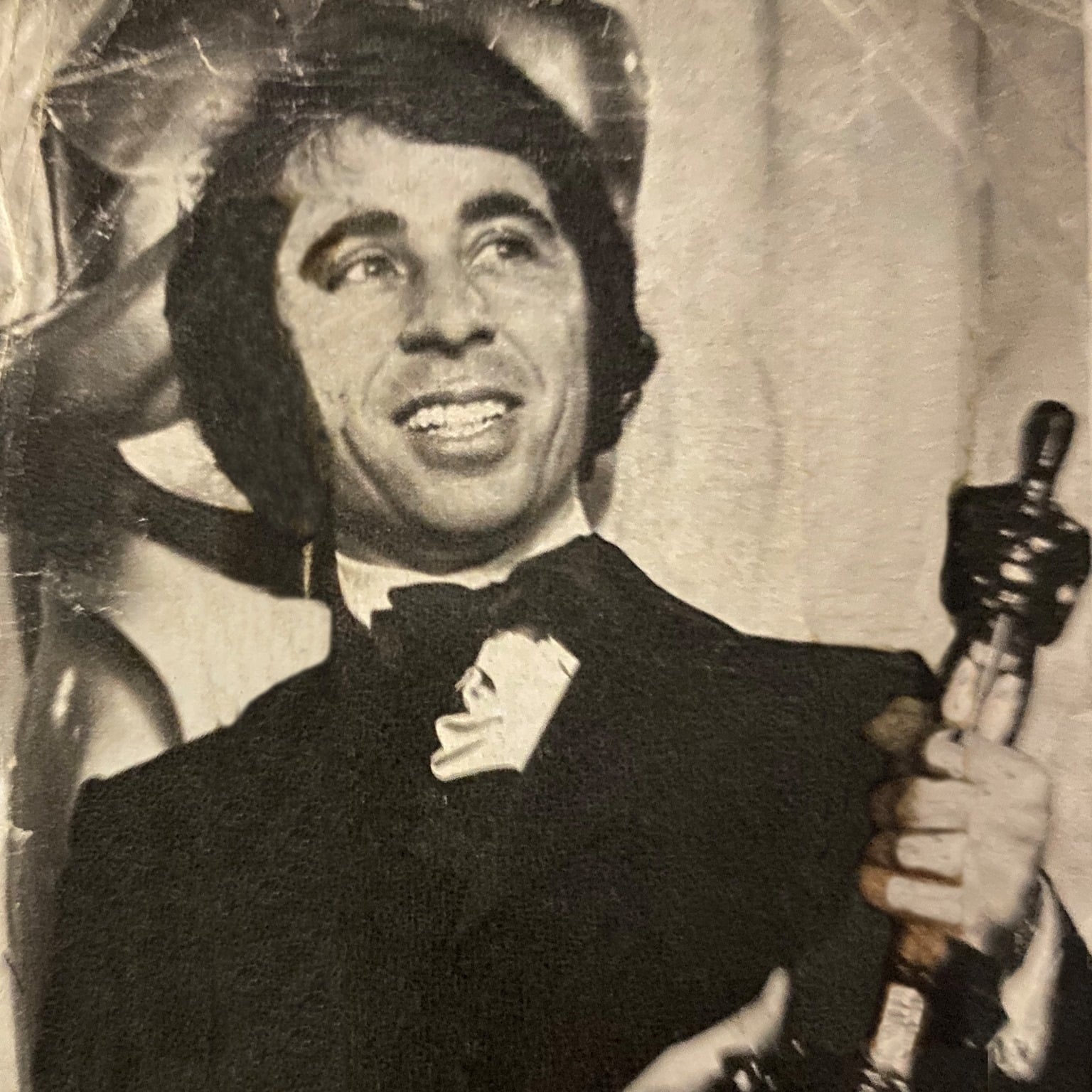
    Receiving his Oscar from Joan Blondell and Glen Campbell

Tag Cloud

Aaron Copland (92) Beethoven (95) Composer (114) Film Music (123) Film Score (143) Film Scores (255) Halloween (94) John Williams (187) KWAX (229) Leonard Bernstein (101) Marlboro Music Festival (125) Movie Music (138) Opera (202) Philadelphia Orchestra (89) Picture Perfect (174) Princeton Symphony Orchestra (106) Radio (87) Ralph Vaughan Williams (85) Ross Amico (244) Roy's Tie-Dye Sci-Fi Corner (290) The Classical Network (101) The Lost Chord (268) Vaughan Williams (103) WPRB (396) WWFM (881)

DON’T MISS A BEAT

Receive a weekly digest every Sunday at noon by signing up here


RECENT POSTS