Tag: Film Scores

  • Picture Perfect: Cinematic Animal Music

    Picture Perfect: Cinematic Animal Music

    This week on “Picture Perfect,” it’s a cinematic carnival of the animals.

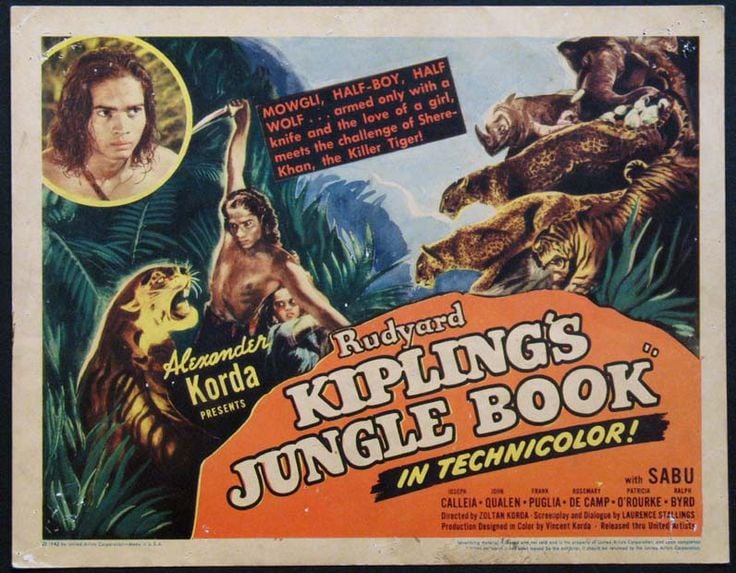
    Take a walk on the wild side with music from “The Jungle Book” (1942), the classic Korda Brothers’ adaptation of Rudyard Kipling’s tale of tails. The film stars the charismatic Sabu as Mowgli. (For the record, Kipling pronounced the name such that the first syllable rhymes with “cow.”) Miklós Rózsa wrote the enchanting score.

    We’ll also hear selections from John Barry’s music for “Born Free” (1966), based on Joy Adamson’s memoir about the raising of Elsa, an orphaned lion cub who grows to adulthood and is eventually released into the Kenyan wilderness. The music turned out to be a double Academy Award winner for Barry, who was recognized for Best Original Score and Best Original Song.

    Jerome Moross is probably best known for his music to “The Big Country.” His “great outdoors” style lends verve to the National Geographic special, “Grizzly!” (1967), a documentary about a pair of ecologists studying North American bears. The energetic Americana score is both memorable and motivating.

    And we can’t allow the hour to pass without hearing Henry Mancini’s “Baby Elephant Walk,” from “Hatari!” (So many exclamation points in these wilderness titles!) The film is directed by Howard Hawks and stars John Wayne. In case you’re wondering, “Hatari!” is Swahili for “Danger!”

    No danger in treating yourself to a musical menagerie of classic film scores, on “Picture Perfect,” this Saturday evening at 6:00 EDT, on WWFM – The Classical Network and wwfm.org.

  • Ernest Gold Hollywood’s Viennese Master

    Ernest Gold Hollywood’s Viennese Master

    This Sunday night on “The Lost Chord,” we’re on the quest for Gold – Ernest Gold, that is.

    July 13 marks the composer’s centenary. Gold, who won an Academy Award for his work on “Exodus” in 1960, wrote nearly 100 film scores, including those for “The Defiant Ones,” “Inherit the Wind,” and “It’s a Mad, Mad, Mad, Mad World.” He was perhaps Hollywood’s last major musical link with Old Vienna.

    Though from the start his ambition was to write for film like his hero, Max Steiner, for a time he eked out a livelihood in New York, where he had settled following the Anschluss in 1938. There, he found work as a piano accompanist and a writer of popular songs. He used the income to formally study harmony and orchestration. He wrote a symphony in 1941. It was never performed in his lifetime, though his Piano Concerto made it to Carnegie Hall. It was damned by the critics for sounding like movie music, but Gold embraced the endorsement, packed his bags, and struck out for the West Coast. Eventually he would secure a foothold at Columbia Studios, where he worked with directors like Stanley Kramer and Otto Preminger.

    Despite his love of film, he never lost his enthusiasm for composing absolute music. The result was a piano sonata, a Symphony for Five Instruments, and one of the works I’ll be featuring this evening, his String Quartet No. 1 from 1948. It had been Gold’s intention that it would be a very serious piece, of an uncompromising, modernist bent. But he soon struck up against a mental block and realized that the only way to go was to write from the heart.

    For 19 years, Gold was married to Marni Nixon, the second of his three wives. If you’re a fan of screen musicals of the 1950s and ‘60s, you probably know that Nixon dubbed the singing voices of lead actresses in films like “The King and I,” “West Side Story,” and “My Fair Lady.”

    Gold wrote his “Songs of Love and Parting” expressly for Nixon in 1963. The texts were drawn from a variety of sources, the better to convey the universality of love and the heartache of separation, including poetry by James Thomson, William Shakespeare, Robert Burns, Emily Dickinson, Edna St. Vincent Millay, and Percy Bysshe Shelley.

    In the few minutes remaining at the end of the hour, we’ll also have time for a couple of Gold’s classic film themes. I hope you’ll join me for “Unalloyed Gold,” a remembrance of Ernest Gold in advance of his centenary, this Sunday night at 10:00 EDT, on WWFM – The Classical Network and wwfm.org.

  • Tudor Movie Music on Picture Perfect

    Tudor Movie Music on Picture Perfect

    This week on “Picture Perfect,” it’s an hour of tunes for the Tudors.

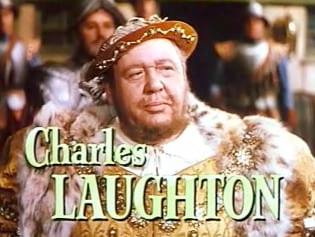
    We’ll hear selections from “Young Bess” (1953), with Jean Simmons as the future Elizabeth I. The colorful and entertaining cast also includes Stewart Granger, Deborah Kerr, and most notably Charles Laughton, who reprises his memorable characterization of Henry VIII. Laughton was honored with an Academy Award for Best Actor for playing Henry in the 1933 film, “The Private Life of Henry VIII.” Miklós Rózsa’s score conjures the era of the great MGM Technicolor spectacles.

    By the time of the events portrayed in “Mary, Queen of Scots” (1971), Elizabeth already wears the crown, albeit uneasily, due to the perceived threat of her first cousin once removed. Vanessa Redgrave is Mary and Glenda Jackson is Elizabeth, with a supporting cast that includes Timothy Dalton, Nigel Davenport, Patrick McGoohan, Trevor Howard, and Ian Holm. As seems to be the custom in dramatic interpretations of the historical events, the film features several fictitious encounters between the queens, even though in reality the two never met. The poignant score is by John Barry.

    “Anne of the Thousand Days” (1969) tells the story of Henry’s doomed second wife, Anne Boleyn. This time Richard Burton plays the king. Anne is played by Genevieve Bujold. Despite mixed reviews, the film was nominated for ten Academy Awards and recognized for its exceptional costumes. Among the other nominees was Georges Delerue for his period-flavored music.

    Finally, in a lighthearted change of pace from all the intrigue and execution, we turn to a big screen adaptation of Mark Twain’s “The Prince and the Pauper” (1937). Set in the time of Prince Edward (later Edward VI), Twain’s novel plays on the conceit that the heir apparent, at some point, becomes confused with a commoner, who happens to bear an uncanny resemblance to him.

    Top-billed Errol Flynn is really a supporting player as the devil-may-care Miles Hendon, who throws in his lot with the scraggly-looking prince, though he hardly believes his claims. Though it would still be a year until the release of “The Adventures of Robin Hood,” Flynn was already well on his way to becoming the screen’s quintessential swashbuckler, thanks to his turn in “Captain Blood” (1935). He easily dominates the film, and it’s a treat to see him duel with his old pal Alan Hale.

    Montagu Love plays Henry VIII, though he’s upstaged by a scheming Claude Rains as Edward Seymour, the Earl of Hertford. Composer Erich Wolfgang Korngold follows Flynn all the way, his music full of swagger and fun.

    Help yourself to a joint of mutton, and hang on to your heads! It’s time for the Tudors, on “Picture Perfect,” music for the movies, this Saturday evening at 6:00 EDT, on WWFM – The Classical Network and wwfm.org.

  • Comic Book Movie Music Adventure Awaits

    Comic Book Movie Music Adventure Awaits

    Get out your Silly Putty! There will be plenty of vibrant colors for you to enjoy this week on “Picture Perfect,” when the focus will be on comic adventurers – as in heroes from the funnies.

    We’ll have music from movies inspired by the two-dimensional cliffhangers of newspaper favorites Prince Valiant, The Phantom, and Dick Tracy, as well as the longer-form, Golden Age adventures of Tintin.

    “Prince Valiant” (1954) brings to life Hal Foster’s enduring Sunday strip about the exploits of a Viking prince at the court of King Arthur. Robert Wagner dons the signature page-boy haircut at the head of a hodge podge cast that also includes Janet Leigh, James Mason, Sterling Hayden, and Victor McLaglen (as Val’s Viking pal Boltar). The film also happens to feature one of Franz Waxman’s most rousing scores, clearly a prototype for the kind of music that later made John Williams a household name.

    Then Billy Zane is “The Ghost Who Walks,” in a big screen adaptation of Lee Falk’s “The Phantom” (1996). Like Batman, The Phantom harnesses personal tragedy – in his case, the murder of his father – to a thirst for justice. He also happens to be part of an ancient lineage of Phantoms, who don the purple suit and fight crime from a secluded skull cave in a remote African country. The memorable, though somewhat monothematic, score is by David Newman, one of the sons of legendary Hollywood composer Alfred Newman.

    Warren Beatty directs an amusing adaptation of Chester Gould’s “Dick Tracy” (1990), replete with primary color production design and meticulously applied prosthetic makeup, transforming some of the most respected actors of the day (including Al Pacino, Dustin Hoffman, and James Caan) into a live-action Rogue’s Gallery. Both design and makeup were recognized with Academy Awards, as was Stephen Sondheim, for his original song “Sooner or Later (I Always Get My Man),” sung in the film by Madonna. We won’t hear Sondheim’s song, but we will hear some of Danny Elfman’s underscore, which harkens back to Hollywood’s Golden Age.

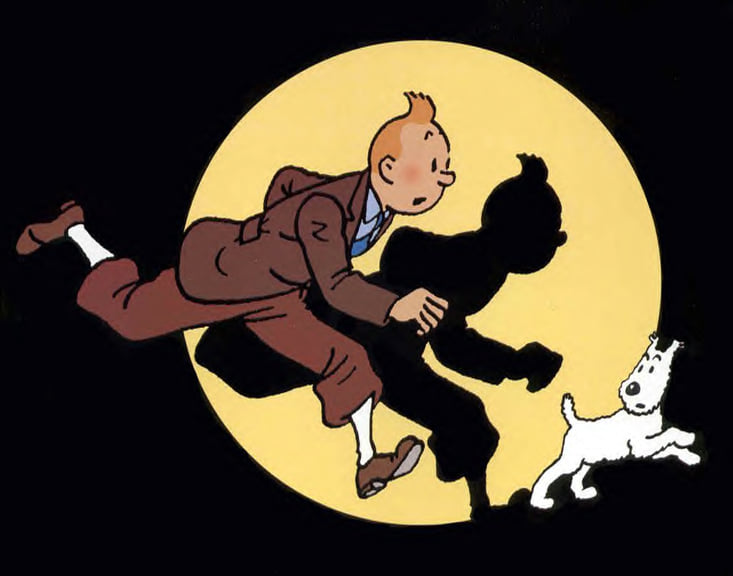
    Finally, we’ll turn from American newspaper strips to the comic albums of Belgian cartoonist Hergé, and his most famous creation, Tintin, an intrepid journalist whose stories seem always to embroil him in globetrotting adventures. Developed for the screen by Steven Spielberg and Peter Jackson, “The Adventures of Tintin” (2011) was shot as 3-D motion capture animation.

    After 50 years in the business, during which he wrote music for all manner of films, in virtually every genre, John Williams finally got a crack at scoring an animated feature. The result was a double Academy Award nomination, as Williams had also written the music that year for Spielberg’s “War Horse.” Not bad for a 79 year-old composer.

    Unfortunately, “Tintin” never gained the kind of traction with the public that the filmmakers had hoped for, otherwise the score would certainly be much better known, as it is cut from the same cloth – and is of the same high quality – as those for the “Star Wars,” Indiana Jones, and Harry Potter series.

    We’ll see you in the funny pages, this week on “Picture Perfect,” music for the movies, this Saturday evening at 6:00 EDT, on WWFM – The Classical Network and wwfm.org!


    DON’T FORGET! Wednesday marks the end of our fiscal year. If you enjoy “Picture Perfect” or any of the other musical offerings on WWFM The Classical Network, please help us meet our budget with your contribution today. Make a donation through June 30 at wwfm.org or by calling 1-888-232-1212. In fact, why not just do it now? Thank you for your kind generosity!

    https://wwwfm.secureallegiance.com/wwfm/WebModule/Donate.aspx?P=DEFAULT&PAGETYPE=PLG&CHECK=vOU2bz5JCWmgCDbf53nm9ezWDeZ%2beA1M
  • Lalo Schifrin Turns 89: Happy Birthday!

    Lalo Schifrin Turns 89: Happy Birthday!

    On the first day of summer (winter in his native Argentina), Lalo Schifrin turns 89. Schifrin is the composer of over 100 film and television scores, including those for “Cool Hand Luke,” “Bullitt,” “Dirty Harry,” “Enter the Dragon,” “Mannix,” “Starsky and Hutch,” “Rush Hour,” and of course “Mission: Impossible.” (Not everyone was a fan. His music for “The Exorcist” was demonstrably rejected by director William Friedkin when he hurled the master tape out into the parking lot.)

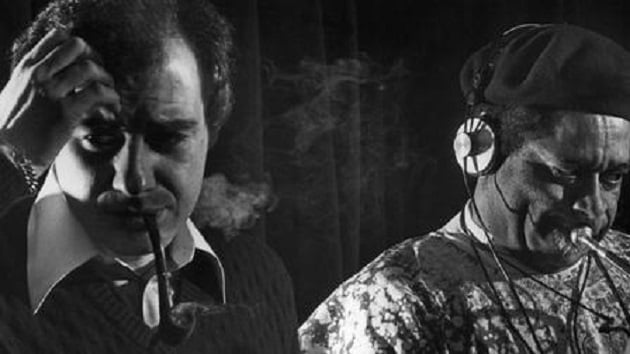
    A highly respected jazz pianist, Schifrin was discovered by Dizzy Gillespie, who hired him on the spot. Schifrin has lived in the United States since 1958, making a very healthy living arranging and composing across genres, including bossa nova, jazz, bebop, rock, and classical, all the while cashing those lucrative Hollywood paychecks – and collecting royalties for the continued use of his indelible theme in the “Mission: Impossible” film franchise.

    Happy birthday, Lalo Schifrin!


    “Concierto Caribeño” for flute and orchestra

    Lalo Schifrin and Dizzy Gillespie

    “Cool Hand Luke”

    Lalo receives an honorary Academy Award from Clint Eastwood in 2018. He was nominated for a competitive Oscar six times.

    Schifrin’s greatest hit


    PHOTO: Lalo and Dizzy

Tag Cloud

Aaron Copland (92) Beethoven (95) Composer (114) Film Music (123) Film Score (143) Film Scores (255) Halloween (94) John Williams (187) KWAX (229) Leonard Bernstein (101) Marlboro Music Festival (125) Movie Music (138) Opera (202) Philadelphia Orchestra (89) Picture Perfect (174) Princeton Symphony Orchestra (106) Radio (87) Ralph Vaughan Williams (85) Ross Amico (244) Roy's Tie-Dye Sci-Fi Corner (290) The Classical Network (101) The Lost Chord (268) Vaughan Williams (103) WPRB (396) WWFM (881)

DON’T MISS A BEAT

Receive a weekly digest every Sunday at noon by signing up here


RECENT POSTS