Tag: Film Scores

  • Flight & Aviation Film Scores Picture Perfect

    Flight & Aviation Film Scores Picture Perfect

    This week on “Picture Perfect,” rise above your earthly concerns and keep looking up, with an hour of music about flight and aviation.

    We’ll begin with selections from “The High and the Mighty” (1954). John Wayne, Claire Trevor, Laraine Day, and Robert Stack star in this high-altitude drama about a harrowing flight from Honolulu to San Francisco. Dimitri Tiomkin supplied the Academy Award-winning music for William Wellman’s thriller, a forerunner to the airborne disaster craze of the 1970s.

    James Stewart may have been a little long-in-the-tooth for “The Spirit of St. Louis” (1957). Stewart was 22 years older than his subject, Charles Lindbergh, at the time of his historic flight across the Atlantic. But Billy Wilder’s film was a passion project for the actor, who, as a USAAF pilot during World War II, attained the rank of Brigadier General. Franz Waxman composed the ageless score.

    “Airport” (1970), after the best-selling novel of Arthur Hailey, kicked-off the most enduring of all-star disaster franchises. Burt Lancaster heads the cast, and Helen Hayes won her second Oscar as a spirited stowaway. It also marked the first appearance in the series by George Kennedy, who rose through the ranks during all the subsequent “Airport” films. The score was the last by Alfred Newman, rounding off an illustrious career. Newman supplied original music for over 200 films – on TOP of his duties as music director at 20th Century Fox, a position he held for 20 years. In all, Newman earned seven Academy Awards.

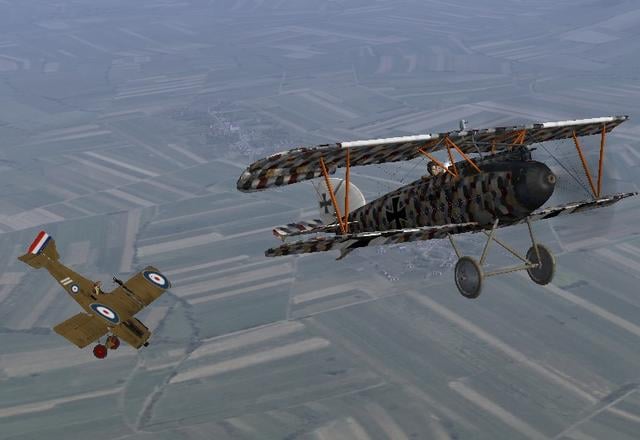
    Finally, we’ll turn to “The Blue Max” (1966). George Peppard, James Mason, and Ursula Andress star in this movie about a German pilot’s quest for glory, as he strives for the titular reward – a decoration for valor – during the First World War. In order to attain it, he must shoot down 20 aircraft. Obviously, in a film heavy with dogfighting, there is much aerial photography and stunt piloting. The score, a comparatively early one for Jerry Goldsmith, has always been a fan favorite.

    Get a bird’s-eye view of flight and aviation, this week, on “Picture Perfect,” music for the movies. Classic film music is the wind beneath our wings, this Saturday evening at 6:00 EST, on WWFM – The Classical Network and wwfm.org.
  • David Lean’s Epic Film Scores Picture Perfect

    David Lean’s Epic Film Scores Picture Perfect

    This week on “Picture Perfect,” take the long view, with Academy Award-winning music from the epics of David Lean.

    One of the most celebrated filmmakers of all time, Lean had already spent two decades in the director’s chair, overseeing such treasurable films as “Blithe Spirit,” “Brief Encounter,” “Great Expectations,” “Oliver Twist,” “Hobson’s Choice,” and “Summertime,” when he turned his attention to the form for which he would ultimately be best remembered: the cinematic epic.

    His first such attempt, “The Bridge on the River Kwai,” released in 1957, went on to win seven Academy Awards, including those for Best Picture, Best Director, Best Actor (for Alec Guinness), Best Screenplay, and Best Original Score. Malcolm Arnold wrote the music. Lean had worked with Arnold before on “Hobson’s Choice.”

    Ironically, it is “Colonel Bogey’s March,” the tune whistled by the English prisoners of war as they enter the Japanese camp, that most people associate with the film. This is actually a pre-existing piece by Kenneth Alford (a pseudonym for British bandmaster Frederick J. Ricketts). Composed in 1914, over the years, the march became outfitted with all manner of bawdy lyrics, which is why the number is whistled, not sung, in the film.

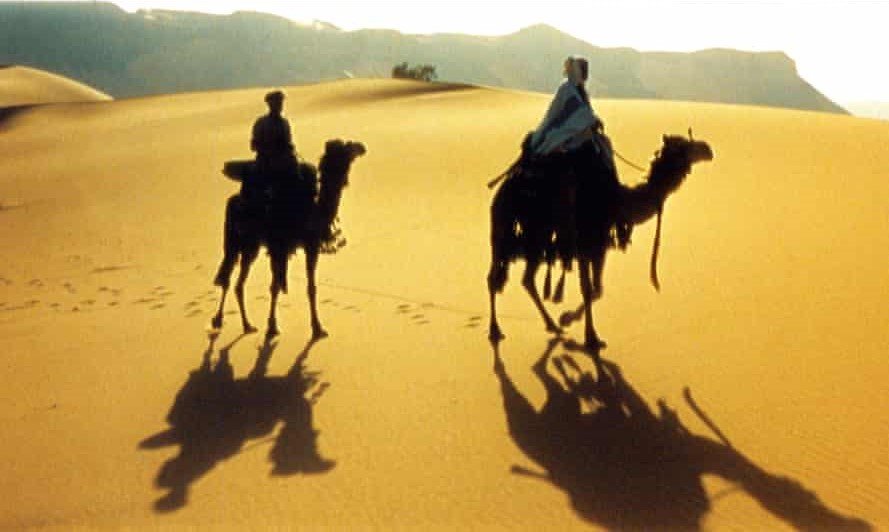
    Lean had hoped that he and Arnold would be able to collaborate once more on “Lawrence of Arabia,” released in 1962. Unfortunately, Arnold, who somehow managed to write so much glorious music over the course of his career, for both film and concert hall, suffered a hellish personal life. At the time of “Lawrence,” he was deep in the throes of psychological and emotional turmoil. Under the circumstances, Lean had no choice but to enlist Maurice Jarre. Jarre certainly rose to the occasion, and thereafter became the director’s composer of choice.

    Lean followed up his success with “Lawrence” – decorated with seven Oscars – with yet another story rendered on an epic scale, “Doctor Zhivago,” released in 1965. By this time, it was practically a forgone conclusion that the Academy would shower Lean with statuettes. Sure enough, “Doctor Zhivago” was honored with five more Academy Awards. Seemingly, the director had become too big to fail.

    It’s hardly surprising that when he stumbled with his next project, “Ryan’s Daughter,” released in 1970 – a film which boasted a similar running time, without perhaps a story of a scope to support it – the critics were there with their knives out. The backlash was such that it would be a good ten years before Lean would find the strength to direct again. The subject of the new film was to have been “Captain Bligh and Mr. Christian,” a retelling of the famous “Mutiny on the Bounty” story. Sadly, the project was plagued with misfortune, so that finally he was unable to hold on to the funding. The film would ultimately be made – by other hands – as “The Bounty.”

    Happily, Lean bounced back with “A Passage to India,” released in 1984. His adaptation of the novel of E.M. Forster was widely acclaimed, with 11 Academy Award nominations. It garnered two wins – one for Dame Peggy Ashcroft, for Best Supporting Actress, and the other for its composer, Maurice Jarre. It would be Jarre’s third and final Oscar. All three resulted from his work with Lean.

    Shortly before his death, the director embarked on yet another epic, an adaptation of Joseph Conrad’s “Nostromo.” Frustratingly, this was left incomplete at the time of his passing in 1991.

    We’re lucky to have what we’ve got. Close your eyes and get the big picture, with music from the epics of David Lean, on “Picture Perfect,” music for the movies, this Saturday evening at 6:00 EST, on WWFM – The Classical Network and wwfm.org.
  • Soviet Cinema’s Musical Masterpieces

    Soviet Cinema’s Musical Masterpieces

    This week on “Picture Perfect,” peek behind the Curtain for music by notable composers for Soviet cinema.

    Alfred Schnittke, a name usually associated with the avant-garde, actually composed over 60 film scores. One of these was for “Agony” (1974), about Rasputin, his influence over the Tsar, and the conspiracy to murder him.

    Georgy Sviridov, a pupil of Shostakovich, wrote the music for “Time, Forward!” (1962), based on the novel of Valentin Kataev. Set in the 1930s, the film describes a day of construction work at the Magnitogorsk Iron and Steel Works. Some of the music was used during the opening ceremonies of the 2014 Winter Olympics in Sochi.

    Dmitri Shostakovich, of course, is celebrated for his symphonies and string quartets, which are regarded as some of the most important of the 20th century. He also happened to write some 30 film scores, beginning all the way back in the silent era. Far and away his greatest hit composed for film, at least in the West, is the Romance from “The Gadfly” (1955), based on the novel of Ethel Lillian Voynich. The music gained broader exposure as the theme to “Reilly, Ace of Spies.”

    Sergei Eisenstein’s “Alexander Nevsky” (1938) invariably turns up on lists of the greatest films ever made. Nevsky, the 13th century Russian prince, military leader, and saint, thwarts the attempted invasion of Novgorod by Teutonic Knights of the Holy Roman Empire.

    Sergei Prokofiev arranged his masterful score into a concert piece, a cantata. However, these days, orchestras seem to be performing it more and more often as it was originally heard, with the film. The synthesis of music and visuals for the climactic Battle on the Ice is one of its indelible highlights.

    Say “da” to classic music for Soviet cinema, on “Picture Perfect,” music for the movies, this Saturday evening at 6:00 EST, on WWFM – The Classical Network and wwfm.org.
  • Jules Verne Film Scores on WWFM

    Jules Verne Film Scores on WWFM

    Journey to the center of the earth and 20,000 leagues under the sea around the world in 80 days in search of the castaways! It’s all Jules Verne this week, with selections by Bernard Herrmann, Paul J. Smith, Victor Young, and William Alwyn, on “Picture Perfect,” music for the movies, this Saturday evening at 6:00 EST, on WWFM – The Classical Network and wwfm.org.

  • Thanksgiving Movie Music Americana & Gratitude

    Thanksgiving Movie Music Americana & Gratitude

    There’s more to Thanksgiving than just turkey and football. This week on “Picture Perfect,” we count our blessings and aspire to do better, with music from movies reflective of what’s best in human nature and most admirable in the American character.

    Aaron Copland’s work on “The Cummington Story” (1945), a semi-documentary produced by the Office of War Information, underscores the gradual acceptance of European war refugees into a cautious but fundamentally decent New England community. The music is pure Americana, with some of the material later finding its way into Copland’s Clarinet Concerto and “Down a Country Lane.”

    “Field of Dreams” (1989) is one of those rare films that has the ability to reduce manly men – even those without father issues – to a pool of tears. Phil Alden Robinson’s superior adaptation of W.P. Kinsella’s novel, “Shoeless Joe,” is a male wish-fulfillment fantasy, in which a man finds redemption, and a new understanding of his father, in the enchanted cornfields of America’s heartland. And it’s all brought about courtesy of America’s pastime, baseball. The evocative score, much indebted to Copland, is by James Horner.

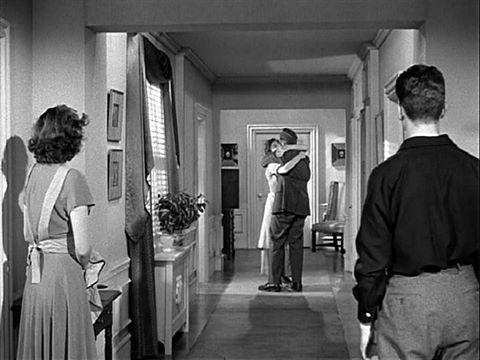
    “The Best Years of Our Lives” (1946) is one of the great American classics. This touching film tells the tale of the three WWII veterans struggling to readjust to civilian life. It isn’t easy, but with the support of family and friends, there’s plenty of hope for the future. Hugo Friedhofer wrote the Academy Award-winning score, earning the film one of its seven Oscars. The orchestrations were by Copland protégé (and composer of “The Big Country”) Jerome Moross.

    Finally, Daniel Day-Lewis elevated Steven Spielberg’s “Lincoln” (2012) to greatness with one of the uncanniest performances ever captured on film. Day-Lewis’ gentle but shrewd Man of Destiny would go to any lengths to hold the country together. John Williams tapped into America’s proud musical heritage, clearly influenced by Copland and Ives to create a score of stirring nobility.

    I hope you’ll join me as we give thanks for family, community and country on “Picture Perfect,” music for the movies, this Saturday evening at 6:00 EST, on WWFM – The Classical Network and at wwfm.org.


    And thank you, YouTube, for making “The Cummington Story” available online!

    Watching it again, it’s interesting to reflect on what an influence, for good or ill, media and government have had in shaping the popular consciousness.

Tag Cloud

Aaron Copland (92) Beethoven (95) Composer (114) Film Music (123) Film Score (143) Film Scores (255) Halloween (94) John Williams (187) KWAX (229) Leonard Bernstein (101) Marlboro Music Festival (125) Movie Music (138) Opera (202) Philadelphia Orchestra (89) Picture Perfect (174) Princeton Symphony Orchestra (106) Radio (87) Ralph Vaughan Williams (85) Ross Amico (244) Roy's Tie-Dye Sci-Fi Corner (290) The Classical Network (101) The Lost Chord (268) Vaughan Williams (103) WPRB (396) WWFM (881)

DON’T MISS A BEAT

Receive a weekly digest every Sunday at noon by signing up here


RECENT POSTS