Tag: Film Scores

  • Latin Swords on WWFM Tonight!

    Latin Swords on WWFM Tonight!

    Okay, it’s time for Take 2.

    Due to a mix-up last week, in which my Ennio Morricone show was aired in place of the swashbuckler program I had earlier promoted, “Latin Swords” will be broadcast this evening at 6:00 EDT, on WWFM – The Classical Network and wwfm.org.

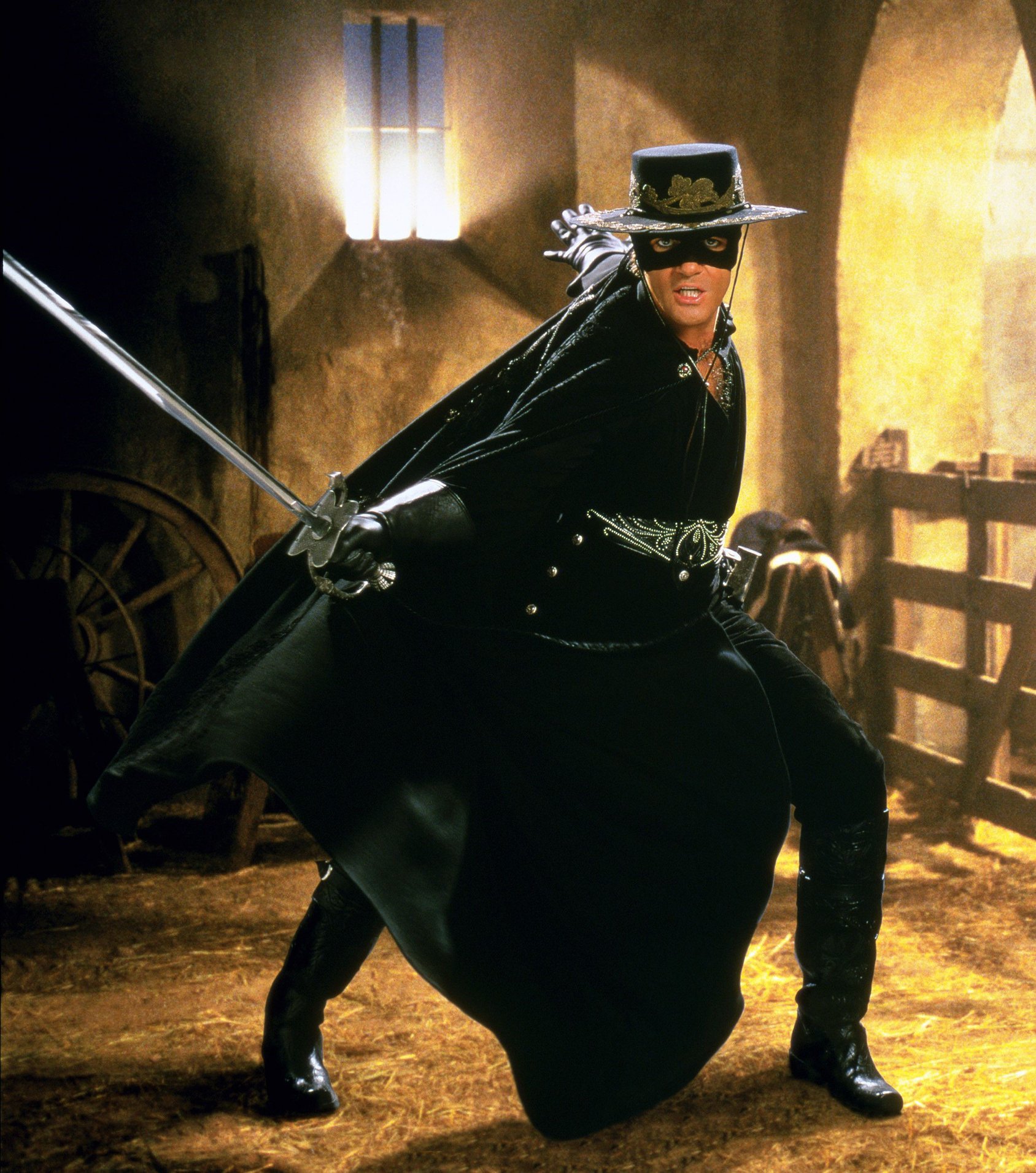
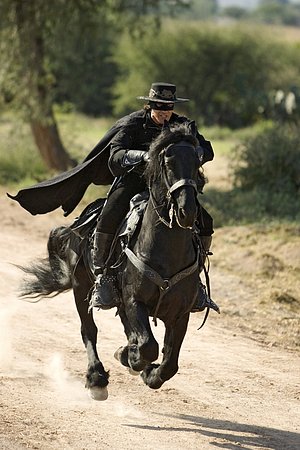
    Tune in for rousing selections from “Captain from Castile” (Alfred Newman), “The Mask of Zorro” (James Horner), “Puss in Boots” (Henry Jackman), and “The Adventures of Don Juan” (Max Steiner).

    On the other hand, if Morricone sounds like the very thing you’ve been hankering for, feel free to pile your plate high with spaghetti westerns at any time, by visiting the “Picture Perfect” webcast page.

    Select the show, and then click on the “listen” icon:

    https://www.wwfm.org/programs/picture-perfect-ross-amico?fbclid=IwAR261r78_pSu0xacrHCWfNLt3eZl60OFXbrIr71vIQiTEe6hnnu52dqvdrQ#stream/0

    Pistols or swords? Choose your weapon, and escape!

  • Latin Swords Swashbuckling Film Scores

    Latin Swords Swashbuckling Film Scores

    Feeling a little out of shape? Boxed in? Blue? This week on “Picture Perfect,” put some swagger back into your step with an hour of audacious music from Latin swashbucklers.

    Alfred Newman gets the blood pumping with his virile soundtrack for “Captain from Castile” (1947), in which Tyrone Power flees persecution at the hands of the Inquisition to join Cortés’ expedition to conquer Mexico. The film was shot on location with one sequence set against the backdrop of an erupting volcano!

    Power, of course, was one of the screen’s great Zorros. However, with “The Mask of Zorro” (1998), Antonio Banderas becomes the Zorro for our time. He’s aided and abetted by Anthony Hopkins, as the elder Zorro who mentors him. (TWO Zorros in one movie! I could expire of joy.) Catherine Zeta-Jones is radiant, and the music by James Horner literally hits all the right notes.

    This film was already a throw-back upon release, with plenty of real-life, real-time swordplay and stunts galore, with the barest minimum of computer-generated bells and whistles. I wish to God popcorn entertainment could still be like this. “The Mask of Zorro” was like a belated last gasp of the 1980s; easily the best swashbuckler of the ‘90s – though, really, was there much competition?

    Banderas got a chance to send-up his image in the Dreamworks’ computer-animated feature, “Puss in Boots” (2011), a spin-off from the Shrek series that actually turned out to be a better sequel than “The Legend of Zorro” (2005).

    The film sports plenty of Zorro in-jokes, which extend even to Henry Jackman’s entertaining score. How is it that animated movies are just about the only movies these days that seem to keep up the great orchestral tradition of classic film scoring?

    Finally, Errol Flynn has one last swash left in his buckle for “The Adventures of Don Juan” (1948), his last wholly satisfying period adventure. Max Steiner rises to the occasion and provides one of his best scores, just about on the same level as those of the master of the genre, Erich Wolfgang Korngold.

    A cape, a plume, and seven-league boots are guaranteed mood-elevators. Forget your cares! Join me for Latin swords, on “Picture Perfect,” music for the movies. We ride hell-for-leather, this Friday evening at 6:00 EDT, on WWFM – The Classical Network and wwfm.org

  • Gilded Age Novels: Soundtracks & Stories

    Gilded Age Novels: Soundtracks & Stories

    “The Gilded Age” was a term coined by none other than Mark Twain to describe the era spanning, roughly, from the end of Reconstruction (after the Civil War) to the turn of the 20th century. He didn’t mean it as a compliment. A gilded age is one that conceals serious social problems beneath a veneer of gold. This week on “Picture Perfect,” we look past the dazzle to focus on music from films inspired by novels from, or about, the period.

    “The Heiress” (1949) was adapted from a play by Ruth and Augustus Goetz, which in turn was based on the book “Washington Square,” by Henry James. Olivia De Havilland plays the “plain Jane” heiress of the title, Ralph Richardson her overbearing father, and Montgomery Clift, the adventurer who may or may not be out for her fortune. De Havilland won an Oscar for her portrayal, as did the music, by Aaron Copland.

    “The Age of Innocence” (1993) was written by one-time James correspondent, his close friend, Edith Wharton. The book was published in 1920, but looks back to the 1870s, its story dealing with the impending marriage of an upper class couple and the appearance of a disreputable interloper who threatens their happiness. The title is an ironic play on the contrast between the outward manners of New York society and its inward machinations. The novel earned Wharton a Pulitzer Prize, the first ever to be awarded to a woman. The film was something of a curve ball from director Martin Scorsese, who made his reputation on arguably meaner streets. Veteran composer Elmer Bernstein provided the lovely, Brahmsian score.

    “The Magnificent Ambersons” (1942) is based on another Pulitzer Prize winner, this time by Booth Tarkington, from 1918. The novel is part of trilogy that traces the declining fortunes of three generations of an aristocratic Midwestern family. With industrialism on the rise, the Ambersons’ “old money” wealth and prestige wane.

    “Ambersons” was only the second film directed by Orson Welles. Sadly, the financial failure of “Citizen Kane” and Welles’ uncompromising artistic vision caused the project to be removed from his control and re-cut by the studio, shaving a full hour off the original running time. It says something about the strength of Welles’ material that what survives yet remains a magnificent achievement.

    The score was by Bernard Herrmann, CBS staff composer from Welles’ radio days. Herrmann had followed Welles to Hollywood to supply the music for “Kane.” With the trimming of “Ambersons,” his score was drastically edited and half the music removed. The famously irascible Herrmann, who had just written his Academy Award winning music for “The Devil and Daniel Webster,” was so angry that he threatened legal action if his name was not removed from the credits. (The studio complied.)

    The action of “Mr. Skeffington” (1944), based on a 1940 novel by Elizabeth von Arnim, begins at a point some consider to be the twilight of the Gilded Age, the eve of World War I. Bette Davis stars as a woman so enamored with her own beauty, and the suitors it attracts, that she fails to value the affections of the man who eventually becomes her husband. Mr. Skeffington, played by Claude Rains, is a Jewish financier, riding high in the ‘teens, but his fortunes change when he’s caught in Europe during the rise of the Nazis.

    Davis and Rains both earned Academy Award nominations for their work. The vivid score is by Franz Waxman. Davis was going through a period of emotional turmoil during the filming, so that she was allegedly insufferable to be around throughout the entire shoot. Someone finally poisoned her eyewash. When the police questioned the director, Vincent Sherman, he wished them good luck with their investigation. “If you asked everyone on the set who would have committed such a thing, everyone would raise their hand!”

    Certainly all that glitters is not gold. We peel back the veneer of prosperity, this week, with “Novels of the Gilded Age,” on “Picture Perfect,” this Friday evening at 6:00 EDT on WWFM – The Classical Network and wwfm.org.


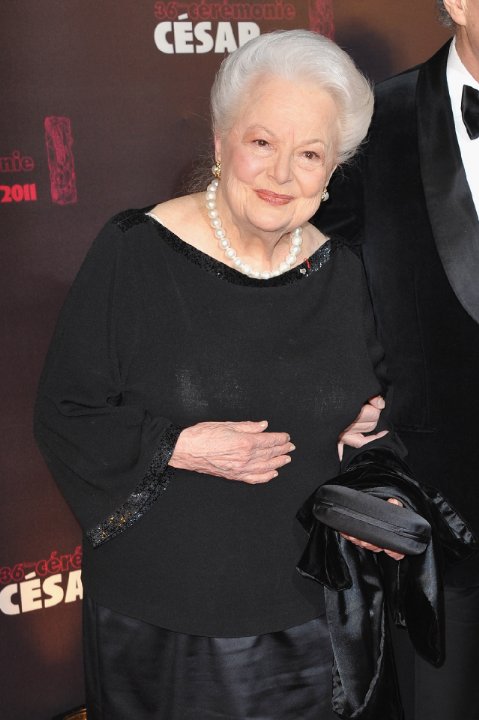
    PHOTOS: The late Olivia de Havilland (left), as Catherine Sloper (upper right), and posing with her Oscar for “The Heiress”
  • Sea Movies Hornblower Bounty Windjammer

    Sea Movies Hornblower Bounty Windjammer

    Taste the “cat” and prepare to be keelhauled!

    This week on “Picture Perfect,” we give in to the impulse to run away to sea.

    Though Gregory Peck cuts a dashing figure as “Captain Horatio Hornblower” (1951), the movie itself is a bit episodic, adapted as it was from three of C.S. Forester’s Hornblower novels. Canadian-born master of British light music Robert Farnon wrote the music, lending another dimension to this nautical adventure.

    Alan Ladd and James Mason engage in a battle of wills in “Botany Bay” (1953). Ladd plays a doctor, wrongly convicted of a crime, who is transported to a penal colony in New South Wales on a ship under the harsh command of Mason. In perhaps the film’s most memorable sequence, Mason has one of his charges keelhauled! Franz Waxman wrote the score.

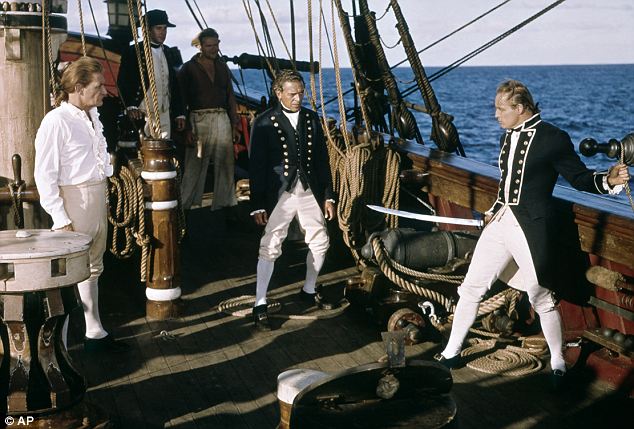
    If it all sounds a mite familiar, it’s because the story is by Charles Nordhoff and James Norman Hall, who also wrote the book that became the basis for “Mutiny on the Bounty” (1962). The classic film version of “Bounty” dates from 1935, with Clark Gable butting up against Charles Laughton’s Captain Bligh. The ‘60s version bears a certain notoriety, mostly for Marlon Brando’s eccentric performance, which turns Fletcher Christian into a fop, and the fact that he essentially directed all his own scenes himself. The film was colossal failure, earning back only $13 million of its $19 million budget. Nonetheless, it managed to inspire Bronislau Kaper to compose one of his most monumental scores.

    Interesting fact: the enlarged replica of the 1787 HMS Bounty, constructed specifically for the 1962 film, sank off the coast of North Carolina during Hurricane Sandy in 2012. The ship had also been used in the “Pirates of the Caribbean” franchise.

    Finally, we’ll hear selections from “Windjammer” (1958), the only film shot using the Cinemiracle process. The film documents the round-trip, transatlantic journey of a Norwegian vessel from Oslo to the Caribbean to New York to Portsmouth, NH, and then back home again. Morton Gould wrote the evocative score, which alternates dance rhythms and sea shanties with a recurring melody suggestive of the sweeping romance of the high seas.

    Prepare to set sail! It’s tall ships recommissioned, on “Picture Perfect,” music for the movies, this Friday evening at 6:00 EDT, on WWFM – The Classical Network and wwfm.org.

  • Ennio Morricone Crossword Tribute

    Ennio Morricone Crossword Tribute

    Addio, Ennio.

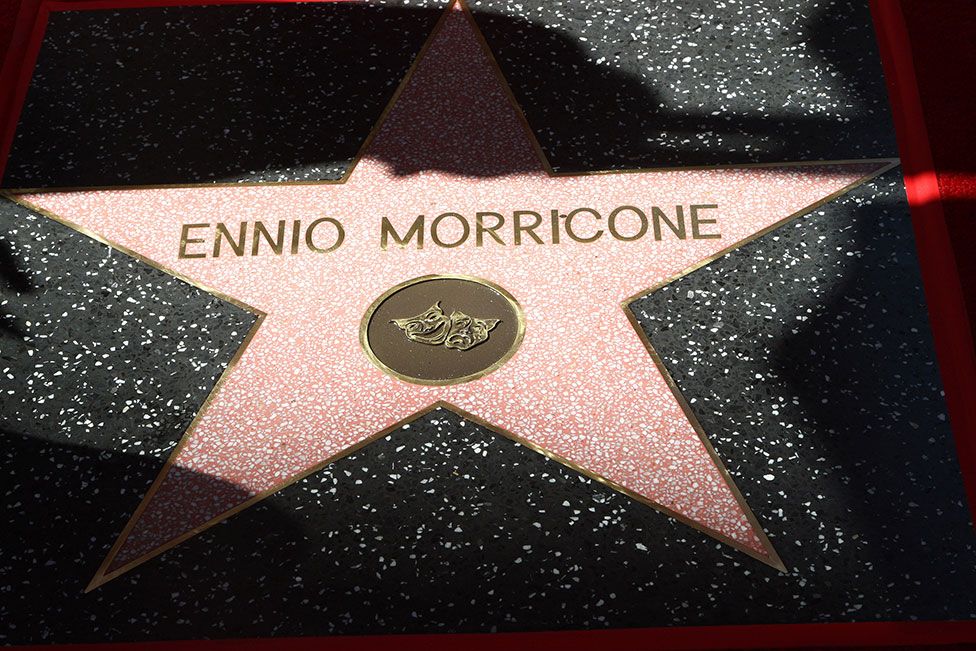
    This week’s Classic Ross Amico crossword honors the life and career of Ennio Morricone, who died on Monday at the age of 91. The composer of over 500 film and television scores, Morricone was likely the most prolific film composer of all time, but he also left his mark on the classical and popular worlds. For a “film composer,” he was unusually influential.

    To fill out the puzzle, follow the link and select “solve online” at the bottom of the page. You’ll then be able to type directly into the squares. Once you feel you’ve exhausted the puzzle, you’ll find the solutions by clicking on “Answer Key PDF.”

    Celebrate the composer of “The Mission,” “The Untouchables,” “Cinema Paradiso,” “Once Upon a Time in the West,” and “The Good, the Bad and the Ugly.” With Ennio, it was all good.

    https://www.armoredpenguin.com/crossword/Data/2020.07/1206/12064820.131.html

Tag Cloud

Aaron Copland (92) Beethoven (95) Composer (114) Film Music (123) Film Score (143) Film Scores (255) Halloween (94) John Williams (187) KWAX (229) Leonard Bernstein (101) Marlboro Music Festival (125) Movie Music (138) Opera (202) Philadelphia Orchestra (89) Picture Perfect (174) Princeton Symphony Orchestra (106) Radio (87) Ralph Vaughan Williams (85) Ross Amico (244) Roy's Tie-Dye Sci-Fi Corner (290) The Classical Network (101) The Lost Chord (268) Vaughan Williams (103) WPRB (396) WWFM (881)

DON’T MISS A BEAT

Receive a weekly digest every Sunday at noon by signing up here


RECENT POSTS