Tag: Film Scores

  • Small Town Secrets in Film Scores

    Small Town Secrets in Film Scores

    This week on “Picture Perfect,” at a time when political tensions run high, I have the bad fortune to have selected a rerun centering on films that explore the dark underbelly of small-town life and the consequences of bucking conformity. This is not a veiled dig at those who live in less-populous areas. I prefer to live there myself!

    Be that as it may, in the interest of balance (though again, wholly by coincidence), next week, the focus will shift to film noir in the gritty city. So no rioting, if you please!

    The events of “Peyton Place” (1957) unfold in a picturesque New Hampshire town, in which all sorts of sordid goings-on roil beneath the surface. Grace Metalious’ runaway bestseller spawned a film, starring Lana Turner, and also a subsequent TV series, with Mia Farrow. Neither version is nearly as seedy as the original, which was about an idyllic New England community whose residents have more than their share of skeletons in the closet. The score includes one of Franz Waxman’s best-known themes.

    “Far from Heaven” (2002) is set in a Connecticut suburb during the 1950s. Therefore, it makes sense that the filmmakers deliberately attempt to conjure the vibe of a Douglas Sirk film. In common with Sirk melodramas like “All That Heaven Allows” and “Imitation of Life,” “Far from Heaven” deals with social issues, in this instance regarding race, class, gender roles, and sexual orientation.

    The score was the last by the great Elmer Bernstein, who had actually been composing for film since the ‘50s. Over the course of his career, Bernstein was nominated for 14 Academy Awards. However, despite his work on such classics as “The Ten Commandments,” “The Magnificent Seven” and “To Kill a Mockingbird,” his only Oscar win came with, of all things, “Thoroughly Modern Millie,” in 1967. He received his final nomination for his work on this film.

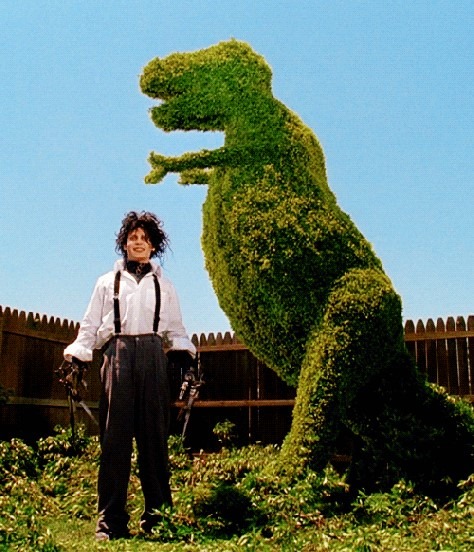
    “Edward Scissorhands” (1990) is Tim Burton’s satirical-yet-touching update of the “Frankenstein” tale, transported to a contemporary American suburb. An artificial man with unusual appendages gradually wins over his suspicious neighbors with his aptitude for hairstyling and lawn sculpture. However, things quickly go south. For the very differences for which Edward was briefly celebrated, he is now hunted by an angry mob.

    Burton presents a cookie-cutter suburbia, simultaneously tacky and anonymous. The houses are painted in faded pastels, and everyone follows the same routine. The score, by Danny Elfman, alternately antic and romantic, has proved to be one of his most memorable.

    Finally, we turn to “Kings Row” (1942), based on the novel by Henry Bellamann. The film is a spiritual forerunner not only of “Peyton Place,” but also, to an extent, of David Lynch’s “Blue Velvet” and “Twin Peaks,” in the sense that it presents life in an idyllic small town that nonetheless casts some very long shadows.

    The film of “Kings Row” accomplishes a remarkable balancing act, in that it manages to maintain an air of hope and optimism, despite all the horrible things that happen to a number of the characters. To this end, it pulls some of the punches thrown by the original book, in part as a concession to the Hays Code, which forced some of the rougher themes to be altered, dropped, or implied. Bellamann’s novel is a much bleaker experience.

    The score is by Erich Wolfgang Korngold, at this point in his career associated with historical adventure films, as Errol Flynn’s regular composer. He wrote the brash theme music for “Kings Row” wholly in this vein, allegedly on an initial assumption drawn merely from the film’s title.

    Good fences make good neighbors. Join me for “Suburban and Small Town Blues” this week, on “Picture Perfect,” music for the movies, this Saturday evening at 6:00 EST, on WWFM – The Classical Network and wwfm.org.


    As of this writing, we are less than $2,000 away from the completion of our fall fundraiser! Your contribution in any amount will help us attain our $70,000 goal. We’ve come a long way, thanks to engaged listeners like you. It’s easy to make a donation. Simply follow the link below. Thank you for your support of classic film scores on YOUR classical music station, WWFM The Classical Network!

    https://wwwfm.secureallegiance.com/wwfm/WebModule/Donate.aspx?P=DEFAULT&PAGETYPE=PLG&CHECK=vOU2bz5JCWmgCDbf53nm9ezWDeZ%2beA1M

  • Theremin in Film A Halloween Soundscape

    Theremin in Film A Halloween Soundscape

    We all know the sound. That crazy, trilled electronic whistle that dips into a whoop. Or it starts in a trough and shoots up into the super stratosphere. It’s the sound of UFOs and mad science. It’s the sound of the theremin.

    This week on “Picture Perfect,” we anticipate a hands-off Halloween with selections from four films enhanced by Leon Theremin’s visionary instrument.

    “The Thing from Another World” was one of two seminal science fiction scores written in 1951. (The other was Bernard Herrmann’s “The Day the Earth Stood Still.”) On the soundtrack, the theremin acts as a musical counterpart to James Arness’ rampaging humanoid carrot. This was unquestionably composer Dimitri Tiomkin’s wildest hour; he never wrote anything like it again.

    “The Thing” and “The Day the Earth Stood Still” may have been the most influential, but “Rocketship X-M” was the first. The film was rushed into production to beat George Pal’s “Destination Moon” to theaters in 1950. It was shot in just 18 days! The unlikely plot has the crew of a moon expedition blown off course to Mars. Interestingly, the composer was none other than Ferde Grofé – he of the “Grand Canyon Suite” fame.

    Far more reputable, but still not wholly comfortable with its science, is Alfred Hitchcock’s “Spellbound,” from 1945. Gregory Peck plays an amnesiac, who may or may not have committed murder, and Ingrid Bergman is the psychoanalyst who falls in love with him. The film is of greatest interest for its production design, which features dream sequences conceived by Salvador Dali, and for its score, by Miklós Rózsa.

    Hitchcock disliked the music – he thought it got in the way of his direction – but Academy voters disagreed, and the score earned Rózsa the first of his three Academy Awards.

    Closer to our own time, Howard Shore incorporated the theremin into his Mancini-esque music for “Ed Wood,” released in 1991. The film is Tim Burton’s love letter to the grade-Z director of “Plan 9 from Outer Space.” “Plan 9” is widely regarded as the worst movie ever made (worse even than “Rocketship X-M”).

    Make contact with the theremin – its distinctive, extraterrestrial timbre, you’ll recall, conjured without physical touch – on “Picture Perfect,” music for the movies, THIS SATURDAY EVENING AT 6:00 EDT, on WWFM – The Classical Network and wwfm.org.


    Children of the night… what music they make! WWFM is in the midst of its fall fundraiser. If you’re a fan of “Picture Perfect,” please support it by making a contribution at 1-888-232-1212, or by donating online at wwfm.org. Thank you for your part in keeping the legacy of classic film music ALIVE!

  • Lost Worlds Movie Music on WWFM

    Lost Worlds Movie Music on WWFM

    As the days grow shorter, it’s easy to get lost. Be sure then to have your radio, tablet, or phone handy, so as not to miss a heart-pounding second of “Picture Perfect” and music from movies about lost worlds.

    Thrill to selections from “King Kong” (Max Steiner), “Journey to the Center of the Earth” (Bernard Herrmann), “One Million Years B.C.” (Mario Nascimbene), and “Jurassic Park” (John Williams).

    Tie a string around your finger for “Lands That Time Forgot.” It will be a show to remember, this Saturday evening at 6:00 EDT, on WWFM – The Classical Network and wwfm.org.

  • Lost Worlds Fantastic Film Scores on Picture Perfect

    Lost Worlds Fantastic Film Scores on Picture Perfect

    This week on “Picture Perfect,” prepare to get “lost!” It’s an hour of music from fantasy films set in lost worlds.

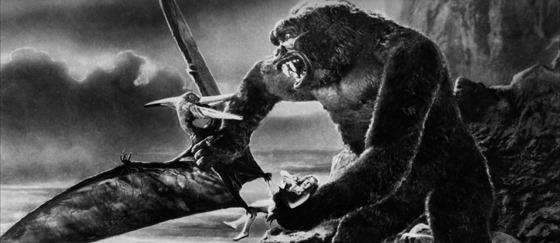
    In “King Kong” (1933), filmmaker and entrepreneur Carl Denham hires a ship to an uncharted island, known only from a secret map in his possession. There the crew discovers the titular gorilla and other outsized, should-be-extinct creatures. Kong is abducted from his natural habitat – and you know the rest. The composer, Max Steiner, pulls out all the stops. “Kong” was one of the first films to demonstrate how truly powerful an orchestral soundtrack could be.

    Then we travel to the earth’s core, courtesy of Jules Verne and “Journey to the Center of the Earth” (1959). James Mason is the professor who leads the expedition. The film sports one of Bernard Herrmann’s most outlandish soundscapes, the orchestra consisting of winds, brass and percussion, but also cathedral organ, four electric organs, and an obsolete Renaissance instrument called the serpent. Watch out for that giant chameleon!

    “One Million Years B.C.” (1966) is a guilty pleasure if ever there was one. Produced by Hammer, the studio that gave us all those repugnant yet somehow delicious Peter Cushing-Christopher Lee horror team-ups, the film features special effects by the legendary Ray Harryhausen and an equally legendary fur bikini, sported by Raquel Welch. The music is by Mario Nascimbene, who wrote one of my favorite scores for Kirk Douglas, for “The Vikings.” We’ll be listening to the film’s climactic volcano sequence.

    As he did with the Indiana Jones films, director Steven Spielberg turned to B-movie source material as his visual inspiration for “Jurassic Park” (1993), based on the novel by Michael Crichton. The herky-jerky dinosaur effects of yore are replaced by state-of-the-art computer-generated imagery, in this story of a remote island safari park gone wrong.

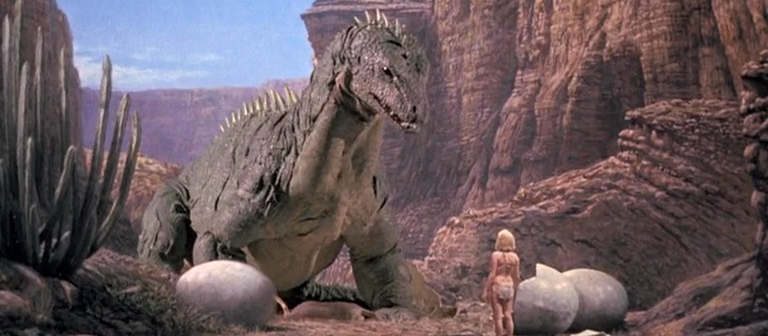
    Sure, we’ve come a long way from Raquel Welch being carried off by a Pteranodon, but admit it, we all still want to see people fight dinosaurs. Instead of fudging history, now we can feel superior by fudging science. “Jurassic Park” plays on modern scientific thinking, with DNA extracted from mosquitoes trapped in amber, cloning, and the theory that dinosaurs were not lizards, after all, but rather birds. The music is by long-time Spielberg collaborator, John Williams.

    If you happen to forget a compass, don’t panic! In the words of Ian Malcolm, life finds a way. Join me for “Lands That Time Forgot,” on “Picture Perfect,” now at its new time, this SATURDAY EVENING AT 6:00 EDT, on WWFM – The Classical Network and wwm.org.

  • On the Waterfront Labor Day Classical

    On the Waterfront Labor Day Classical

    Johnny Friendly is running this racket. So “Picture Perfect” has been moved to Saturday at 6 pm, see?

    It will be an all-American program for Labor Day weekend, including Leonard Bernstein’s music for “On the Waterfront” (1954) – Elia Kazan’s exposé of sleazy underworld corruption along the docks of Hoboken – alongside selections from Aaron Copland’s “The Red Pony” (1949), Virgil Thomson’s “Louisiana Story” (1948), and Elie Siegmeister’s “They Came to Cordura” (1959).

    Both the Bernstein and Copland are rare documents taken from the films’ original recording sessions. Thomson’s “Louisiana Story” is the only film score ever to have been awarded a Pulitzer Prize. And Siegmeister’s “They Came to Cordura” is the source of “Picture Perfect”s striking theme music.

    Following tonight’s broadcast, stick around for Rachel Katz’s “A Tempo” at 7:00. Her guest this week will be none other than Patrick Stewart, who will talk about his recent film, “Coda” (in which he plays a classical pianist), and the transformative power of the arts.

    I coulda had class. I coulda been a contender. I coulda been somebody – instead of a bum, which is what I am.

    I ain’t no canary, but this new time slot, Saturday at 6 pm EDT, is for the birds – literally – on WWFM – The Classical Network and wwfm.org.

Tag Cloud

Aaron Copland (92) Beethoven (95) Composer (114) Film Music (123) Film Score (143) Film Scores (255) Halloween (94) John Williams (187) KWAX (229) Leonard Bernstein (101) Marlboro Music Festival (125) Movie Music (138) Opera (202) Philadelphia Orchestra (89) Picture Perfect (174) Princeton Symphony Orchestra (106) Radio (87) Ralph Vaughan Williams (85) Ross Amico (244) Roy's Tie-Dye Sci-Fi Corner (290) The Classical Network (101) The Lost Chord (268) Vaughan Williams (103) WPRB (396) WWFM (881)

DON’T MISS A BEAT

Receive a weekly digest every Sunday at noon by signing up here


RECENT POSTS