Tag: Film Scores

  • Leroy Anderson & Bernard Herrmann American Masters

    Leroy Anderson & Bernard Herrmann American Masters

    The composers Leroy Anderson and Bernard Herrmann rose to prominence, in their respective ways, through their invaluable contributions to American popular culture.

    Anderson (1908-1975), whose fluency in foreign languages (especially those of Scandinavia) made him an asset to the U.S. Army during the Second World War, was more or less staff composer for the Boston Pops.

    His early work for the Pops was as an arranger. It was Arthur Fiedler who recognized his talent and began requesting original work. Good call. Anderson turned out to be the Irving Berlin of American light orchestral music, producing hit after hit after hit: “Blue Tango,” “The Typewriter,” and “Plink! Plank! Plunk!” among them. Johnny Mathis scored a gargantuan success with his vocal rendition of “Sleigh-Ride,” for over half a century a holiday staple. Anderson’s “The Syncopated Clock,” a favorite from the start, became further entrenched in the popular consciousness as the theme music for “The Late Show,” a showcase for the CBS late night movie.

    Herrmann (1911-1975) was staff conductor for CBS radio. In this role, he introduced American audiences to an impressive array of comparatively arcane music for the era, including works by Charles Ives, Nikolai Myaskovsky, Gian Francesco Malipiero, Edmund Rubbra, and Richard Arnell.

    He fell in with Orson Welles, with whom he worked on radio shows like “Mercury Theatre on the Air” (including Welles’ notorious adaptation of “War of the Worlds”). When Welles went to Hollywood, Herrmann went with him, to write the music for “Citizen Kane.” This would be the first of decades worth of finely-crafted film scores, always orchestrated by Herrmann himself (an unusual practice in Hollywood) and always perfectly suited to the images on screen, or their psychological underpinnings.

    Of course, Herrmann is best-known for his collaborations with Alfred Hitchcock (including “Vertigo,” “North by Northwest,” and “Psycho”), but he also wrote top-notch, ear-opening scores for producer Charles Schneer and special effects artist Ray Harryhausen (most notably “Jason and the Argonauts”). Amazingly, he won only a single Oscar, for his work on “The Devil and Daniel Webster,” in 1941. Herrmann died of a heart attack shortly after completing the recording sessions for Martin Scorsese’s “Taxi Driver,” in 1975.

    Happy birthday, gentlemen! Thanks for all the music.


    Staying up late with “The Syncopated Clock”

    “North by Northwest”

    https://www.youtube.com/watch?v=xBxjwurp_04


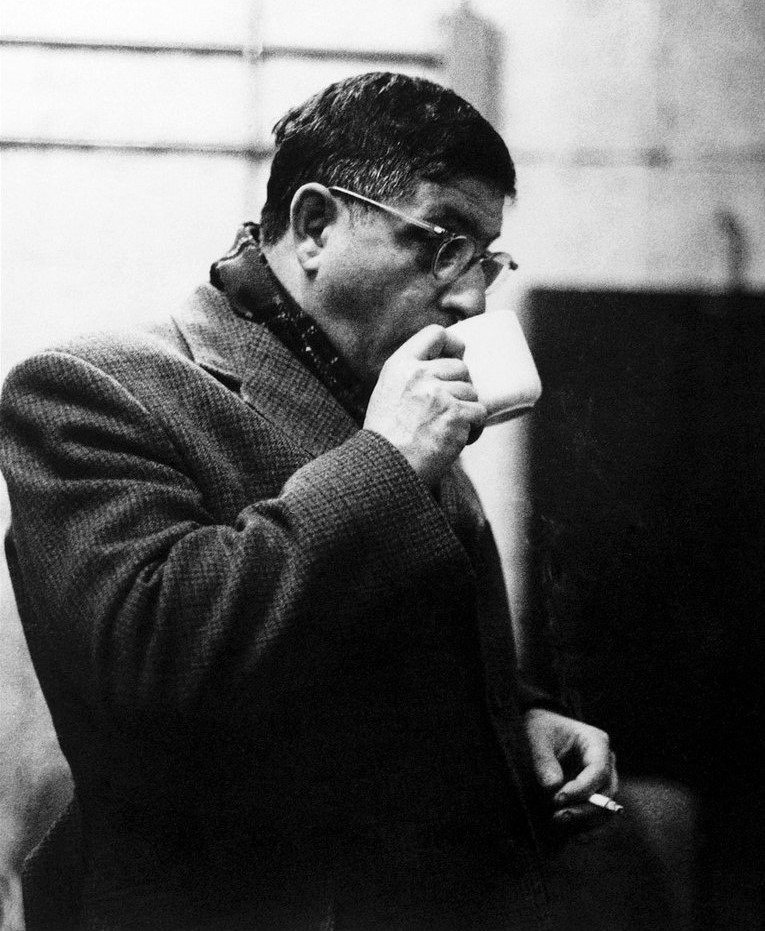
    PHOTOS: Cranky Herrmann needs caffeine (left); sunny Anderson remembers his royalty checks

  • Wizard & Sorcerer Film Scores on Picture Perfect

    Wizard & Sorcerer Film Scores on Picture Perfect

    This week on “Picture Perfect,” you’ll be spellbound (I hope) by an hour of musical selections from movies about wizards and sorcerers.

    Gandalf and Saruman duke it out in Peter Jackson’s frenetic, yet somehow ponderous adaptations of J.R.R. Tolkien’s “The Lord of the Rings,” films so bloated and poorly paced that anyone who did not read the books probably wondered what all the fuss was about. Its abundant defects didn’t keep the screen trilogy from making over a billion dollars and garnering 30 Academy Award nominations. Three of those were bestowed upon composer Howard Shore. We’ll be sampling from his music to “The Fellowship of the Ring” (2001).

    Made for a fraction of the budget, much less self-serious, and arguably way more fun is “The Sword and the Sorcerer” (1982), which holds no pretense to be anything beyond what it is: a schlocky B-movie sword and sandal swashbuckler. However, the composer, David Whitaker, aspired for something greater. Against tremendous time pressures, he turned in a marvelous score, which sounds like Erich Wolfgang Korngold on a shoestring. If this film had been made by George Lucas, Whitaker would be world famous.

    After creating one of his greatest scores for Stanley Kubrick’s “Spartacus,” Alex North had his music for Kubrick’s “2001: A Space Odyssey” rejected – and not in a nice way. (North didn’t find out about it until the lights went down at the film’s premiere.) Fortunately, the composer was able to salvage the best material for “Dragonslayer” (1981). The plot, about a bumbling sorcerer’s apprentice who faces a seemingly impossible challenge, is serviceable at best, but the dragon may yet be the most amazing committed to film. Also, the score is terrific.

    Finally, John Williams kicked off another billion dollar franchise with “Harry Potter and the Sorcerer’s Stone” (2001), which in England was released (as was the book) as “Harry Potter and the Philosopher’s Stone.” Who ever heard of a sorcerer’s stone? I guess the publishers were nervous that Americans would be put off by any association with philosophy.

    Prepare to be charmed! It’s music for wizards and sorcerers this week, on “Picture Perfect,” this Friday evening at 6:00 EDT, on WWFM – The Classical Network and wwfm.org.


    PHOTO: Saruman vexes Gandalf with the exquisite whiteness of his beard

  • Elmer Bernstein Western Film Scores

    Elmer Bernstein Western Film Scores

    “Fill your hands, you son of a b****!”

    Western film scores of Elmer Bernstein, on “Picture Perfect,” music for the movies, this Friday evening at 6:00 EDT, on WWFM – The Classical Network and wwfm.org.

  • Magnificent Seven Elmer Bernstein Scores

    Magnificent Seven Elmer Bernstein Scores

    Chris (Brynner): You forget one thing. We took a contract.
    Vin (McQueen): It’s sure not the kind any court would enforce.
    Chris: That’s just the kind you’ve got to keep.

    This week on “Picture Perfect,” saddle up with seven magnificent western film scores by Elmer Bernstein – including selections from “The Comancheros,” “The Shootist,” “The Sons of Katie Elder,” “True Grit,” “Wild Wild West,” “The Hallelujah Trail,” and of course “The Magnificent Seven.”

    One never had to worry about social distancing in the Old West. It’s high-spirited music for wide-open spaces, this Friday evening at 6:00 EDT, on WWFM – The Classical Network and wwfm.org.

  • Jane Austen Film Scores Picture Perfect

    Jane Austen Film Scores Picture Perfect

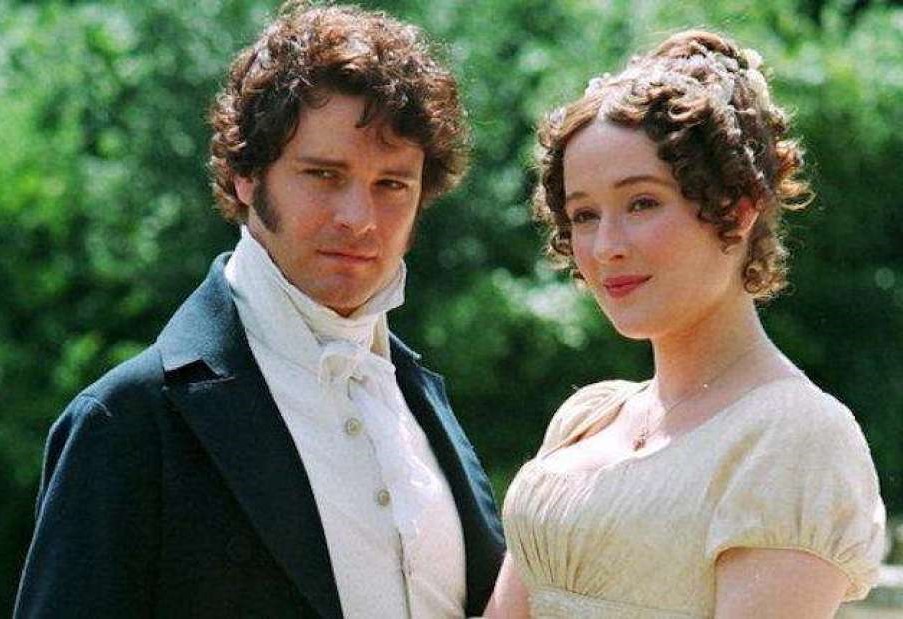
    It is a truth universally acknowledged that a radio host in possession of a weekly film music show must be in want of a good theme. This week on “Picture Perfect,” we eschew the usual fare of Vikings, pirates, and dinosaurs, to enter the world of Jane Austen.

    We’ll hear Rachel Portman’s Academy Award winning score for “Emma” (1996), Patrick Doyle’s music for “Sense and Sensibility” (1995), and selections from two versions of “Pride and Prejudice,” with music by Carl Davis (1995) and Dario Marianelli (2005).

    Not only do Austen adaptations sport amazing casts, the scores attract some of classical music’s star performers. Listen in for contributions by soprano Jane Eaglen, pianist Jean-Yves Thibaudet, and fortepianist Melvyn Tan.

    A large income is the best recipe for happiness I ever heard of – at least according to “Mansfield Park.” The next best is a playlist assembled from Jane Austen movies. Join me this Friday evening at 6:00 EDT, on WWFM – The Classical Network and wwfm.org.

Tag Cloud

Aaron Copland (92) Beethoven (95) Composer (114) Film Music (123) Film Score (143) Film Scores (255) Halloween (94) John Williams (187) KWAX (229) Leonard Bernstein (101) Marlboro Music Festival (125) Movie Music (138) Opera (202) Philadelphia Orchestra (89) Picture Perfect (174) Princeton Symphony Orchestra (106) Radio (87) Ralph Vaughan Williams (85) Ross Amico (244) Roy's Tie-Dye Sci-Fi Corner (290) The Classical Network (101) The Lost Chord (268) Vaughan Williams (103) WPRB (396) WWFM (881)

DON’T MISS A BEAT

Receive a weekly digest every Sunday at noon by signing up here


RECENT POSTS