Tag: Film Scores

  • Hemingway’s Hollywood: Scores for Classic Film Adaptations

    Hemingway’s Hollywood: Scores for Classic Film Adaptations

    This week on “Picture Perfect,” as I continue to cultivate my Corona beard, we’ll get in touch with our masculine side, with music from movies inspired by the writings of Ernest Hemingway.

    Seemingly at odds with Hemingway’s minimalist, “iceberg” style, big screen adaptations of the writer’s work show what the stories don’t tell. In the case of “The Killers” (1946), the screenwriters, unapologetically, just made stuff up, an entire back story explaining the motivations for the hit of boxer “Swede” Anderson. Fortunately, those screenwriters happened to include an uncredited John Huston, who virtually codified noir with “The Maltese Falcon.”

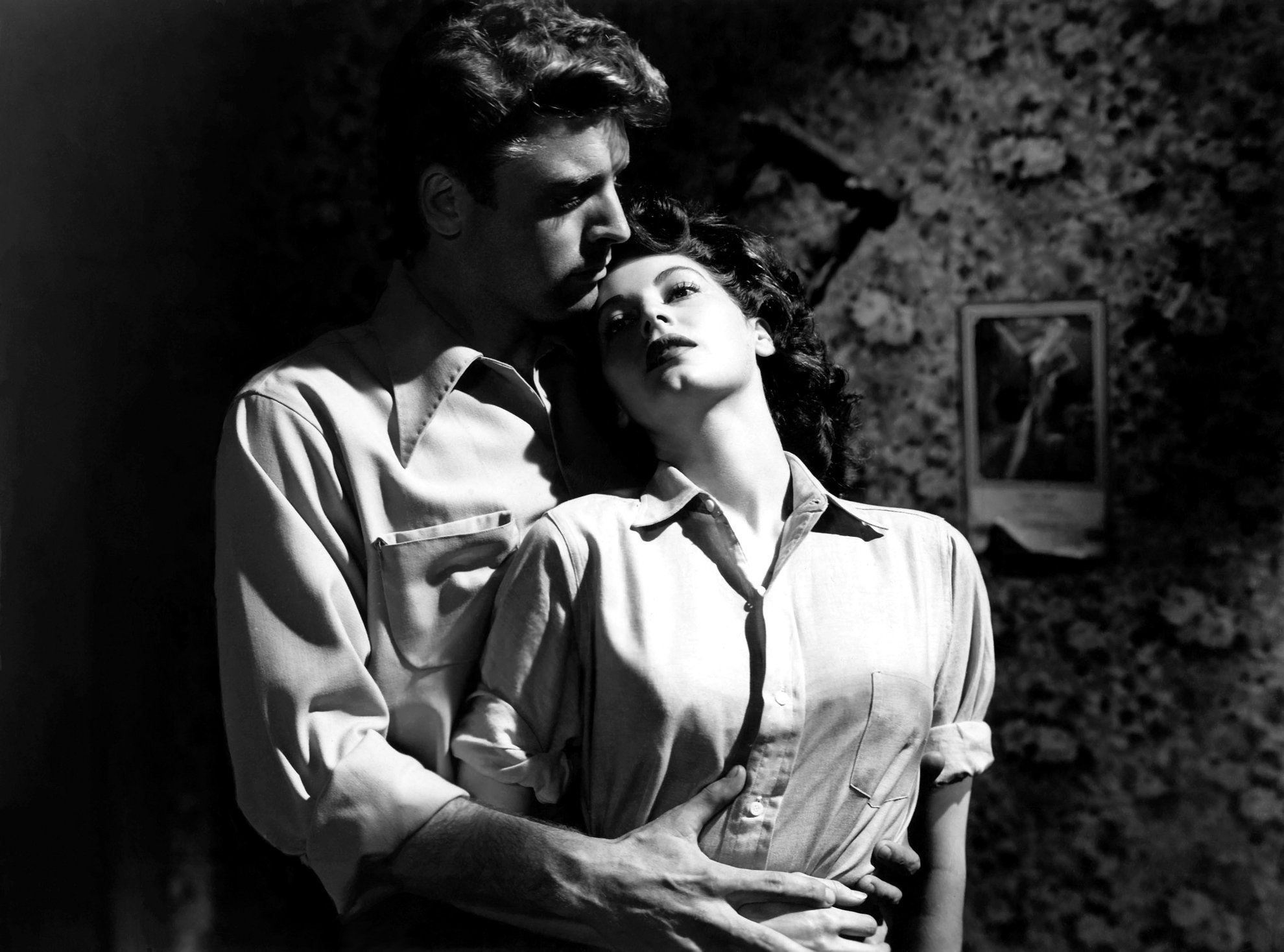
    “The Killers” provided Burt Lancaster with his break-out role. It also features a knock-out score by Miklós Rózsa, in which he uses the dum-dee-dum-dum motto later made famous by the television series “Dragnet.”

    George C. Scott reunited with his “Patton” director, Franklin J. Schaffner, for an adaptation of Hemingway’s posthumously published novel, “Islands in the Stream” (1977). Scott gives one of his best performances as a Hemingway-like figure living on a Caribbean island. “Patton” composer Jerry Goldsmith wrote the music. Goldsmith spoke of it often as his favorite score.

    Hemingway himself handpicked the leads for “For Whom the Bell Tolls” (1943), with Gary Cooper and Ingrid Bergman falling in love against the backdrop of the Spanish Civil War. The music was written by the prolific and versatile Victor Young.

    Finally, Spencer Tracy is the whole show, as he faces off against a large marlin, in the “The Old Man and the Sea” (1958). Dimitri Tiomkin’s music earned him his fourth Academy Award.

    I hope you’ll join me for an hour of laconic grace and stoic manliness on “Picture Perfect,” music for the movies. Everyone, come to Papa, this Friday evening at 6:00 EDT, on WWFM – The Classical Network and wwfm.org.


    PHOTO: Burt Lancaster and Ava Gardner – infinitely more attractive than my Corona beard

  • 18th Century Fantastic Adventures

    18th Century Fantastic Adventures

    The Enlightenment isn’t exactly remembered for its flights of fancy. If the odd novel embraced a fantastic tone, it was frequently in the service of satire, an entertaining means to send-up contemporary mores and pursuits or to mock authority figures and good old reliable human frailty. This week on “Picture Perfect,” we’ll explore a few of these fantastic adventures of the 18th century.

    “The Surprising Adventures of Baron Munchausen” (1785) pokes fun at one Hieronymus Karl Friedrich, Freiherr von Münchhausen, a German nobleman and veteran of the Russo-Turkish War, whose reputation for telling outrageous tall tales is lampooned by Rudolf Erich Raspe. Raspe, looking to avoid a libel suit, published the work anonymously, with the result that it was commonly believed that the Baron actually dictated the tales himself. Naturally, the real-life Munchausen was upset by the unwanted attention. Thanks to Raspe, his very name came to be associated with feigned illness and pathological lying.

    The book has been adapted to film several times, beginning with a silent version by Georges Méliès, all the way back in 1911. We’ll be listening to music from two subsequent adaptations. The first, “Münchhausen” (1943), is undeniably entertaining and exceptionally well-made. However, undermining one’s enjoyment is a sense of unease in the knowledge that the film was a pet project of Joseph Goebbels, who wanted to celebrate the 25th anniversary of the UFA film studio by producing a lavish spectacle worthy to stand toe-to-toe with foreign efforts like “The Wizard of Oz” and “The Thief of Bagdad.”

    Considering the source, one would have to look awfully hard to come up with anything resembling Nazi propaganda. The entire exercise comes across as a pastoral escape from the horrors of totalitarianism, total war, and the Final Solution. The elegant music, by Georg Haentzschel, would not be out of place in the concert hall. Haentzschel is regarded as perhaps the last representative of a generation of Middle European light music composers.

    More than 40 years later, director Terry Gilliam undertook another production design-driven adaptation that resembles nothing if not a series of Doré illustrations brought to life. Contrary to received wisdom, “The Adventures of Baron Munchausen” (1988) managed to pull in a respectable amount of per-screen capital. The film was a casualty of a management turnover at Columbia Pictures, with the new regime eager to bury the projects of the old. Hence, it was never seen theatrically beyond a very limited release. The score, by Michael Kamen, while in a romantic heroic style, wittily contains abundant allusions to music of the 18th century.

    “The Manuscript Found in Saragossa” (1805) is a transitional work, with its ecstatically lurid opening chapter – replete with gypsy storytellers, highwaymen, dueling skeletons, lesbian vampires, and a couple of corpses dangling in a gibbet – dragging the Enlightenment kicking and screaming into the Romantic age. It starts out as a masterpiece of surrealism, by way of Gothic convention, but the spell is eventually broken, sadly, by a large, cold bucket of Enlightenment water, in the form of a perfectly rational explanation at the end. But until then, the author, Jan Potocki, gets an A for effort. The interlocking structure, with stories inside stories inside stories looks ahead to postmodern experiments by writers like Italo Calvino and John Barth, to say nothing of Jorge Luis Borges.

    The book was made into an acclaimed Polish film, “The Saragossa Manuscript,” in 1965. Its cult status led to a restoration financed by Jerry Garcia, Martin Scorsese, and Francis Ford Coppola that was released on VHS and DVD in 2001.

    Who else could provide the perfect soundtrack to such a hallucinogenic experience but Krzysztof Penderecki? Penderecki intersperses spooky passages with neo-classical and baroque interludes.

    Finally, we’ll hear music from one of the many adaptations of Jonathan Swift’s “Gulliver’s Travels” (1726). “The Three Worlds of Gulliver” (1960) simplifies the book’s narrative and dispenses with a great deal of the misanthropic humor in favor of children’s fantasy. You won’t catch Gulliver extinguishing a fire in the Lilliputian Emperor’s palace with his urine in this version. What you will find is a good deal of technical wizardry and a delightful score by Bernard Herrmann.

    What, you doubt my veracity? Then surely the music must speak for itself. Join me for fantastic adventures in the 18th century, this Friday evening at 6:00 EDT, on WWFM – The Classical Network and wwfm.org.


    PHOTO: A fancy flight with Baron Munchausen
  • Irish Film Scores on Picture Perfect

    Irish Film Scores on Picture Perfect

    It’s Friday the 13th. Bad luck for Victor McLaglen. Still four days away, but John Wayne will pound his face so hard that he’ll still be spitting teeth on St. Patrick’s Day.

    McLaglen gets his lathering in the epic climax of John Ford’s “The Quiet Man.” Victor Young’s score will be one of the highlights this week, on “Picture Perfect,” which will be devoted to films with Irish settings and Irish themes.

    “The Luck of the Irish” (1948) features Tyrone Power as an American journalist who travels to Ireland, where he gets in touch with his roots – and a full-size leprechaun, played by Cecil Kellaway.

    No “Darby O’Gill”-style special effects here. Kellaway is just some guy in a leprechaun hat. When Power comments, “Say, aren’t you rather large for a leprechaun?,” Kellaway responds, “That’s a page of me family history I’d rather we not go into.” It was hoped that Barry Fitzgerald would have taken the role – and how perfect would that have been? – but he couldn’t be secured. In the event, Kellaway was nominated for an Academy Award for Best Supporting Actor.

    The music is by the English-born Cyril J. Mockridge, who was Alfred Newman’s assistant at 20th Century Fox. Mockridge is probably best known for his score to “Miracle on 34th Street.” “The Luck of the Irish” is full of Celtic-style folk melodies and some shimmering leprechaun music, but why it quotes “Greensleeves” is anybody’s guess. Probably at the request of a producer. (Green = Irish, right?)

    John Williams wrote a gorgeous, melancholy score for “Angela’s Ashes” (1999), adapted from Frank McCourt’s bestselling memoir. It’s refreshing to hear Williams give free rein to his lyrical side, beyond the context of lightsabers, magic wands and rampaging dinosaurs. The recording we’ll hear is from the difficult-to-acquire international release. The version issued stateside was marred by dialogue from the film. (Why do they do that?)

    You can’t have an hour of Irish film music without including something with The Chieftains. “Circle of Friends” (1995) is based on the novel by Maeve Binchy, about three childhood friends, who reunite in college, and their adventures with the young men they find there. The film stars Minnie Driver, Chris O’Donnell, Alan Cumming and Colin Firth. Michael Kamen wrote the score, but it’s The Chieftains, obviously, that lend it an air of authenticity.

    Finally, Victor Young’s palette is all green in “The Quiet Man” (1952). John Wayne, Maureen O’Hara, Barry Fitzgerald, Victor McLaglen, Mildred Natwick, Ward Bond, and a Mulligan stew of Irish character actors flesh out what must be John Ford’s most delightful film. It earned him his fourth Academy Award for Best Director, and the film itself was nominated for Best Picture.

    The alternately romantic and boisterous, folk-inflected score perfectly complements Ford’s tone of sustained whimsy, for what is essentially a love story unfolding in the face of cultural differences. Also the face of Victor McLaglen.

    Shamrocks will shake amidst the blarney rubble, on “Picture Perfect,” music for the movies, this Friday evening at 6:00 EDT, on WWFM – The Classical Network and wwfm.org.

  • Early Music Month: Medieval Sounds in Film Scores

    Early Music Month: Medieval Sounds in Film Scores

    March is Early Music Month. While the concept may seem somewhat remote from the world of film music, this week on “Picture Perfect,” we’ll set the Wayback Machine and enjoy four scores that employ melodies and modes of the Middle Ages.

    We’ll hear selections from “Becket” (1964), by Laurence Rosenthal. In the film, based on a play by Jean Anouilh, Richard Burton plays the Archbishop of Canterbury, and Peter O’Toole, King Henry II. The music is reliant on chant, with a quotation from the familiar Gregorian melody “Dies Irae” (“Day of Wrath”), occurring fairly early in the action.

    Then we’ll hear music from “The Hunchback of Notre Dame” (1939), by Alfred Newman. This time based on a novel – “Notre Dame de Paris,” by Victor Hugo – the film features Maureen O’Hara as Esmeralda and Charles Laughton as Quasimodo, with Cedric Hardwicke, Thomas Mitchell, Edmond O’Brien, and Harry Davenport in the supporting cast. The project was one of nine scored by Newman that year, which many historians regard as Hollywood’s finest. Again, the composer evokes the era through sacred choral passages and secular dances.

    “The Warlord” (1965) starring Charlton Heston, Richard Boone and Rosemary Forsyth, is the tale a knight who falls in love with a peasant woman, and in order to keep her, claims his right of “droit du seigneur” – his prerogative to spend the first night with any bride among his serfs. Unfortunately, she falls in love with him, and all hell breaks loose.

    It was an unusual project for the composer, Jerome Moross, who is best-known for the kind of breezy Americana sound employed in his best-known music, that for “The Big Country.” Here, he evokes the 11th century with an underscore that, again, finds inspiration in authentic music of the era.

    Finally, we’ll turn to “The Lion in Winter” (1965), adapted from a play by James Goldman, an historical drama set at the Christmas court of Henry II – again, as in “Becket,” played by Peter O’Toole. Henry spars with his estranged wife, the temporarily paroled Eleanor of Aquitaine (played by Katherine Hepburn), in a familial power struggle, which also involves their three sons, played by Anthony Hopkins, John Castle, and Nigel Terry. Timothy Dalton appears as Philip II of France.

    The film was the winner of three Academy Awards, including one for Best Original Score. The composer was John Barry. Yet again the music is steeped in that of the Middle Ages, yet given a distinctly modern twist.

    Plentiful intrigue and funny haircuts are guaranteed. However, there’s nothing Middling about the music. Film composers make history, this Friday evening at 6:00 EST, on WWFM – The Classical Network and wwfm.org.


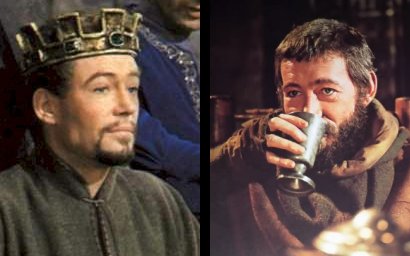
    PHOTOS: Dual O’Tooles, as Henry II in “Becket” (left) and “The Lion in Winter”

  • Viking Music Dragon Boats on Classical Network

    Viking Music Dragon Boats on Classical Network

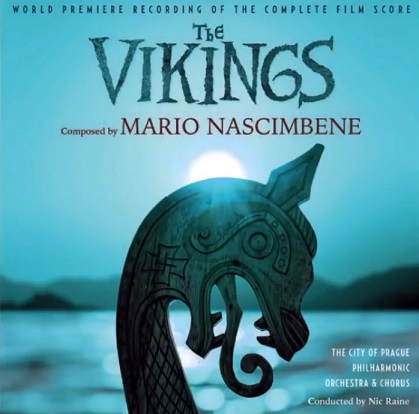
    Dragon boat sighting! This week on “Picture Perfect,” we’ll quaff deep from our drinking horns to music from “The Long Ships” (Dusan Radic), “Prince Valiant” (Franz Waxman), “The 13th Warrior” (Jerry Goldsmith), and “The Vikings” (Mario Nascimbene). Lock up your daughters, and let the looting begin, this Friday evening at 6:00 EST, on WWFM – The Classical Network and wwfm.org!

Tag Cloud

Aaron Copland (92) Beethoven (95) Composer (114) Film Music (123) Film Score (143) Film Scores (255) Halloween (94) John Williams (187) KWAX (229) Leonard Bernstein (101) Marlboro Music Festival (125) Movie Music (138) Opera (202) Philadelphia Orchestra (89) Picture Perfect (174) Princeton Symphony Orchestra (106) Radio (87) Ralph Vaughan Williams (85) Ross Amico (244) Roy's Tie-Dye Sci-Fi Corner (290) The Classical Network (101) The Lost Chord (268) Vaughan Williams (103) WPRB (396) WWFM (881)

DON’T MISS A BEAT

Receive a weekly digest every Sunday at noon by signing up here


RECENT POSTS