Tag: Film Scores

  • Kirk Douglas: Music from His Greatest Films

    Kirk Douglas: Music from His Greatest Films

    Hollywood legend Kirk Douglas died on February 5 at the age of 103. An actor of vitality, determination, and conscience, Douglas appeared in over 90 films. This week on “Picture Perfect,” we’ll honor his memory with music from four of his personal favorites.

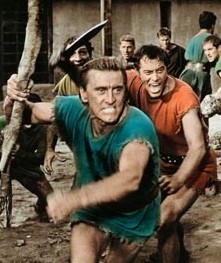
    We’ll begin with “Spartacus” (1960). Douglas plays the 1st century leader of a slave revolt against the Roman Empire. His co-stars include Laurence Olivier, Jean Simmons, and Tony Curtis. The music is by Alex North (born in Chester, PA, just outside of Philadelphia). The love theme, one of North’s best-known melodies, lends a sense of human connection amidst the martial fanfares and gladiatorial violence.

    Douglas is often credited with having broken the back of the Hollywood blacklist by openly acknowledging Dalton Trumbo as the screenwriter on “Spartacus.” Trumbo had been forced underground as a ghostwriter for refusing to testify before the House Un-American Activities Committee. The film became the biggest money-maker in the history of Universal Studios, up to that time.

    Vincente Minnelli’s cynical exposé of behind-the-scenes Hollywood, “The Bad and the Beautiful” (1952), stars Douglas as a ruthless mogul, who uses and abuses everyone around him. It’s one of his great “bad boy” characterizations. The film, which also features Lana Turner, Walter Pigeon, Dick Powell, and Gloria Graham, won a whole slew of Oscars. Graham was recognized as Best Supporting Actress.

    The music is by Philadelphia-born David Raksin, who is best-remembered for his theme to the all-time noir classic “Laura.” It doesn’t seem possible, but here he really surpasses himself. If you love the sound of Golden Age Hollywood, complete with haunting saxophone, then this one’s for you!

    Minnelli directed Douglas in another one of his standout roles, a much more sympathetic portrayal of the tortured artist Vincent Van Gogh, in “Lust for Life” (1956). For the film, Douglas turns in one of the great performances of his career. Furthermore, his physical resemblance to the painter is uncanny.

    Anthony Quinn won an Oscar for Best Supporting Actor as Van Gogh’s sometimes friend, the artist Paul Gaugin. The powerful score is by the great Miklós Rózsa, who here marries his Hungarian-inflected signature sound to an evocative sort of French impressionism.

    Finally, when Kirk isn’t fighting giant squid, he’s singing “A Whale of Tale,” as Ned Land, in Walt Disney’s “20,000 Leagues Under the Sea” (1954). The otherwise brooding score is a real showcase for Paul J. Smith, who had earlier provided incidental music for Disney’s animated features “Snow White and the Seven Dwarfs,” “Bambi,” and “Pinocchio.”

    As actor, director, producer, and author, Douglas was a whale of a talent. He himself included these four titles among his top ten films.

    Bad and beautiful, with a lust for life, and in a league of his own… Douglas can still knock your block off, this Friday evening at 6:00 EST, on WWFM – The Classical Network and at wwfm.org.


    PHOTOS: Douglas in “Spartacus,” “The Bad and the Beautiful,” “Lust for Life,” and “20,000 Leagues”
  • Doomed Love in Film: Picture Perfect

    Doomed Love in Film: Picture Perfect

    There’s no love like doomed love. We all know it’s true. Happily-ever-after is fine for lesser souls. The rest of us can’t look away from “Casablanca,” “The Age of Innocence,” or “The Umbrellas of Cherbourg.” The one that got away hangs heaviest on the heart.

    If impediments fan the flames of desire, then death must be the greatest impediment of all. This week on “Picture Perfect,” it’s an hour of bittersweet wish-fulfillment, as starred-crossed lovers connect beyond the mortal plane.

    Modern-day playwright Christopher Reeve is captivated by a portrait of early 20th century actress Jane Seymour, in “Somewhere in Time” (1980). He wills himself, through self-suggestion, back through the decades, and the two fall in love. It doesn’t end particularly well, though a tear-jerking denouement is contrived wherein the couple is ultimately reunited. Critics were not impressed, but “Somewhere in Time” is still ardently embraced by its admirers.

    The hopelessly romantic score is by John Barry. Barry wrote the music shortly after he lost both his parents, which he credited, in part, for its strong emotional content. He scored the film as a favor to Seymour, a friend. The film’s modest budget prohibited the possibility of hiring Barry at his usual fee. There are strong echoes of this music in Barry’s Oscar-winning score for “Out of Africa,” composed a few years later.

    Interestingly, Richard Matheson wrote the screenplay, basing it on one of his own novels. A prolific “Twilight Zone” scribe, Matheson was also responsible for “The Incredible Shrinking Man,” “I am Legend,” and “Hell House.” Remember when William Shatner discovered a gremlin on the wing of his plane? Matheson wrote that, too. ‘Nuff said.

    In “The Ghost and Mrs. Muir” (1947), widow Gene Tierney takes up residence in a seaside cottage in turn-of the century England and engages in philosophical jousts with the ghost of a salty sea captain, played by Rex Harrison. For a time, the tone is divertingly whimsical, but then the film transforms into a poignant love story. The music is by the great Bernard Herrmann.

    It had long been an ambition of Steven Spielberg to remake the Spencer Tracy film, “A Guy Named Joe.” In the original, Tracy’s character is killed while flying a mission during World War II. Then he returns from the Beyond to help his grieving girlfriend, a civilian pilot, played by Irene Dunne, and allow her to begin a new life with another man, played by Van Johnson.

    Spielberg’s “Always” (1989) updates the setting, with Richard Dreyfuss and John Goodman playing aerial firefighters, and Holly Hunter an air traffic controller, in the Pacific Northwest. The film follows the same basic plot line – the spirit of a dead pilot mentoring his replacement, while struggling to accept that his grieving lover needs to move on with her life. The film was not well received, but the music was by Spielberg’s house composer, John Williams.

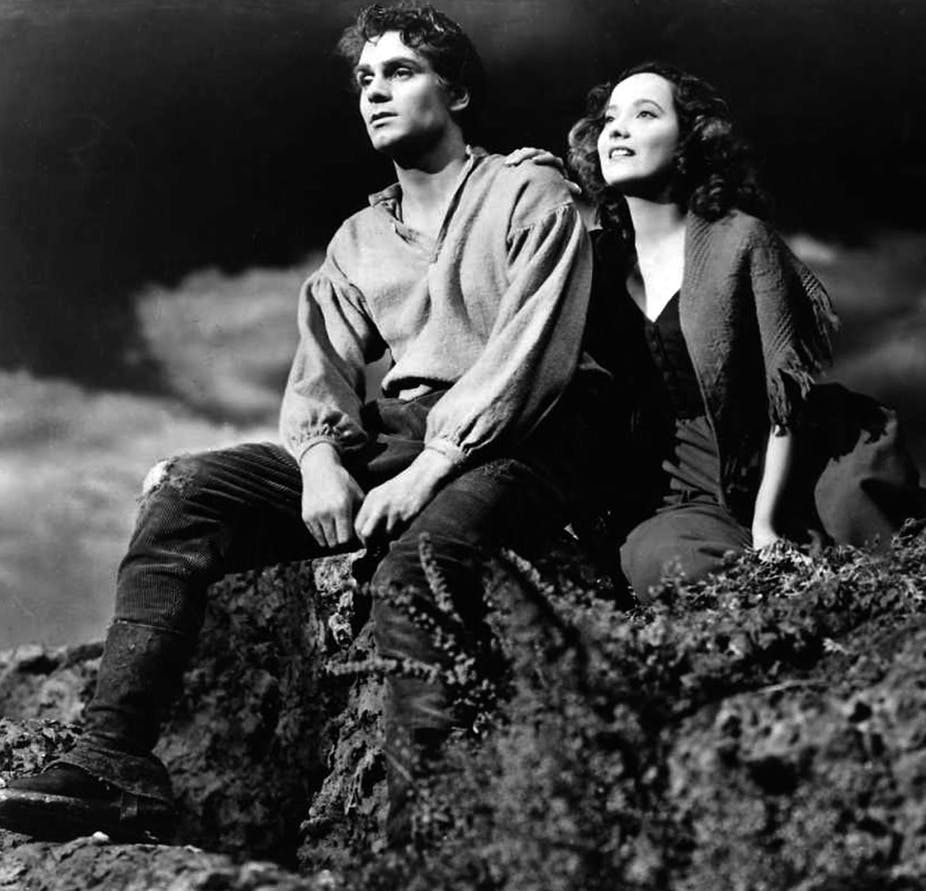
    Finally, “Wuthering Heights” (1939) is one of the all-time classic screen romances. Laurence Olivier plays the Byronic Heathcliff, whose intensity destroys the lives of everyone around him as he is consumed by animal passion for the wayward Cathy, played by Merle Oberon. Alfred Newman wrote the music, one of his best-loved scores. The film takes a lot of liberties with Emily Bronte’s original novel, and the conclusion is pure Hollywood, but we’ll take it.

    Hopeless romantics care not for the limitations of mortality. That’s “Love Eternal,” on “Picture Perfect” – music for the movies – this Friday evening at 6:00 EST, on WWFM – The Classical Network and wwfm.org.

  • Oscar Music Special Webcast

    Oscar Music Special Webcast

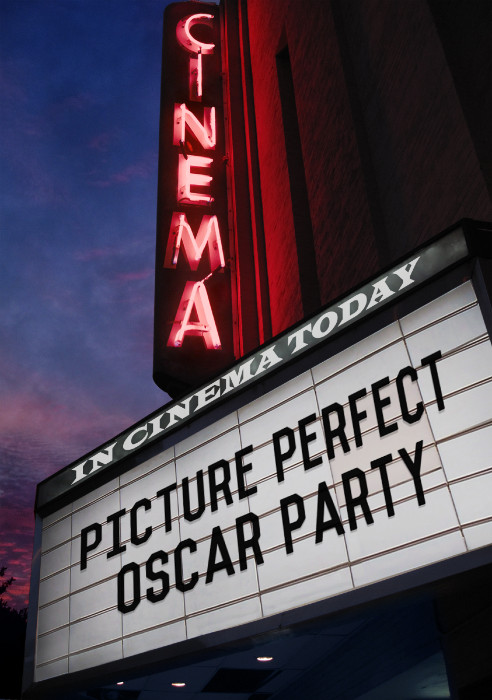
    Can’t get enough of Oscar? A reminder that Friday’s “Picture Perfect” Oscar Party has been posted early as a special webcast for Academy Awards weekend. Enjoy three hours of classic film scores and all five of this year’s nominees for Best Original Score. There’s also an “in memoriam” for Kirk Douglas (more to come on February 21) and even a John Williams medley. It’s the very thing to while away a Sunday afternoon, as you await the big ceremony. Listen online at WWFM – The Classical Network. Follow the link and click on one of the three “Listen” buttons to begin the show!

    https://www.wwfm.org/post/picture-perfect-february-7-oscar-party-2020

  • Why I Still Watch the Oscars Nostalgia & Movies

    I don’t know why I keep watching the Academy Awards. The truth is, just about everyone I really like in the entertainment industry is either retired or dead. But every once in a while, a film will come along, like “The Artist” or “The Shape of Water,” that will seize onto my retro sensibility. Or Morricone will finally get an Oscar.

    At any rate, watching the Academy Awards has been a life-long tradition that goes back to my childhood, when the family would gather in the living room and feast like guests of Petronius as screen legend after screen legend would take the podium. And the film score nominees were like something out of a second Golden Age.

    Sure, there was ample tedium, embarrassing production numbers that bloated the ceremony to eyelid-drooping proportions. You could watch “The Irishman” in the amount of time it would take to get to Best Picture. But it was worth it for the classic film montages and the “In Memoriam” segment.

    And yes, there could be a few squirmy episodes of collective self-congratulation and maybe an eye-rolling political digression or two. But it’s the Oscars. When you flip on the tube, you’re giving Hollywood its night.

    It’s like going to the circus. Does anyone even like the circus? And yet once you’re there, the impressions are overwhelming. It’s nostalgic. You may want to rant the whole time, but you can’t look away.

    So I’ll be there on Sunday night, as I have been for decades, anesthetizing myself with a platter of viands, hoping to see Joe Pesci pick up another Oscar and hating “Joker” (which I still haven’t seen), all the while reflecting on the superstars and better movies of my youth.

    Everything about the Academy Awards is like going to the movies anyway. They’re a construct. They’re fantasy. And every once in a while, just maybe, if I’m lucky, there’s still something worth seeing.

  • Oscars Best Film Scores & Academy Award Music

    Oscars Best Film Scores & Academy Award Music

    And the winner is… us!

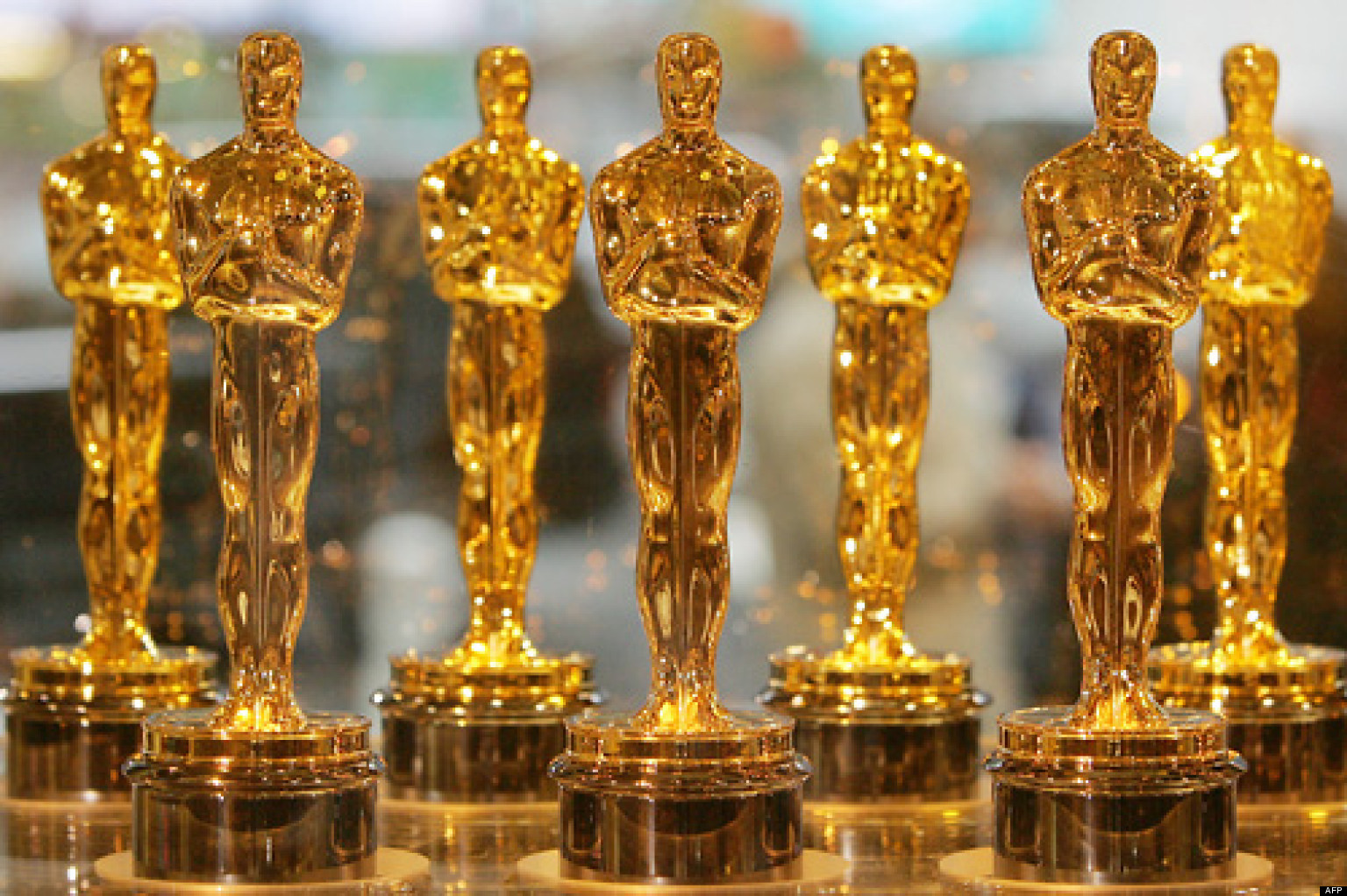
    Regardless of how you may feel about the current state of the movies, the Academy Awards are always an excellent excuse to cast a nostalgic look back on Oscar history.

    This week on “Picture Perfect,” we’ll sample from all five of this year’s nominees for Best Original Score, but also revel in music from some of the most honored and beloved classics of all time – including “The Godfather,” “Star Wars,” “Titanic,” “The Lord of the Rings,” “Lawrence of Arabia,” “Ben-Hur,” and “Gone with the Wind.”

    Whether or not the movies’ best days are behind them, there will be plenty to celebrate, with THREE HOURS OF QUALITY FILM MUSIC, on a special expanded edition of “Picture Perfect,” this Friday from 4 to 7 p.m. EST, on WWFM – The Classical Network and wwfm.org.

    #AcademyAwards #Oscars

Tag Cloud

Aaron Copland (92) Beethoven (95) Composer (114) Film Music (123) Film Score (143) Film Scores (255) Halloween (94) John Williams (187) KWAX (229) Leonard Bernstein (101) Marlboro Music Festival (125) Movie Music (138) Opera (202) Philadelphia Orchestra (89) Picture Perfect (174) Princeton Symphony Orchestra (106) Radio (87) Ralph Vaughan Williams (85) Ross Amico (244) Roy's Tie-Dye Sci-Fi Corner (290) The Classical Network (101) The Lost Chord (268) Vaughan Williams (103) WPRB (396) WWFM (881)

DON’T MISS A BEAT

Receive a weekly digest every Sunday at noon by signing up here


RECENT POSTS