Tag: Film Scores

  • Remembering Barry Tuckwell on The Classical Network

    Remembering Barry Tuckwell on The Classical Network

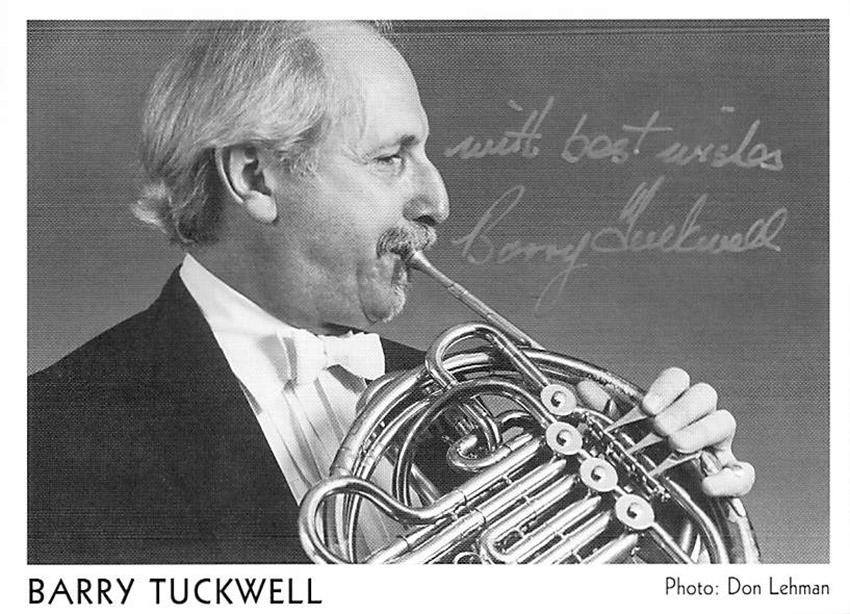
    This afternoon on The Classical Network, we’ll remember Barry Tuckwell. Tuckwell, one of the greatest hornists of his generation, died yesterday at the age of 88. He was one-time principal horn of the London Symphony Orchestra, who splintered off to record widely as a soloist.

    We’ll begin the 4:00 hour today, with some samples of his artistry (Telemann, Knussen and Strauss). Then we’ll observe the anniversaries of the birthdays of Wilhelm Kienzl, François-Joseph Gossec, Ulysses Kay, and Afro-Cuban violinist José Silvestre White y Lafitte.

    At 6:00, it’s an hour of dystopian visions on “Picture Perfect,” music for the movies, including selections from “Fahrenheit 451” (Bernard Herrmann), “WALL-E” (Thomas Newman), “A.I. Artificial Intelligence” (John Williams), and “Metropolis” (Gottfried Huppertz).

    That should be enough to wet your whistle. Music is our valve, as we celebrate Tuckwell and company, from 4 to 7 p.m. EST time, on WWFM – The Classical Network and wwfm.org.

  • Hitchcock’s Harpsichords Crime Scores

    Hitchcock’s Harpsichords Crime Scores

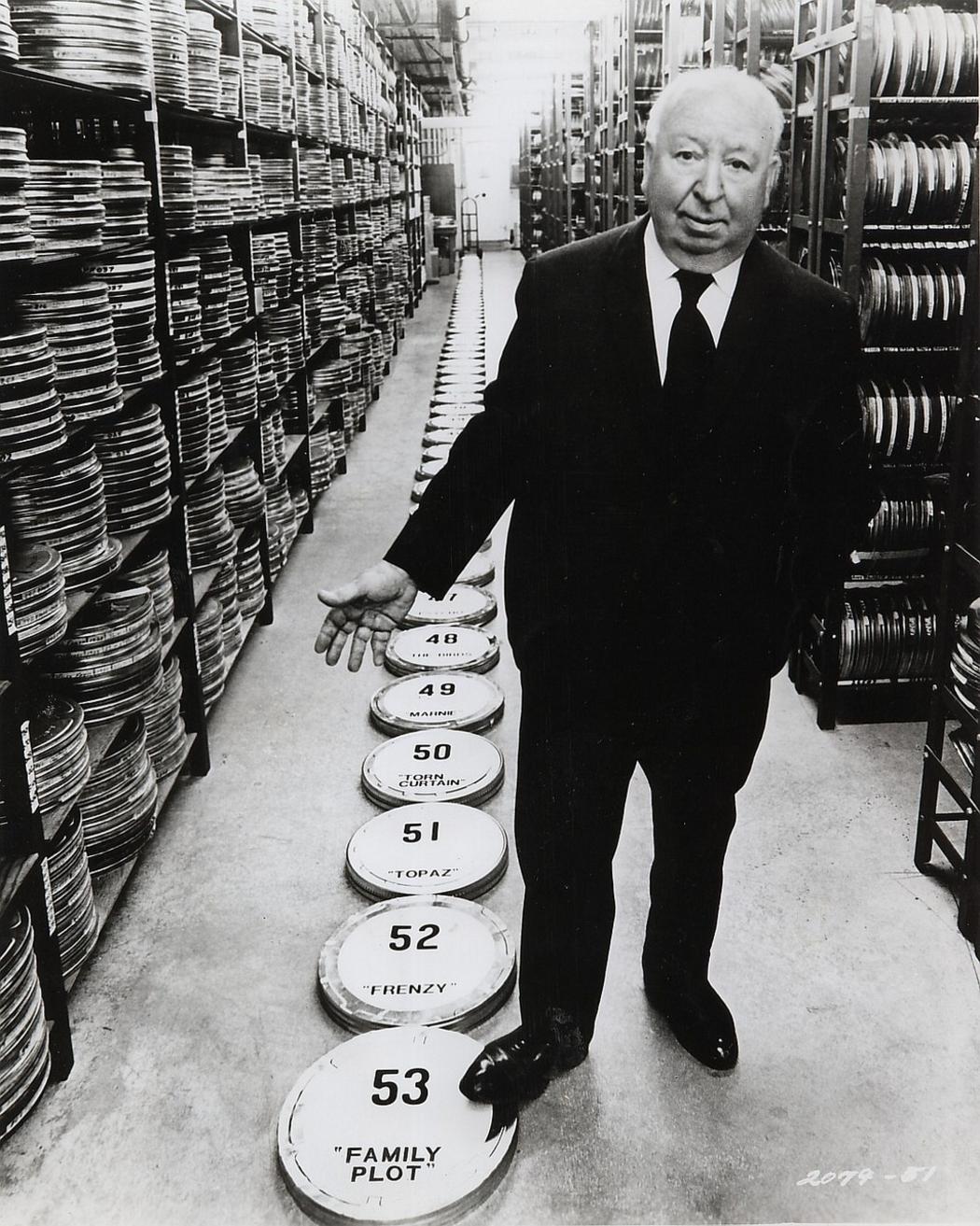
    In trying to convey the tone he was looking for in his latest motion picture, director Alfred Hitchcock stated drolly to his composer, “Mr. Williams, murder can be fun.” With this in mind, John Williams, who had just won an Academy Award for his music to “Jaws,” turned to the harpsichord.

    Because of its use in mysteries and thrillers, the harpsichord – in context, a fusty-sounding instrument – had taken on a certain mischievous quality.

    This week on “Picture Perfect,” we’ll hear selections from “Family Plot” (1976), a neglected score from the dawn of Williams’ widespread popularity, alongside Ron Goodwin’s music for “Murder She Said” (1961), the first of Margaret Rutherford’s Miss Marple films; John Addison’s “Sleuth” (1972), an adaptation of Anthony Shaffer’s play, with Sir Laurence Olivier and Michael Caine engaged in a perilous battle of wits; and André Previn’s “Dead Ringer” (1964), starring a post-“Baby Jane” Bette Davis as dysfunctional twins whose fraught relationship leads to murder.

    The order has been placed for ham on wry. Join me for an hour of wicked fun with arch harpsichords, on “Picture Perfect” – music for the movies – this Friday evening at 6:00 EST, on WWFM – The Classical Network and wwfm.org.

  • Time & Cinema Kings Row to The Leopard

    Time & Cinema Kings Row to The Leopard

    This week on “Picture Perfect,” with another year nearly burnt to nub, it’s an hour of cinematic reflections on time and impermanence.

    “Kings Row” (1942), based on the bestselling novel of Henry Bellamann (the one-time dean of the Curtis Institute of Music), takes place over a span of decades in a small Midwestern town. The community’s dark underbelly, gradually revealed, proves especially challenging to the story’s three protagonists, played by Robert Cummings, Ann Sheridan and Ronald Reagan.

    The deteriorating health of Cumming’s character’s grandmother (Maria Ouspenskaya, best known as Maleva, the gypsy fortune teller, in the 1943 version of “The Wolfman”) moves one of the film’s supporting characters to eulogize the passing of “… a whole way of life. A way of gentleness and honor and dignity. These things are going… and they may never come back to this world.” The story straddles the turn of the 20th century, even incorporating a New Year’s scene set in the year 1900.

    Erich Wolfgang Korngold composed the music. The opening fanfare, which we’ll hear from a rare 1961 recording, is said to have been one of the principal inspirations on John Williams in the writing of “Star Wars.”

    Director Orson Welles made his stunning Hollywood debut with back-to-back explorations of change and the passage of time: “Citizen Kane” (1941), about the rise and fall of a larger-than-life newspaper magnate – who, at his core, longs only for a simple pleasure of his childhood – and “The Magnificent Ambersons” (1942), after Booth Tarkington’s Pulitzer Prize-winning novel, documenting a prominent family’s declining fortunes over three generations. Both films sport scores by the ever-versatile Bernard Herrmann. We’ll hear some of the more upbeat selections assembled by the composer into a concert suite called “Welles Raises Kane.”

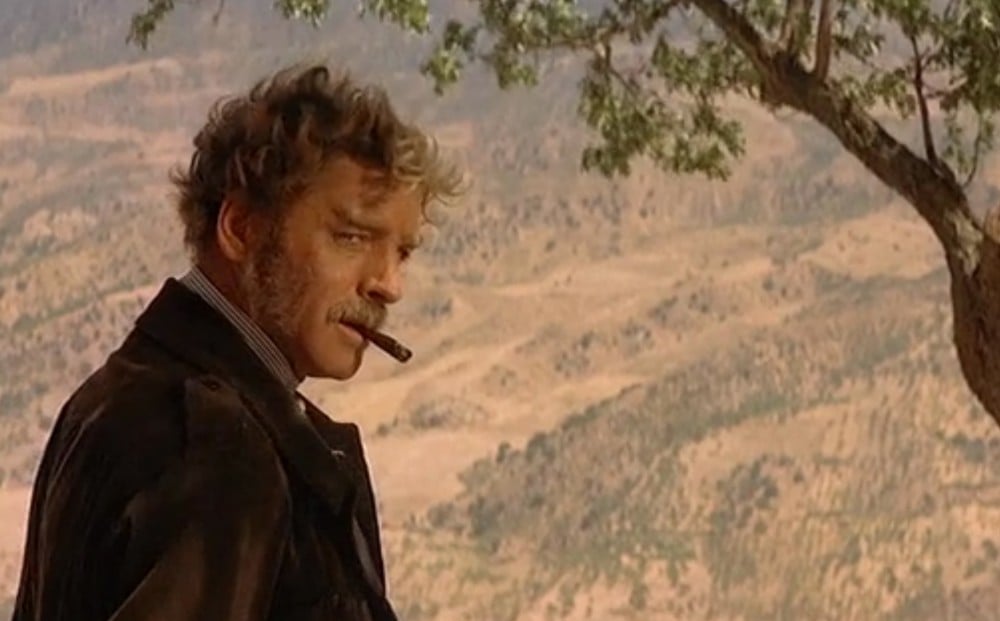
    “The Leopard” (1963) must be one of the most poignant meditations on mutability and time. One could argue whether or not director Luchino Visconti manages to capture the images of decay so pervasive in Giuseppe Tomasi di Lampedusa’s novel. What he does achieve is an achingly poetic study of the fall from prominence of an aristocratic Sicilian family, and the impact upon its patriarch (played by Burt Lancaster) during the time of Italian unification. Along the way, he also succeeds in staging one of the great set-pieces: an opulent ball that spans nearly a third of the film’s 187-minute running time. The operatically moving score is by Nino Rota.

    The hour will conclude with one final selection for the New Year, a lively overture to “The Four Poster” (1952). Rex Harrison and Lili Palmer appear in a series of vignettes – bedroom scenes – featuring a novelist husband and his wife. Collectively, they encapsulate the history of a marriage. The film became the basis for the musical “I Do! I Do!” The music is by Dimitri Tiomkin.

    Mark the sands of the hourglass and heed selections for the New Year. Nought may endure but Mutability, this Friday evening at 6:00 EST, on WWFM – The Classical Network and wwfm.org.

  • Herrmann’s Hitchcock Untold Scores

    Herrmann’s Hitchcock Untold Scores

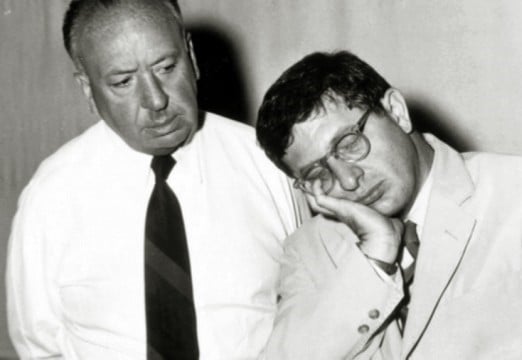
    In the mid-1950s, composer Bernard Herrmann and Alfred Hitchcock came together for a string of commercial, critical and artistic successes, including, most notably, “Vertigo,” “North by Northwest” and “Psycho.” But the two collaborated on no less than nine films, if we count “The Birds,” on which Herrmann acted as sound consultant.

    This week, on “Picture Perfect,” we’ll have selections from the other five – among them, “Marnie,” “The Trouble with Harry” and “The Wrong Man.”

    Herrmann’s reworking of Arthur Benjamin’s “The Storm Clouds Cantata” was used at the climax of the 1956 version of “The Man Who Knew Too Much,” as a frantic James Stewart attempts to thwart an assassination plot at Royal Alert Hall. (In the film, Herrmann himself appears on the podium.)

    We’ll also hear a portion of the rejected score for “Torn Curtain,” the project that ended the Herrmann-Hitchcock association. Hitchcock fired Herrmann, when the composer ignored his instructions to write something light and popular, under studio pressure. John Addison was hired as his replacement, and the film was a failure at the box office.

    In recent years, Herrmann admirers have had several opportunities to sample the composer’s original thoughts. Quentin Tarantino is obviously a fan. Some of Herrmann’s “Torn Curtain” music turns up in “Once Upon a Time in Hollywood.”

    Hitch yourself to Bernard Herrmann. It’s lesser-heard Herrmann-Hitchcock, this Friday evening at 6:00 EST, on WWFM – The Classical Network and wwfm.org.

  • Lives of the Saints Classic Film Scores

    Lives of the Saints Classic Film Scores

    This week on “Picture Perfect,” on this November 1st, the saints go marching in.

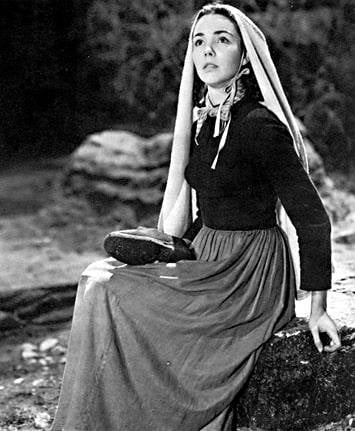
    We’ll hear a suite from “The Song of Bernadette” (1943), one of Jennifer Jones’ finest hours. Jones was honored with an Academy Award for her performance. The film was nominated in 12 categories. Franz Werfel’s novel relates the story of Bernadette Soubirous, a Lourdes peasant prone to visions of the Blessed Virgin Mary.

    Igor Stravinsky made several attempts to break into Hollywood film scoring, but he couldn’t keep up with the relentless schedule. He took a crack at the “Apparition of the Virgin” scene, but then had second thoughts. The project went to Alfred Newman, who won his third of nine Oscars. Stravinsky’s music was recycled in the second movement of his “Symphony in Three Movements.”

    The life of Joan of Arc has been translated to film many times. In the case of “Saint Joan” (1957), Otto Preminger adapted the play by George Bernard Shaw. Newcomer Jean Seberg was cast in the title role. Her inexperience brought her in for a sound critical drubbing. Even an old hand like screenwriter Graham Greene was not immune to critical barbs for the liberties he took in reworking Shaw’s play. Despite all that, the score, by Russian-born English composer Mischa Spoliansky, is lovely.

    By contrast, the film of “A Man for All Seasons” (1966), after the play of Robert Bolt, was lavishly praised, especially Paul Scofield’s performance as Sir Thomas More, for which he received an Academy Award for Best Actor. The film was the recipient of six Oscars in all, including that for Best Picture. The period-inflected score is by Georges Delerue.

    Henryk Sienkiewicz’s international bestseller, “Quo Vadis,” incorporates into its narrative Saints Peter and Paul, but the truly interesting characters are the cynical Petronius, who really knows how to throw a party, and the quite mad Nero, who plays the lyre, even as Rome burns.

    Miklós Rózsa’s score has been much-lauded for its attempt at historical authenticity – allegedly it incorporates early Greek, Hebrew and Sicilian melodies – though its popularity has been eclipsed, somewhat, by Rózsa’s “Ben-Hur” and “King of Kings.” “Quo Vadis” is really the film in which Rózsa lays out the blueprint for a decade or more of big screen piety. Bernard Herrmann called it “the score of a lifetime.”

    I hope you’ll join me for “Lives of the Saints,” on this All Saints’ Day, on “Picture Perfect,” music for the movies, this Friday evening at 6:00 EDT, on WWFM – The Classical Network and wwfm.org.


    PHOTO: Jennifer Jones and the Lourdes’ prayer
Tag Cloud

Aaron Copland (92) Beethoven (95) Composer (114) Film Music (123) Film Score (143) Film Scores (255) Halloween (94) John Williams (187) KWAX (229) Leonard Bernstein (101) Marlboro Music Festival (125) Movie Music (138) Opera (202) Philadelphia Orchestra (89) Picture Perfect (174) Princeton Symphony Orchestra (106) Radio (87) Ralph Vaughan Williams (85) Ross Amico (244) Roy's Tie-Dye Sci-Fi Corner (290) The Classical Network (101) The Lost Chord (268) Vaughan Williams (103) WPRB (396) WWFM (881)

DON’T MISS A BEAT

Receive a weekly digest every Sunday at noon by signing up here


RECENT POSTS