Tag: Film Scores

  • Napoleonic Wars on the Big Screen

    Napoleonic Wars on the Big Screen

    There is a pithy quote you may have heard to the effect that England and America are two countries divided by a common language. The observation is sharp and spot-on, so naturally it has been attributed to two of the greatest wits of their day, George Bernard Shaw and Oscar Wilde. Yet these attributions are without verifiable foundation. (The closest Wilde ever came in print: “We really have everything in common with America nowadays except, of course, the language.”)

    Similarly, we all know what is meant by “Napoleon complex.” But did you know there is every possibility that Napoleon was not short? Like the commonality of language that divides the English and the Americans (and I know that Shaw and Wilde were Irish), it turns out that there may be some confusion over Napoleon’s actual height on account of two different systems of measurement that happened to use the same terms.

    Be that as it may, this week on “Picture Perfect,” with Bastille Day (July 14) right around the corner, we’ll surge to power on the allegedly diminutive shoulders of Napoleon Bonaparte. The focus will be on the Napoleonic Wars – which is to say, movies set, at least in part, between about 1803 and 1815.

    There is a lot of unlikely casting in these films. The first English language adaptation of Leo Tolstoy’s “War and Peace” (1956) stars Audrey Hepburn, Henry Fonda, and Mel Ferrer, with Herbert Lom as Napoleon. Lom is fine; but Henry Fonda? At least the music is by Nino Rota.

    Stanley Kramer’s “The Pride and the Passion” (1957) is loosely based on the novel “The Gun,” by C.S. Forester. Forester is best known for the nautical adventures of Horatio Hornblower – also set during the Napoleonic Wars.

    The film depicts the story of a British officer (Cary Grant) who is ordered to retrieve a large cannon from Spain. But before he can do so, he must lend assistance to the leader of the Spanish guerillas (Frank Sinatra!) in the transport of the weapon across 600 miles of treacherous ground to reclaim the city of Avila from the French. Further complications arise from their respective feelings for Sinatra’s mistress (Sophia Loren).

    The score is by Trenton-born George Antheil, self-proclaimed “bad boy of music.” Antheil achieved lasting notoriety as the composer of the raucous “Ballet Mécanique” in the 1920s. He would later embrace a more conservative language for his symphonies and for his music for the movies. Antheil composed over 30 film scores. “The Pride and the Passion” would be his last.

    Ridley Scott’s first feature, “The Duellists” (1977), is based on a story by Joseph Conrad. It relates the tale of an obsessive duellist (Harvey Keitel), who takes it as a personal affront when he is arrested by a fellow hussar (Keith Carradine) for crossing swords with the mayor’s nephew, whom he has fatally wounded. This sets the two men in a kind of combative pas de deux, a series of duels that spans the entire Napoleonic era. The sheer beauty of the film is matched by Howard Blake’s haunting score.

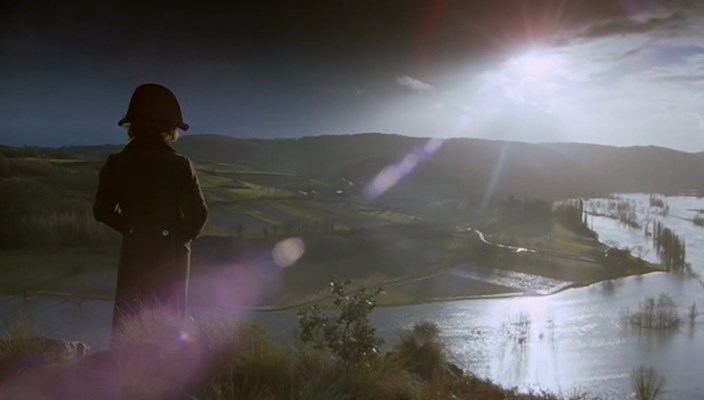
    Abel Gance’s “Napoleon” (1927) is widely regarded as one of the towering achievements in all of cinema. I’ve had the good fortune to see it on the big screen twice. However, it was with a new score by Carmine Coppola, the father of Francis Ford Coppola, who financed the film’s revival. The original score was by Arthur Honegger. Honegger was the famed French composer (of Swiss birth), who was one of the members of Les Six, a lose collective of artists that also included Francis Poulenc and Darius Milhaud.

    Gance’s epic was gargantuan at the time I saw it, in the 1980s – about four hours long. A more recent restoration places the film’s running time at 5 ½ hours. That’s still down from a 9 ½ hour version shown in 1927!

    The film is crowned by a celebrated triptych, for which the screen widens to accommodate the simultaneous projection of three reels – an extraordinary innovation for its time. “Napoleon” is full of such touches. Apparently, there had even been a sequence shot in 3-D, which was left on the cutting room floor. If you’re at all interested in the squandered potential of cinema, this is a film which must be seen in the theater.

    I hope you’ll join me for music from big movies set during the Napoleonic Wars. It will be a satisfying show by any measure, this Friday evening at 6:00 EDT, on WWFM – The Classical Network and wwfm.org.


    PHOTO: A brooding Harvey Keitel in the extraordinarily beautiful “The Duellists”
  • Zeffirelli’s Shakespeare & Film Scores

    Zeffirelli’s Shakespeare & Film Scores

    Franco Zeffirelli died on June 15 at the age of 96. The influential director favored big emotions and grandiose subjects, making his biggest mark in Shakespeare and opera. I’ll leave the opera to other hands. However, this week on “Picture Perfect,” I’ll do what I can to honor his artistry with music from a selection of his films.

    “Romeo and Juliet” (1968) was probably the most culturally significant of these. Not only did it turn out to be a surprise hit, the film has been a staple of high school English curricula for decades. Zeffirelli’s vision proved especially appealing to teenaged audiences – in part because of the refreshing youth of its leads (Leonard Whiting and Olivia Hussey, 17 and 16 respectively).

    “Romeo and Juliet” was nominated for several Academy Awards, including those for Best Picture and Best Director. Laurence Olivier spoke the film’s prologue and epilogue, and reportedly dubbed the voice of the Italian actor who played Lord Montague. Nino Rota wrote the music, and the love theme was popularized as “A Time for Us.”

    Another enduring success for Zeffirelli, a devout Roman Catholic, was his television miniseries, “Jesus of Nazareth” (1977). This time Olivia Hussey plays Mary, mother of Jesus. The all-star cast includes eight Academy Award winners, past and future (Anne Bancroft, Ernest Borgnine, James Earl Jones, Laurence Olivier, Christopher Plummer, Anthony Quinn, Rod Steiger, and Peter Ustinov). It makes me happy to learn that the sets for the film were reused by Monty Python for “Life of Brian.”

    The music was by Maurice Jarre, David Lean’s composer-of-choice. I realize we’ve been hearing a lot of late-period Jarre recently, when he was most under the spell of electronics. “Jesus of Nazareth” sports a good old-fashioned orchestral score, with obligatory Biblical chorus.

    Zeffirelli proved again and again that he was especially adept at adapting Shakespeare for the big screen. With the unlikely casting of action hero Mel Gibson as the melancholy Dane, “Hamlet” (1990) was something of a gamble that paid off. Zeffirelli puzzlingly tampers with one of the all-time great openings in the history of drama, delaying the appearance of the ghost of Hamlet’s father in favor of some fabricated funeral that looks like a rejected scene from “Star Wars,” but Gibson brings to the title role a refreshing vitality. The reading is passionate and dangerous. The music was by Ennio Morricone.

    Art imitates life in Zeffirelli’s first feature as director, “The Taming of the Shrew” (1967), a showcase for the famously tempestuous husband-and-wife Richard Burton and Elizabeth Taylor. In addition, “Shrew” and “Romeo” provided notable supporting roles for a young Michael York. Nino Rota supplies an alternately rollicking and melancholy score in a manner that seems characteristic of Italian composers – perhaps the influence of Italian opera?

    Of course Zeffirelli made a magnificent imprint in the world of opera, with his opulent, eye-popping productions. For film, he directed adaptations of “La traviata” and “Otello,” with Placido Domingo.

    Among his other films were “Brother Sun, Sister Moon,” “The Champ,” “Endless Love,” “Jane Eyre,” and “Tea with Mussolini.” But we’ll go with the spectacle – I think Franco would have wanted it that way – this Friday evening at 6:00 EDT, on WWFM – The Classical Network and wwfm.org.

  • Godzilla & Dinosaur Movie Music

    Godzilla & Dinosaur Movie Music

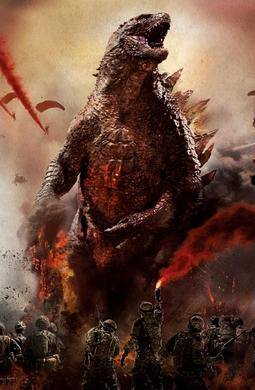
    How many dinosaurs have atomic breath? Have you ever woken up next to one?

    I know, I know, strictly speaking, Godzilla is not a dinosaur. Don’t give me any guff. All I’m looking for is an hour’s worth of “fearfully great lizards” (from the Greek), and I don’t care how I get them.

    This week on “Picture Perfect,” with Godzilla back in theaters, I thought it would be a good time for Godjira to rise from the surf yet again for another day of sand and fun.

    We’ll hear music from the film that kicked off the latest American attempt at a Godzilla franchise, titled, simply and leanly, “Godzilla” (2014), a “reboot” of the long-running Toho series. Since every Hollywood blockbuster these days seemingly aspires to emulate comic books, the film was planned as the cornerstone of yet another cinematic Tower of Babel. Reportedly, next year Godzilla will finally fight Kong (again). I kind of miss when he was just a guy in a suit, though…

    As these things go, “Godzilla” was not too bad, with at least some show of restraint in not revealing too much of the titular monster too soon (some felt it couldn’t be soon enough), especially in the film’s marketing. Also, the producers managed to assemble an A-list cast, including Bryan Cranston, Academy Award winners Juliette Binoche and David Straitharn, Japanese Academy Award winner Ken Watanabe, and soon-to-be Best Actress (for “The Shape of Water”) Sally Hawkins. The music was by Alexandre Desplat, in recent years everywhere at once.

    Of course, Godzilla is not the only pre-historic being to sport fashionable beachwear. “One Million Years B.C.” (1966) featured special effects by the legendary Ray Harryhausen and an equally legendary fur bikini, worn by Raquel Welch.

    Not to be confused with the recent “10,000 B.C.,” this was actually a Hammer Studios remake of a 1940 Hollywood film, “One Million B.C.” – a fact as little known as the well-kept historical secret that man and dinosaurs did indeed co-exist. With its stop-motion dinosaurs, fur bikinis, and Peter Brady-style volcanoes, this cheese ball classic is a guilty pleasure indeed. The music was by Mario Nascimbene, who wrote one of my favorite scores for Kirk Douglas, “The Vikings.”

    Some kinder, gentler fare will be served up by way of the animated film “The Land Before Time” (1988). Executive produced by Steven Spielberg, George Lucas, Kathleen Kennedy, and Frank Marshall – all of whom were involved with “Raiders of the Lost Ark” – this Don Bluth-directed opus about anthropomorphized dinosaurs spawned a profitable franchise, with at least 12 direct-to-video sequels. The music for the original was by James Horner.

    Spielberg turned to B-movie source material for his visual inspiration for “Jurassic Park” (1993), based on the novel by Michael Crichton. The herky-jerky dinosaur effects of yore were replaced with state of the art computer-generated effects, in this story of a safari park gone wrong.

    The premise this time takes advantage of the most recent scientific thinking, albeit filtered through a prism of speculative wonder and horror – DNA extracted from mosquitoes trapped in amber, cloning, and the theory that dinosaurs were not lizards, after all, but rather birds.* John Williams music proved to be the Tyrannosaurus rex among his film scores of the 1990s.

    Join Godzilla and me for a dinosaur clambake, on “Picture Perfect,” Friday evening at 6:00 EDT, on WWFM – The Classical Network and wwfm.org.


    *If we’re going to drag science into the thing, here’s an amusing article I discovered in Smithsonian Magazine, in which paleontologists speculate what dinosaurs may have been a part of Godzilla’s DNA. Before his radioactive mutation that is.

    https://www.smithsonianmag.com/science-nature/what-kind-of-dinosaur-is-godzilla-45639768/?no-ist&fbclid=IwAR30oAV7CkYpOA7cksEA9mymnwXbBkzHq2p7GZ6-RtX0k-pvmbmpnHTfXPk

  • Civil War Films: Music & Memorial Day

    Civil War Films: Music & Memorial Day

    Memorial Day has its roots in Decoration Day, a time to honor those who gave “the last full measure of their devotion” during the War Between the States. This week on “Picture Perfect,” we acknowledge the heroism and sacrifice of ordinary Americans placed in extraordinary circumstances.

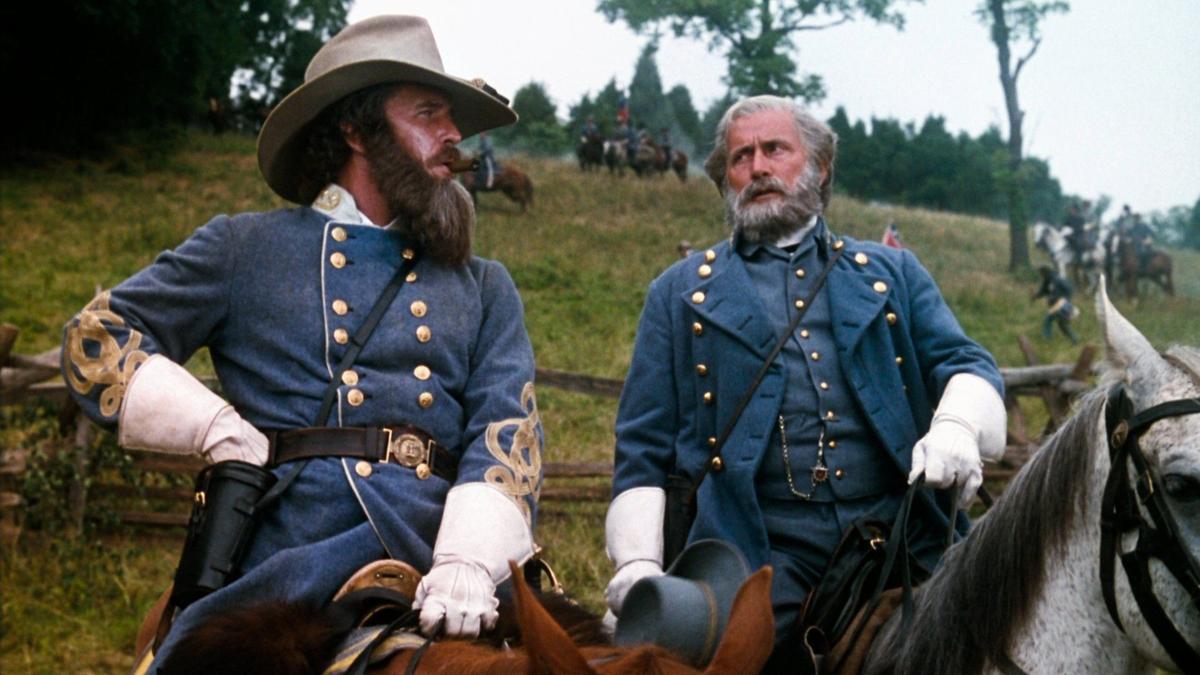
    The Civil War drama, “Gettysburg” (1993) – based on the Pulitzer Prize-winning novel, “The Killer Angels,” by Michael Shaara – was originally intended to be a television mini-series, but when Ted Turner was struck by the quality of the production, he turned around and released it theatrically. Despite the 254 minute running time, and some fairly ridiculous facial hair, “Gettysburg” yet manages to be engrossing, moving, and at times exhilarating.

    The film stars Tom Berenger, Jeff Daniels (who’s never been better), and Martin Sheen. It’s a testament to the power of the storytelling that “Gettysburg” yet manages to engage – despite Berenger’s “Cousin It” beard. In fact, my friends and I always refer to this film as “Gettys-BEARD.”

    Perhaps another indication of its television origins – a transparent attempt to keep a lid on the budget – is the score by Randy Edelman, which is performed, in large part, on electronic, as opposed to acoustic, instruments. I guess that’s the price you pay for a four-hour film with a cast of thousands. It would have been nice had Turner splurged on an orchestra, but the music still manages to inspire.

    There was no such cost-cutting in evidence on “Gone with the Wind” (1939). Max Steiner goes all out with a full symphony orchestra. So much of the film deals with the personal interactions between Scarlett O’Hara, Ashley Wilkes, Melanie Hamilton, and a certain “visitor from Charleston.” However, the human story is set against the sprawling backdrop of the Antebellum, Civil War and Reconstruction eras. We’ll hear music associated with the Civil War segments at the heart of the film, including the memorable sequence with Scarlett walking among the wounded.

    When the nine-part Ken Burns’ television documentary, “The Civil War” (1990), first aired, over five consecutive nights, it became the most watched program in PBS history. The theme music is particularly well known, as “Ashokan Farewell.” Its composer is Jay Ungar, who performs it on the series’ original soundtrack, with Molly Mason and the ensemble Fiddle Fever.

    Finally, “Glory” (1989) dramatizes a valorous campaign undertaken by Colonel Robert Gould Shaw’s 54th Massachusetts Voluntary Regiment, an all African American outfit that distinguished itself in a hopeless assault on Fort Wagner, near Charleston, South Carolina. The film sports a terrific cast, including Morgan Freeman, Matthew Broderick, and Cary Elwes, with an Oscar-winning performance by Denzel Washington.

    James Horner’s score can be a little derivative at times, but, with the participation of the Harlem Boy Choir, it manages to tug the heart strings at all the key moments.

    Hundreds of thousands laid down their lives so that we can troll one another on the internet. We’re bigger than our differences, people. Preserve the union of history and entertainment on “Picture Perfect” – music for the movies – this Friday evening at 6:00 EDT, on WWFM – The Classical Network and wwfm.org.


    PHOTO: Tom Berenger (left), breaking the beard budget

  • Superhero Movie Music Picture Perfect

    Superhero Movie Music Picture Perfect

    Look! Up in the sky! This week on “Picture Perfect,” the focus is on superheroes!

    We’ll begin with music from Tim Burton’s “Batman” (1989). It’s true, I wasn’t all that crazy about the film. In fact, I’m still waiting for someone to make the Batman movie I’ve got in my head. But that probably isn’t going to happen – we’re too far down the computer generated road at this point.

    At least Danny Elfman actually made the effort to write a decent score. I admit I was underappreciative of it at the time. To me, he was still “that guy from Oingo Boingo.” But it sounds better and better in light of all that has followed. Elfman’s love for Bernard Herrmann is evident. And don’t worry, I will spare you the Prince songs.

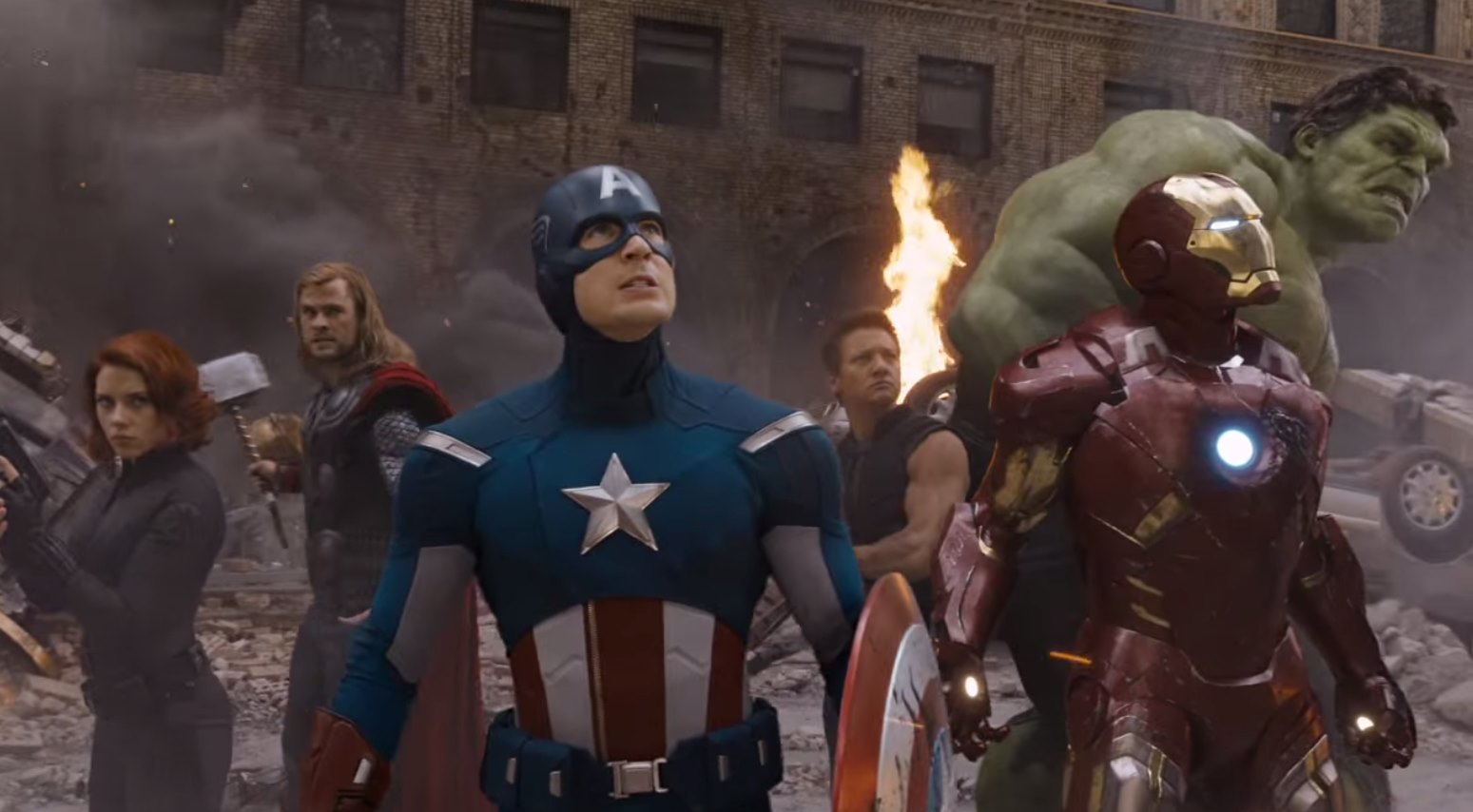
    “The Avengers” may have provided the satisfaction of seeing Iron Man, Captain America, Thor, and the Hulk on the screen all at the same time, but arguably “The Incredibles” (2004) was more fun. Pixar’s clever satire/adventure featured the vocal talents of Craig T. Nelson, Holly Hunter, and Samuel L. Jackson.

    The score is a smart throwback to the swinging espionage films of the 1960s. Originally the producers approached John Barry to write the music, hoping for something very much in the style of his work on the James Bond films. But Barry declined, not wanting to return to his earlier style. In the event, composer Michael Giacchino was only too happy to step into Barry’s well-polished shoes.

    “The Avengers” (2012), of course, is the 800-pound gorilla of superhero franchises, but in these days when each hyper spectacle seems to surpass the last, not only in terms of din and seizure-inducing effects, but in the epic scope of its box office, that could very well change at any time. With the latest sequel, “Avengers: Endgame,” now in theaters, I thought it would be as good a time as any to play music from the first film, by Alan Silvestri.

    To truly understand what is missing from superhero music these days, one need only refer to the gold standard of the genre, “Superman” (1978). John Williams’ score was from smack-dab in the middle of his heroic period, falling as it did, between “Star Wars” and “Raiders of the Lost Ark.” Its star-spangled fanfare and march beautifully conjure memories of Superman music past – for the George Reeves TV series and, before that, the Fleischer Brothers cartoons – yet effortlessly surpass them like leaping a tall building in a single bound.

    I know, I know, not every film can be, nor should be, the same, and Williams’ primary colors wouldn’t sit as well, perhaps, with the dark streets of Gotham. But why does everything have to be so grim these days? I read comic books when I was a kid, and I don’t remember everything being so hopeless.

    I don’t want to hear about how the real world is a gritty place right now. “Superman” was made in the wake of Watergate and Vietnam, for crying out loud. Entertainment molds the world, every bit as much as the world shapes our entertainment. Is it too much to ask for a little fun and inspiration from our superhero movies? Can we leave the theatres feeling exhilarated, for a change, as opposed to simply exhausted?

    All kryptonite will be encased in lead for “Everything’s Super,” this Friday evening at 6:00 EDT, on WWFM – The Classical Network and wwfm.org.

Tag Cloud

Aaron Copland (92) Beethoven (95) Composer (114) Film Music (123) Film Score (143) Film Scores (255) Halloween (94) John Williams (187) KWAX (229) Leonard Bernstein (101) Marlboro Music Festival (125) Movie Music (138) Opera (202) Philadelphia Orchestra (89) Picture Perfect (174) Princeton Symphony Orchestra (106) Radio (87) Ralph Vaughan Williams (85) Ross Amico (244) Roy's Tie-Dye Sci-Fi Corner (290) The Classical Network (101) The Lost Chord (268) Vaughan Williams (103) WPRB (396) WWFM (881)

DON’T MISS A BEAT

Receive a weekly digest every Sunday at noon by signing up here


RECENT POSTS