Tag: Film Scores

  • How European Composers Won the West

    How European Composers Won the West

    Before American composers like Jerome Moross and Elmer Bernstein made the western distinctly their own, the task of scoring the genre fell largely to European émigrés. This week on “Picture Perfect,” to coincide with the birthdays today of Max Steiner and Dimitri Tiomkin, we’ll take a look at some outside perspectives on how the West was won.

    Steiner, who was literally the godson of Richard Strauss, came from Vienna, where he studied with Johannes Brahms and Robert Fuchs. He scored such classic films as “King Kong,” “Gone with the Wind” and “Casablanca.”

    Among his over 300 film projects were a number of westerns. One of these was “They Died with Their Boots On” (1941), which starred Errol Flynn as George Armstrong Custer and Olivia de Havilland as Libby, the woman who becomes his wife. Steiner’s score features familiar folk material, some old-fashioned “faux” Indian music, and one of his characteristically lush love themes.

    Tiomkin was a pupil of Alexander Glazunov. Born in Ukraine in 1894, he became a fresh voice of the American West, when he wrote the music for “High Noon,” the first of his western “ballad” scores. Advanced word, based on an early screening for the press, was that the picture would be a failure. However, Tiomkin had such faith in the theme song, sung in the film by Tex Ritter, that he hired Frankie Laine to record it, and the record became a world-wide hit. In fact, his score is largely credited with having saved the film.

    Tiomkin was recognized with two Academy Awards: one for Best Original Song, and one for the score itself. It is the first time a composer won two Oscars for his work on the same movie. It also changed the way western scores were done. In the 1950s, Tiomkin became THE western composer of choice. He produced a number of subsequent western ballad scores, including that for “Gunfight at the O.K. Corral” (1957). Asked how it was that a composer from Ukraine could write so convincingly for the American West, Tiomkin quipped, “A steppe is a steppe is a steppe.”

    Franz Waxman, perhaps another unexpected source for classic western music, was born in Upper Silesia. He arrived in the U.S. by way of Germany. Nevertheless, as part of the composer’s varied and prolific output, he did indeed score a number of films in the genre, including “The Furies” (1950), a peculiar noir-western hybrid. Walter Huston, in his final film role, plays a cattle baron who remarries and throws his empire into jeopardy. Barbara Stanwyck is his strong-willed daughter.

    Hungarian-born composer Miklós Rózsa scored many films with historical settings – “Quo Vadis,” “Ben-Hur,” and “King of Kings,” among them. However, to my knowledge, his only western was “Tribute to a Bad Man” (1956). James Cagney stars as a rancher who doles out some frontier justice.

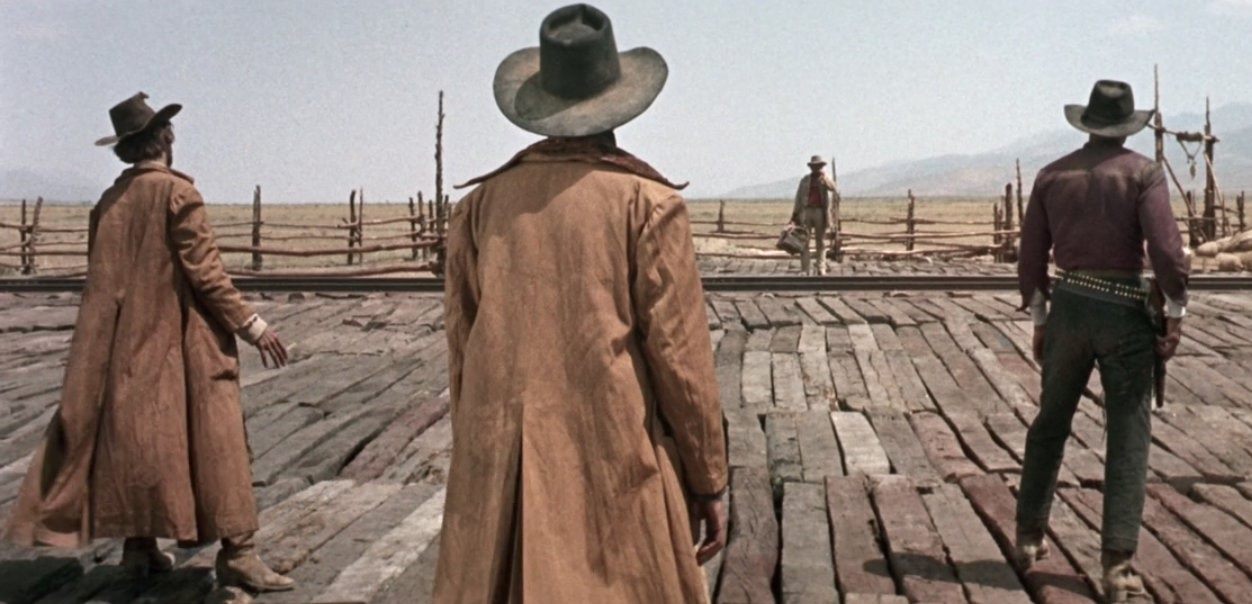
    Finally, we’ll have music by Ennio Morricone, from arguably the most operatic of all spaghetti westerns, “Once Upon a Time in the West” (1968). As a reaction to Tiomkin’s ballad scores and the neo-Coplandisms of Elmer Bernstein and the rest, Morricone brings his own quirky sensibility to bear on the classic western iconography. Get ready for indelible motifs for harmonica and banjo, but also an unexpectedly moving elegiac arioso, underscoring the close of the American West with the arrival of the railroad.

    Set your pocket watches for “Picture Perfect,” music for the movies. The next coach leaves this Friday evening at 6:00 EDT, on WWFM – The Classical Network and wwfm.org.
  • Horse Racing Movie Music on Picture Perfect

    Horse Racing Movie Music on Picture Perfect

    It’s a rare horse race where everyone comes out a winner. This week on “Picture Perfect,” we beat the odds. On the eve of the 145th running of the Kentucky Derby, we’ll have beautiful and rousing music from films about horses and horse racing.

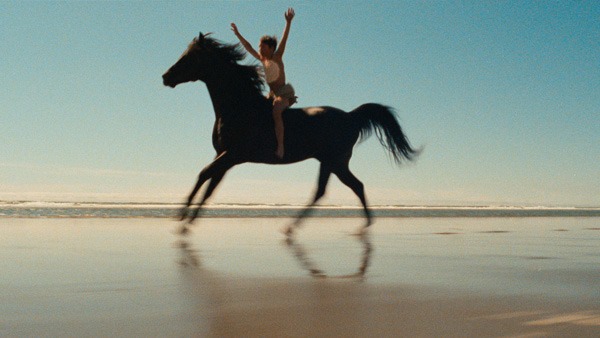
    “The Black Stallion” (1979), based on the classic novel by Walter Farley, depicts the bonding of a shipwrecked boy and an Arabian stallion, whose shared destiny takes them to the race track. Mickey Rooney’s uncharacteristically subdued performance as the former trainer who finds a new lease on life earned him an Academy Award nomination for Best Supporting Actor.

    Francis Ford Coppola executive produced the film, and his father, Carmine Coppola, wrote the music. Reportedly the unsung Shirley Walker, who had been hired as an orchestrator, wound up contributing a fair amount to it, when the composer was put off by requests from director Carroll Ballard that portions of the music be rewritten.

    “The Reivers” (1969), after William Faulkner’s Pulitzer Prize winning novel, is a coming-of-age story about a boy swept into automobile theft and illicit horse racing in the American south. Mark Rydell directed, and Steve McQueen stars as the rakish Boon Hogganbeck. The narration was by Burgess Meredith, who reprises his role in the recording we’ll hear, with John Williams conducting his own music.

    For the film, Williams provided an alternately wistful and carefree Americana score. It’s said that his work on “The Reivers” is what moved Steven Spielberg to hire him to write the music for his first theatrical feature, “The Sugarland Express.” The Spielberg association brought Williams to “Jaws,” the first of his truly iconic film scores. He would worked with Rydell again on “The Cowboys” (1972), “Cinderella Liberty” (1973), and “The River” (1984).

    It was inevitable that the nonfiction bestseller “Seabiscuit: An American Legend” would be given the Hollywood treatment. The miraculous ascent of the real-life dark horse who became a symbol of hope during the Great Depression seemed tailor-made for dramatization.

    Though it presses all the right buttons, “Seabiscuit” (2003) is not to be confused with a superior documentary that was shown on PBS around the same time. Nonetheless, the feature film, which starred Tobey McGuire, Jeff Bridges, and Chris Cooper, was nominated for seven Academy Awards, including Best Picture. Randy Newman wrote the music.

    Finally, we’ll turn to “Hidalgo” (2004), also allegedly based on a true story, though the source material – the memoir of distance rider Frank T. Hopkins – has also inspired a fair degree of skepticism. In 1890, Hopkins became the first American invited to compete in a centuries-old 3000-mile survival race across the Arabian Desert.

    Viggo Mortensen plays Hopkins, and Omar Sharif is the sheik who asks him to put up or shut up, over the claim made by Buffalo Bill’s Wild West Show that he and his horse are the greatest distance runners in the world. The music is by James Newton Howard.

    It’s a sure thing, so place your bets on “Picture Perfect” and music from movies about horse racing, this Friday evening at 6:00 EDT, on WWFM – The Classical Network and wwfm.org.

  • Beauty Patches & Royal Romps on Picture Perfect

    Beauty Patches & Royal Romps on Picture Perfect

    Beauty patches are back!

    This week on “Picture Perfect,” it’s an hour of lace and licentiousness, with music from movies set during the reign of Charles II.

    “Restoration” (1995) features quite a cast, with a pre-“Iron Man” Robert Downey, Jr., as a young doctor torn between duty and debauchery. He succumbs to the latter at the court of Charles, played by Sam Neill, before finding redemption as he battles the Great Plague and braves the Fire of London. The film also stars David Thewlis, Polly Walker, Meg Ryan, Ian McKellan and Hugh Grant.

    The main title of James Newtown Howard’s score takes its impetus from Henry Purcell’s “The Fairy Queen.” And indeed there are baroque inflections throughout.

    George Sanders plays Charles in “The King’s Thief” (1955). Edmund Purdom is a highwayman who pilfers an incriminating book from David Niven. An aristocratic schemer, Niven will stop at nothing to get it back. The swashbuckling score is by Miklós Rózsa.

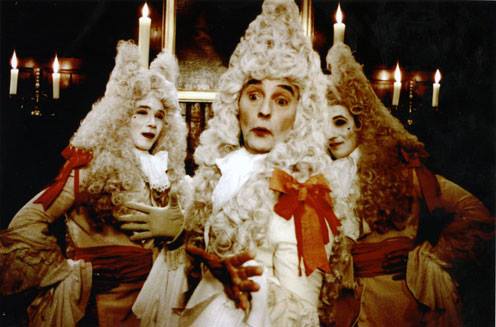
    I don’t recall Charles making an appearance in “The Draughtsman’s Contract” (1982), Peter Greenaway’s saucy though strangely aloof Restoration opus. However, there is plenty of licentiousness and an abundance of outlandish wigs. And, it being a Greenaway film, it is certainly strange in more ways than one. Michael Nyman’s score puts a minimalist spin on baroque sources.

    Finally, “Forever Amber” (1947) is based on a then-scandalous novel by Kathleen Winsor, about an ambitious young woman’s rise through the bedchambers of the Royal Court. The film was directed by Otto Preminger. Linda Darnell is Amber. Once again, George Sanders plays Charles, eight years before reprising the role for “The King’s Thief.” Cornel Wilde, Richard Greene and Jessica Tandy are also in the cast. Philadelphia-born composer David Raksin, of “Laura” fame, plays fast and loose with music of the era.

    Bwoo-hoo-hoo-hoo! It’s so naughty! Everyone, giggle into your handkerchiefs and wear ribbons on your shoes, this Friday evening at 6:00 EDT, on WWFM – The Classical Network and wwfm.org.
  • Remembering André Previn: A Hollywood & Classical Music Giant

    Remembering André Previn: A Hollywood & Classical Music Giant

    The outpouring of love and grief precipitated by the death of André Previn on February 28 seems to have brought the music world to state of catharsis. So I wonder how many will pause to remember him today, on what would have been his 90th birthday. Clearly any musical tributes will take place as scheduled over the coming season.

    For now, I offer a few reminiscences of “Previn & The Pittsburgh,” a television series featuring performances by the Pittsburgh Symphony Orchestra, introduced by Previn, then the orchestra’s music director. Of particular interest was an episode subtitled “The Music that Made the Movies,” devoted to outstanding film scores, with special guests John Williams and Miklós Rózsa. To hear Rózsa talk and to see him conduct his music for “Ben-Hur” is priceless.

    It is to be remembered that before he became recognized as a world-class conductor of symphonies, Previn enjoyed an active and successful career in the film industry, where he rubbed shoulders with many Hollywood legends, musical and otherwise.

    Thank you, André Previn, for all the beauty, inspiration, solace, and refinement you brought to the world.


    Previn conducts Jerry Goldsmith, from “The Blue Max.”

    Miklós Rózsa talks about Old Hollywood and Bernard Herrmann.

    Previn conducts Bernard Herrmann’s music for “Psycho.”

    Rózsa, bringing it Old School, as he conducts “Ben-Hur.”

    Previn invites John Williams to conduct “Star Wars.”

    Williams conducts “Superman.”


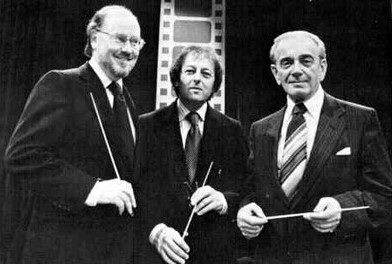
    Three Magi of movie music (left to right): Williams, Previn, and Rózsa

  • Williams Previn Rózsa Film Score Gods

    Williams Previn Rózsa Film Score Gods

    I’m not sure, exactly, that this is the Holy Trinity of Film Composers, but I might just risk damnation to worship at their altar. Left to right: John Williams, André Previn, and Miklós Rózsa.

    Enjoy a full hour of Previn’s film scores on “Picture Perfect,” this Friday evening at 6:00 EST, on WWFM – The Classical Network and wwfm.org.

Tag Cloud

Aaron Copland (92) Beethoven (95) Composer (114) Film Music (123) Film Score (143) Film Scores (255) Halloween (94) John Williams (187) KWAX (229) Leonard Bernstein (101) Marlboro Music Festival (125) Movie Music (138) Opera (202) Philadelphia Orchestra (89) Picture Perfect (174) Princeton Symphony Orchestra (106) Radio (87) Ralph Vaughan Williams (85) Ross Amico (244) Roy's Tie-Dye Sci-Fi Corner (290) The Classical Network (101) The Lost Chord (268) Vaughan Williams (103) WPRB (396) WWFM (881)

DON’T MISS A BEAT

Receive a weekly digest every Sunday at noon by signing up here


RECENT POSTS