Tag: Film Scores

  • Doppelganger Movie Music for Disoriented Times

    Doppelganger Movie Music for Disoriented Times

    Do the holidays already have you feeling a little disoriented? This week, on “Picture Perfect,” we’re literally seeing double.

    James Stewart plays Scottie Ferguson, a traumatized police detective who becomes obsessed with the woman he loves – and loses – in Alfred Hitchcock’s “Vertigo” (1958). Kim Novak portrays both the enigmatic beauty and her spitting image, who Ferguson, rather creepily, attempts to mold. Bernard Herrmann wrote the hypnotic score. Not too long ago, the love theme was recycled in the Academy Award winning film, “The Artist.”

    Krzysztof Kieślowski’s “La double vie de Véronique”/“The Double Life of Véronique” (1991) features parallel characters living in Poland and France who are mysteriously linked, both of them played by Irène Jacob. The performance earned Jacob an award for Best Actress at the Cannes Film Festival. The music, which plays a significant role in the actual plot, is by Zbigniew Preisner. (Again, thanks to Bill Zeltman for sending me a copy of the soundtrack!)

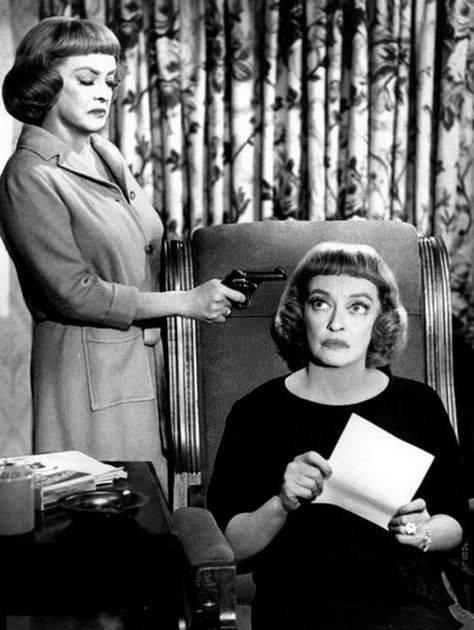
    For the second time in her career, Bette Davis gets a chance to play an evil twin in “Dead Ringer” (1964). The first was in the 1946 good twin-bad twin melodrama, “A Stolen Life.” When asked what the difference was between the two performances, Davis quipped, “About 20 years.” “Dead Ringer” was directed by her longtime friend and “Now, Voyager” co-star Paul Henreid. The music is by André Previn, whose score employs a stock-in-trade sinister harpsichord, yet when he comes to write the love theme, he manages to whip up one hell of a tribute to Erich Wolfgang Korngold.

    Korngold scored a number of Davis’ films in the 1940s, though he is principally remembered for his work on the swashbucklers of Errol Flynn. To capitalize on Flynn’s star-making performance in “Captain Blood,” Warner Brothers produced a big screen adaptation of Mark Twain’s Tudor switcheroo, “The Prince and the Pauper” (1937). Flynn steals the show as Miles Hendon, the devil-may-care guardian of Prince Edward and Tom Canty, Edward’s mirror image, played by real-life twins Bobby and Billy Mauch. If you’re a Korngold fan, or an enthusiast of violin concertos, you may recognize some of the music. Korngold recycled the theme for use in the last movement of his Violin Concerto in D, championed by Heifetz and others. (By coincidence, today is Twain’s birthday!)

    Double your pleasure with music from movies about doppelgangers, twins, and dual identities, on “Picture Perfect,” this Friday evening at 6:00 EST, on WWFM – The Classical Network and wwfm.org.

  • Ennio Morricone at 90 Celebrating a Maestro

    Ennio Morricone at 90 Celebrating a Maestro

    This week on “Picture Perfect,” we’ll stick a feather in our cap and call it Morricone.

    Ennio Morricone, author of over 500 film and television scores, is perhaps the most prolific movie composer of all time. Tomorrow will mark his 90th birthday(!).

    We’ll celebrate this extraordinary artist by revisiting some of his most indelible inspirations, including selections from “Cinema Paradiso” (1988), “The Good, the Bad and the Ugly” (1966), “The Mission” (1986), “Once Upon a Time in the West” (1968), “Navajo Joe” (1966), “The Untouchables” (1987), and his Academy Award winning music for “The Hateful Eight” (2015).

    I’d hate for you to miss it. Join me this Friday evening at 6:00 EST, as we salute Italy’s maestro of the movies. It’s Morricone at 90, on WWFM – The Classical Network and wwfm.org.
  • Spooky Comedy Film Scores for Halloween

    Spooky Comedy Film Scores for Halloween

    Spooky comedies. A seeming oxymoron. Perhaps in an attempt to subvert our fears, or to generate laughter from tension, filmmakers have frequently juxtaposed humor with the supernatural – or at any rate death.

    This week on “Picture Perfect,” we’ll conjure some Hallowe’en spirit with music from four macabre comedies.

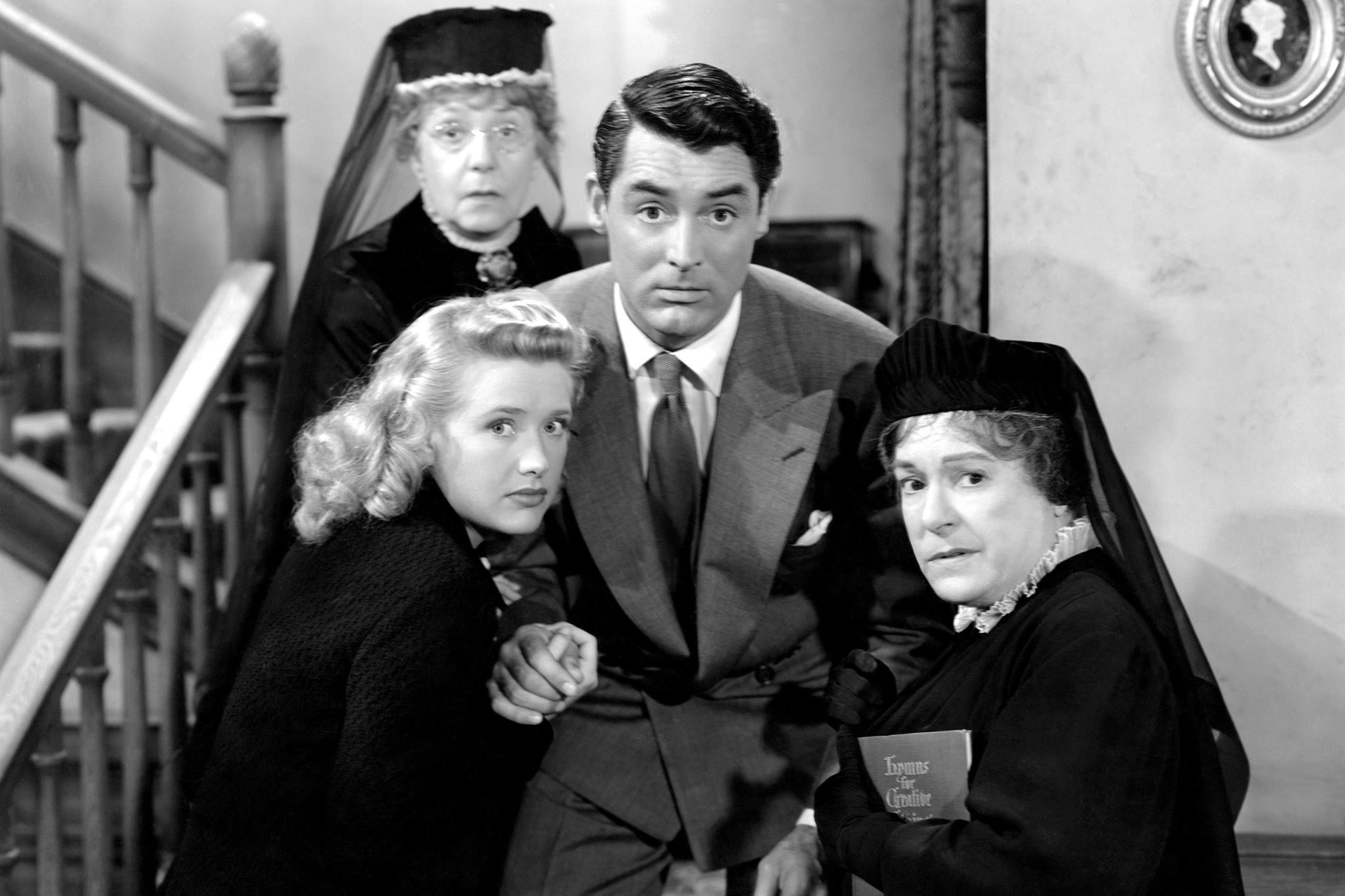
    Frank Capra’s screen adaptation of “Arsenic and Old Lace” (1944) was actually shot in 1941, but it could not be released until after the hit stage play, by Joseph Kesselring, had concluded its Broadway run.

    The film starred Cary Grant, Priscilla Lane, Raymond Massey, Peter Lorre, Jack Carson, and Capra favorites James Gleason and Edward Everett Horton.

    Two seemingly innocuous spinster aunts poison lonely old men and have them buried in their basement, by a family member who believes that he’s Teddy Roosevelt. (He thinks that he’s digging the Panama Canal.) Massey and Lorre play a murderer on the lam and his plastic surgeon, respectively, who hole up in the house, unaware that Massey’s body count pales next to that of his unwitting hosts.

    The score, by Max Steiner, is as manic as Grant’s performance – perhaps a mite overdone, with its breakneck allusions to familiar melodies – but it bears the same distinctive gloss as other Steiner classics like “Gone With the Wind” and “Casablanca.”

    Composer Bernard Herrmann will always be most closely associated with the films of Alfred Hitchcock. In particular, his music for the shower scene in “Psycho” has entered the popular consciousness as few other film scores have. Hitchcock and Herrmann collaborated on nine films in all. The first of these was a black comedy called “The Trouble with Harry” (1955), a droll farce about a corpse that materializes in a New England community and can’t seem to stay buried.

    Don Knotts and a haunted house – that’s the high concept behind “The Ghost and Mr. Chicken” (1966). How could it possibly miss? Knotts’ elastic-faced terror finds a goofy foil in Vic Mizzy’s score. Mizzy also wrote music for “The Addams Family.”

    Finally, in a kind of twist on “Topper,” Alec Baldwin and Geena Davis play a recently-deceased couple who try to scare off the inhabitants of their former home, in “Beetlejuice” (1988). In desperation, they enlist the services of a manic “bio-exorcist” (a loosy-goosy Michael Keaton) and things get seriously antic.

    The music is by Danny Elfman, as always a fan of Nino Rota, although he also pays homage to the Stravinsky of “The Soldier’s Tale” and frequently alludes to Raymond Scott. There’s even a touch of Bernard Herrmann in one of the tracks, as Elfman evokes the skeleton fight from “The Seventh Voyage of Sinbad.”

    I hope you’ll join me for a mishmash of horror and humor this week, on “Picture Perfect,” music for the movies, this Friday evening at 6:00 EDT, on WWFM – The Classical Network and wwfm.org.
  • Explorers on Film Celebrate Discovery

    Explorers on Film Celebrate Discovery

    Conquest is so not in right now. Nonetheless, this week on “Picture Perfect,” in advance of Columbus Day, the focus will be on explorers and exploration.

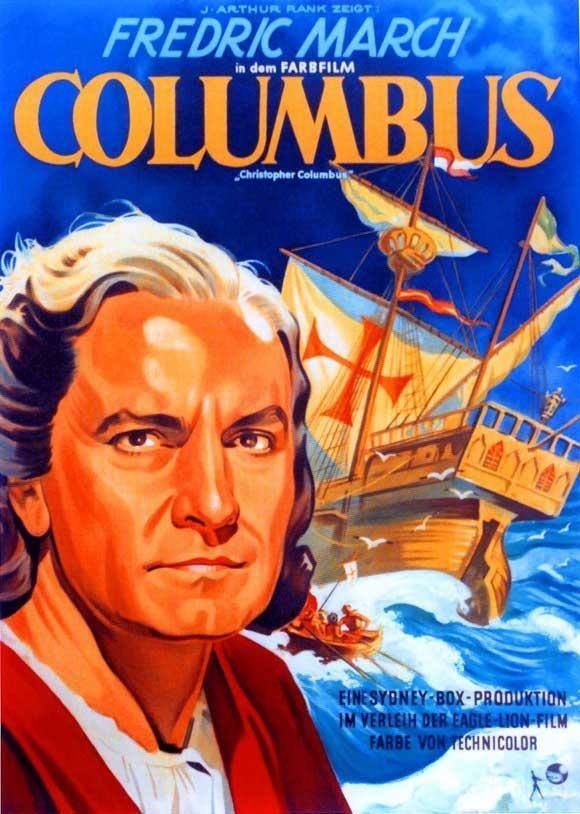
    Fredric March plays the title role in “Christopher Columbus” (1949), inspired by the novel of Rafael Sabatini, author of “Scaramouche” and “The Sea Hawk.” The film was released by Gainsborough Pictures, the British studio that produced Alfred Hitchcock’s “The Lady Vanishes” and “The Wicked Lady,” a wildly popular, saucy period melodrama that starred Margaret Lockwood and James Mason.

    Stewart Granger had originally been announced for the lead. Mason had also been considered. Replicas of the Nina and the Santa Maria were built especially for the film, and location shooting took place in Barbados. The Santa Maria was lost for two nights following a squall in the West Indies. Then it caught fire and had to be rebuilt. As far as March was concerned, all the effort was for naught. Reportedly, he was not very happy with the finished film.

    The music for “Christopher Columbus” was by Arthur Bliss, who in 1950 would receive his knighthood and, in 1953, his appointment as Master of the Queen’s Music.

    If you think March was a strange choice, just imagine Gary Cooper in “The Adventures of Marco Polo” (1938). Cooper assumes the role of the famed Venetian merchant who travels the Silk Road to China. Despite the ludicrous casting, the film yet manages to entertain, with Basil Rathbone, fine as always, as the villain.

    The music is by Hugo Friedhofer. Friedhofer was such a successful orchestrator, he remained largely in the shadows of the film score luminaries he assisted. He lent his distinctive touch to many now-classic scores by Max Steiner and Erich Wolfgang Korngold. “The Adventures of Marco Polo” was Freidhofer’s first big chance to step up and show what he could do as a composer. He would have to wait until 1942 for another. Four years later, he would win a much-deserved Academy Award for his score to “The Best Years of Our Lives.”

    The westward journey of Meriwether Lewis and William Clark has been a source of perpetual fascination for Americans. In 1997, Ken Burns directed a PBS documentary “Lewis and Clark: The Journey of the Corps of Discovery.” National Geographic climbed on board a few years later with “Lewis and Clark: Great Journey West” (2002). The 42-minute featurette was released in IMAX theaters, with narration by Jeff Bridges and music by Sam Cardon.

    Finally, Ralph Vaughan Williams wrote his most famous film score for the Ealing Studios docudrama “Scott of the Antarctic” (1948). John Mills plays explorer Robert Falcon Scott on his determined push to the reach the South Pole.

    Vaughan Williams’ work on the score became the basis for his Symphony No. 7, which bears the subtitle “Sinfonia Antartica.” (Note that the composer drops the first “c” from the title of his symphony, preferring the Italian and dooming the work to being constantly misspelled.) We’ll hear selections from an extended suite from “Scott of the Antarctic,” from the first of three CDs issued on the Chandos label that, collectively, offer an overview of Vaughan Williams’ work for the cinema.

    Corn and tomatoes from the New World! Spaghetti and fireworks from the Orient! Snow cones and frostbite from the Antarctic! Discover music from movies about explorers and exploration this week, on “Picture Perfect,” this Friday evening at 6:00 EDT, on WWFM – The Classical Network and wwfm.org.

  • Hemingway’s Hollywood Soundtracks

    Hemingway’s Hollywood Soundtracks

    This week on “Picture Perfect,” we get in touch with our masculine side, with music from movies inspired by the writings of Ernest Hemingway.

    Seemingly at odds with Hemingway’s minimalist, “iceberg” style, big screen adaptations of the writer’s work show what the stories don’t tell. In the case of 1946’s “The Killers,” the screenwriters unapologetically just made stuff up, an entire back story explaining the motivations for the hit of boxer “Swede” Andreson. Fortunately those screenwriters happened to include an uncredited John Huston, who virtually codified noir with “The Maltese Falcon.”

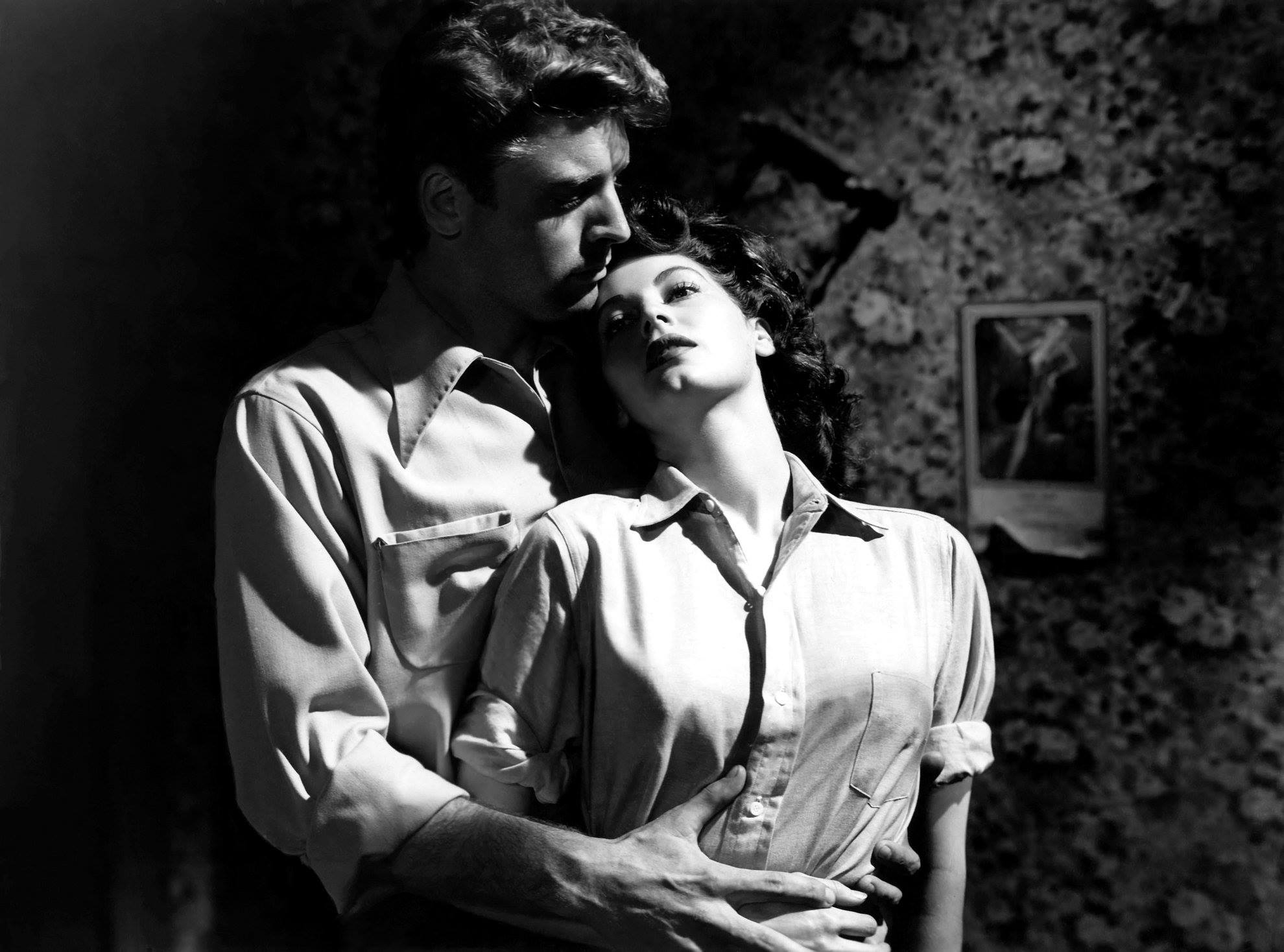
    “The Killers” provided Burt Lancaster with his break-out role. It also features a knock-out score by Miklós Rózsa, in which he uses the dum-dee-dum-dum motto later made famous by the television series “Dragnet.”

    In 1977, George C. Scott reunited with his “Patton” director, Franklin J. Schaffner, for an adaptation of Hemingway’s posthumously published novel, “Islands in the Stream.” Scott gives one of his best performances as a Hemingway-like figure living on a Caribbean island. “Patton” composer Jerry Goldsmith wrote the music. Goldsmith spoke of it often as his favorite score.

    Hemingway himself handpicked the leads for the 1943 adaptation of “For Whom the Bell Tolls,” with Gary Cooper and Ingrid Bergman falling in love against the backdrop of the Spanish Civil War. The music was by the prolific and versatile Victor Young.

    And finally, Spencer Tracy is the whole show, as he faces off against a large marlin, in the 1958 version of “The Old Man and the Sea.” Dimitri Tiomkin’s music earned him his fourth Academy Award.

    Join me for an hour of laconic grace and stoic manliness on “Picture Perfect,” music for the movies, this Friday evening at 6:00 EDT, on WWFM – The Classical Network and wwfm.org.


    PHOTO: Burt Lancaster and Ava Gardner killing it in “The Killers”

Tag Cloud

Aaron Copland (92) Beethoven (95) Composer (114) Film Music (123) Film Score (143) Film Scores (255) Halloween (94) John Williams (187) KWAX (229) Leonard Bernstein (101) Marlboro Music Festival (125) Movie Music (138) Opera (202) Philadelphia Orchestra (89) Picture Perfect (174) Princeton Symphony Orchestra (106) Radio (87) Ralph Vaughan Williams (85) Ross Amico (244) Roy's Tie-Dye Sci-Fi Corner (290) The Classical Network (101) The Lost Chord (268) Vaughan Williams (103) WPRB (396) WWFM (881)

DON’T MISS A BEAT

Receive a weekly digest every Sunday at noon by signing up here


RECENT POSTS