Tag: Film Scores

  • Animated Film Scores Soar on Picture Perfect

    Animated Film Scores Soar on Picture Perfect

    “Music is a moral law,” wrote Plato. “It gives soul to the universe, wings to the mind, flight to the imagination… and life to everything.”

    That includes computer-generated imagery.

    While my distaste for the overkill of CGI in alleged “live action” movies is quite well known, I have to concede that, when shelling out the clams for a big-budget movie, one stands a better chance these days of getting a quality ride if one banks on the solely computer-animated feature. Put an action hero in a computer-animated landscape, and everything looks incredibly fake. But integrate the characters, by creating them in the computer as well, and the result is often much more absorbing, imaginative, and even wittier than your run-of-the-mill Hollywood blockbuster.

    Furthermore, in a day when so many movies sport scores made up of droning electronics punctuated by colorless action cues, the computer-generated feature seems to attract composers who still understand how to write music.

    This week on “Picture Perfect,” we’ll listen to enlivening scores from four computer-generated films.

    We’ll hear selections from the first installment in the “Ice Age” franchise, by David Newman (son of Golden Age heavy-hitter Alfred Newman, brother of Thomas Newman, and cousin of Randy Newman).

    We’ll also have some of John Williams’ music from “The Adventures of Tintin,” after the comic book adventurer created by Belgian artist and writer Hergé. Tintin’s popularity in Europe failed to translate into big domestic box office, comparatively speaking, but the score is Williams’ best of its kind – an exciting adventure piece full of leitmotifs and great action cues – since the first of the Harry Potter films.

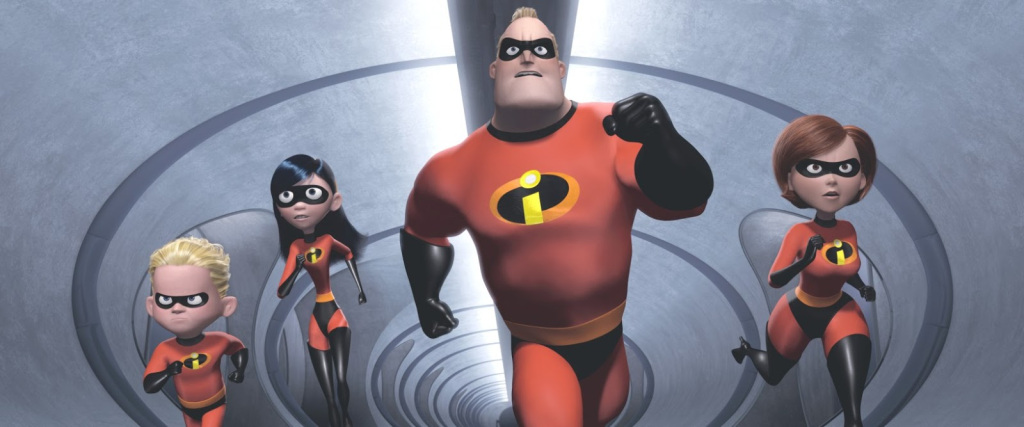
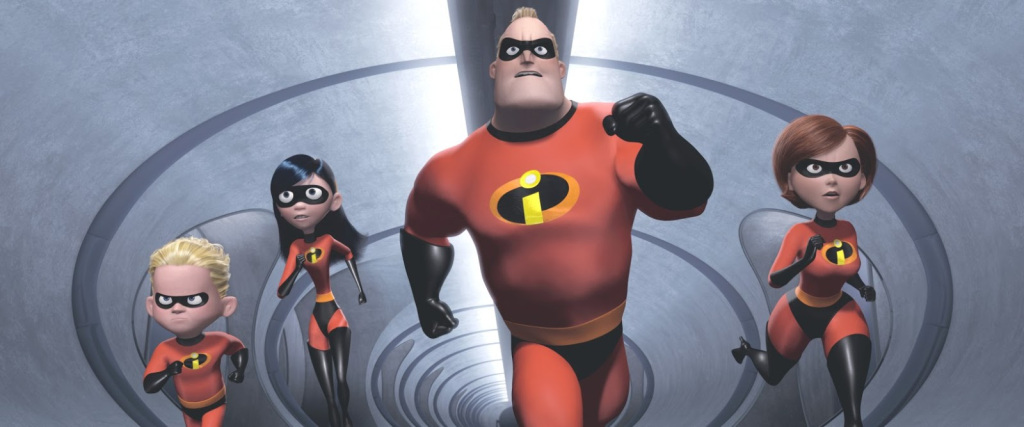
    We’ll round out the hour with two projects scored by Michael Giacchino for Pixar Animation Studios. Giacchino’s break-out success was the sly superhero satire, “The Incredibles,” for which he composed in the swinging ‘60s espionage style popularized by John Barry when writing for the James Bond films.

    We’ll also hear selections from Giacchino’s Academy Award-winning score to “Up.” “Up” was nominated for Best Picture at the 82nd Academy Awards, only the second animated feature ever to be included in the category.

    We can all use a little animation right now. I hope you’ll join me for an hour of music from computer-animated adventures, on “Picture Perfect,” this Friday evening at 6:00 EDT, on WWFM – The Classical Network and wwfm.org.
  • Animated Adventures Great Film Scores

    Animated Adventures Great Film Scores

    “Music is a moral law,” wrote Plato. “It gives soul to the universe, wings to the mind, flight to the imagination… and life to everything.”

    That includes computer-generated imagery.

    While my distaste for the overkill of CGI in alleged “live action” movies is quite well known, I have to concede that, when shelling out the clams for a big-budget movie, one stands a better chance these days of getting a quality ride if one banks on the solely computer-animated feature. Put an action hero in a computer-animated landscape, and everything looks incredibly fake. But integrate the characters, by creating them in the computer as well, and the result is often much more absorbing, imaginative, and even wittier than your run-of-the-mill Hollywood blockbuster.

    Furthermore, in a day when so many movies sport scores made up of droning electronics punctuated by colorless action cues, the computer-generated feature seems to attract composers who still understand how to write music.

    This week on “Picture Perfect,” we’ll listen to enlivening scores from four computer-generated films.

    We’ll hear selections from the first installment in the “Ice Age” franchise, by David Newman (son of Golden Age heavy-hitter Alfred Newman, brother of Thomas Newman, and cousin of Randy Newman).

    We’ll also have some of John Williams’ music from “The Adventures of Tintin,” after the comic book adventurer created by Belgian artist and writer Hergé. Tintin’s popularity in Europe failed to translate into big domestic box office, comparatively speaking, but the score is Williams’ best of its kind – an exciting adventure piece full of leitmotifs and great action cues – since the first of the Harry Potter films.

    We’ll round out the hour with two projects scored by Michael Giacchino for Pixar Animation Studios. Giacchino’s break-out success was the sly superhero satire, “The Incredibles,” for which he composed in the swinging ‘60s espionage style popularized by John Barry when writing for the James Bond films.

    We’ll also hear selections from Giacchino’s Academy Award-winning score to “Up.” “Up” was nominated for Best Picture at the 82nd Academy Awards, only the second animated feature ever to be included in the category.

    We can all use a little animation right now. I hope you’ll join me for an hour of music from computer-animated adventures, on “Picture Perfect,” this Friday evening at 6:00 EDT, on WWFM – The Classical Network and wwfm.org.

  • Branagh’s Henry V Soundtrack & Shakespeare

    Branagh’s Henry V Soundtrack & Shakespeare

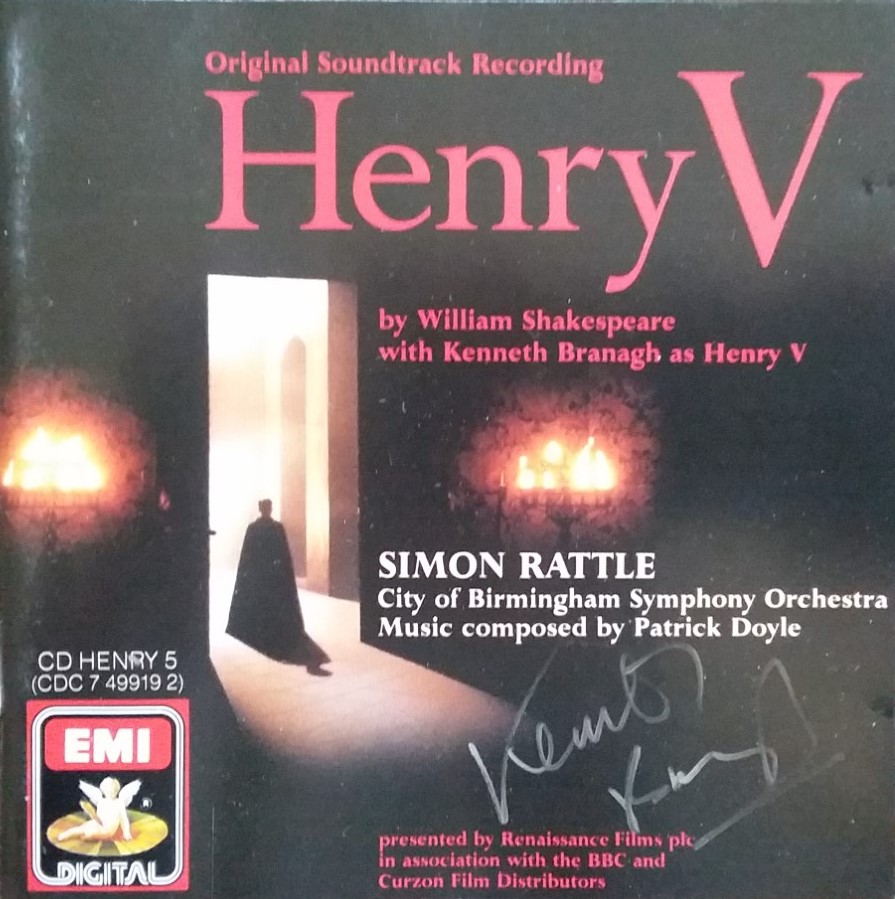
    Here’s a glimpse of my soundtrack to Patrick Doyle’s “Henry V.” I had the booklet signed by Kenneth Branagh. At the time, Branagh had just been hired by Marvel to direct “Thor,” and I was hoping to talk him into casting Brian Blessed as Odin and Derek Jacobi as Loki. Alas, it was not to be… not that I ever thought it would be!

    Enjoy selections from Branagh’s “Henry V,” alongside Doyle’s music for “As You Like It,” “Hamlet,” and “Much Ado About Nothing.”

    Branagh meets the Bard on “Picture Perfect,” this Friday evening at 6:00 EDT, on WWFM – The Classical Network and wwfm.org.

  • Joan of Arc on Film Music

    Joan of Arc on Film Music

    Seven centuries ago, a humble peasant girl was able to convince Charles de Valois (soon King Charles VII) that she had been chosen by God to lead a French army against English forces during the Hundred Years’ War. With no military training, she achieved a momentous victory at the city of Orléans. She was later captured, tried for heresy, and burned at the stake at the age of 19.

    The story of Joan of Arc has been treated numerous times on film. This week on “Picture Perfect,” we’ll hear music from some of those.

    Carl Theodor Dreyer’s silent classic “The Passion of Joan of Arc” (1928) is justly celebrated as a landmark of world cinema. The film features a legendary performance by Maria Falconetti. Falconetti’s portrayal is unusually nuanced and cumulatively heartbreaking. Richard Einhorn composed “Voices of Light,” an original work, in 1994, to accompany the film. The recording includes contributions by Anonymous 4.

    Earlier, in 1983, conductor and composer Ole Schmidt provided his own score to “The Passion of Joan of Arc.” Interestingly, Schmidt was born the same year the film was released. He also held the distinction of sharing Dreyer’s Danish nationality.

    Luc Besson directed the “The Messenger: The Story of Joan of Arc” (1999), featuring his then wife, Milla Jovovich, as the Maid of Orléans. The starry supporting cast includes John Malkovich, Faye Dunaway, and Dustin Hoffman (donning an Obi-Wan Kenobi robe). The composer was Éric Serra. The score is primarily orchestral, but incorporates synthesized effects.

    Finally, we’ll turn to Otto Preminger’s “Saint Joan” (1957), based on the play by George Bernard Shaw. Graham Greene wrote the screenplay. Newcomer Jean Seberg is Joan, somewhat out of her element alongside veteran actors John Gielgud, Anton Walbrook and Felix Aylmer. Also, would you believe Richard Widmark as Charles VII?

    Unfortunately, “Saint Joan” was immolated by the critics. Mischa Spoliansky composed the lovely score. You can sample some of it here, along with the film’s main title sequence, designed by the legendary Saul Bass:

    I hope you’ll join me for music for movies about Joan of Arc this week, on “Picture Perfect.” Feel the burn, this Friday evening at 6:00 EDT, on WWFM – The Classical Network and wwfm.org.

  • Elmer Bernstein A Cinematic Promised Land

    Elmer Bernstein A Cinematic Promised Land

    With Passover only days away, simply remembering Elmer Bernstein leads me back through a wilderness of mediocrity that today passes for film music, to a Promised Land of cinematic milk and honey.

    Over the course of an enviable career that spanned some 50 years, Bernstein composed music for dozens of movies, many of them still much-beloved, including “The Ten Commandments” (1956), “The Magnificent Seven” (1960), “To Kill a Mockingbird” (1962), and “The Great Escape” (1963).

    In addition, he was one of the first film composers to incorporate jazz elements into his work for dramatic purposes, in movies like “The Man with the Golden Arm” (1955), “Sweet Smell of Success” (1957), and “Walk on the Wild Side” (1962).

    Coming out of the Swinging Sixties, when the industry clearly favored a more “popular” sound over purely orchestral scores (until John Williams changed everything), Bernstein kept right on working. Thanks to a generation of younger filmmakers who had grown up on his classics, he never lacked for opportunities. Suddenly he found himself much in demand as a comedy composer, providing the underscores for “Animal House” (1978), “The Blues Brothers” (1980), “Airplane!” (1980), “Stripes” (1981), and “Ghostbusters” (1984).

    For Martin Scorsese, he composed music for “The Age of Innocence” (1993), “Bringing Out the Dead” (1999), and “The Gangs of New York” (2002), though his score for the latter was ultimately rejected. He also adapted Bernard Herrmann’s music for Scorsese’s remake of “Cape Fear” (1991).

    Oh yeah, along the way, he also composed the iconic National Geographic theme – clearly by the same man who wrote “The Magnificent Seven.”

    In all, Bernstein was nominated for 14 Academy Awards, but claimed the Oscar only once, fairly early on, for his work on “Thoroughly Modern Millie” (1967), of all things. His final nomination was for his very last score, for “Far from Heaven” (2002). Elmer Bernstein died on August 18, 2004 at the age of 82.

    Here’s a suite from one of his best-loved scores.

    Happy birthday, Elmer Bernstein.

Tag Cloud

Aaron Copland (92) Beethoven (95) Composer (114) Film Music (123) Film Score (143) Film Scores (255) Halloween (94) John Williams (187) KWAX (229) Leonard Bernstein (101) Marlboro Music Festival (125) Movie Music (138) Opera (202) Philadelphia Orchestra (89) Picture Perfect (174) Princeton Symphony Orchestra (106) Radio (87) Ralph Vaughan Williams (85) Ross Amico (244) Roy's Tie-Dye Sci-Fi Corner (290) The Classical Network (101) The Lost Chord (268) Vaughan Williams (103) WPRB (396) WWFM (881)

DON’T MISS A BEAT

Receive a weekly digest every Sunday at noon by signing up here


RECENT POSTS