Tag: Film Scores

  • Superhero Movie Music From Superman to The Avengers

    Superhero Movie Music From Superman to The Avengers

    Look! Up in the sky!

    It’s a bird! It’s a plane! It’s “PICTURE PERFECT” – where the focus this week is on superheroes!

    It’s true, I was wasn’t all that crazy about Tim Burton’s “Batman” (1989). In fact, I’m still waiting for someone to make the Batman movie I’ve got in my head. But that probably isn’t going to happen – we’re too far down the computer-generated, dystopian road at this point.

    At least Danny Elfman actually made the effort to write a decent score. I admit I was underappreciative of it at the time of the film’s release. To me, Elfman was still “that guy from Oingo Boingo.” But it sounds better and better in light of all that has followed. Elfman’s love for Bernard Herrmann is evident. And don’t worry, I will spare you the Prince songs.

    “The Avengers” may have provided the satisfaction of seeing Iron Man, Captain America, Thor, and the Hulk on the screen all at the same time, but arguably “The Incredibles” (2004) was more fun. Pixar’s clever satire/adventure featured the vocal talents of Craig T. Nelson, Holly Hunter, and Samuel L. Jackson.

    The score is a smart throwback to the swinging espionage films of the 1960s. Originally the producers approached John Barry to write the music, hoping for something very much in the style of his work on the James Bond films. But Barry declined, not wanting to return to his earlier style. In the event, composer Michael Giacchino was only too happy to step into Barry’s well-polished shoes.

    “The Avengers” (2012), of course, is the 800-pound gorilla of superhero franchises, but in these days when each hyper-spectacle seems to surpass the last, not only in terms of din and seizure-inducing effects, but in the epic scope of its box office, that could very well change at any time. Before it does, we’d better sample some of the music from the first film, by Alan Silvestri.

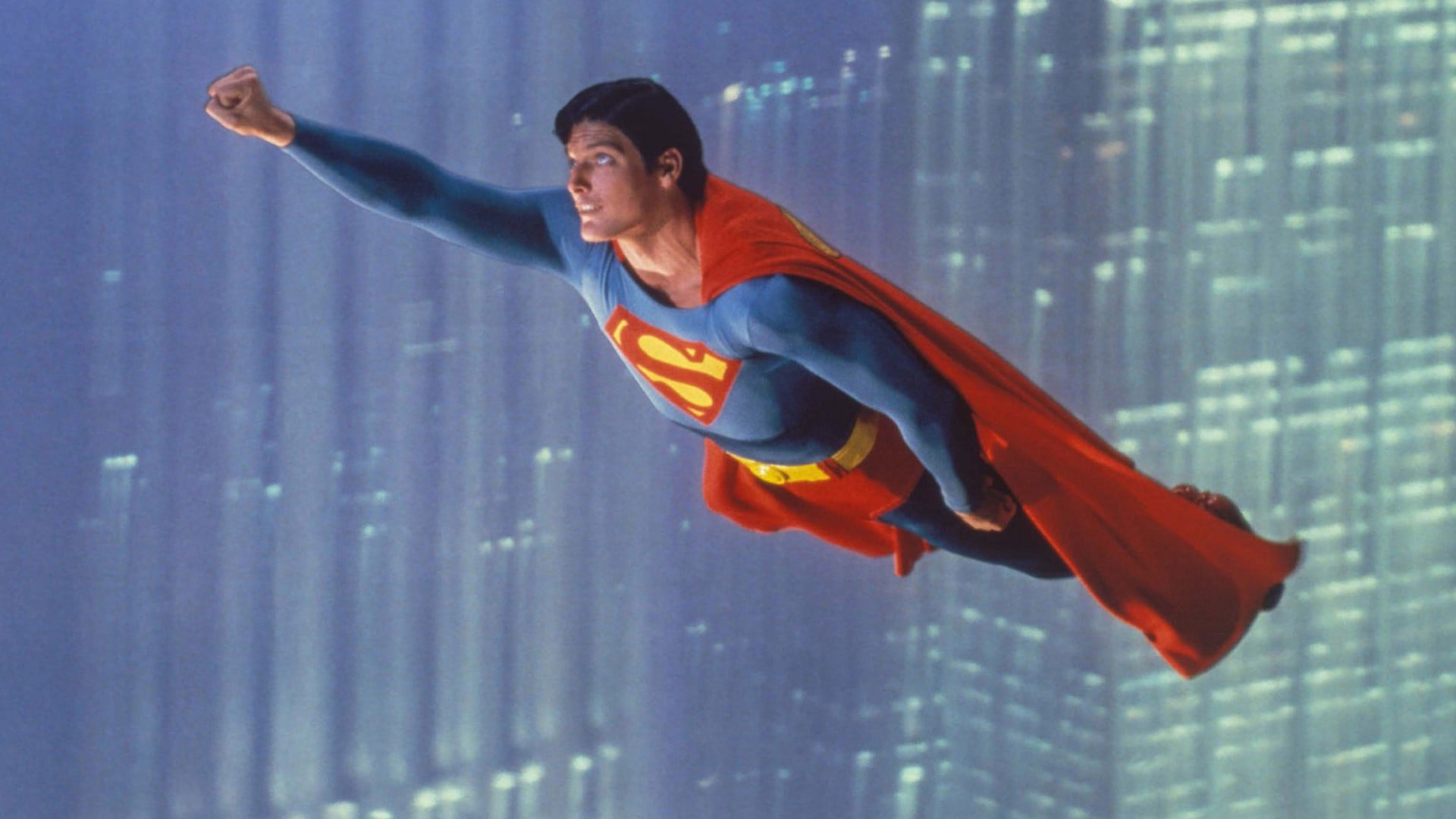
    To truly understand what is missing from superhero music these days, one need only refer to the gold standard of the genre, “Superman” (1978). John Williams’ score was from smack-dab in the middle of his heroic period, falling as it did, between “Star Wars” and “Raiders of the Lost Ark.” Its star-spangled fanfare and march beautifully conjure memories of Superman music past – for the George Reeves TV series and, before that, the Fleischer Brothers cartoons – yet effortlessly surpass them like leaping a tall building in a single bound.

    I know, I know, not every film can be, nor should be, the same, and Williams’ primary colors wouldn’t sit as well, perhaps, with the dark streets of Gotham. But why does everything have to be so grim these days? I read comic books when I was a kid, and I don’t remember everything being so hopeless.

    I don’t want to hear about how the real world is a gritty place right now. “Superman” was made in the wake of Watergate and Vietnam, for crying out loud. Entertainment molds the world, every bit as much as the world shapes our entertainment. Is it too much to ask for a little fun and inspiration from our superhero movies? Can we leave the theatres feeling exhilarated, for a change, as opposed to simply exhausted?

    All kryptonite will be encased in lead for “Everything’s Super,” on “Picture Perfect,” music for the movies, now in syndication on KWAX, the radio station of the University of Oregon!


    Clip and save the start times for all three of my recorded shows:

    PICTURE PERFECT, the movie music show – Friday at 8:00 PM EDT/5:00 PM PDT

    SWEETNESS AND LIGHT, the light music program – Saturday at 11:00 AM EDT/8:00 AM PDT

    THE LOST CHORD, unusual and neglected rep – Saturday at 7:00 PM EDT/4:00 PM PDT

    Stream them, wherever you are, at the link!
    https://kwax.uoregon.edu/

  • Jaws at 50 Dive into Aquatic Movie Music

    Jaws at 50 Dive into Aquatic Movie Music

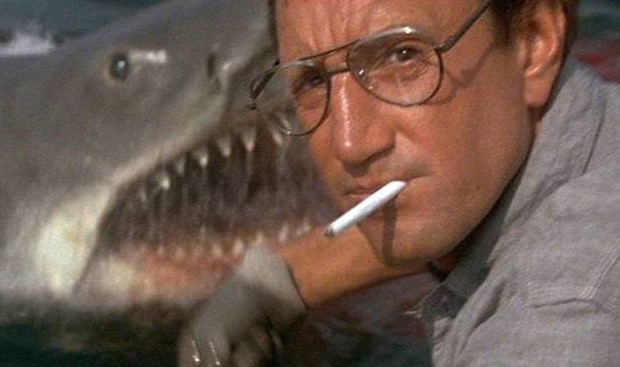
    Just when you thought it was safe to go back in the water, this week on “Picture Perfect,” we mark the 50th anniversary of “Jaws.”

    “Jaws” opened on June 20, 1975. The film’s balance of terror, wit and adventure, with a perfectly-calibrated trio of central characters and a young Steven Spielberg eager to please, propelled it to unprecedented box office glory, the first film to glide past the $100 million mark. Needless to say, the studios sat up and took notice. “Jaws” is widely credited as having laid the foundation for what became recognized as the summer blockbuster season. When it was surpassed by “Star Wars” two years later, there was no looking back. With so much chum in the water, the shareholders went into a frenzy and everyone wanted a bite.

    Given the film’s ultimate influence on the industry, with superheroes and computer animation long dominating the year’s major releases in a quest for ever-higher profits, it seems only proper now to honor “Jaws” with an hour of aquatic traumas.

    “Beneath the 12-Mile Reef” (1953) stars Robert Wagner, Terry Moore, and Peter Graves in a Romeo and Juliet story about two families of competing fishermen along the Gulf coast of Florida, one working class and of Greek origin, and the other a family of privileged WASPs. Gilbert Roland is the Greek patriarch who runs afoul of an improbably large octopus. Bernard Herrmann wrote the music, which employs no fewer than nine harps (one for each arm, and a spare).

    A young Henry Mancini was one of three composers to work on “Creature from the Black Lagoon” (1954). Mancini, soon to be world famous for “Moon River,” “Baby Elephant Walk,” and “The Pink Panther,” was teamed with veteran film composer Hans J. Salter and Herman Stein. None of the three were credited on screen – typical of what was then considered just another low-budget B-movie.

    What can I say about John Williams’ masterful music for “Jaws” (1975)? It’s right up there with “Psycho” and “The Good, the Bad and the Ugly,” in terms of most recognized and most frequently parodied. Everyone remembers the primal shark theme, but what is sometimes overlooked is that “Jaws” is also one of the great adventure scores, the music effortlessly navigating the choppy waters of suspense, horror, and seafaring swashbuckler. The composer was recognized with a richly-deserved Academy Award (his second of five).

    The conflict in “The Swimmer” (1968) is not a giant octopus, nor a great white shark, nor a prehistoric gill man, but rather the progressive psychological breakdown of an upper middle class Connecticut man who believes he’s living the American Dream.

    Adapted from a short story by John Cheever, “The Swimmer” stars Burt Lancaster as the man, who acts on a quixotic impulse to travel all the way home, across county, by way of a network of suburban swimming pools. The adventure starts out well enough, with Lancaster and everyone he encounters full of optimism and fun; but the further he moves along his allegorical journey, the more the enterprise, the climate, and the people begin to grow cold.

    “The Swimmer” is a decidedly downbeat tale which could make the viewer as reluctant to dip a toe into a chlorinated in-ground swimming pool as the shark-infested waters of Peter Benchley’s Amity Beach. The score is by Marvin Hamlisch, of all people, and it suits the film brilliantly.

    Better stick to the bath. Dreams of aquatic refreshment are all wet this week, on “Picture Perfect,” music for the movies, now in syndication on KWAX, the radio station of the University of Oregon!


    Clip and save the start times for all three of my recorded shows:

    PICTURE PERFECT, the movie music show – Friday at 8:00 PM EDT/5:00 PM PDT

    SWEETNESS AND LIGHT, the light music program – Saturday at 11:00 AM EDT/8:00 AM PDT

    THE LOST CHORD, unusual and neglected rep – Saturday at 7:00 PM EDT/4:00 PM PDT

    Stream them, wherever you are, at the link!
    https://kwax.uoregon.edu/

  • Armchair Travel Through Film Scores on Picture Perfect

    Armchair Travel Through Film Scores on Picture Perfect

    This week on “Picture Perfect,” we’ll settle in for a little armchair traveling as, musically, we follow the English abroad.

    We’ll hear selections from “Enchanted April” (Richard Rodney Bennett), “A Passage to India” (Maurice Jarre), “The Best Exotic Marigold Hotel” (Thomas Newman), and “Around the World in 80 Days” (Victor Young).

    Bennett, quite the accomplished concert composer (and occasional torch song singer), supplies a sensitive score for the 1991 Merchant/Ivory adaptation of Elizabeth von Arnim’s novel about four English ladies who spend an idyllic month at an Italian villa.

    Jarre received his third Academy Award for his music to David Lean’s final film, a 1984 adaptation of E.M. Forster’s novel of repression and racial tension in colonial India.

    Newman incorporates traditional Indian elements into his score for “The Best Exotic Marigold Hotel,” the 2012 surprise hit about English pensioners reinventing themselves in retirement in Jaipur.

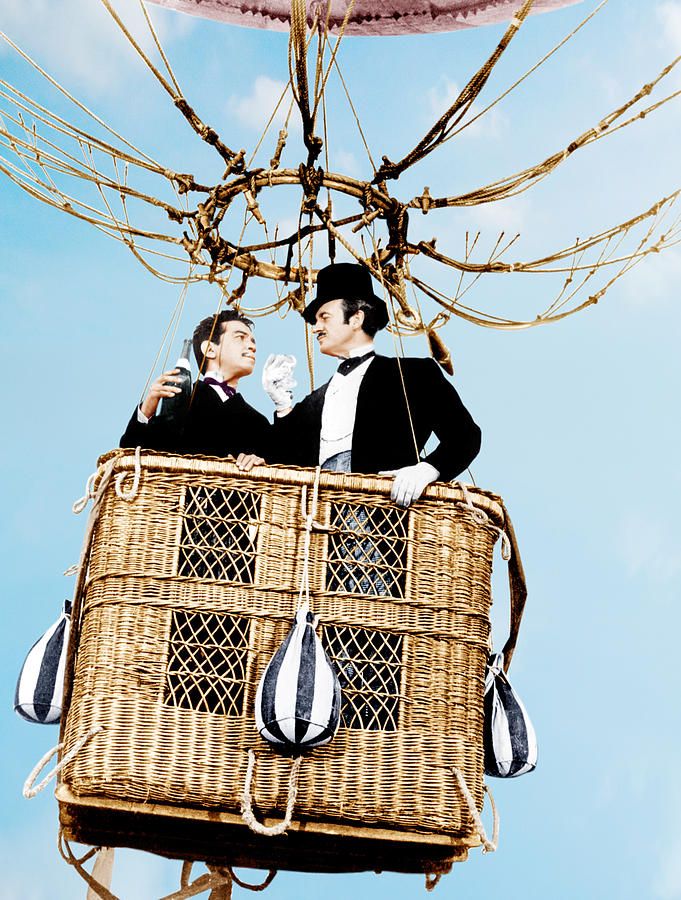
    And Young won his only Oscar (alas, posthumously bestowed) for “Around the World in 80 Days,” the star-studded, light-as-a-feather, though admittedly charming mega-victor at the 1956 Academy Awards. It takes longer to watch the movie than it does to read Jules Verne’s novel – though it does provide a rare opportunity to see Ronald Colman in color.

    No need to haul that steamer trunk. It will be an hour of transporting selections on “Picture Perfect,” music for the movies, now in syndication on KWAX, the radio station of the University of Oregon!


    Clip and save the start times for all three of my recorded shows:

    PICTURE PERFECT, the movie music show – Friday at 8:00 PM EDT/5:00 PM PDT

    SWEETNESS AND LIGHT, the light music program – Saturday at 11:00 AM EDT/8:00 AM PDT

    THE LOST CHORD, unusual and neglected rep – Saturday at 7:00 PM EDT/4:00 PM PDT

    Stream them, wherever you are, at the link!
    https://kwax.uoregon.edu/


    PHOTO: There’s no balloon in Verne’s original, but as long as there’s champagne, who cares?

  • Biblical Epics on Film Radio Show KWAX

    Biblical Epics on Film Radio Show KWAX

    This week on “Picture Perfect” it’s the second installment in a mini-festival of very big films, as we present another hour of Biblical epics, though this time with a twist. Rather than go directly to the Gospels, these are all films adapted from bestselling historical novels.

    Lloyd C. Douglas’ “The Robe” was given the Hollywood treatment in 1953. Richard Burton plays Marcellus, the Roman tribune who oversees the crucifixion and wins Christ’s robe in a game of dice. Victor Mature (last week’s Samson) is his well-oiled slave, Demetrius, and Jean Simmons, his childhood sweetheart, now betrothed to Caligula (a scene-stealing Jay Robinson).

    “The Robe” holds the distinction of being the first film released in CinemaScope. Allegedly, it is also the only Biblical epic ever to yield a sequel (“Demetrius and the Gladiators”). The score, by Alfred Newman, has always been popular.

    Thomas B. Costain’s “The Silver Chalice” was brought to the big screen in 1954. The film introduced Paul Newman in the lead, as a lowborn artisan commissioned to fashion a decorative casing for the cup from which Christ drank at the Last Supper (i.e. the Holy Grail).

    The film is interesting in that it features quasi-abstract sets by stage designer Rolfe Gerard and a stunning score by Franz Waxman, which incorporates the “Dresden Amen,” also used in Wagner’s “Parsifal.” However, Newman was mortified by his performance and famously took out an ad in Variety, essentially to apologize.

    “Barabbas” is worlds away from the usual Hollywood epic. Based on the Nobel Prize-winning novel of Pär Lagerkvist, the film is a ruminative slog through the guilt-ridden psyche of the title character, played by Anthony Quinn. Barabbas is the thief who is pardoned to make way for the crucifixion of Christ. He spends the rest of his life searching for meaning in a meaningless world.

    In a quixotic attempt at verisimilitude, director Richard Fleischer shot the crucifixion scene during an actual solar eclipse. Mario Nascimbene (who composed the music for last week’s “Solomon and Sheba”) wrote the score.

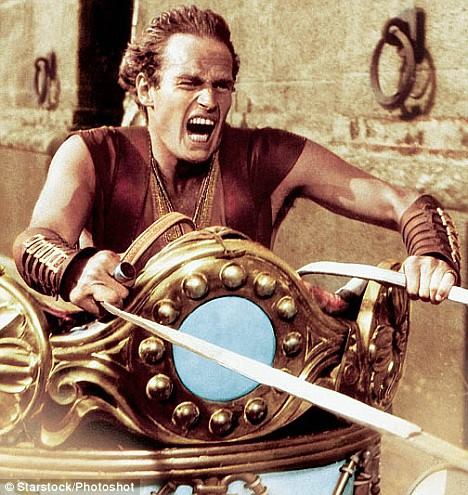
    Finally, we’ll wrap things up with music from one of the all-time Oscar champs, “Ben-Hur,” from 1959. Based on the 1880 novel of General Lew Wallace, “Ben-Hur” was honored with 11 Academy Awards, including those for Best Picture, Best Director (William Wyler) and Best Actor (Charlton Heston).

    The highlight of the film, of course, is the amazing chariot race, but there is a grandeur to the whole which makes it difficult to look away. Miklós Rózsa wrote the magnificent score, arguably the best of any film of its kind. (Parenthetically, today is the composer’s birthday!)

    The “Ben-Hur” Oscar record has been tied twice – in 1998, by “Titanic,” and in 2004, by “The Lord of the Rings: The Return of the King” – but this is before computer generated imagery, folks. They just don’t make ‘em like this anymore.

    The New Testament is all-new, by way of adaptations from historical novels, this week on “Picture Perfect,” music for the movies, now in syndication on KWAX, the radio station of the University of Oregon!


    Clip and save the start times for all three of my recorded shows:

    PICTURE PERFECT, the movie music show – Friday at 8:00 PM EDT/5:00 PM PDT

    SWEETNESS AND LIGHT, the light music program – Saturday at 11:00 AM EDT/8:00 AM PDT

    THE LOST CHORD, unusual and neglected rep – Saturday at 7:00 PM EDT/4:00 PM PDT

    Stream them, wherever you are, at the link!

    https://kwax.uoregon.edu/

  • Movie Concertos Beyond the Warsaw Concerto

    Movie Concertos Beyond the Warsaw Concerto

    The craze for the romantic movie concerto likely achieved its delirious apotheosis with the “Warsaw Concerto” from the film “Dangerous Moonlight,” a 1941 potboiler about a fictional pianist who escapes Nazi-occupied Poland, enlists in the RAF and, while suffering from amnesia, attains glory as a fighter pilot during the Battle of Britain.

    Richard Addinsell’s showstopper (arranged by Roy Douglas and performed on the soundtrack by Louis Kentner) is said to have yielded over 100 recordings. It certainly spawned numerous imitators.

    This week on “Picture Perfect,” we’ll hear five other movie concertos, including three for piano, one for cello, and a virtuosic showpiece for violin and orchestra.

    Tune in for the “Cornish Rhapsody” from “Love Story” (1944) by Hubert Bath; “Symphonie Moderne” from “Four Wives” (1939) by Max Steiner; and the “Concerto Macabre” from “Hangover Square” (1945) by Bernard Herrmann; also the Cello Concerto in C from “Deception” (1946) by Erich Wolfgang Korngold and the “Carmen Fantasy” for violin and orchestra from “Humoresque” (1946) by Franz Waxman.

    Enjoy these concerted efforts for the silver screen, on “Picture Perfect,” music for the movies, now in syndication on KWAX, the radio station of the University of Oregon!


    Clip and save the start times for all three of my recorded shows:

    PICTURE PERFECT, the movie music show – Friday at 8:00 PM EDT/5:00 PM PDT

    SWEETNESS AND LIGHT, the light music program – Saturday at 11:00 AM EDT/8:00 AM PDT

    THE LOST CHORD, unusual and neglected rep – Saturday at 7:00 PM EDT/4:00 PM PDT

    Stream them, wherever you are, at the link!

    https://kwax.uoregon.edu/


    Bait-and-switch trailer for “Deception”

    PHOTO: Laird Cregar burning down the house in “Hangover Square”

Tag Cloud

Aaron Copland (92) Beethoven (95) Composer (114) Film Music (123) Film Score (143) Film Scores (255) Halloween (94) John Williams (187) KWAX (229) Leonard Bernstein (101) Marlboro Music Festival (125) Movie Music (138) Opera (202) Philadelphia Orchestra (89) Picture Perfect (174) Princeton Symphony Orchestra (106) Radio (87) Ralph Vaughan Williams (85) Ross Amico (244) Roy's Tie-Dye Sci-Fi Corner (290) The Classical Network (101) The Lost Chord (268) Vaughan Williams (103) WPRB (396) WWFM (881)

DON’T MISS A BEAT

Receive a weekly digest every Sunday at noon by signing up here


RECENT POSTS