Tag: Film Scores

  • Dragon Movie Music Scores Picture Perfect

    Dragon Movie Music Scores Picture Perfect

    Baby, it’s cold outside! This week on “Picture Perfect,” pull up a chair and warm yourself to music from movies about dragons.

    Who doesn’t like a good dragon movie? Unfortunately, there are so few of them. Inevitably, the stories fail to live up to the production design, the special effects, and, yes, often the music.

    One score that Universal Pictures definitely took to, like a dragon to its hoard, was that for “Dragonheart” (1996). The film stars Dennis Quaid, with Sean Connery supplying the voice of the film’s dragon, Draco. The studio loved the music so much that it was used in its movie trailers for years, so don’t be surprised if you recognize it, even if you never saw the film. The composer was Randy Edelman.

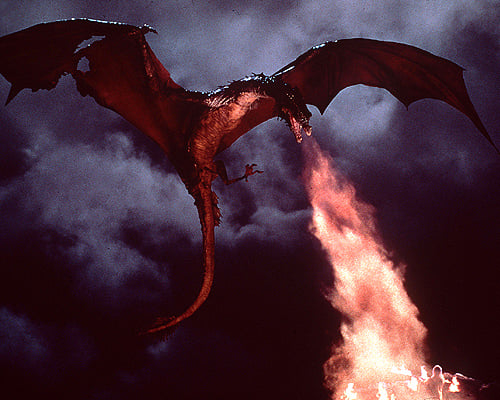
    Alex North wrote one of the finest dragon scores for “Dragonslayer” (1981). “Dragonslayer” caused a bit of stir on its release, since it was an early foray by Disney into more mature territory. The film featured shocking (for the time) onscreen immolations and dismemberment.

    The story is a fairly generic sorcerer’s apprentice tale. However, the dragon, Vermithrax Pejorative, easily carries the movie, which also features a late performance by Sir Ralph Richardson as the master sorcerer. The composer reused portions of his rejected score for Stanley Kubrick’s “2001: A Space Odyssey.” A number of critics, including Pauline Kael, praised the result.

    The film was nominated for an Academy Award for its outstanding visual effects, but lost out to “Raiders of the Lost Ark.” George Lucas’ Industrial Light and Magic provided the effects for both films. In my humble assessment, Phil Tippett’s “go motion” dragon has yet to be surpassed.

    Many years later, Disney competitor Dreamworks released “How to Train Your Dragon” (2010), a wholly computer-animated film. The story is one of forbidden friendship between a young Viking and a scaly representative of his tribe’s hereditary foes. Despite the Viking characters and setting, the score has an overt Celtic flavor and the actors speak with a Scottish burr (!). The music was by John Powell.

    Purely animated films are often more successful in creating an organic, believable world than those supposedly “live action” films that place actors in front of green screens and surround them with video game pyrotechnics. Only director Peter Jackson could have devised a way to pad J.R.R. Tolkien’s classic bedtime story, “The Hobbit,” into three bloated installments, darkening the tone, tying it in with lore from Tolkien’s “The Silmarillion,” and self-consciously anticipating the events in the equally self-indulgent film versions of “The Lord of the Rings.”

    Howard Shore supplied the music for all of the Middle Earth movies. He was recognized with three Academy Awards – one for “The Fellowship of the Ring,” in 2001, and two for “The Return of the King” in 2003, for which he also provided the Best Original Song. We’ll hear a selection of his music for the second of the films inspired by “The Hobbit,” subtitled “The Desolation of Smaug” (2013). The part of the dragon, by the way, was voiced by Benedict Cumberbatch.

    Fire your imagination, and warm your toes at the dragon’s breath. Feel the burn, on “Picture Perfect,” music for the movies, now in syndication on KWAX, the radio station of the University of Oregon!


    Clip and save the start times for all three of my recorded shows:

    PICTURE PERFECT, the movie music show – Friday at 8:00 PM EST/5:00 PM PST

    SWEETNESS AND LIGHT, the light music program – ALL NEW! – Saturday at 11:00 AM EST/8:00 AM PST

    THE LOST CHORD, unusual and neglected rep – Saturday at 7:00 PM EST/4:00 PM PST

    Stream them, wherever you are, at the link!
    https://kwax.uoregon.edu/

  • Jerry Goldsmith Overshadowed Genius

    Jerry Goldsmith Overshadowed Genius

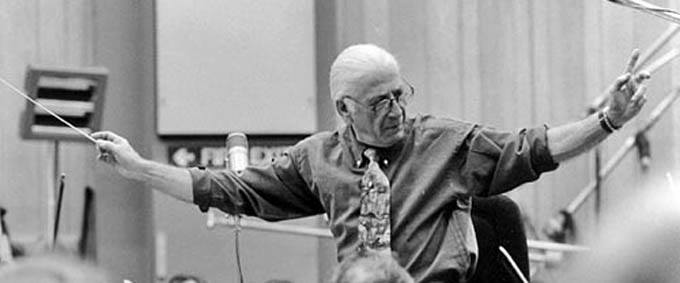
    Two days after John Williams’ birthday falls the anniversary of the birth of Jerry Goldsmith. Unfortunately, this would essentially become the story of Jerry’s life, as despite being three years Williams’ senior and having cracked the A-list ahead of his younger colleague, Goldsmith often seemed to be caught in Williams’ wake.

    Sure, he distinguished himself with some of the great film scores of his time, including those for “The Sand Pebbles” (1966), “The Blue Max” (1966), “The Flim-Flam Man” (1967), “Planet of the Apes” (1968), “Patton” (1970), “Papillon” (1973), “Chinatown” (1974), “The Wind and the Lion” (1975), “MacArthur” (1977), “The Boys from Brazil” (1978), “The Great Train Robbery” (1979), “Alien” (1979, butchered in the sound editing), and “Star Trek: The Motion Picture” (1979). For television, he wrote for “Dr. Kildare,” “The Twilight Zone,” “Gunsmoke,” “The Man from U.N.C.L.E.,” and “The Waltons.”

    But by the 1980s, the films began to get weaker. It seemed like Goldsmith was always getting tossed the projects Williams passed on, or cheap knockoffs of Williams’ successes. By his final decade, he was stuck writing for such garbage as “The Mummy” (1999), “The Haunting” (1999), and “Looney Tunes: Back in Action” (2003). A notable exception was “L.A. Confidential” (1997), but rarely were his later projects up to his talent. I can recall many a moviegoing experience in which Goldsmith’s music wound up being the only redeeming quality.

    Furthermore, he had a reputation for being able to compose at white heat, so he was frequently called upon to write replacement scores for films like “The River Wild” (1994), “Air Force One” (1997), and “The 13th Warrior” (1999). He composed and recorded the score to “Chinatown,” one of the best of the 1970s, in only ten days.

    Criminally, he was honored with but a single Academy Award, for his influential score to “The Omen” (1976).

    Goldsmith died in 2004, at the age of 75. If he were to come back today, he would mop the joint with all the Hans Zimmers of this world. Like the John Henry of Hollywood composers, he’d be churning out quality film scores to put all the cheap-ass computer steam-drillers to shame.

    Happy birthday, Jerry Goldsmith!


    The Man from U.N.C.L.E.

    Planet of the Apes

    Patton

    Chinatown

    The Wind and the Lion

    The Omen

    Star Trek: The Motion Picture

  • John Williams Birthday Radio Tribute

    John Williams Birthday Radio Tribute

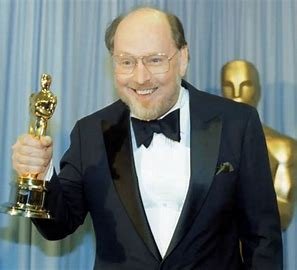
    In common with just about everyone of a certain age, I fell in love with John Williams’ transporting, often inspirational music through repeated listenings to the soundtracks for a string of blockbusters he scored, primarily from the late ‘70s, through the early ‘80s – “Star Wars,” “Superman,” “Raiders of the Lost Ark,” “E.T.,” and so forth.

    This week, on “Sweetness and Light,” to mark Williams’ 93rd birthday (he was born on February 8, 1932), we’ll hark back to some of these, but we’ll also hear a surprising number of “B-sides,” as they were once called. You know, like on a classic 45-RPM, with the hit tune on side A, and a lesser-known number on the flip-side. Yes, I’m dating myself, but if you’re old enough to have seen those movies in the theater, you know just what I’m talking about.

    One of the things I absolutely love about Williams’ music is that, even in his most intense scores, he’s always able to find moments of light, warmth, and humanity. When you listen to John Williams, you remember how wonderful it is to be alive, in a world of limitless possibility. Moreover, he’s introduced countless people (I among them) to the delights of the symphony orchestra.

    At the peak of his influence – a period of decades – he basically defined the sound of the movies. Sadly, Hollywood has given it all up to save a few pennies in settling for a computer-manipulated shorthand of ominous drones and heart-pounding but anonymous chase rhythms.

    I hope you’ll join me in saluting the Last of the Movie Music Lions. It’s a John Williams’ miscellany – 15 selections in all, ranging from the 1960s to the 2000s – as we wish the composer a very happy birthday, on “Sweetness and Light,” this Saturday morning at 11:00 EST/8:00 PST, exclusively on KWAX, the radio station of the University of Oregon!

    Stream it, wherever you are, at the link:

    https://kwax.uoregon.edu/

  • Spielberg Hitchcock Herrmann Williams Radio

    Spielberg Hitchcock Herrmann Williams Radio

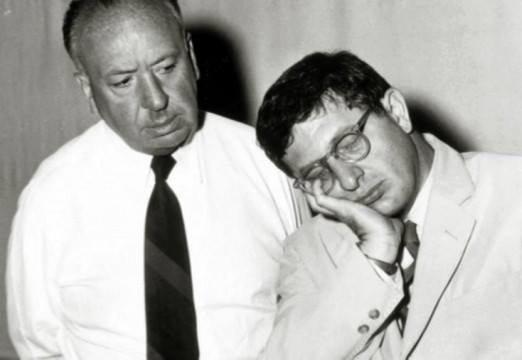
    When Steven Spielberg was introduced to Bernard Herrmann during a scoring session for Martin Scorsese’s “Taxi Driver,” he wound up going all fan-boy.

    “Oh, Mr. Herrmann!” Spielberg gushed. “I’m such an admirer of your work! You’re such an amazing genius!”

    Herrmann, who was notoriously prickly, looked him up and down and scowled, before replying, “So why do you always hire John Williams?”

    Interestingly, not long before, Spielberg, buoyed by the box office success of “Jaws,” worked up the courage to meet Herrmann’s one-time employer, Alfred Hitchcock, on the set of Hitch’s final film, “Family Plot” (which, coincidentally, Hitchcock also hired Williams to score).

    Before Spielberg could say anything, Hitch had him escorted off set, commenting to actor Bruce Dern, “Isn’t that the boy who made the fish movie?”

    The very night Spielberg met Herrmann (albeit briefly), the composer wrapped-up recording his music for “Taxi Driver,” went back to his hotel and died of a heart attack, in his sleep, in the wee hours of December 24, 1975. Hitchcock would follow his erstwhile collaborator in 1980.

    I establish these connections, because two of my three radio shows this weekend focus on the music of Bernard Herrmann and John Williams.

    In the mid-1950s, Herrmann and Hitchcock came together for a string of commercial, critical, and artistic successes, including, most notably, “Vertigo,” “North by Northwest” and “Psycho.” But the two collaborated on no less than nine films, if we count “The Birds,” on which Herrmann acted as sound consultant.

    Today, on “Picture Perfect,” we’ll have selections from the other five – among them, “Marnie,” “The Trouble with Harry” and “The Wrong Man.”

    Herrmann’s reworking of Arthur Benjamin’s “The Storm Clouds Cantata” was used at the climax of the 1956 version of “The Man Who Knew Too Much,” as a frantic James Stewart attempts to thwart an assassination plot at Royal Alert Hall. (In the film, Herrmann himself appears on the podium.)

    We’ll also hear a portion of the rejected score for “Torn Curtain,” the project that ended the Herrmann-Hitchcock association. Hitchcock fired Herrmann, when the composer ignored his instructions to write something light and popular, under studio pressure. John Addison was hired as his replacement, and the film was a failure at the box office.

    In recent years, Herrmann admirers have had several opportunities to sample the composer’s original thoughts. Quentin Tarantino is obviously a fan. He used some of Herrmann’s “Torn Curtain” music in “Once Upon a Time in Hollywood.”

    I hope you’ll join me for lesser-heard Herrmann-Hitchcock, on “Picture Perfect,” music for the movies.

    But wait – there’s more!

    Tomorrow is John Williams’ 93rd birthday. To celebrate, I’ve assembled a miscellany of the composer’s music for film, television, and the Olympic Games for “Sweetness and Light.” Among the offerings will be selections from several scores written for Spielberg and one (“Family Plot”) written for Hitch.

    Hitch yourself to Herrmann, this Friday at 8:00 EST/5:00 PST; then send well-wishes to Williams, this Saturday morning at 11:00 EST/8:00 PST, on “Picture Perfect” and “Sweetness and Light,” respectively – exclusively on KWAX, the radio station of the University of Oregon!


    Clip and save the start times for all three of my recorded shows:

    PICTURE PERFECT, the movie music show – Friday at 8:00 PM EST/5:00 PM PST

    SWEETNESS AND LIGHT, the light music program – ALL NEW! – Saturday at 11:00 AM EST/8:00 AM PST

    THE LOST CHORD, unusual and neglected rep – Saturday at 7:00 PM EST/4:00 PM PST

    Stream them, wherever you are, at the link!
    https://kwax.uoregon.edu/

  • Oscars Disappointment & the Decline of Film Scores

    Oscars Disappointment & the Decline of Film Scores

    This year’s Academy Award nominations were announced on Thursday, and I can’t say that they got me all that excited. Not that I’m one of those people who moans about how their favorite film wasn’t nominated, and this is why no one watches the Oscars anymore, and its very existence is no longer relevant. The awards aren’t about pleasing Joe Blow, or they shouldn’t be; they’re about those in the industry recognizing the achievements of their peers. Unfortunately, the ceremony also happens to be tied to a costly television broadcast, and a healthy swathe of air time at that, so the Academy is sensitive of the need to generate ratings.

    When Hollywood was operating at its peak, with major stars, and major studios backing a nice variety of films in great quantities, it all worked out very well. There was glamour and opulence and a sense of occasion, and viewers were pretty much guaranteed a good show, with excellence eliding with popular taste. Now the majors mostly crank out sausage for the masses and the actors no longer possess a mystique generated by studio-backed PR machines that would have once elevated them to the status of demigods.

    Most of the nominees now are films produced by coalitions of smaller studios, often with limited distribution. If they’re backed by Netflix, they’re often released for a week in New York and L.A. to qualify for Oscar consideration, and then yanked to take their intended place as content on a streaming service that tired people put on over dinner at the end of a long work day. It’s a miracle that any of them can generate any buzz.

    Once upon a time, I would get excited to see a movie, anticipate seeing it in the theater, become immersed in the experience, and then think about it afterwards. Now the streaming service won’t even allow the end credits to play through before it jumps to the next item. We’re living in an era of quick and disposable gratification. Nothing has any sense of resonance or purpose anymore. It comes down to too much technology, too many choices, and too little attention span.

    Last night, I streamed “Emilia Pérez,” without any previous idea of what it was about. For the record, it’s billed as a French musical crime comedy; however, it’s mostly in Spanish, and while it could certainly have played as farce, there is nothing in it that is even remotely funny. Well, perhaps unintentionally so, in some of the musical numbers. Was it a good movie? Ultimately, I think so. I thought moments in the first half hour were laughably bad, but it took me a while to buy into the premise. All the same, it didn’t strike me as Best Picture quality.

    Nor was there any reason I could discern that it should have been a musical. (The screenplay is based on an opera libretto written by the film’s director, Jacques Audiard.) I did find the story compelling, and because of the novelty, the performances too. I’m not sure it would have had the same effect had I read anything about it beforehand, but on its own, it kept me interested for its 2-hour, 10-minute running time. Personally, I had no objection to the content – the history of the movies is full of examples of films that reflect their respective zeitgeists – but I can see how it would be a lightning rod for conservative ire. It’s not exactly the kind of film that would have been made with Glenn Ford!

    What was most depressing to me about this year’s nominees were those for Best Original Score. A few years ago, I was among those who voiced their indignation when the Academy tried to sheer a number of the categories, including that for film-scoring, from its telecast. Now, only a few years later, I wonder what’s the point? And I don’t think it’s just a matter of the nominees not pleasing Joe Blow (in this case, me); it’s a matter of most film scores these days being fairly anonymous. Remember how, once upon a time, there would be albums devoted to the great scores of such and such a year? Now, you couldn’t possibly fill two sides of an LP.

    Think for a moment about “Gone with the Wind,” “Mutiny on the Bounty,” “Lawrence of Arabia,” “Doctor Zhivago,” “Romeo and Juliet,” “The Godfather,” “Star Wars. Countless classic films all tied in people’s memories with their indelible music, an entire branch of the industry left to wither on the vine, as budgetary concerns and lack of viewer discernment have allowed the art of movie scoring to degenerate. Why does the category even exist anymore, as most scores these days are mostly sound design? A bunch of background droning and percussive effects altered or even generated electronically, so that they would be impossible to duplicate by any orchestra performing anywhere under standard concert conditions.

    Of course, historically, most voters and certainly most viewers can’t seem to tell an original score from a song-dominated musical (for example, “The Wizard of Oz” or the more recent classics of Disney’s animation renaissance of the 1990s). So “Wicked” stands a good chance of snagging the award. On the other hand, if the voting members of the Academy want to think they’re supporting something edgy and contemporary, it could go to “Emilia Pérez.” But really, the music in those films is likely better served in the Original Song category.

    Here are this year’s nominees for Best Original Score. The only other one of the films I’ve seen so far is “Conclave.” Volker Bertelmann’s music certainly does attract a lot of attention to itself, and thank God (it is, after all, a Vatican movie), it’s not just sound design, but oh my, it is terribly overbearing…

    • BEST ORIGINAL SCORE *

    “The Brutalist,” Daniel Blumberg

    “Conclave,” Volker Bertelmann

    “Emilia Pérez,” Clément Ducol and Camille

    “Wicked,” John Powell and Stephen Schwartz

    “The Wild Robot,” Kris Bowers

    • BEST ORIGINAL SONG *

    “El Mal” from “Emilia Pérez,” Music by Clément Ducol and Camille, Lyric by Clément Ducol, Camille and Jacques Audiard

    “The Journey” from “The Six Triple Eight,” Music and Lyric by Diane Warren

    “Like a Bird” from “Sing Sing,” Music and Lyric by Abraham Alexander and Adrian Quesada

    “Mi Camino” from “Emilia Pérez,” Music and Lyric by Camille and Clément Ducol

    “Never Too Late” from “Elton John: Never Too Late,” Music and Lyric by Elton John, Brandi Carlile, Andrew Watt and Bernie Taupin


    PHOTOS: When film scores were film scores! Clockwise from left: John Williams, André Previn & Elmer Bernstein, Ennio Morricone, and Dimitri Tiomkin

Tag Cloud

Aaron Copland (92) Beethoven (95) Composer (114) Film Music (123) Film Score (143) Film Scores (255) Halloween (94) John Williams (187) KWAX (229) Leonard Bernstein (101) Marlboro Music Festival (125) Movie Music (138) Opera (202) Philadelphia Orchestra (89) Picture Perfect (174) Princeton Symphony Orchestra (106) Radio (87) Ralph Vaughan Williams (85) Ross Amico (244) Roy's Tie-Dye Sci-Fi Corner (290) The Classical Network (101) The Lost Chord (268) Vaughan Williams (103) WPRB (396) WWFM (881)

DON’T MISS A BEAT

Receive a weekly digest every Sunday at noon by signing up here


RECENT POSTS