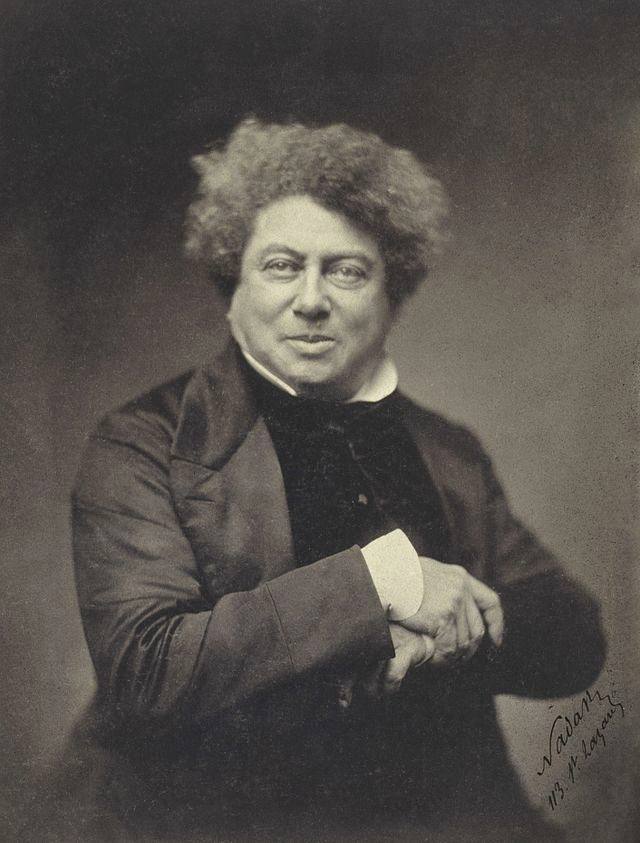
Tag: Franz Liszt

  • Where Have All the Oratorios Gone?

    Where Have All the Oratorios Gone?

    It’s January 6. Epiphany. The Feast of the Three Kings. The Christian feast day that marks, among other things, the Magi’s visit to the Christ Child.

    I know I’ve lamented in the past about how so many of the magnificent classical music Christmas works of the past millennium have disappeared from the airwaves. Of the larger works, it seems only Handel’s “Messiah,” Bach’s “Christmas Oratorio,” and of course Tchaikovsky’s (secular) “The Nutcracker” are guaranteed.

    Thankfully, I have an enormous record library with at least three shelves devoted exclusively to Christmas music, so I’m able to work through a lot of the forgotten and/or neglected masterworks at home and in the car. But it’s not the same as somebody else pulling and programming the music and knowing that I am part of a unified listening community.

    I feel the same way when watching a movie that is broadcast, or actually in a theater, as opposed to playing it from my own collection or streaming it. It’s wonderful to live in an age when these things are possible, but it is just not the same as knowing that I’m a part of a communal experience. (That said, I’m certainly not going to watch “It’s a Wonderful Life” on network television with a thousand commercial breaks!)

    I must give a tip of the Ebenezer Scrooge top hat to Yle Klassinen in Helsinki for airing Franz Liszt’s “Christus” complete. That station really is a marvel. Oh how I love my digital radio! Of course, I don’t speak Finnish, but I can usually make out the performers when they are announced and the playlists are posted online.

    Anyway, I had already listened to the Dorati recording on my own time. I’ve done so for many, many years. It’s enriched my Christmases ever since I first encountered it on the air, broadcast on Philadelphia’s late, lamented WFLN, back in the early 1980s. Time was, when serious classical Christmas music commenced with Advent. Yes, it was leavened with gems like Victor Hely-Hutchinson’s “Carol Symphony,” the aforementioned “Nutcracker,” and Leopold Mozart’s “A Musical Sleigh-Ride,” in the hilarious recording by the Eduard Melkus Ensemble that includes the neighing horses and barking dogs. I looked forward to hearing that every year. I snapped it up when it was reissued on compact disc and have included it in my own broadcasts for decades.

    Those works have their place, but it seems the serious, large-scale choral works are all going away. Commerce, secularism, short attention spans, ignorance, and grievance all work against the simple enjoyment of a lot of masterful music. It’s much safer to play three-minute arrangements of familiar Christmas carols. Over and over and over again.

    I grant you, three hours is a lot of radio real estate to give up to Liszt’s “Christus.” But can’t anyone even carve out an hour for Vaughan Williams’ “Hodie?” I suppose I should just shut up and be thankful that RVW’s “Fantasia on Christmas Carols” is still in rotation.

    I count myself very fortunate to have been able to share “Christus” many times over the years. I know I’ve played it complete on WXLV, WPRB, and WWFM – once I even preempted the weekly opera broadcast – and excerpted the purely orchestral movements even more frequently, working them into my morning and afternoon playlists. “The March of the Three Holy Kings” is a high point.

    I am sorry I don’t have a stretch of air-time during which to play it for you now, but the entire Dorati recording of the oratorio (one of three recordings I own, and still my preferred) is posted on YouTube.

    If you want to cut to the chase, here’s the march of the Kings.

    Think it sounds an awful lot like Wagner’s Wotan? There’s likely a reason for that. I’ve posted about it before.

    https://rossamico.com/2023/01/06/three-kings-music-mystery-wagner-liszt/

    I try to be sensitive to other people’s faiths and belief systems, and frankly I am no zealot, but when it comes to music, I am very much a fundamentalist. This is not about pushing Christianity down anyone’s throat as much as a desire to preserve and disseminate the sublime Christmas works, many of them by top-tier composers, presented, like the classic movies on TCM, complete and uncut.

    Of course, most of these recordings I’ve played over the years are from my own collection. I was very fortunate to be able to do my own programming, for hours at a time, for the better part of three decades. In such a situation, when a radio host loses his platform, countless hours of repertoire go with him. You’ll still get “Messiah,” but you probably won’t get Josef Rheinberger’s “The Star of Bethlehem” (here posted as a playlist of nine separate videos).

    Rutland Boughton’s “Bethlehem” is another Christmas work I’m crazy about. You won’t find it in many record libraries at radio stations here in the U.S. But I’ve got it, and I’ve aired it. Rather than write about it again, I’ll refer you to one of my teasers from a few years ago.

    https://rossamico.com/2017/12/21/merlin-in-bethlehem-a-christmas-music-surprise/

    If you’re a Vaughan Williams fan, I think you will find it delightful. For a long time, I was unable to share any of the audio online, due to Hyperion Records’ justifiably Draconian practice of not allowing any its recordings on YouTube. But the company is now in other hands, so here it is, finally, as a playlist – albeit with the tracks posted separately, so prepare to have to skip an occasional ad.

    On the Twelfth Day of Christmas, your resident classical music curmudgeon gives to you… three Christmas oratorios. If I splurged for a dozen, this post would be four times the length!

    Have yourself a merry “Little Christmas!”

    ——–

    IMAGE: Detail from Edward Burne-Jones’ “Adoration of the Magi”

  • Bernstein, Liszt & the Devil’s Symphony

    Bernstein, Liszt & the Devil’s Symphony

    I don’t know about you, but if I were a kid I’d be all over my parents to be able to attend a program called “Liszt and the Devil.”

    In one of his celebrated “Young People’s Concerts,” from 1970, Leonard Bernstein makes the bold assertion that “A Faust Symphony” is Franz Liszt’s greatest work. I think “grandest” would be less controversial. I mean, Liszt was the composer of probably the most revolutionary piano sonata of the 19th century.

    Despite Bernstein’s effusion that “A Faust Symphony” is one of the monumental works of the whole Romantic Movement, it is hardly the most frequently programmed of his compositions. His piano concertos are heard much more frequently. So are some of his symphonic poems, at least on the radio. (When was the last time you heard “Les Preludes” in concert?) He wrote oratorios, masses, organ works, songs, and even an opera. His later works are on another plane entirely, as he hurled his lances into a future he would never live to see.

    As a pianist, he is frequently cited as a kind of proto-rock star, whipping his audiences into extravagant displays of emotion. Men wept and women fainted. Some fought over carelessly abandoned gloves or cigar butts or even his coffee dregs. Doctors seriously debated the causes and effects of “Lisztomania,” as it was described, and it remains a topic of speculation in academic and medical circles today.

    Liszt was a peculiar mix of prophet and showman. He could be flashy or profound, fiendishly difficult or insistently memorable, offputtingly vulgar or transcendentally beautiful. Interestingly, in his mid-30s, he retired from public life as a recitalist (recital, by the way, was a term he coined), shifting his focus instead to composition, conducting, teaching, and philanthropic efforts. In his mid-50s, he took the cloth. As the Abbé Liszt, he was, among other things, a licensed exorcist. Which takes us back to the matter at hand.

    I happen to share Bernstein’s enthusiasm for “A Faust Symphony.” It’s always been a great favorite of mine. Sadly, you don’t really see it programmed very often anymore – if it ever was. But back in the day, Bernstein and Solti and maybe a few others kept it alive. Bernstein recorded it twice: with the New York Philharmonic for Columbia Records in 1960 and with the Boston Symphony Orchestra for Deutsche Grammophon in 1976. Riccardo Muti conducted it in Philadelphia, back in 1982 – sadly two years before my arrival in the City of Brotherly Love – and recorded it for EMI. The recording is very good. Come to think of it, I don’t think I’ve ever heard “A Faust Symphony” live. This must be rectified!

    I love that Bernstein doesn’t talk down to the kids and lays some pretty heavy, adult concepts on them. Not only in the philosophical examination of the essential dichotomy of the human character, but also the nitty gritty of debauched adult behavior. I’m sure there are moments when the moms and dads in the audience are wondering whether maybe they should have taken the young ones to Radio City Music Hall instead. Around 28 minutes in, Bernstein delves into the Devil, the seduction of Gretchen, and “the wages of sin.”

    It’s fun that Bernstein can go to the piano to illustrate so many of his musical points and that he’s got so much Liszt under his fingers.

    This is the second “Young Person’s Concert” I’ve seen in which Bernstein gets so carried away conducting that he loses his baton (at 44 minutes in). The other was during a Sibelius program from 1965, in which he conducts the Symphony No. 2. In that instance, a moment after the baton takes flight, he reaches beneath the lectern and actually produces a spare! Here he rides it out with his bare hands, as Mephisto’s spirit of negation is itself negated by Gretchen’s innocence.

    This is Liszt’s original version, by the way. Three years later, he appended a coda for chorus and tenor. That’s the version Bernstein recorded.

    Bernstein knows a thing or two in comparing Liszt to Faust. He had a little bit of Faust in his own character, as well. But then, don’t we all?

    Happy birthday, Franz Liszt!


    “Young People’s Concert: Liszt and the Devil.” All in all, an intelligently presented, entertainingly delivered lecture and performance. I hope you enjoy it.

    Bernstein’s classic 1960 recording with the New York Philharmonic

    Also fun to hear “A Faust Symphony” turn up among the musical selections on the soundtrack to this restoration of the 1926 silent film “Masciste in Hell”

  • Hungarian Music on Sweetness and Light

    Hungarian Music on Sweetness and Light

    This week on “Sweetness and Light,” we’ll lend plenty of paprika and poppyseed to your breakfast with an hour of Hungarian delights.

    Enjoy a selection from a beloved film score by Miklós Rózsa (you can take the composer out of Hungary, but you can’t take Hungary out of the composer!), a “Hungarian Capriccio” by Eugene Zador (who assisted Rózsa as an orchestrator), some old Hungarian dances arranged by Ferenc Farkas, Hungarian fantasies by Franz Lehár and Franz Doppler, Doppler’s orchestration of a work by Franz Liszt, Liszt’s arrangement of a patriotic melody, and a schmaltzy treatment of a work by Jenő Hubay.

    That’s an ample helping of goulash and czardas on “Sweetness and Light,” this Saturday morning at 11:00 EDT/8:00 PDT, exclusively on KWAX, the radio station of the University of Oregon!

    Stream it wherever you are at the link:

    https://kwax.uoregon.edu/

  • Alexandre Dumas Music on KWAX Radio

    Alexandre Dumas Music on KWAX Radio

    He is best known as the author of “The Three Musketeers” and “The Count of Monte Cristo.” However, Alexandre Dumas churned out historically-inspired prose on all manner of subjects, and he did so by the metre.

    This week on “The Lost Chord,” we present an hour of music inspired by his writings, including rarely-heard incidental music composed for a revival of his play “Caligula,” by Gabriel Fauré; ballet music from an opera, “Ascanio,” taken from a novel featuring Benvenuto Cellini, by Camille Saint-Saëns; and a poetic monologue, “Joan of Arc at the Stake,” by Franz Liszt. We’ll also hear the suite for symphonic band “The Three Musketeers,” by George William Hespe.

    It’s all for one, and one for all! I hope you’ll join me for “The Lost Sword,” on “The Lost Chord,” now in syndication on KWAX, the radio station of the University of Oregon!


    Clip and save the start times for all three of my recorded shows:

    PICTURE PERFECT, the movie music show – Friday at 8:00 PM EDT/5:00 PM PDT

    SWEETNESS AND LIGHT, the light music program – Saturday at 11:00 AM EDT/8:00 AM PDT

    THE LOST CHORD, unusual and neglected rep – Saturday at 7:00 PM EDT/4:00 PM PDT

    Stream them, wherever you are, at the link!

    https://kwax.uoregon.edu/

  • Post-Holiday Music & Book Finds

    Post-Holiday Music & Book Finds

    I know it’s not Epiphany yet, but with the more intense part of the holiday season now behind us, it looks as if I’ve managed to survive another year. I hope yours have been good ones.

    Unfortunately, as previously reported, my laptop was the last casualty of 2024. I’ll have a replacement under my fingers today, but retrieving the old files is an ongoing challenge. For the time being, I’d like to share with you a few of my Christmas gifts.

    Yes, I am still very much into physical media. If it doesn’t exist on compact disc or vinyl, it may as well be a live performance in a concert hall, because I’ll probably never listen to it again. Also, compact discs are extremely handy for the kind of work that I do. But enough with the apologies. I like what I like.

    For one thing, I happen to be a nut for Franz Liszt’s rarely-heard “Christmas Tree Suite.” Liszt dedicated the work to his granddaughter, Daniela von Bülow, the daughter of Cosima Liszt and conductor Hans von Bülow. Some of the early movements are reflections on familiar carols, but as the suite progresses, the movements become dreamier and more introspective. The work was first performed on Christmas Day in 1881, the day Daniela’s birthday was always observed, though she was actually born on Christmas Eve. I have many recordings of the piece, but this is probably the most recently available, issued on the Naxos label. I have to say, having listened to it only once, it’s not likely to become a personal favorite. I’ll certainly go back and give it another chance, but I feel like Wojciech Waleczek is a little too soporific in his interpretation, especially in the earlier movements, in which the more familiar carols mosey a little more than would be desirable. This is only a first impression, and I may revise my opinion with increased exposure. Certainly, there is plenty of space for interpretive subjectivity as the work becomes more ruminative in the later movements.

    The Charles Ives Anniversary Edition is one of the happy tie-ins with the 2024 Ives sesquicentennial celebrations. The five-CD box, released by Sony, and which I haven’t taken out of the shrink wrap yet, contains coveted reissues of plenty of Ives rarities and curios, including an album of the composer performing his own music at the keyboard.

    Stefan Jackiw and Jeremy Denk gave an unforgettable concert of the Ives Violin Sonatas here in Princeton, on Ives’ birthday, October 20, in 2020. I didn’t know they had recorded the pieces, but lo and behold, here they are, on a recent Nonesuch release that also includes both of Ives’ piano sonatas. I haven’t listened to it yet, but I am very much looking forward to it.

    The book is about the cellist Beatrice Harrison, long familiar to me from her classic recording of the Elgar Cello Concerto, but only recently did I learn of her worldwide fame in connection with a nightingale in her garden with whom she performed impromptu duets over the radio, captivating millions around the world. 2024 marked the centenary of the first of those broadcasts. I wrote a little more about it here before.

    https://www.facebook.com/photo/?fbid=1308616126724114&set=basw.AbpKcq6N8YFve4Jmc47IF0Cpw3fvpPfuJp99zZDC9GqTCc05UIZWWF40UPKTSpStP5FnKyywTPR_Apg0MTFHmuWa-bBfzobP9r2E34kkP0kBcJGADxiqoNs-cQkYkDwh-nq5TLthwzfrBryUuzNKRpsKH8bgFQ41BXVv5tqx28tuYg&opaqueCursor=Abqfx7PZKtgyYK1e-ycBYC3fwkUdUN1tVwtZhSWhhw21BEGeezUx3dp_oHUVvayqMrAGhllJKP5rOZy9rCRvxWW-J2GWQeARLnf2nRIgKsiIIDNwZ9A1n3vDjd1ctZwLp-3E5ntvGe0ZVCPKHDvsygeGqw-mJ3JjQMocERP5ngiYHfLjyleQoI_0mk3KtzGDaeETNMNzhTDhR2fE4_KUdmyq6tdm2Aqk5eh4KiiolC2NipODNhc4ewtZRXbHx1JoAHrOH9_s6PUIDxmObg5nhRJx7IKIq43Gb6qxhuq8zXCNCRHDm_ulO0A0E0XIrRAwI0T84pVfBuTT38neOhGKfrue8ACn6JmZLT_j9vR-72VIk4SbM-J4Z4_AWu885XyUKhiDYfM3TDYnBF6_ij5ukix68kRD0-ezyxHQUQs8qT63tU3wtfu4yBv4FXphxUtKkblmQrHhBkyNFobddVeiBLyV1GyYLVc5CO9iOUyaULNgdPFjt0-Jjz9MGU0Ee0EiNAXV79nZLDZW4ADljpO4rNk2ib2wHdYyUfcNvDUGSgjrSZ_pcUZ9SuB-mgZDLZqec4MHLQ0s7I9zVd8W4rcRiYcd4lRR7Zl3eYlRG6VJG05aZhRRbMn5HrdzB5vK0FCxjw2anELgtPVgpVBPamIvjfQdzKxQXP6q-ybbxhEPhgzN3MMr9aP4PqnkPI90gNcAtVZgLpDnY1MYBLQLjetRC5Y6BSCuM7x2qmwoNUxn6fkqJFHsD9Je_23ZskNflyBEIuM0xSiz2Nt3wZaLjHhuNG4euWb4MrybzkWfOrr_AMZ4pW9XeIZZ8RsOeJPeYtUfNWOVXC_7QCXk2VPICEmaSmG_xJZOn_xKyHfVuZffCAJz2aPR8e8gfpdtQ5bYFkLub28

    Not a bad haul, if I do say so myself. I must have been a good boy, after all. Now that the New Year’s festivities have passed, I am looking forward to being back in my burrow until spring.

Tag Cloud

Aaron Copland (92) Beethoven (94) Composer (114) Film Music (116) Film Score (143) Film Scores (255) Halloween (94) John Williams (185) KWAX (228) Leonard Bernstein (99) Marlboro Music Festival (125) Movie Music (131) Opera (197) Philadelphia Orchestra (86) Picture Perfect (174) Princeton Symphony Orchestra (106) Radio (86) Ralph Vaughan Williams (85) Ross Amico (244) Roy's Tie-Dye Sci-Fi Corner (290) The Classical Network (101) The Lost Chord (268) Vaughan Williams (99) WPRB (396) WWFM (881)

DON’T MISS A BEAT

Receive a weekly digest every Sunday at noon by signing up here


RECENT POSTS