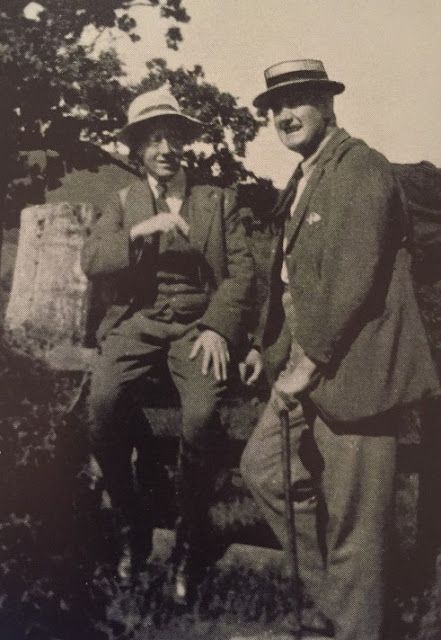
Composer Gustav Holst, best known for his symphonic suite “The Planets,” was not the only celebrity in the family. His younger brother, Emil, was an actor on stage and screen.
Both were born “von Holst.” Their father was of Swedish, Latvian, and German descent. Their great-grandfather had also been a composer, who taught harp at the Imperial Russian Court in St. Petersburg. Continuing in the family trade, their grandfather set up shop in England. In doing so, he added the “von,” thinking a little gravitas might help to drum up business. Sensibly, Gustav dropped the prefix with the outbreak of war with Germany in 1914. Emil took the stage name Ernest Cossart in 1896.
In Hollywood, Cossart was often typecast as butlers. Twice, he played a priest. He also played Pa Monahan in “Kings Row” (1942), with Ann Sheridan and Ronald Reagan, and Squire Brown in “Tom Brown’s School Days” (1940). You may also remember him as Ginger Rogers’ irascible father in “Kitty Foyle” (1940).
Here he is with the great character Edward Everett Horton in the Ernst Lubitsch’s “Angel” (1937).
During World War II, Cossart joined Cedric Hardwicke, Basil Rathbone, and others in establishing a fund to help British artists in distress.
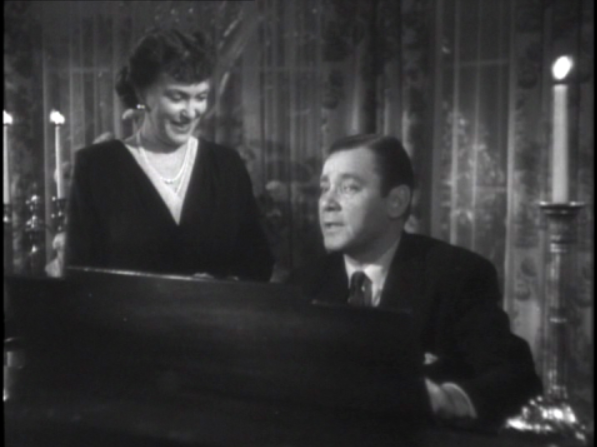
The gentleman who hands off his hat and coat is Herbert Marshall, who starred in Lubitsch’s “Trouble in Paradise” (1932). A distant relative of Mary Shelley, Marshall lost a leg in the First World War after he was shot in the knee while serving on the Western Front. Determined to get back to the stage, he learned to walk with a prosthetic limb. This being a music page, you might be interested to know he played a blind composer in the film “The Enchanted Cottage” (1945), with Robert Young and Dorothy McGuire. His real-life handicap proved immaterial to the ladies, who were crazy about him. During the Second World War, he visited military hospitals to instill hope and give practical advise to those who were maimed during the conflict.
As a boy, Cossart (then still Emil von Holst) used to troll his brother by surreptitiously setting back the hands of the clock, prolonging Gustav’s dreaded violin practice. This did nothing to endear the instrument to the future composer. Gustav picked up the trombone at the age of 12.
Cossart died in New York City in 1951. He was 74 years old. Gustav died in 1934 at 59.
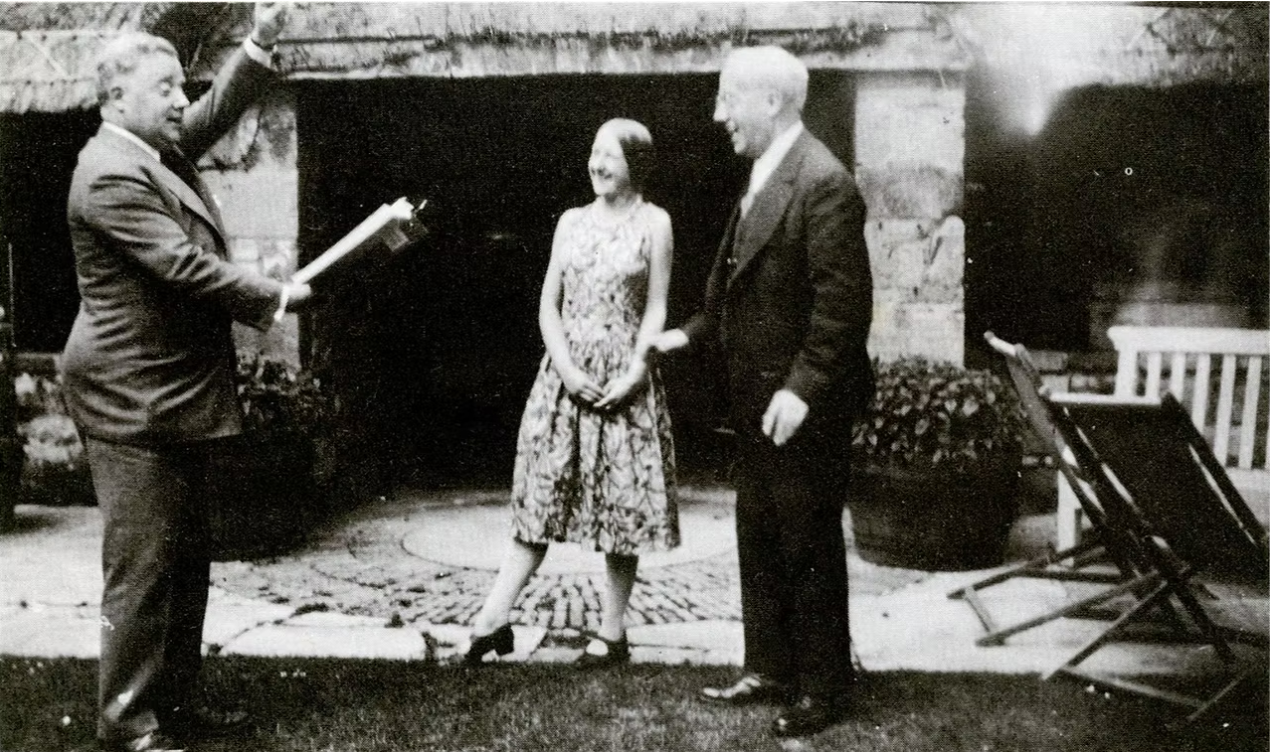
Here’s a candid photo of Cossart, left, with his niece, Imogen Holst, composer, conductor, and assistant to Benjamin Britten, and on the right, his brother, the famous composer Gustav Holst, whose birthday it is today.
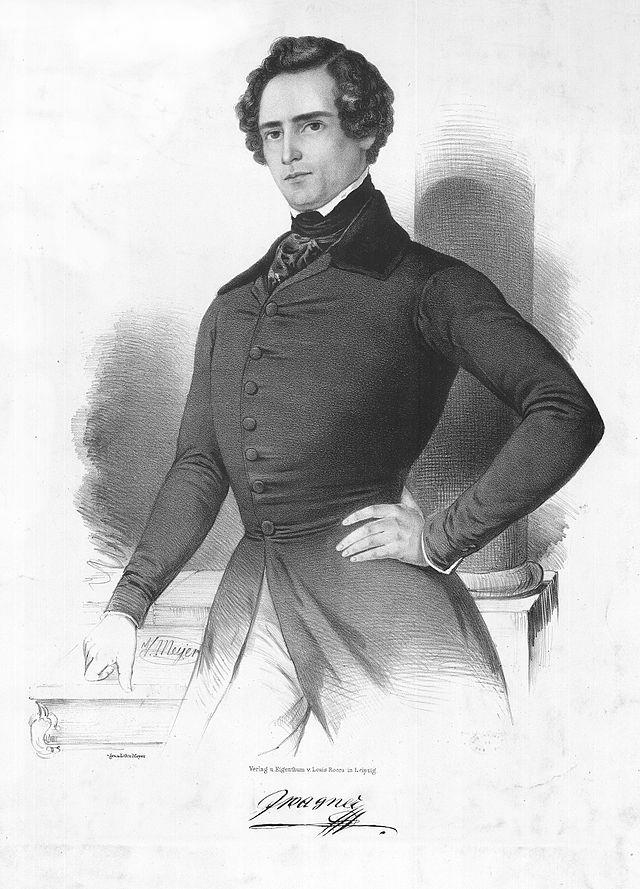
Wagner wrote symphonies? That’s right. He took a crack at writing two of them, in a Beethovenian style, before finding his niche as a revolutionary opera composer.
This week on “The Lost Chord,” we’ll hear Wagner’s Symphony in E, alongside early attempts by Gustav Holst and Claude Debussy. Judging from their mature works, these three would be among the least likely to attempt sonata form.
Impetuous youth! I hope you’ll join me for “Bold Heads on Young Shoulders” – audacious composers at the start of their careers strive for symphonic mastery – on “The Lost Chord,” now in syndication on KWAX Classical Oregon!
——–
Clip and save the start times for all three of my recorded shows:
PICTURE PERFECT, the movie music show – Friday at 8:00 PM EDT/5:00 PM PDT
SWEETNESS AND LIGHT, the light music program – Saturday at 11:00 AM EDT/8:00 AM PDT
THE LOST CHORD, unusual and neglected rep – Saturday at 7:00 PM EDT/4:00 PM PDT
This week on “Sweetness and Light,” to mark the sesquicentenary of the birth of Gustav Holst (born on this date in 1874), we’ll have a down-to-earth celebration of the composer of “The Planets.”
Holst wrote some very interesting and effective works in a modestly modernist style, but the emphasis this morning will be on his delectable folk-inflected music. In the company of his lifelong friend, Ralph Vaughan Williams, Holst struck out for the fields and fens, documenting by cylinder and notating by hand songs of the English countryside, preserving them against the oblivion of encroaching industrialization. Recognizing their rich potential as raw material for the development of a distinctly “English” national sound, the two artists began assimilating characteristics into their own respective styles.
Since Holst’s day job was as director of the St. Paul’s Girls’ School (from 1905 until his death in 1934), it’s hardly surprising that the larger portion of the music to be heard during the hour will be devoted to pieces introduced by the students and faculty.
We’ll enjoy a worthy successor to the popular “St. Paul’s Suite” of 1913, the “Brook Green Suite,” composed two decades later. The St. Paul’s School is located on Brook Green in Hammersmith, London. The performance will surely be of added interested in that it will be conducted by composer’s daughter, Imogen Holst.
Of course, when celebrating Holst, we can’t very well ignore “The Planets.” For a light music show, it goes without saying, the most jovial of these is “Jupiter, the Bringer of Jollity.” The big tune at its generous heart was further popularized as the patriotic hymn “I Vow to Thee, My Country.” Holst was a master orchestrator (it’s amusing to reflect that his instrument was the trombone), but I think you’ll find his own arrangement for two pianos to be fresh and surprisingly illuminating. Our performers will be Richard Rodney Bennett and Susan Bradshaw.
The Suite No. 2 for Military Band of 1911 is based on a number of delightful folk tunes, including “Swansea Town,” “I’ll Love My Love,” “A Blacksmith Courted Me,” “Dargason,” and “Greensleeves.” We’ll hear it played by the Dallas Wind Symphony, directed by Howard Dunn. And as a bonus, we’ll follow it with Holst’s setting of one of the songs for men’s chorus, sung by the Baccholian Singers of London.
Finally, we’ll have the substantial choral ballet of 1926, “The Golden Goose,” on a scenario adapted from a tale of the Brothers Grimm,” again given its debut at St. Paul’s. This one is long on charm, chockful of good tunes in a folk style. Hilary Davan Wetton will direct the Guildford Choral Society and Philharmonia Orchestra. What’s not to love?
There’s gold in them thar hills! I hope you’ll join me for a Holst sesquicentennial tribute, on “Sweetness and Light,” this Saturday morning at 11:00 EDT/8:00 PDT, exclusively on KWAX, the radio station of the University of Oregon!
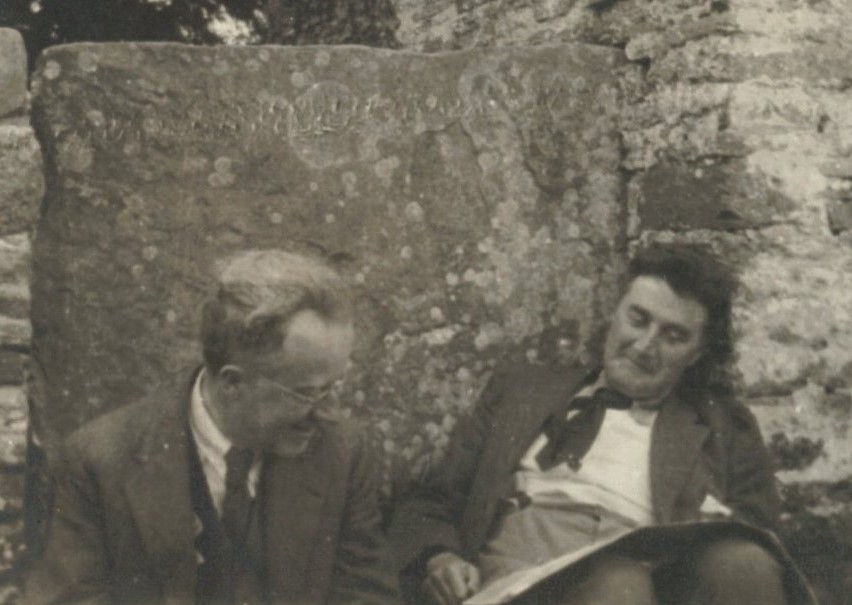
It’s interesting that Gustav Holst and Ralph Vaughan Williams were born only three weeks apart, albeit separated by two years. Uncle Ralph’s birthday looms on October 12 – but for today, we celebrate Holst!
“Gustav” may be a strange name for one of England’s greatest composers. Even stranger, he was actually christened Gustavus. Also, there was a “von” in his name – Gustavus Theodore von Holst. Holst’s father was of Swedish, Latvian, and German descent. His great-grandfather had also been a composer, who taught harp at the Imperial Russian Court in St. Petersburg. Continuing in the family trade, his grandfather set up shop in England. In doing so, he added the “von,” thinking it lent a little gravitas and might help to drum up business. Sensibly, Gustav dropped the prefix with the outbreak of war with Germany in 1914.
Like Vaughan Williams, Holst was born in Gloucestershire. Both were students at the Royal College of Music, who studied with Sir Charles Villiers Stanford. Significantly, they were also linked by a common destiny, spearheading a movement to establish a distinctly “English” national sound in music. They accomplished this by getting their hands dirty, tying on their boots and striking out for the fields and fens, to collect songs of the countryside, already endangered by encroaching industrialization. In some of their best original music, both composers assimilate English folk inflections into their respective styles.
Holst himself was an exacting teacher, who took his duties very seriously. However, in common with the best of his profession, he never imposed his will on his students, but rather shepherded them in finding their own solutions. Holst served as director of music at St. Paul’s Girls’ School, Hammersmith, and at Morley College.
Of course his masterpiece would be “The Planets,” composed between 1914 and 1916. Hard to believe, in a world of composers schooled on the piano, that Holst’s principal instrument was the trombone! I recall listening to this music for the first time in my teens and thinking “Jupiter,” in particular, positively exuded “England.” Its roistering, galumphing, perhaps even Falstaffian antics give way to a stately, processional theme, later adapted into the patriotic hymn “I Vow to Thee, My Country.” But with the passage of time, and longer familiarity, “The Planets’” English identity, detectable in every note, has become increasingly evident.
Even so, Holst was never of a provincial mindset. On the contrary, he was a much more adventurous – and frequently modernist – composer than he is frequently given credit for having been. His literary inspirations were far-ranging, from Thomas Hardy to Walt Whitman to Sanskrit. His music is often less emotive than Vaughan Williams’. I’ve always detected more of an objective detachment in his works. Remarked Vaughan Williams, “He was not afraid of being obvious when the occasion demanded, nor did he hesitate to be remote when remoteness expressed his purpose.”
The two were one another’s most constructive critics. When Holst died, comparatively young, at the age of 59, Vaughan Williams felt his friend’s passing keenly. Aside from the personal loss, from a professional and artist standpoint, suddenly he was bereft of his most valued confidante and advisor.
Holst’s legacy can be detected best in those composers who reacted against Vaughan Williams and the pastoral school. His economy and restraint appealed to the generation of Walton, Britten, and Tippett. Also – and I never see this remarked upon – I detect his spirit often in the film and concert music of Bernard Herrmann. (Herrmann was a great anglophile, who championed Holst.) There is a certain aloofness, perhaps even a chill, in the work of both artists, but also great sensitivity.
Happy birthday, Gustav Holst (1874-1934)! You may be regarded by some as a one-hit wonder, but it is an assessment made in ignorance. May the inertia of your greatest success carry listeners far beyond “The Planets.”
The composer’s most famous music, “Mars, the Bringer of War” (1914)
“Jupiter, the Bringer of Jollity” (1914)
“Beni Mora” (1910)
Vaughan Williams’ setting of “Seventeen Come Sunday” from his “English Folk Song Suite” (1923)
Listen for the tune in Holst’s “Somerset Rhapsody” (1906), about three minutes in
“Choral Hymns from the Rig Veda” (1911), anticipating Britten?
First Choral Symphony (1923-24); RVW expressed only “cold admiration” for it
12 Welsh Folk Songs (1930-31): “My sweetheart’s like Venus”
Finally, a collaborative work, “Pan’s Anniversary,” a masque written by Ben Jonson, circa 1620, revived in 1905 for a production at Stratford-upon-Avon. Vaughan Williams composed most of the incidental music, with Holst stepping up to arrange some dance tunes under considerable time pressure. The piece was released for the first time on Albion Records, the recording branch of the Ralph Vaughan Williams Society, with some colorful bonuses.
You can sample the entire album, including an arrangement of the “Fantasia on a Theme by Thomas Tallis” for voices and strong octet, here:
The Albion catalogue sports much unusual and intriguing RVW fare, often in world premiere recordings. You’ll find some great gift ideas for the musical anglophile who “has everything.”