One of England’s greatest composers, Ralph Vaughan Williams looked back to his country’s agrarian roots as a roundabout way of securing the future of its cultural identity. On the 150th anniversary of his birth, I salute him in all his rumpled glory.
As did so many composers who were caught in the wildfire of nationalism that swept across Europe, beginning in the middle of the 19th century, Vaughan Williams rebelled against the prevailing academicism that reached its tendrils from the capitals of German music to choke the “provincial” hinterlands. He emerged from an environment that had produced far too many knock-offs of Mendelssohn and Brahms. Vaughan Williams would revolutionize his compatriots’ perception of art music by embracing the sounds of the English countryside.
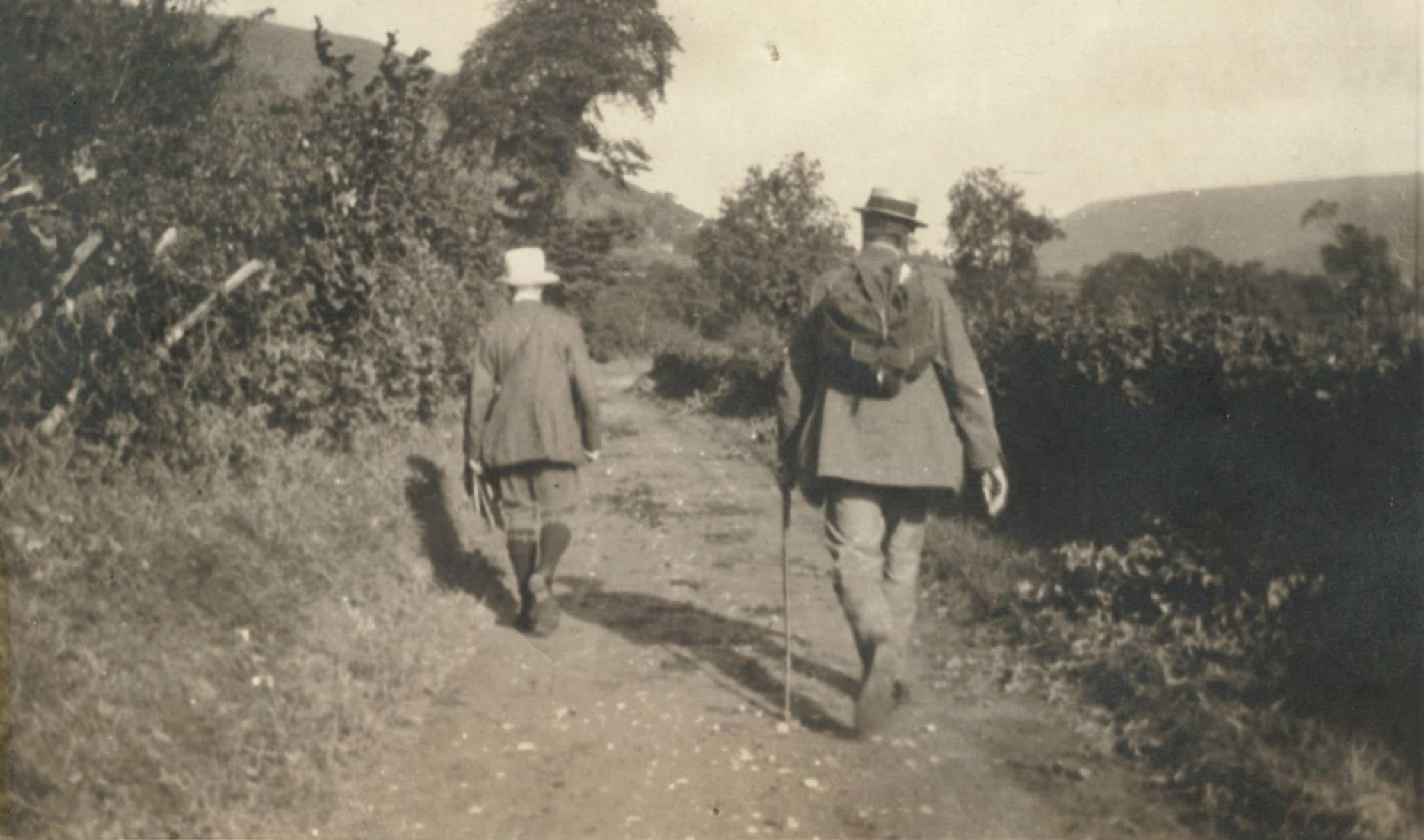
However, like Béla Bartók, he was no simplistic, twee purveyor of folk music. On the contrary, the rhythms and inflections of his native land were already part of his DNA. The songs he documented while roaming the fields and fens with his colleague, Gustav Holst, merely brought to the surface what was already innate. What he expressed in his original music was thoroughly digested and deeply personal.
Some of Vaughan Williams’ best loved works are imbued with nostalgia for a faded world, but the composer pushed forward also, through two world wars and into the Great Beyond. He was not a conventionally religious man, but mysticism seems to color a fair amount of his music. He was also unafraid, in works like his Sixth Symphony, to stare desolation unflinchingly in the face. Technically, his lessons with Maurice Ravel made him a thoughtful orchestrator, so that throughout his life he deployed his instrumental forces with considerable craft and creativity. Given the proper attention, there is much to engage on all levels of his music.
While you might not want to take his advice on the best way to tie a tie, musically, with Vaughan Williams, you are always in the hands of a master. Put your faith in Ralph (pronounced “Rafe”) for the Vaughan Williams sesquicentenary.
Thank you, RVW, for a lifetime of enrichment, and happy birthday!
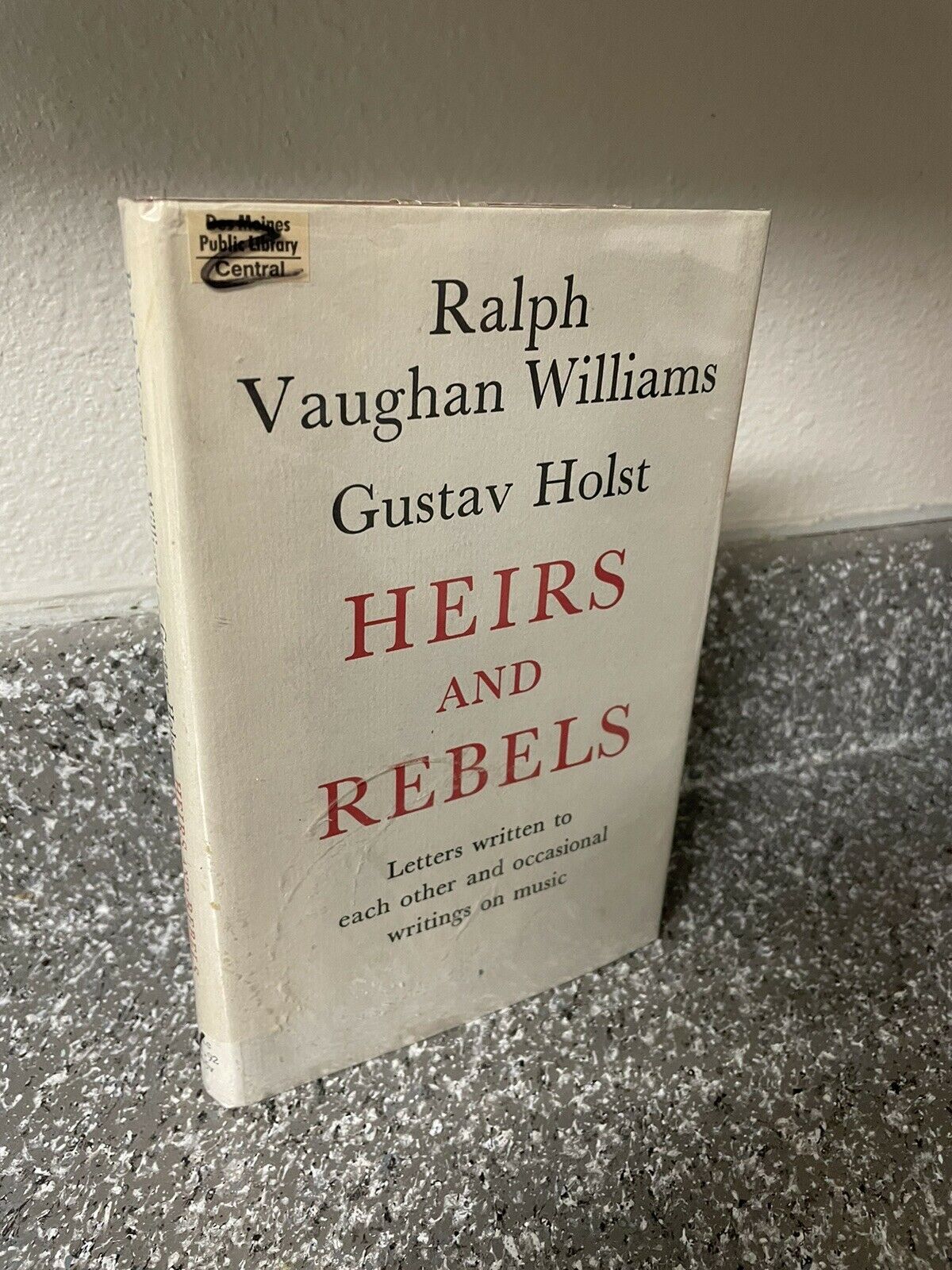
You may recall, I posted here a couple of times that I was the beneficiary of the Des Moines Public Library, which for some reason opted to discard a number of collectible volumes about Ralph Vaughan Williams, in the year that marks the sesquicentennial of his birth. (The actual date is October 12.) In any case, Des Moines’ loss is my gain, as I snatched them off eBay not long after they appeared.
One of these is a collection of correspondence between Vaughan Williams and fellow composer Gustav Holst, edited by Ursula Vaughan Williams (RVW’s widow) and Imogen Holst (Gustav’s daughter). The letters are interleaved with musical essays by both artists.
Having just finished the book, which is rather slender at just over 100 pages, I come away with a better understanding of their friendship and just how much they influenced one another. There was such honesty and trust between them. In their shared pursuit of artistic excellence and a new English music, neither of them were ever insensitive in their criticism, but they weren’t afraid to be direct in stating what they thought worked and didn’t work in each other’s compositions.
There are several interesting essays by Holst that make me want to revisit the music of Thomas Weelkes and Samuel Wesley, so highly did he regard them at their best. It’s interesting what things the editors decide to footnote and what they don’t. I got a bit of a swollen head when I realized how much I was able to pick up that would have slipped past a reader perhaps not quite so well-versed in English music.
Of course, being a library discard, there are a few instances in my copy of random scrawl in the margins and unnecessary underlining in ink, which is irksome – who writes in a book in pen? – but for the price I am glad to have it, as copies on the secondhand market are many times the cost.
The title is a reference to a lecture delivered by Holst at Yale in 1929, in which he quotes Gilbert Murray: “Every man who counts is a child of tradition and a rebel from it.”
Vaughan Williams and Holst embodied this dictum most demonstratively, absorbing their lessons from hidebound Hubert Parry and Charles Villiers Stanford at the Royal College of Music, striking out on their own to harvest English folk song from its natural habitat before it could be plowed under by industrialization, and, in Vaughan Williams’ case, reaching back to the Tudor era to revitalize “The English Hymnal.” Holst also found inspiration in ancient Hindu texts. Both men built their own idiosyncratic structures on these foundations to become two of England’s most distinctive musical voices.
Holst offered the following words to Vaughan Williams, in a moment of self-doubt. Amidst all the advice and constructive criticism, he writes perceptively, in a letter from 1903, “Your best – your most original and beautiful style or ‘atmosphere’ is an indescribable sort of feeling as if one were listening to very lovely lyrical poetry. I may be wrong but I think this (what I call to myself the REAL RVW) is more original than you think.”
Theirs was a special friendship, and Vaughan Williams felt keenly Holst’s loss when he died in 1934, at the age of 59. RVW had a lot of creative years ahead of him. He died in 1958, at 85, active until the end. For the rest of his life, he missed the valued input of his close friend and kindred spirit.
Happy birthday, Gustav Holst.
“Jupiter” (1914)
“Beni Mora” (1910)
Vaughan Williams’ setting of “Seventeen Come Sunday” from his “English Folk Song Suite” (1923)
Listen for the tune in Holst’s “Somerset Rhapsody” (1906), about three minutes in
“Choral Hymns from the Rig Veda” (1911), anticipating Britten?
Here’s a glimpse at some of my birthday booty from the other day.
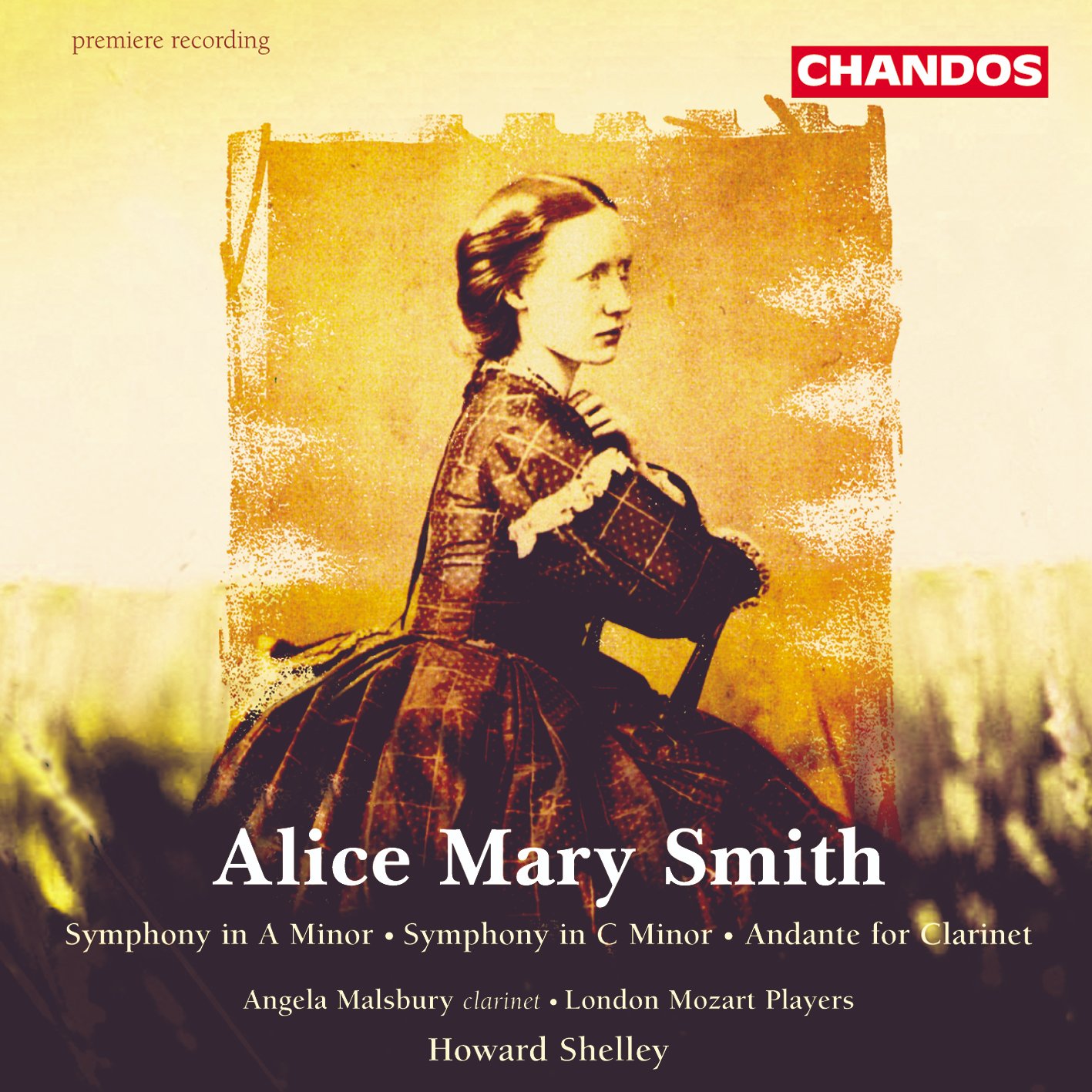
The CD of works by Alice Mary Smith was released on Chandos Records in 2005, but somehow I only learned about it this year. Very happy to have it! Smith, who lived from 1839 to 1884, is believed to be the first English woman to compose a symphony. A student of William Sterndale Bennett and George Alexander Macfarran, she wrote two symphonies, six concert overtures, four piano quartets, three string quartets, a clarinet sonata, a respectable collection of sacred choral works and cantatas, and a couple of works for the stage, including an operetta. There is something about her Andante for Clarinet and Orchestra that caught my ear, when I encountered it on the radio. (It’s actually an orchestral version of the slow movement from her sonata.) The first movement of her Symphony in A minor is also impressive; the last movement is memorable and keeps up a good head of steam. If you like Mendelssohn or Arthur Sullivan, with maybe a little Schubert in the orchestration, that’s the kind of musical language you can pretty much expect.
Andante for Clarinet and Orchestra
Symphony in A minor
The other disc contains the world premiere recording of a work by Ralph Vaughan Williams, incidental music for the masque “Pan’s Anniversary” by Ben Jonson. Vaughan Williams and Pan? Come on! I am SO there!! Apparently, RVW was under time constraints when writing the work, so some of the dance arrangements had to be delegated to his good friend, Gustav Holst. The program also includes some other unexpected gems, including an arrangement of one of RVW’s most popular works, the “Fantasia on a Theme by Thomas Tallis,” for voices and string octet.
The CD is issued on Albion Records, the recording branch of the Ralph Vaughan Williams Society, which has done so much to ferret out and document rare, neglected, and forgotten works by the composer. A nice surprise in RVW’s sesquicentennial year, being celebrated with enthusiasm in the U.K. and seemingly ignored everywhere else.
A preview of the contents of “Pan’s Anniversary” here:
Looking forward to giving this a good listen today!
Lord knows, he was no fashion plate – but he sure could write music!
Ralph Vaughan Williams looked to England’s agrarian roots as a roundabout way of securing the future of its cultural identity.
As did so many composers who were caught in the wildfire of nationalism that swept across Europe from the mid-19th century forward, Vaughan Williams put the torch to the prevailing academicism that stretched its tendrils all the way from Germany to choke the musically “provincial” outlands. He emerged from an environment that had produced far too many knock-offs of Mendelssohn and Brahms. Vaughan Williams would revolutionize his compatriots’ perception of art music by embracing the sounds of the English countryside.
That said, much like Béla Bartók, he was no simplistic, twee purveyor of folk song. On the contrary, he recognized that the rhythms and inflections of his native land were already embedded his DNA. The songs he documented while roaming the fields and fens with his colleague, Gustav Holst, merely brought to the surface what was already innate. What he expressed in his original music was thoroughly internalized and deeply personal.
Some of Vaughan Williams’ best loved works are imbued with nostalgia for a faded world, but the composer pushed forward, as well, through two world wars and into the Great Beyond. He was not a conventionally religious man, but mysticism seems to color a fair amount of his music. Other pieces stare desolation unflinchingly in the face. Lessons with Maurice Ravel made him a thoughtful orchestrator, so that throughout his life he deployed his instrumental forces with considerable creativity and expertise. Given the proper attention, there is much to engage on all levels of his music.
He may not have been on intimate terms with a comb or perhaps even capable of tying his own tie, but beneath that tousled mop and behind those bushy eyebrows, his workshop was always kept in good working order.
Happy birthday, RVW. In all your rumpled glory, we salute you!
Incidental music to “The Wasps”
“Fantasia on a Theme by Thomas Tallis”
Mass in G minor
Symphony No. 4, conducted by the composer
Phantasy Quintet
Selections from the opera “The Poisoned Kiss,” virtually unknown, but full of good tunes
Adrian Boult conducts a selection from “Job: A Masque for Dancing”
It’s interesting that Gustav Holst and Ralph Vaughan Williams were born three weeks apart (though separated by two years). Uncle Ralph’s birthday is coming up on October 12, but today is a day to celebrate Holst, born on this date in 1874.
“Gustav” may seem like a strange name for one of England’s greatest composers. Even more peculiar, he was actually christened Gustavus. Also, there was a “von” in his name – Gustavus Theodore von Holst. Holst’s father was of Swedish, Latvian, and German descent. His great-grandfather had also been a composer, who taught harp at the Imperial Russian Court in St. Petersburg. Continuing in the family trade, his grandfather set up shop in England. In doing so, he added the “von,” thinking it lent a little gravitas and that it might help to drum up some business. With the outbreak of war with Germany in 1914, sensibly Gustav dropped the prefix
Like Vaughan Williams, Holst was born in Gloucestershire. Both were students at the Royal College of Music, who studied with Sir Charles Villiers Stanford. Significantly, they were also linked by a common destiny, spearheading a movement to establish a distinctly “English” national sound in music. They accomplished this by getting their hands dirty, tying on their boots and striking out for the fields and fens, documenting by cylinder and notating by hand songs of the English countryside, already endangered by encroaching industrialization. In some of their best original music, both composers assimilate native folk inflections into their respective styles.
Holst himself was an exacting teacher, who took his duties very seriously. However, in common with the best of his profession, he never imposed his will on his students, but rather shepherded them in finding their own voices and solutions. Holst served as director of music at St. Paul’s Girls’ School, Hammersmith, and at Morley College.
Of course his masterpiece would be “The Planets,” composed between 1914 and 1916. Hard to believe, in a world full of composers schooled on the piano, that Holst’s principal instrument was the trombone! I recall listening to this music for the first time in my teens and thinking “Jupiter,” in particular, exuded “England.” Its roistering, galumphing, perhaps Falstaffian antics give way to a stately, processional theme, later adapted by the composer into the patriotic hymn “I Vow to Thee, My Country.” But with the passage of time, and longer familiarity, “The Planets’” English identity, is detectable to me in every note.
For all that, Holst was never of a provincial mindset. On the contrary, he was a much more adventurous – and frequently modernist – composer than he is frequently given credit for. His literary inspirations were far-flung, from Thomas Hardy to Walt Whitman to Sanskrit. His music is often less emotive than Vaughan Williams’. I’ve always detected more of an objective detachment in Holst’s works. Remarked Vaughan Williams, “He was not afraid of being obvious when the occasion demanded, nor did he hesitate to be remote when remoteness expressed his purpose.”
The two were one another’s most constructive critics. When Holst died, young, at the age of 59, in 1934, Vaughan Williams felt his friend’s passing keenly. Adding to the personal loss of a lifelong companion, from a professional and artistic standpoint, suddenly he was bereft of his most valued confidante and advisor.
Holst’s legacy can be detected best in those composers who reacted against Vaughan Williams and the pastoral school. His economy and restraint appealed to the generation of Walton, Britten, and Tippett. Also – and I never see this remarked upon – I detect his spirit often in the film and concert music of Bernard Herrmann. (Herrmann was a great anglophile, who championed Holst.) There is a certain aloofness, a chill even, in the work of both artists, but also great sensitivity.
Happy birthday, Gustav Holst! You may be regarded by most as a one-hit wonder, but you connected squarely, and the resulting line drive carried further than is generally accepted.
“Jupiter” (1914)
“Beni Mora” (1910)
Bernard Herrmann conducts “The Planets” (complete)