Tag: Gustav Holst

  • Whitman’s British Isles Influence

    Whitman’s British Isles Influence

    While Walt Whitman has attained a venerable status here in the United States, as essentially America’s national poet, more surprising, perhaps, was his impact on composers of the British Isles.

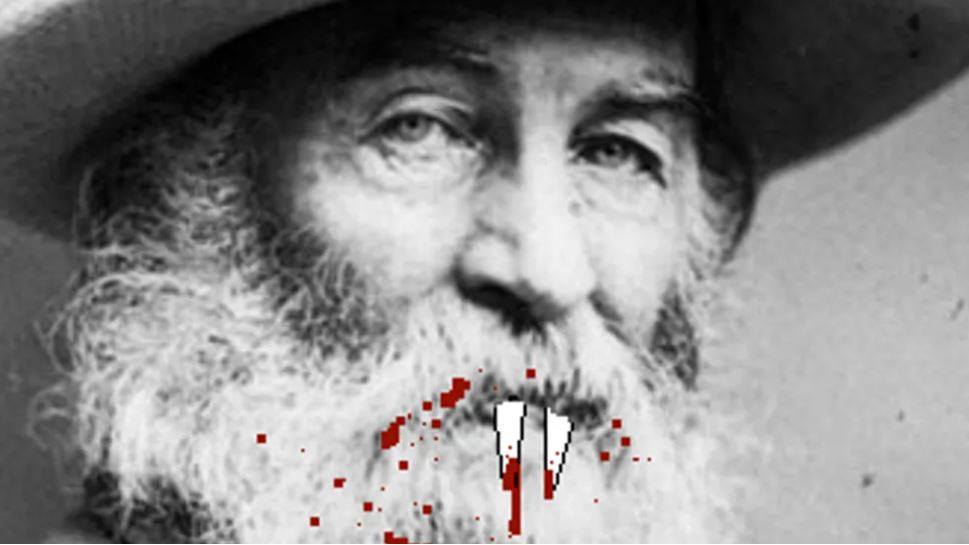
    Whitman was beloved by artists in the U.K. Interestingly, I learned in doing some reading in preparation for these shows that writer Bram Stoker was so taken with Whitman, the man, that allegedly he modeled his characterization of Dracula upon him (for more, follow the links below). And he meant it as a compliment! Stoker viewed Whitman as the quintessential man and kept up a correspondence with him until the poet’s death.

    More to our purposes, this Sunday night on “The Lost Chord,” we’ll hear two works by Gustav Holst, composer of “The Planets:” the “Walt Whitman Overture,” written in 1899, when Holst was about 25 years-old, and “The Mystic Trumpeter” from 1904.

    Holst first encountered Whitman’s poetry while still a student at the Royal College of Music. He would go on to set a number of Whitman texts. “The Mystic Trumpeter” made a particularly strong impression on him. His musical response was an important stepping stone in the composer’s artistic development, emerging as he was from a decade of Wagner worship and not yet giving himself over to the absorption of folk English material. Still, there are certainly glimpses of the mature artist to come.

    Holst’s good friend and colleague, Ralph Vaughan Williams, was also influenced by Whitman, not only in the writing of his frequently recorded “A Sea Symphony,” portions of his cantata “Dona nobis pacem,” and his work for chorus and orchestra, “Toward the Unknown Region,” but also in the less frequently encountered mini song cycle, “Three Poems by Walt Whitman.” The set consists of “Nocturne,” “A Clear Midnight,” and “Joy, Shipmate, Joy!” Written in 1925, the songs are products of Vaughan Williams’ maturity. The composer was around 53 years-old.

    Frederick Delius was yet another English composer deeply influenced by Whitman. Delius’ settings for baritone, chorus, and orchestra, titled “Sea Drift,” from 1903-04, are collectively regarded as one of the composer’s finest achievements. “Sea Drift” was composed at the peak of Delius’ vitality.

    His “Songs of Farewell,” however, were produced under quite different circumstances. Delius was both blind and paralyzed, suffering from the effects of advanced syphilis, when he received an unexpected gift in the arrival of a young musician by the name of Eric Fenby, who offered his services as an amanuensis. The result was a rekindling of Delius’ creativity.

    “Songs of Farewell,” a cycle of dreamy choral settings after Whitman, was dictated to Fenby by Delius in 1929-30. There are five songs: “How sweet the silent backward tracings;” “I stand as on some mighty eagle’s beak;” “Passage to you;” “Joy, shipmate, joy!;” and “Now finale to the shore.”

    We continue our celebration of “the good gray poet,” all month long, for the occasion of the bicentennial of his birth. Whitman was born in Huntingdon, NY, on Long Island, on May 31, 1819, and he died in Camden, NJ, on March 26, 1892.

    “Walk out with me toward the unknown region…” Join me for “The Mystic Trumpeter,” the second of four programs, this Sunday night at 10:00 EDT, on WWFM – The Classical Network and wwfm.org.


    Read Bram Stoker’s effusive letter to Whitman here:

    https://www.brainpickings.org/2019/01/09/bram-stoker-walt-whitman-letter/

    Walt Whitman’s influence on “Dracula” and (possibly) the 1931 “Frankenstein:”

    https://bigthink.com/book-think/walt-whitman-frankenstein-dracula-and-the-afterlife

  • Waterfowl Farewell Last WPRB Show

    Waterfowl Farewell Last WPRB Show

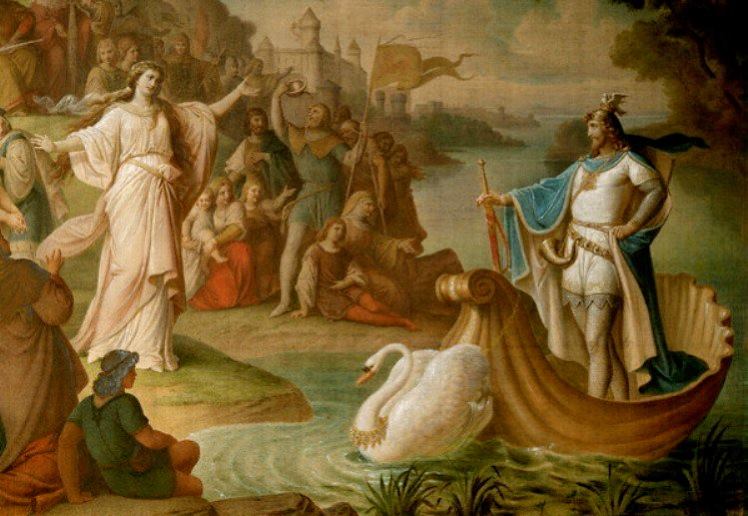
    This morning’s program on WPRB will be my last of the season – that is to say, my swan song. What better way to go, then, than to play a whole lot of music about waterfowl?

    We’ll hear works inspired by swans, geese, and ducks, by composers such as Paul Hindemith, Gustav Holst, Engelbert Humperdinck, Sergei Prokofiev, Jean Sibelius, Heitor Villa-Lobos, and Siegfried Wagner.

    My goose is cooked, this Sunday morning from 7 to 10 EDT, on WPRB 103.3 FM and wprb.com. I’ll fowl the airwaves one last time, on Classic Ross Amico.

  • Remembering Richard Hickox Champion of English Music

    Remembering Richard Hickox Champion of English Music

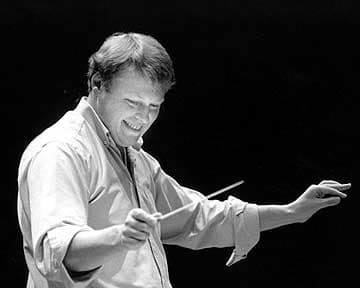
    It’s sobering to think that Richard Hickox would have been 70 years-old today. Hickox, one of the great champions of English music, died of a dissecting thoracic aneurysm, suffered while recording Gustav Holst’s “First Choral Symphony,” in 2008.

    For decades, Hickox applied his indefatigable zeal to filling out the catalogue with fine recordings of established classics and poor stepchildren. His early passing came especially hard at the end of what seemed like a run on great British conductors – Bryden Thomson (died in 1991), Sir Alexander Gibson (1995), and Vernon Handley (2008, only two months before) – that kept alive a venerable tradition too often dismissed abroad.

    Hickox was the founder of the City of London Sinfonia and Collegium Musicum 90. He was also choral director of the London Symphony Orchestra, artistic director of the Northern Sinfonia, and principal conductor of the BBC National Orchestra of Wales. At the time of his death, he was music director of Opera Australia.

    Hickox recorded prolifically – orchestral works, oratorios, and operas – for the EMI and Chandos labels. The recipient of many honours and awards, he was also president of the Elgar Society. He was the only conductor ever to program the complete symphonies of Ralph Vaughan Williams as a series in concert. Who knows how much more he would have accomplished had he lived another 20 or 25 years?

    This afternoon on The Classical Network, we’ll remember Hickox and the Spanish conductor Jesús López-Cobos, who died on Friday at the age of 78. López-Cobos will conduct music of Heitor Villa-Lobos on the anniversary of the birth of Brazil’s most famous composer. I hope you’ll join me from 4 to 7 p.m. EST, on WWFM – The Classical Network and wwfm.org.

  • Ralph Vaughan Williams Birthday Celebration

    Ralph Vaughan Williams Birthday Celebration

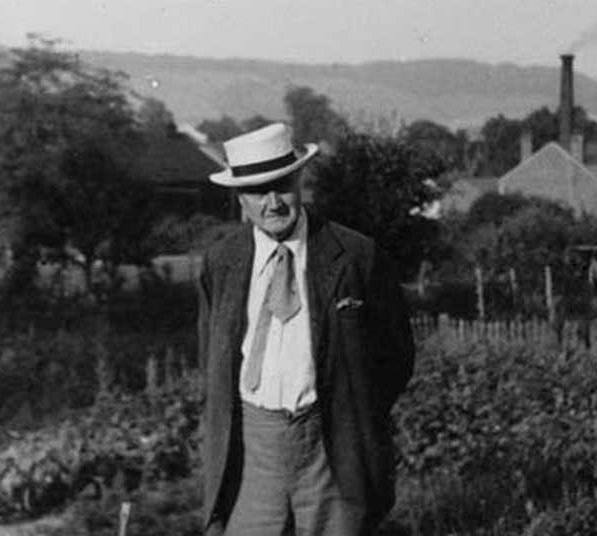
    It’s never truly autumn until we can celebrate the birthday of Ralph Vaughan Williams. One of England’s greatest composers, Vaughan Williams looked back to his country’s agrarian roots as a roundabout way of securing the future of its cultural identity. This Thursday morning on WPRB, we will salute the great man in all his rumpled glory by sampling from a broad cross-section of his multifaceted output.

    As did so many composers who were caught in the wildfire of nationalism that swept across Europe from the mid-19th century forward, Vaughan Williams rebelled against the prevailing academicism that stretched its tendrils all the way from Germany to choke the musically “provincial” outlands. He emerged from an environment that had produced far too many knock-offs of Mendelssohn and Brahms. Vaughan Williams would revolutionize his compatriots’ perception of art music by embracing the sounds of the English countryside.

    However, much like Béla Bartók, he was no simplistic, twee purveyor of folk music. On the contrary, the rhythms and inflections of his native land were already in his DNA. The songs he documented while roaming the fields and fens with his colleague, Gustav Holst, merely brought to the surface what was already innate. What he expressed in his original music was thoroughly digested and deeply personal.

    Some of Vaughan Williams’ best loved works are imbued with nostalgia for a faded world, but the composer pushed forward, as well, through two world wars and into the Great Beyond. He was not a conventionally religious man, but mysticism seems to color a fair amount of his music. Other pieces stare desolation unflinchingly in the face. His lessons with Maurice Ravel made him a thoughtful orchestrator, so that throughout his life he deployed his instrumental forces with considerable creativity and expertise. Given the proper attention, there is much to engage on all levels of his music.

    I hope you’ll join me as we salute this fascinating composer with five hours of lesser-known works and recordings of historic significance. While you might not want to take his instruction on the best way to tie ties, musically you will be in the hands of a master, this Thursday morning from 6 to 11 EDT on WPRB 103.3 FM and wprb.com. You can put your faith in Ralph (pronounced “Rafe”), on Classic Ross Amico.


    Ralph Vaughan Williams Society

  • Vaughan Williams Birthday English Folk Music on WWFM

    Vaughan Williams Birthday English Folk Music on WWFM

    In case you haven’t heard…

    Today is the birthday of Ralph Vaughan Williams (1872-1958). We wend our way to WWFM next to celebrate this bear-like, somewhat slovenly man, who, with his friend Gustav Holst, spearheaded the movement to establish a distinctly English sound in music. We’ll hear Vaughan Williams’ “English Folk Song Suite,” followed by Holst’s “Somerset Rhapsody.” The two share a common ancestry – as will be immediately recognized.

    Cows and Tudors loom large today as we honor Vaughan Williams, from 4 to 7 p.m. EDT, on WWFM – The Classical Network and at wwfm.org.


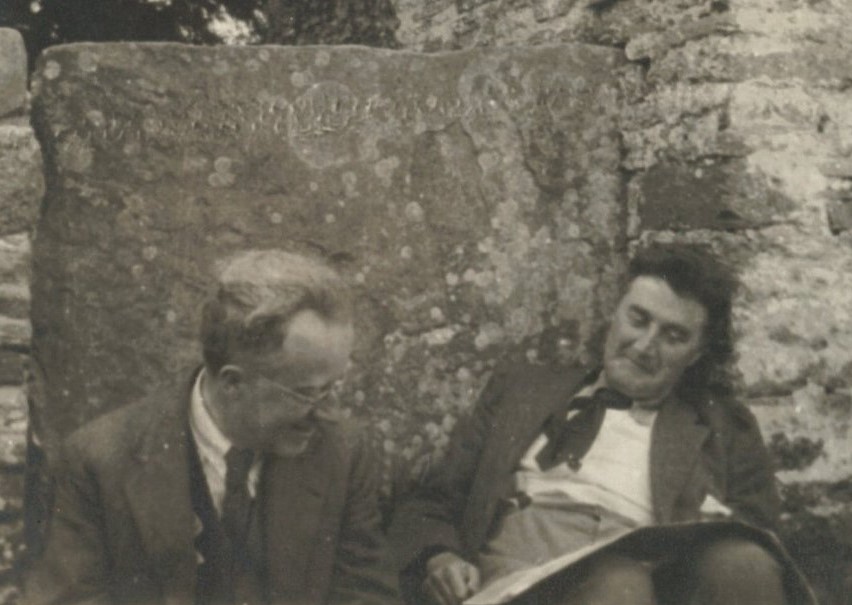
    Best buds Gustav Holst (left) and RVW

Tag Cloud

Aaron Copland (92) Beethoven (95) Composer (114) Film Music (123) Film Score (143) Film Scores (255) Halloween (94) John Williams (187) KWAX (229) Leonard Bernstein (101) Marlboro Music Festival (125) Movie Music (138) Opera (202) Philadelphia Orchestra (89) Picture Perfect (174) Princeton Symphony Orchestra (106) Radio (87) Ralph Vaughan Williams (85) Ross Amico (244) Roy's Tie-Dye Sci-Fi Corner (290) The Classical Network (101) The Lost Chord (268) Vaughan Williams (103) WPRB (396) WWFM (881)

DON’T MISS A BEAT

Receive a weekly digest every Sunday at noon by signing up here


RECENT POSTS