Tag: Hindemith

  • Hindemith Birthday KWAX Radio & Bliss Michelson

    Hindemith Birthday KWAX Radio & Bliss Michelson

    I already post too much on Saturdays, since I’m committed to promote my radio shows “Sweetness and Light” and “The Lost Chord,” both of which air today on KWAX (and can be streamed here: kwax.uoregon.edu); but today also marks the birthday of one of the most significant composers of the 20th century. Sometimes I’ll do a search to see what I’ve written about a given anniversary over the past years, and I am frequently awed by my younger self. Who is that guy? I guess once the monomania takes hold, there’s no stopping me. At any rate, I find my observations from 2019 to be interesting and entertaining. I hope you do too. Once you read the post, be sure to scroll down to the comments section to read an amusing anecdote shared by my radio mentor, the late and dearly-missed Bliss Michelson.

    https://www.facebook.com/photo/?fbid=1379019078932045&set=a.279006378933326

    If Bliss’ comment sparks your curiosity to hear Hindy’s Double Bass Sonata, here’s a link to the piece:

    Also, I wonder if this is the Chicago Symphony concert he was referring to?

    Happy birthday, Paul Hindemith.

  • Malevolent Christmas Puppets Hindemith & More

    Malevolent Christmas Puppets Hindemith & More

    If you’ve ever had a nightmare about a grimacing nutcracker or found yourself profoundly disturbed by a Rankin-Bass Christmas special, then this one’s for you!

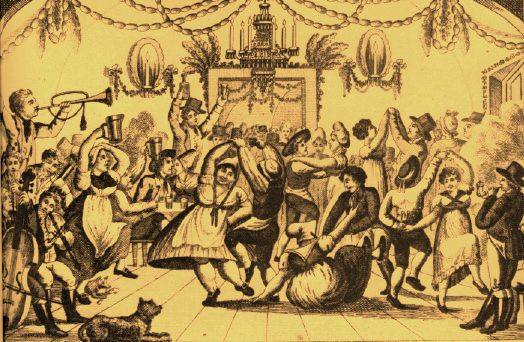
    This Sunday night on “The Lost Chord,” nothing says Christmas like malevolent puppets, as we present Paul Hindemith’s holiday fairy tale “Tuttifäntchen,” from 1922. A wooden figure carved out of a fir by a master woodcutter springs to life for 24 hours of mayhem. He literally robs a young girl of her good heart, thrashes children with a switch, and sends all of the Christmas trees in the world out onto the marketplace – all en route to a desired reunion with the fir of his origin. (Fortunately, his reign of terror only lasts a day, and everything ends well.)

    It may sound like a real horror show, but the music is disarming in its simplicity and warmth. Hindemith’s score incorporates familiar Christmas songs and a contagious foxtrot, “Dance of the Wooden Puppets.” A delightful suite from “Tuttifäntchen” was released on the CPO label back in 1999. In 2013, CPO issued this complete recording, from which I excise most of the spoken dialogue, since it is in German.

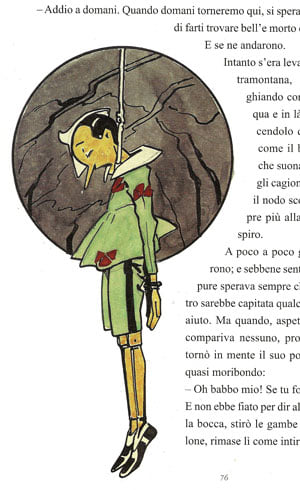
    This allows time for two additional pieces. From “Tuttifäntchen,” we’ll turn to Pinocchio. In Carlo Collodi’s original story – published in the 1880s, over a half century before Walt Disney gave him a good scrubbing – the boy-puppet is very rascally indeed. He even kills Jiminy Cricket with a hammer!

    His exploits inspired Ernst Toch, a Hindemith contemporary, to compose “Pinocchio: A Merry Overture,” in 1935. Toch would later be awarded the Pulitzer Prize for Music in 1956, for his Symphony No. 3.

    The hour will open with the “Punch and Judy Overture,” from 1945, by American composer Leroy Robertson. Punch, of course, is the quintessential murderous puppet, who outsmarts the Devil and even Death himself.

    “THAT’S the way to do it,” as he’s always fond of saying. (If you’ll notice, Mr. Punch is invariably self-satisfied – hence the phrase “pleased as Punch.”)

    “In my opinion the street Punch is one of those extravagant reliefs from the realities of life which would lose its hold upon the people if it were made moral and instructive. I regard it as quite harmless in its influence, and as an outrageous joke which no one in existence would think of regarding as an incentive to any kind of action or as a model for any kind of conduct. It is possible, I think, that one secret source of pleasure very generally derived from this performance… is the satisfaction the spectator feels in the circumstance that likenesses of men and women can be so knocked about, without any pain or suffering.”

    – Charles Dickens (Mr. Christmas, himself), in a letter from 1849

    I hope these malevolent puppets fill you with all the warmth and joy of the season. Join me for “Hindemith Branches Out” – celebrating the holidays with Tuttifäntchen and friends – this Sunday night at 10:00 EST, on WWFM – The Classical Network and wwfm.org.

    For a teaser, here’s Hindemith’s “Dance of the Wooden Dolls,” in a version for solo piano:


    In Collodi’s original, Pinocchio kills Jiminy Cricket, eats the Cat’s paw, and pays the ultimate price. The publisher thought the ending too depressing and made Collodi change it. (The puppet still commits pesticide and maims the cat, though.)

  • Wittgenstein’s Lost Chord Left-Hand Legacy

    Wittgenstein’s Lost Chord Left-Hand Legacy

    Concert pianist Paul Wittgenstein lost his right arm during the First World War. Rather than abandon his career, he commissioned works for the left hand from some of the great composers of his day, including Benjamin Britten, Sergei Prokofiev, Richard Strauss, and of course Maurice Ravel.

    This Sunday night on “The Lost Chord,” we’ll highlight two of Wittgenstein’s lesser-known commissions.

    In 1922, Wittgenstein approached Paul Hindemith – at 27, a rising star of German modernism, indeed the radical avant-garde – to produce his “Klaviermusik mit Orchester.”

    Wittgenstein’s reaction to the piece is unknown, although we can easily surmise. He never played the work in public. Furthermore, since he had secured exclusive performance rights, he wouldn’t allow anyone else to play it, either.

    Following the pianist’s death in 1961, his widow relocated to a farmhouse in Bucks County, Pennsylvania, where for decades she kept all of her husband’s belongings in a single room. When the estate was finally catalogued in 2002, a copy of the Hindemith concerto was discovered among Wittgenstein’s effects, along with other scores, correspondence, and items of interest, including locks of both Beethoven’s and Brahms’ hair.

    It was Leon Fleisher who gave the belated premiere of the concerto, some 80 years after it was written, with the Berlin Philharmonic, conducted by Sir Simon Rattle. I was present at the U.S. East Coast premiere, with Fleisher and the Curtis Symphony Orchestra, conducted by Christoph Eschenbach. Listen carefully to see if you can hear me applauding, in a recording made at Philadelphia’s Verizon Hall, at the Kimmel Center for the Performing Arts, on April 27, 2008.

    As a rule, Wittgenstein gravitated toward composers of a more Romantic bent. Erich Wolfgang Korngold was one of music’s most astounding prodigies, a Viennese wunderkind and celebrated opera composer, who later achieved world fame in Hollywood. There, he produced over a dozen classic scores, for films like “Captain Blood,” “The Adventures of Robin Hood,” and “The Sea Hawk.”

    His greatest operatic success was “Die tote Stadt,” given its debut in 1920. Korngold was 23 years-old. In 1922, he became the first composer approached by Wittgenstein for a left-hand piano concerto. (It was the same year, by the way, that Wittgenstein enlisted Hindemith.) The result was the Piano Concerto in C-sharp. Tonight, Marc-André Hamelin will be the soloist, an outstanding virtuoso figuratively playing with one hand tied behind his back.

    Interestingly, Wittgenstein much preferred this piece to Ravel’s Concerto for the Left Hand. It was the Ravel, commissioned in 1929, that would secure his place in music history, but he must have felt Korngold’s Romanticism and sense of struggle played more to his strengths. For whatever reason, Korngold became a Wittgenstein favorite. In the few minutes remaining at the end of the hour, Leon Fleisher will return to the keyboard for a performance of the “Lied,” the ardent slow movement of Korngold’s Suite for Two Violins, Cello and Piano Left-Hand.

    I hope you’ll join me for “What’s Left?” – rarely-heard commissions by Paul Wittgenstein – on “The Lost Chord,” this Sunday night at 10:00 EST, on WWFM – The Classical Network and wwfm.org.

  • Hindemith’s Octet: An Endurance Test

    Hindemith’s Octet: An Endurance Test

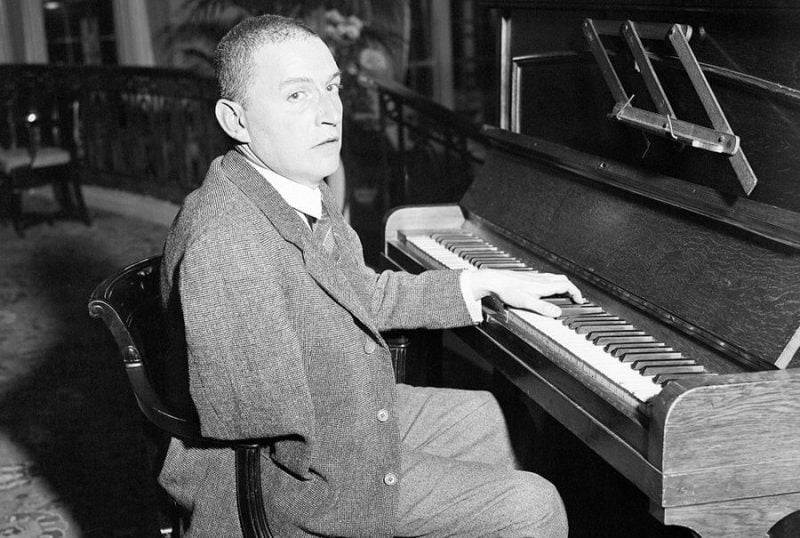
    There’s Hindemith on a good day. Then there’s the Hindemith of the Octet for Winds and Strings.

    At 27 minutes, Hindemith’s Octet is something of an endurance test for performers, and perhaps even more so for listeners. The piece is ugly, grey, cranky, and noodly – gebrauchsmusik at its worst. And I say this as a Hindemith fan. There are times when Hindemith’s music can be glorious, thrilling, or transcendent, even. And then there are those when he just makes you feel like you’ve been reading a newspaper in the back seat on a too-long car trip.

    This is not a piece I would attempt to share under the glare of a sunny summer’s day. But there are thunderstorms in the forecast, so let the good times roll.

    Eight talented musicians make of it what they can, on this week’s “Music from Marlboro.” We’ll hear as fine a performance of the piece as you’re ever likely to encounter, from the 1983 Marlboro Music Festival.

    Then, by way of apology, I’ll do the best that I can to repair our friendship with Beethoven’s wholly delightful Serenade in D major, Op. 25. Beethoven’s Serenade is a late entry in the 18th century divertimento craze. Its date of composition is uncertain, but recent scholarship places it around the time Beethoven wrote his popular Septet. We’ll hear a performance from Marlboro in 1980, with flutist Christine Nield, violinist Young Uck Kim, and violist Michael Tree (of the legendary Guarneri Quartet).

    Hindemith may have had Beethoven and Schubert in mind when he embarked on his Octet. But beyond that, I have no idea what he was thinking. Form is no substitute for content, on this week’s “Music from Marlboro,” this Wednesday evening at 6:00 EDT, on WWFM – The Classical Network and wwfm.org.
    Marlboro School of Music and Festival: Official Page


    HINDEMITH: Whatever pops into my head is gold

  • Marlboro Festival: Hindemith & Beethoven Unleashed

    Marlboro Festival: Hindemith & Beethoven Unleashed

    A chamber music festival takes a break from chamber music this week, as musicians from Marlboro band together under two legendary artists.

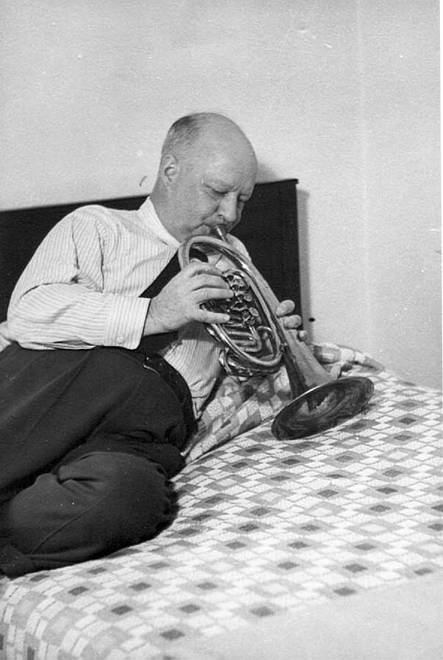
    Paul Hindemith was evidently feeling his oats when he launched into his series of Kammermusiken, 20th century analogues to the Bach Brandenburg Concertos, only with a little more vinegar. Hindemith was about 26 when he wrote his exuberant Kammermusik No. 1 in 1922, the piece sounding like a post-modern mash-up of “Petrushka,” the Rondo-Burleske from Mahler’s Ninth Symphony, and hot jazz. Watch out for that siren! The performance, from 2016, will feature an ensemble of 12 Marlboro musicians under the direction of a figure better known as a pianist, Leon Fleisher.

    Then Pablo Casals will preside over a makeshift orchestra at the 1969 Marlboro Music Festival for a spiritually potent performance of Beethoven’s Symphony No. 7. Casals’ loving, humanistic interpretations of the orchestral works of Beethoven, Mozart, Schubert, Mendelssohn, Schumann, and of course Bach form a remarkable capstone to an enviable career. The legendary cellist was affiliated with Marlboro for the last 13 years of his life, from 1960 to 1973.

    Wagner characterized Beethoven’s Seventh as “the apotheosis of the dance,” but not even he could have foreseen Hindemith’s foxtrot. We’ll be dancing up a storm on the next “Music from Marlboro,” this Wednesday evening at 6:00 EST, on WWFM – The Classical Network and wwfm.org.
    Marlboro School of Music and Festival: Official Page

Tag Cloud

Aaron Copland (92) Beethoven (95) Composer (114) Film Music (123) Film Score (143) Film Scores (255) Halloween (94) John Williams (187) KWAX (229) Leonard Bernstein (101) Marlboro Music Festival (125) Movie Music (138) Opera (202) Philadelphia Orchestra (89) Picture Perfect (174) Princeton Symphony Orchestra (106) Radio (87) Ralph Vaughan Williams (85) Ross Amico (244) Roy's Tie-Dye Sci-Fi Corner (290) The Classical Network (101) The Lost Chord (268) Vaughan Williams (103) WPRB (396) WWFM (881)

DON’T MISS A BEAT

Receive a weekly digest every Sunday at noon by signing up here


RECENT POSTS