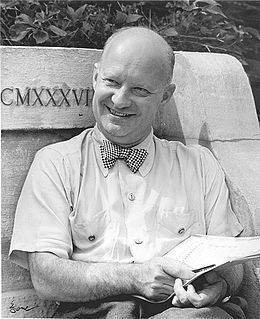
There are certain pieces by Paul Hindemith that I really, really like. And let’s face it, the gent was extremely influential. But when I came to put together yesterday’s “Music from Marlboro,” it was so miserable hot that I just couldn’t bring myself to subject my listeners to his Octet for Winds and Strings.
The piece is ugly, grey, cranky, and noodly – gebrauchsmusik at its worst. I’m sure there’s a time and a place for this kind of music (I have programmed it before), but at 27 minutes, let’s face it, it’s just too grating for too damn long. I’ll save it for a bleak – and at least cool – winter’s day.
There are times when Hindemith can be glorious, thrilling, or transcendent, even. And then there are those when he just leaves your mouth tasting like gun metal on a too-long car trip.
Here’s a humorous piece written a few years ago that just about nails it. Be forewarned, however, that the language can be a little rough, with the boldest of words in a bold headline. NSFW, then.
He shook hands with Mickey Mouse, married Gloria Vanderbilt, and signed a ten-year recording contract at the age of 90. Why, it’s LEOPOLD! Join me this afternoon at 4:00 on The Classical Network as we dip a toe into the recorded legacy of Leopold Stokowski, on his birthday.
It’s also the anniversary of the birth of famed film composer Miklós Rózsa. Rózsa titled his autobiography “A Double Life.” Following his lead, we’ll hear examples of both his film and concert music. And I suppose – Franz von Suppé also having been born on this date – we’ll toss in one of Suppé’s frothy overtures, as well. Like Stokowski, Suppé got a fair amount of mileage out of being parodied in cartoons, so we should all be thankful for the movies, for having granted wide exposure to all three of today’s birthday celebrants.
At 6:00, it’s another “Music from Marlboro.” This week, we’ll hear works by two composers of German origin, who travelled very different routes, Richard Strauss (1864-1949) and Paul Hindemith (1895-1963).
Both men found much notoriety as nerve-shattering iconoclasts – Strauss with his operas “Salome” and “Elektra” and Hindemith with his raucous works of the 1920s. Then they settled into respectability, Strauss ageing into the elder statesman of Romantic opulence, and Hindemith becoming an influential teacher at Yale. The two men chose different paths during the Nazi Regime. Hindemith, denounced as an “atonal noisemaker” by Goebels, left for America, by way of Switzerland and Turkey, while Strauss, in his 70s with the outbreak of war, remained at home, hoping to preserve and promote German music and to protect his Jewish daughter-in-law and grandchildren. While understanding Strauss’ importance as a propaganda tool, Goebels wasn’t too fond of his music, either, referring to him privately as a “decadent neurotic.”
But we’ll avoid all that, and instead listen to Strauss at the very beginning of his career, in 1883-84, and a Piano Quartet in C minor completed at the age of 20. Interestingly for this composer who became celebrated for the apotheosis of the lavish tone poem, Strauss here channels his admiration for Johannes Brahms, and in a genre not generally associated with a follower of the post-Wagnerian “New Music School.” Brahms was at the height of his fame while the young Strauss was living in Berlin. In fact, Strauss attended the premiere of Brahms’ Fourth Symphony. This performance of the Piano Quartet promises to be a very special one, with Walter Klien at the keyboard, heard at the 1972 Marlboro Music Festival, in his early 40s and at the peak of his powers.
Hindemith was evidently feeling his oats when he launched into his series of Kammermusiken, 20th century analogues to the Bach Brandenburg Concertos, but with a little bit of an ironic edge. Hindemith was about 26 when he wrote his exuberant Kammermusik No. 1, in 1922, the piece sounding like a post-modern mash-up of “Petrushka,” the Rondo-Burleske from Mahler’s Ninth Symphony, and hot jazz. Watch out for that siren! The performance, from 2016, will feature an ensemble of 12 Marlboro musicians under the direction of another great pianist, Leon Fleisher.
Two young composers show what they can do, one in reverence and the other evidently not, on “Music from Marlboro,” this Wednesday evening at 6:00 EDT, on WWFM – The Classical Network and wwfm.org.
Marlboro School of Music and Festival: Official Page
If you’ve ever had a nightmare about a grimacing nutcracker or found yourself profoundly disturbed by a Rankin-Bass Christmas special, then this one is for you.
This Sunday night on “The Lost Chord,” we present as our centerpiece Paul Hindemith’s unusual Christmas fairy tale, “Tuttifäntchen,” written in 1922, in which a wooden figure carved out of a fir by a master woodcutter comes to life and causes all sorts of havoc. He literally robs a young girl of her good heart, thrashes children, and sends all of the Christmas trees in the world out onto the marketplace – all en route to a desired reunion with the fir of his origin. (Fortunately, his reign of terror spans only 24 hours, and everything ends well.)
It may sound like a real horror show, but the music is disarming in its simplicity and warmth. Hindemith’s score incorporates familiar Christmas songs and a contagious foxtrot, called “Dance of the Wooden Puppets.” A delightful suite from “Tuttifäntchen” was released on the CPO label back in 1999. In 2013, CPO issued this complete recording, from which I excise most of the spoken dialogue, since it is in German.
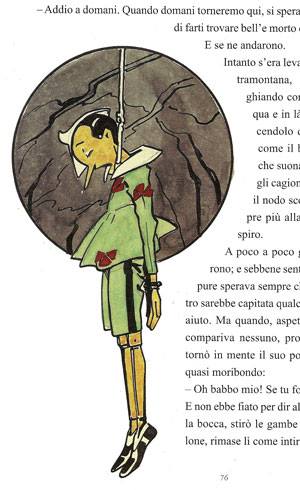
This allows time for two additional pieces. From “Tuttifäntchen,” my thoughts travel immediately to Pinocchio. In Carlo Collodi’s original story – published in the 1880s, over a half century before Walt Disney gave him a good scrubbing up – the boy-puppet is an absolute terror. He even kills Jiminy Cricket with a hammer!
His exploits inspired Ernst Toch, a Hindemith contemporary, to compose “Pinocchio: A Merry Overture,” in 1935. Toch was awarded the Pulitzer Prize for Music in 1956, for his Symphony No. 3.
The hour will open with the “Punch and Judy Overture,” from 1945, by American composer Leroy Robertson. Punch, of course, is the classic murderous puppet, who outsmarts the Devil and even Death himself.
“THAT’S the way to do it,” as he’s fond of saying. (If you’ll notice, Mr. Punch is always self-satisfied – hence the phrase “pleased as Punch.”)
“In my opinion the street Punch is one of those extravagant reliefs from the realities of life which would lose its hold upon the people if it were made moral and instructive. I regard it as quite harmless in its influence, and as an outrageous joke which no one in existence would think of regarding as an incentive to any kind of action or as a model for any kind of conduct. It is possible, I think, that one secret source of pleasure very generally derived from this performance… is the satisfaction the spectator feels in the circumstance that likenesses of men and women can be so knocked about, without any pain or suffering.”
– Charles Dickens (Mr. Christmas, himself), in a letter from 1849
I hope you’ll join me for “Hindemith Branches Out” – celebrating the holidays with the naughty puppet Tuttifäntchen and friends – this Sunday night at 10:00 EST, on WWFM – The Classical Network and wwfm.org.
For a teaser, here’s Hindemith’s “Dance of the Wooden Dolls,” in a version for solo piano:
In Collodi’s original, Pinocchio kills Jiminy Cricket, eats the Cat’s paw and pays the ultimate price. The publisher thought the ending too depressing and made Collodi change it. (The puppet still commits pesticide and maims the cat, though.)
While Herbert Blomstedt may not be the most glamorous conductor, he is one of the most reliable. Occasionally, he’s even inspired. A professional conductor can’t hope for more than that. For me, his Hindemith recordings lift the composer’s music to a whole other level, and I was privileged to experience his acclaimed Nielsen live in Philadelphia.
Now, at the age of 90, Blomstedt shows no signs of slowing down, with dozens of concerts on this year’s schedule, from Europe’s most storied orchestras (the Berlin and Vienna Philharmonics) to the San Francisco Symphony, which he directed from 1985 to 1995.
A devout Seventh-day Adventist, Blomstedt does not work on Saturdays. He does not consider conducting work, but rather an expression of his religious devotion; he does, however, count rehearsals. He abstains from meat, alcohol and coffee.
Interestingly, he was born in Massachusetts, but his parents returned the family to Sweden, the country of their origin, when he was only 2.
Join me this afternoon, as we mark the maestro’s 90th birthday by listening to some of his finest recordings. They’ll be among our featured offerings today from 12 to 4 p.m., on WWFM – The Classical Network and wwfm.org.
Happy birthday, Herbert Blomstedt!
A brief interview that ran in the New York Times back in February, concurrently with his latest appearance with the Philadelphia Orchestra:
It’s music that’s so over-the-top, Cecil B. DeMille would have blushed.
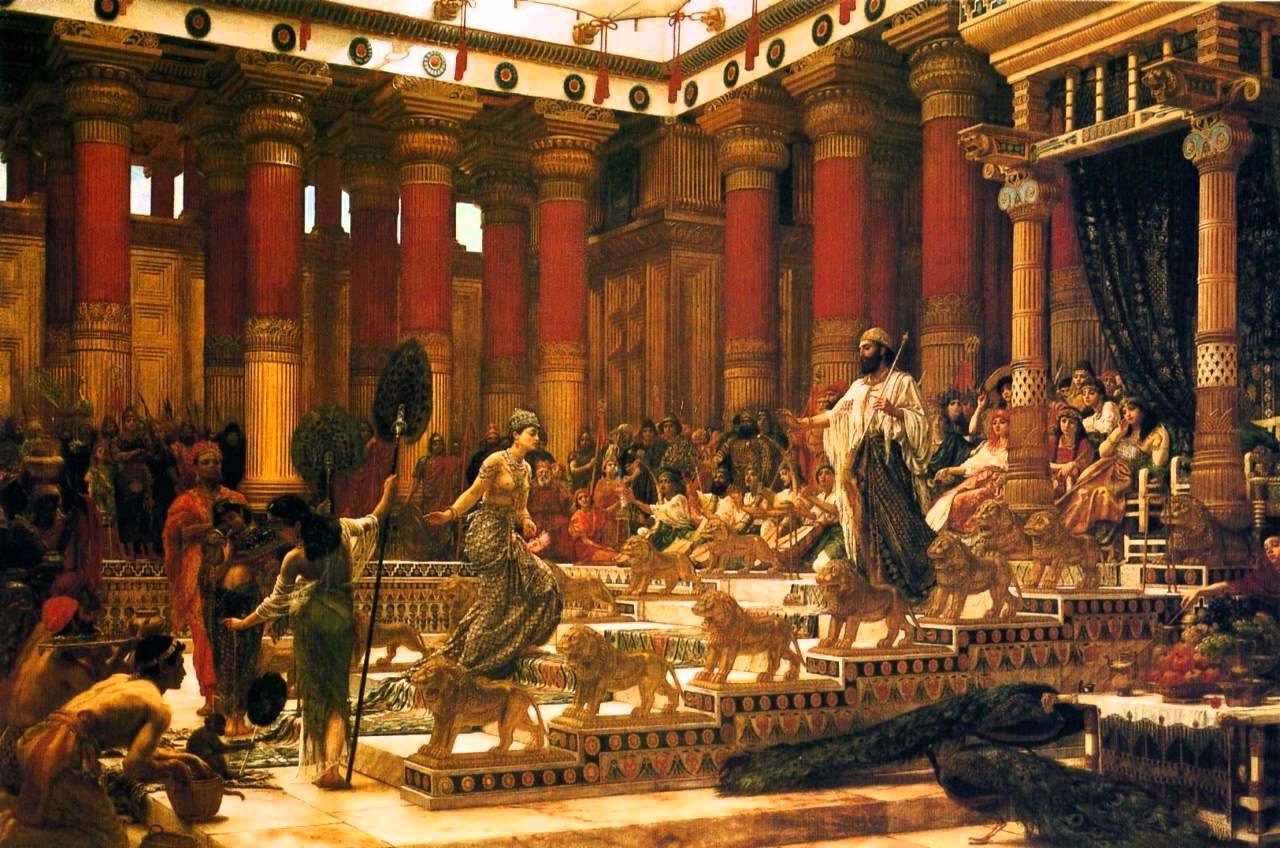
Join me this afternoon as we get all quasi-biblical, with a suite from Ottorino Respighi’s ballet “Belkis, Queen of Sheba.” The spectacle, set at the court of King Solomon, was given its first performance at La Scala in 1932. The finale featured over a thousand performers, which likely accounts for the work’s subsequent neglect. Grandiose even by Respighi’s standards, the concluding orgiastic dance whipped the opening night audience into a frenzy.
We’ll also hear a Concerto for Winds, Harp and Orchestra by Paul Hindemith, one of his more attractive inventions, which we’ll complement with music by his great Baroque counterpart Georg Philipp Telemann.
The last hour will likely feature at least some English music – because I’m just in that kind of mood.
Listen in, if you’re a little moody yourself, from 4 to 7 p.m. EDT, on WWFM – The Classical Network or at wwfm.org.