Tag: Hubert Parry

  • Hubert Parry English Musical Renaissance

    Hubert Parry English Musical Renaissance

    Today is the 175th anniversary of the birth of Sir Charles Hubert Hastings Parry – who, let’s face it, had far too many names, which is why everyone generally refers to him, simply, as Hubert Parry.

    Parry was one of the foremost figures of the so-called English Musical Renaissance – not the actual Renaissance, mind you, but rather the flowering of English music that took place toward the end of the 19th century, after a nearly 200-year dearth of world-class composers following the death of Henry Purcell in 1695.

    A professor at the Royal College of Music in London, Parry eventually became the school’s head. He influenced an entire generation of much better-known musicians, people like Ralph Vaughan Williams, Gustav Holst, John Ireland, and Frank Bridge.

    Parry himself composed reams of music – symphonies, odes and oratorios, unaccompanied choral pieces, church music, an opera, chamber and instrumental works, incidental music for the stage, a piano concerto and, perhaps best of all, a set of “Symphonic Variations” – but he is probably best-recognized these days for his enduring choral work “Jerusalem” (still sung on the Last Night of the Proms) and the coronation anthem “I was glad.”

    The character of much of his music – and the fact that his works have been embraced by royals and nationalists – might lead one to assume that Parry the man was a little on the stodgy side. But nothing could be further from the truth. He was a free-thinker, humanist and Darwinian in outlook, who was described with affection by some as a radical, with a strong bias against Conservatism.

    Though he himself was enormously wealthy and never wanted for anything, he lived an ascetic life and a reflective one. He was against blood-sports and prone to bouts of depression – understandable in one disposed to reflection.

    He was generous with his pupils and broadminded with those he disagreed with. Though he held strong convictions, he seldom took anything at face value. Without Parry’s perception and support of his most promising students, English music might have developed very differently.

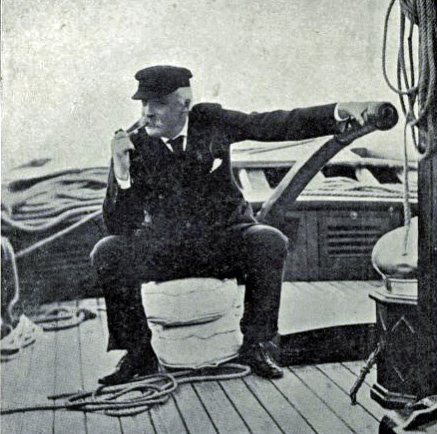
    It’s interesting to note that, even during his lifetime, his detractors used his “privilege” against him. But it seems his only indulgence was his yacht, which he dubbed “The Wanderer.”

    Parry is buried in St. Paul’s Cathedral, alongside Sir Arthur Sullivan and William Boyce.

    Happy birthday, Hubert Parry!


    “Symphonic Variations”

    Symphony No. 3 “The English”

    The “Lady Radnor Suite,” composed for Helen, Countess of Radnor, who led an all-female string orchestra

    “Jerusalem” at the Proms

    “I was glad” at the Queen’s Platinum Jubilee

    Vaughan Williams remembers Hubert Parry and Sir Charles Villiers Stanford

    Dave Hurwitz of classicstoday.com shares George Bernard Shaw’s evisceration of Parry’s oratorio “Job”

    “The Wanderer” Toccata and Fugue, named for Parry’s yacht
  • Christmas Music Parry Vaughan Williams WWFM

    Christmas Music Parry Vaughan Williams WWFM

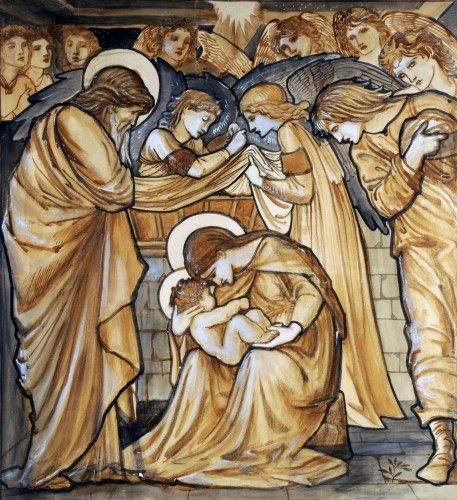
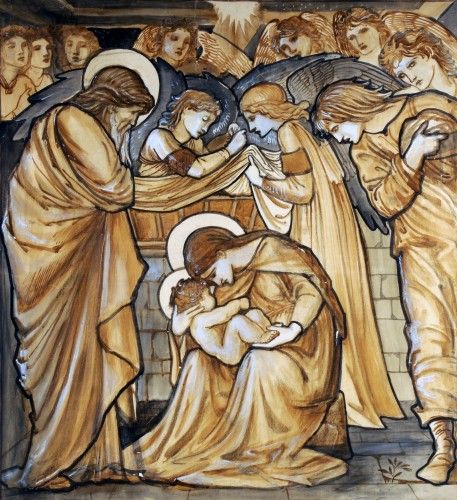
    Later tonight, with all the cooking, conviviality, and hopefully clean-up winding down, settle in for an hour of reflection, with two works by English composers inspired by the Nativity.

    Alongside Sir Charles Villiers Stanford and Sir Edward Elgar, Sir Hubert Parry was one of the key figures of the so-called “English Musical Renaissance.” He influenced a whole generation of much better-known composers, including Ralph Vaughan Williams and Gustav Holst. We’ll hear his “Ode on the Nativity,” given its first performance on the same concert, at the Hereford Three Choirs Festival in 1912, as Vaughan Williams’ “Fantasia on Christmas Carols.”

    Vaughan Williams, the great-nephew of Charles Darwin, and an atheist in his youth, later softened into a kind of “cheerful agnosticism.” He dearly loved the King James Bible, and he especially enjoyed Christmas. Of course, he wrote much music on the subject. In fact, his very last composition was “The First Nowell.” He worked diligently at the piece, inspired by medieval pageants, during his final month, but died suddenly before its completion.

    However, even at 85 years-old, RVW retained a remarkable level of concentration. He managed to pound out the whole thing in short score in only a few weeks. Furthermore, he had fully orchestrated the first two-thirds. The finishing touches were applied by his assistant, Roy Douglas – he of “Les Sylphides” fame.

    If you like the “Fantasia on Christmas Carols,” I think you’ll really enjoy this. It’s pastoral music for a pastoral scene. I hope you’ll join me for “A Play in a Manger,” THIS SUNDAY NIGHT, ONE HOUR LATER THAN USUAL, AT 11:00 EST, on WWFM – The Classical Network and wwfm.org.

    Until then, best wishes for a happy and meaningful Christmas!

  • Christmas Music from the English Renaissance

    Christmas Music from the English Renaissance

    With Christmas only days away, there’s still much to be done. Even so, this Sunday night on “The Lost Chord,” we pause to remember the story of the first Christmas, with music by a couple of English composers inspired by the Nativity.

    Alongside Sir Charles Villiers Stanford and Sir Edward Elgar, Sir Hubert Parry was one of the key figures of the so-called “English Musical Renaissance.” He influenced a whole generation of much better-known composers, including Ralph Vaughan Williams and Gustav Holst. We’ll hear his “Ode on the Nativity,” given its first performance on the same concert, at the Hereford Three Choirs Festival in 1912, as Vaughan Williams’ “Fantasia on Christmas Carols.”

    Vaughan Williams, the great-nephew of Charles Darwin, and an atheist in his youth, later softened into a kind of “cheerful agnosticism.” He dearly loved the King James Bible, and he especially enjoyed Christmas. Of course, he wrote much music on the subject. In fact, his very last composition was “The First Nowell.” He worked diligently at the piece, inspired by medieval pageants, during his final month, but died suddenly before its completion.

    However, even at 85 years-old, RVW retained a remarkable concentration. He managed to pound out the whole thing in short score in only a few weeks. Furthermore, he had fully orchestrated the first two-thirds. The finishing touches were applied by his assistant, Roy Douglas – he of “Les Sylphides” fame.

    If you like the “Fantasia on Christmas Carols,” I think you’ll really enjoy this. It’s pastoral music for a pastoral scene. Join me for “A Play in a Manger,” this Sunday night at 10:00 EST, on WWFM – The Classical Network and wwfm.org.

  • Classical Music Anniversaries Today on WWFM

    Classical Music Anniversaries Today on WWFM

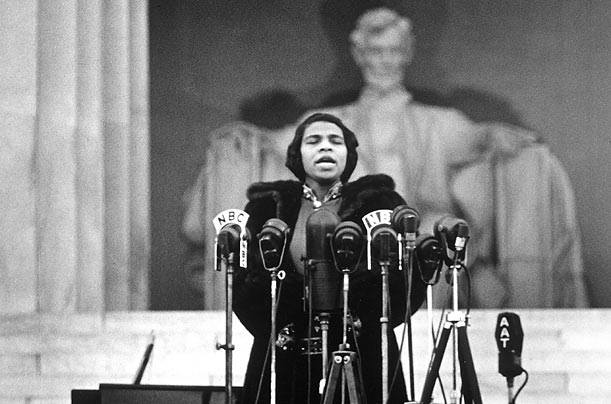
    Today is the 120th anniversary of the birth of contralto Marian Anderson. Violinist Gidon Kremer turns 70. We’ll have music inspired by Arthur’s legendary sword, Excalibur, by Louis Coerne, and Morten Lauridsen’s “Lux Aeterna.” You can also look forward to “An English Suite,” courtesy of Hubert Parry, and a work by the Swedish composer Wilhelm Peterson-Berger. All in all, it’s a great afternoon for programming by birthday anniversaries today, from 4 to 7 p.m. EST, on WWFM – The Classical Network and at wwfm.org.

  • English Nativity Settings: Parry & Vaughan Williams

    English Nativity Settings: Parry & Vaughan Williams

    This Sunday night on “The Lost Chord,” we’ll celebrate Christmas with an hour of English Nativity settings.

    Hubert Parry was part of the English Musical Renaissance – not the actual Renaissance, but rather that flowering of English music which took place at the close of the 19th century, after a nearly 200 year dearth of world class composers following the death of Henry Purcell in 1695.

    A professor at the Royal College of Music in London, Parry eventually became the school’s head. He influenced an entire generation of much better known composers, people like Ralph Vaughan Williams, Gustav Holst, John Ireland and Frank Bridge.

    We’ll be listening to Parry’s “Ode on the Nativity,” for soprano, chorus and orchestra, on a text by William Dunbar. The work was given its premiere in 1912 at the Hereford Three Choirs Festival, on the same day as Vaughan Williams’ “Fantasia on Christmas Carols.”

    Vaughan Williams wrote so much Christmas music. It’s remarkable that such a spiritual composer, who seemed particularly attracted to religious texts and Biblical subjects, was a self-proclaimed agnostic. At least by the end of his life he had softened his stance from atheism! He was particularly passionate about Christmas carols.

    We’ll be listening to the very last music he ever composed, “The First Nowell,” a nativity play arranged and adapted from medieval pageants by Simona Pakenham.

    Vaughan Williams worked diligently on the piece during his final month, but died before the work’s completion. Nonetheless, he had finished orchestrating two thirds of it and had mapped out the rest rather thoroughly. The finishing touches were applied by his assistant, Roy Douglas – he of “Les Sylphides” fame.

    By the way, Douglas just turned 107 on December 12! He is still listed on the board of the Ralph Vaughan Williams Society as its vice-president. Next to Douglas, Vaughan Williams was a mere lad while he was at work on the piece, at the age of 85.

    I hope you’ll join me for “A Play in a Manger,” this Sunday night at 10 ET, with a repeat Christmas Eve at 6; or that you’ll listen to it later as a webcast at http://www.wwfm.org.

    Merry Christmas!

    PHOTOS: Vaughan Williams with fur on his clothes; Parry with fur on his face

Tag Cloud

Aaron Copland (92) Beethoven (95) Composer (114) Film Music (123) Film Score (143) Film Scores (255) Halloween (94) John Williams (187) KWAX (229) Leonard Bernstein (101) Marlboro Music Festival (125) Movie Music (138) Opera (202) Philadelphia Orchestra (89) Picture Perfect (174) Princeton Symphony Orchestra (106) Radio (87) Ralph Vaughan Williams (85) Ross Amico (244) Roy's Tie-Dye Sci-Fi Corner (290) The Classical Network (101) The Lost Chord (268) Vaughan Williams (103) WPRB (396) WWFM (881)

DON’T MISS A BEAT

Receive a weekly digest every Sunday at noon by signing up here


RECENT POSTS