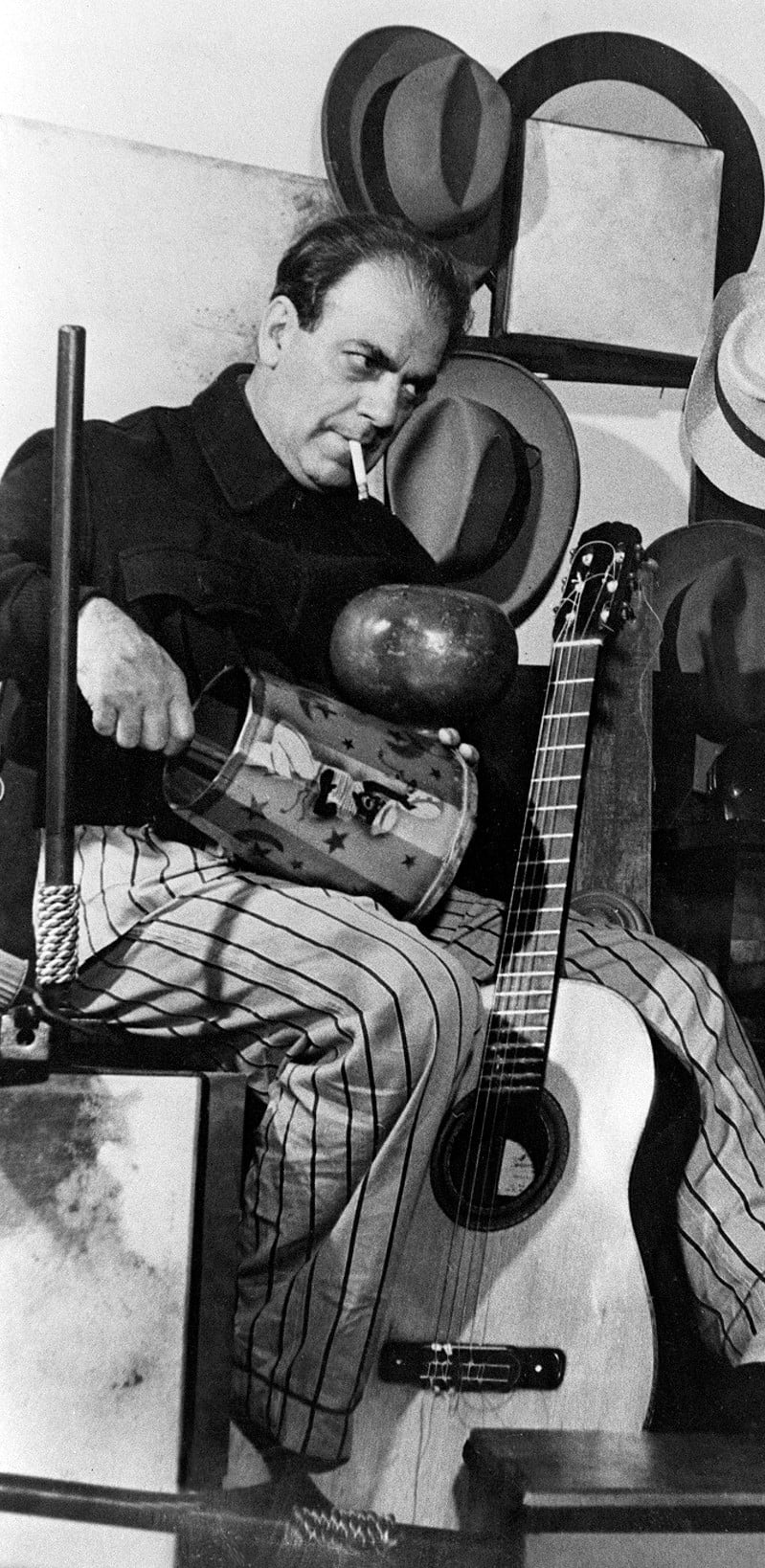
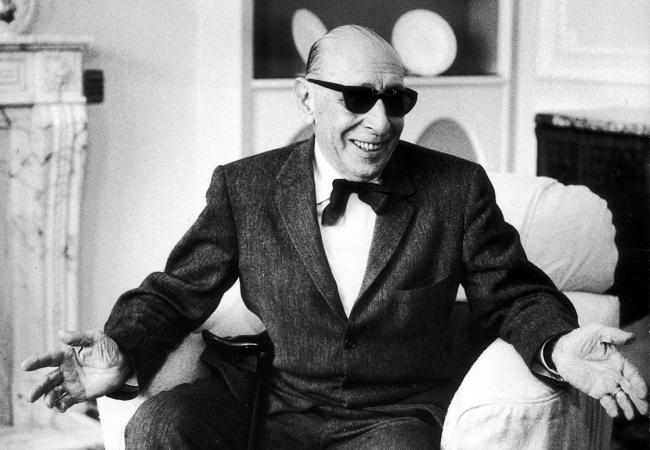
A day after sharing Igor Stravinsky’s observation that Vivaldi composed the same concerto 500 times comes this barb about his great Brazilian contemporary, Heitor Villa-Lobos: “Why is it whenever I hear a piece of music I don’t like, it’s always by Villa-Lobos?”
MEE-OW!
To further agitate the catty Stravinsky, here’s the symphonic poem “Uirapuru,” named for a Brazilian bird. In short, it’s another one of Villa-Lobos’ folkloric rainforest pieces.
“Igor Stravinsky was born in the spring and died in the spring. In a sense, he lived his whole life in a springtime of creativity. All his music is spring-like, newly budding, rooted in the familiar past, yet fresh and sharp, with that stinging, paradoxical combination of the inevitable and the unexpected.”
On Stravinsky’s birthday, enjoy this brief appreciation, narrated by Leonard Bernstein, assembled not long after Stravinsky’s death:
I especially got a kick out of the cowboy reception, around the 9-minute mark.
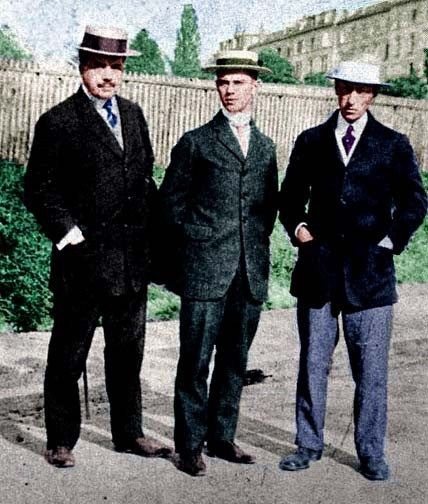
Also on this date, in 1908, Stravinsky’s “Fireworks” was first performed, at the wedding of Rimsky-Korsakov’s daughter, Nadezhda, to Stravinsky’s professional rival, Maximillian Steinberg. The wedding took place a few days before Rimsky-Korsakov’s death. Stravinsky received the commission for his breakthrough ballet, “The Firebird,” in part because Serge Diaghilev heard the piece and was impressed with his orchestration.
Stravinsky conducts “Fireworks,” from his Russian nationalist period, in Japan:
Stravinsky, in his last public appearance, conducts his neoclassical masterpiece, “Pulcinella”:
Stravinsky conducts one of my favorite works from his serial period, “Agon”:
Stravinsky’s final masterpiece, “Requiem Canticles,” was first performed at Princeton’s McCarter Theatre in 1966. Against expectations, Stravinsky again conducted. The performance is led here by his assistant, Robert Craft:
“Requiem Canticles” would be repeated at Stravinsky’s funeral five years later.
As a bonus, here’s an article I wrote on Stravinsky in Princeton for the Trenton Times in 2016:
Princeton University professor emeritus Claudio Spies has died. Born in Santiago, Chile, Spies was on the faculty of the Princeton University music department from 1970 to 1998. Prior to that, he taught at Harvard, Vassar, and Swarthmore. He also taught at Juilliard from 1998 to 2010. His own teachers included Nadia Boulanger, Harold Shapero, and Irving Fine. Conductors Erich Kleiber and Fritz Busch were also early mentors. His friendship with Igor Stravinsky facilitated the premiere of Stravinsky’s “Requiem Canticles” at McCarter Theatre in 1966. Spies was 95 years-old. Learn more about this remarkable man here:
Today is the birthday of ballet impresario Sergei Diaghilev. Get your toes tapping with 12 works written or adapted for the Ballets Russes. You know you need the exercise.
MAURICE RAVEL, “DAPHNIS ET CHLOE”
Shepherds, pirates, and Pan!
NIKOLAI TCHEREPNIN, “NARCISSE ET ECHO”
Tcherepnin was actually Diaghilev’s first choice to compose “The Firebird.”
IGOR STRAVINSKY, “PULCINELLA”
Diaghilev produced Stravinsky’s three breakthrough ballets, “The Firebird,” “Petrouchka,” and “The Rite of Spring,” but this one is the most unremittingly joyous.
RICHARD STRAUSS, “JOSEPHSLEGENDE”
Poor Richard Strauss never got paid for his opulent biblical ballet on account of WWI.
MANUEL DE FALLA, “THE THREE-CORNERED HAT”
Ballet meets flamenco.
PETER ILYCH TCHAIKOVSKY, “AURORA’S WEDDING”
Stokowski conducting, at the age of 95!
LORD BERNERS, “THE TRIUMPH OF NEPTUNE”
Sailor Tom Tug’s adventures in Fairy Land (alas, these excerpts comprise but a third of the ballet).
CONSTANT LAMBERT, “ROMEO AND JULIET”
Not really an adaptation of Shakespeare’s tragedy, but a backstage romantic comedy. Just a clip, with set and costume designs by Max Ernst and Joan Miro.
OTTORINO RESPIGHI, “LA BOUTIQUE FANTASQUE”
“The Fantastic Toybox,” after melodies of Rossini.
SERGEI PROKOFIEV, “THE PRODIGAL SON”
Bad boys get the best music.
ERIK SATIE, “PARADE”
Selections, choreography by Massine and designs by Picasso.
FRANCIS POULENC, “LES BICHES”
Before you get any smart ideas, the title means “The Does,” slang for coquettish young women. With Nijinska’s choreography. (BONUSES: Diaghilev’s “Prelude to the Afternoon of a Faun” and “Scheherazade”).