Tag: JoAnn Falletta

  • Celebrating Women in Classical Music Today

    Celebrating Women in Classical Music Today

    It should be a truth universally acknowledged that, historically, women have not been given the same opportunities as men.

    Even so, when putting together a checklist for the purpose of today’s programming on The Classical Network, which will be devoted entirely to women in music, I was astonished when the number of women composers that sprang readily to mind overflowed the space I had allotted. Okay, maybe I have a broader knowledge of repertoire than your average man- or person-on-the-street, but there is an awful lot of really fine and/or historically significant repertoire from which to draw.

    On the whole, the field has been a lot kinder to female instrumentalists and especially singers. Women being accepted as conductors, however, remains an uphill climb, at least among the major orchestras. But I don’t intend to make this about gender politics. (Lord knows, there are plenty of mediocre male conductors.) Instead, we’ve set aside this day to celebrate the contributions of women to the art and enjoyment of music.

    It’s only one of our special themes this week, as we continue to stockpile your contributions against the end of our fiscal year, which will arrive with the chimes of midnight on June 1.

    Do you like what we’re doing? Do we add to the quality of your days? Help us help YOU by calling us now at 1-888-232-1212, or by making your contribution online at wwfm.org. As always, we thank you for your support of WWFM – The Classical Network!


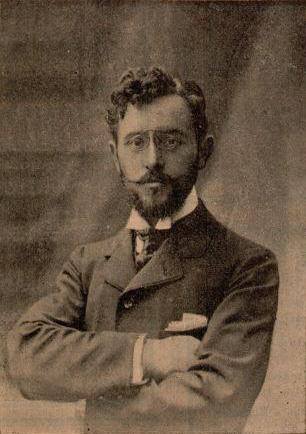
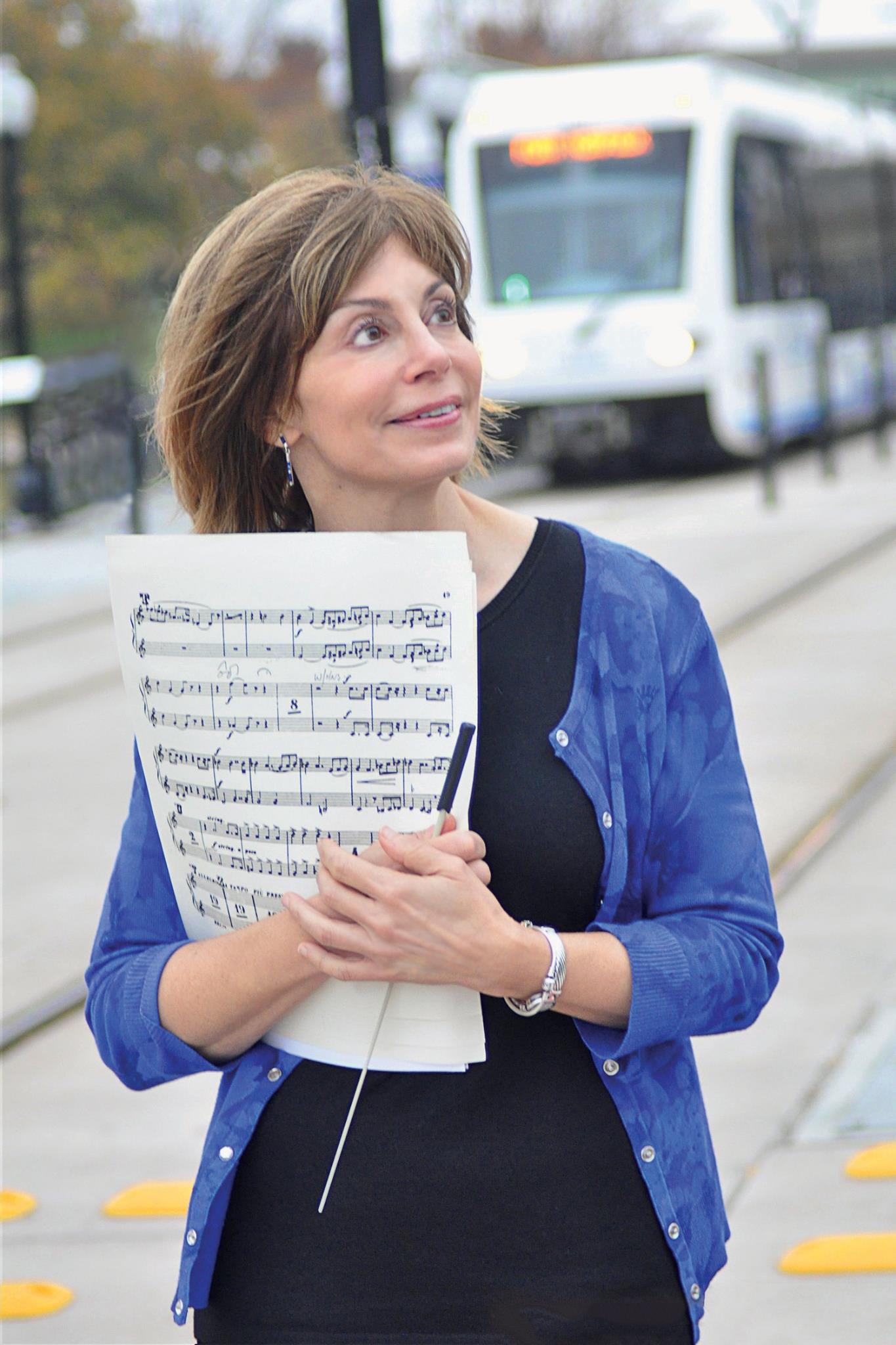
    A few of the voices we will hear from today: those of (clockwise from left) conductor JoAnn Falletta, guitarist Sharon Isbin, and pianist Barbara Nissman. Then join us at 8 p.m. EDT for a special concert of music by composer Amy Beach (bottom right).
  • John Powell: Genius or Bigot?

    John Powell: Genius or Bigot?

    How can a deeply flawed human being write music of lasting beauty? That’s a question that is bound to assert itself when considering the case of John Powell (1882-1963).

    This Sunday night on “The Lost Chord,” I’ll be presenting Powell’s “Virginia Symphony” (originally titled “Symphony on Virginian Folk Themes and in the Folk Modes”), which is built on melodies collected by the composer over decades of folk song research. It was composed in 1945, and substantially revised in 1951. If at the times the music has something of an English flavor, it’s because most of the tunes Powell collected were of English, Irish or Scottish origin. A good many of them were already old when Elizabeth I was young. It’s useful to remember, Powell was a contemporary of Ralph Vaughan Williams. (He was roughly ten years Vaughan Williams’ junior.) Folk song collecting was very much in the air, on both sides of the Atlantic.

    Unfortunately, Powell had something of a blind spot for melodies outside of what he considered the acceptable Anglo-Saxon fold. In organizing folk festivals, he denied entry to spirituals, gospel and protest songs. More damningly, he was actively involved in the organization of the Anglo-Saxon Clubs of America, a magnet for white supremacists, which was instrumental in the passage of the Virginia Racial Integrity Law of 1924. Under the law, racial identity was clearly delineated. It recognized only two races – “white” and everyone else. Anyone of African ancestry was classified as “colored.” People who had previously identified themselves as multi-racial, some of whom were of one-sixteenth African ancestry, were now legally negroes (using the terminology of the time). The Racial Integrity Law criminalized marriages between whites and nonwhites. The law was passed at the same session during which the Virginia General Assembly legalized the sterilization of what were termed the “feebleminded,” defined as “insane, idiotic, imbecile, or epileptic.” The same ideas were percolating in Germany, of course, though it would take another ten years for the Nazis to catch up.

    Not content to work behind the scenes, Powell wrote a book on the subject, “Mongrels in America,” in which he expresses his views on the importance of keeping the races separate. Rather ironic, I think, in that Powell’s best-known piece is probably his “Rhapsodie nègre,” for piano and orchestra. He was a composer with some repugnant notions, certainly. How much of it is relevant to our enjoyment of the music is debatable. The controversial views of Richard Wagner seem almost tame by comparison.

    Even so, the music is worth hearing. Powell was clearly passionate about Anglo-American folk songs. It’s unfortunate that that passion spilled over into other areas that a good many today would, justifiably, find abhorrent. Still, the Virginians are understandably proud of their native son. We’ll hear a recording of his symphony made by JoAnn Falletta and the Virginia Symphony Orchestra, of which she has been music director since 1991.

    I hope you’ll join me for “Yes, Virginia, There is a Symphony,” this Sunday night at 10:00 EDT, on WWFM – The Classical Network and wwfm.org.


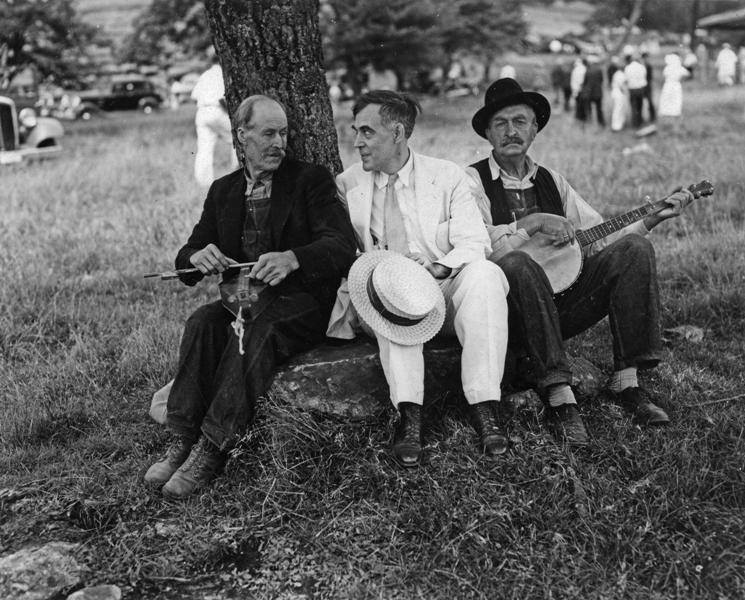
    PHOTO: John Powell (center) learns a thing or two about bowing a dulcimer at the White Top Folk Festival, the festival he helped found, in the 1930s.

  • JoAnn Falletta’s WPRB Radio Fest

    JoAnn Falletta’s WPRB Radio Fest

    It’s a Falletta Fest! All recordings of works conducted and/or played by JoAnn Falletta this morning on WPRB.

    Falletta is in Princeton with the New Jersey Symphony Orchestra for this year’s NJSO Edward T. Cone Composition Institute, five days of intensive compositional evaluations and consultations, master classes and career-building opportunities, which will culminate in a live concert performance of participating composers’ works. The concert, including four new works and a piece by Institute director Steven Mackey, will take place at Princeton University’s Richardson Auditorium Saturday at 8 p.m.

    We’ll celebrate Falletta’s return by sampling from her vast discography, with orchestral music by, among others, Romeo Cascarino, Kenneth Fuchs, Jack Gallagher, E.J. Moeran, Jerome Moross, Behzad Ranjbaran, Igor Stravinsky, and Marcel Tyberg, performed by orchestras with which Falletta has had fruitful associations, including the Buffalo Philharmonic Orchestra, the Virginia Symphony Orchestra, the Ulster Orchestra, the London Symphony Orchestra, the Czech National Symphony Orchestra, and the Women’s Philharmonic.

    We’ll also listen to a couple of new releases of music by Richard Strauss and Vítězslav Novák, issued on the Naxos label, a rare recording featuring Falletta as guitarist, and two that she made with her husband, the clarinetist Robert Alemany.

    Falletta herself will drop by around 9:00 to talk about the institute and some of her other projects. She’s always very busy, with plenty of concerts, festivals and recordings in the pipeline.

    I hope you’ll join me this morning for some entrancing musical rarities, courtesy of JoAnn Falletta, on Classic Ross Amico, from 6 to 11 EDT on WPRB 103.3 FM and wprb.com.

  • JoAnn Falletta Returns to WPRB

    JoAnn Falletta Returns to WPRB

    I am very pleased to announce that JoAnn Falletta has agreed to return as my guest this week on WPRB.

    Falletta is in Princeton as part of the New Jersey Symphony Orchestra Edward T. Cone Composition Institute. Four emerging composers will have their works rehearsed and performed by the NJSO, participate in masterclasses with Institute Director Steven Mackey, receive feedback from NJSO musicians, and benefit from career-building advice from music-industry leaders.

    Falletta will help mentor the composers and then conduct the orchestra in representative works by Noah Kaplan, Sam Lipman, Alyssa Weinberg, and another former Classic Ross Amico guest, Saad Haddad, alongside Mackey’s “Four Iconoclastic Episodes.” The concert, which is open to the public, will take place at Princeton University’s Richardson Auditorium this Saturday at 8 p.m.

    Tune in to WPRB this Thursday morning at 9:00 to hear Falletta talk about the institute and some of her other projects. As music director of the Buffalo Philharmonic Orchestra and the Virginia Symphony Orchestra, she’s always very busy, with plenty of concerts, festivals and recordings in the pipeline. Falletta has championed dozens of works that could easily be classified as unusual and neglected. She is also an indefatigable champion of new music.

    To celebrate her return to Princeton, we’ll enjoy a full morning of her recordings, including selections from new releases of music by Richard Strauss and Vítězslav Novák on the Naxos label. Mark your calendars for another Falletta Fest on Classic Ross Amico, this Thursday morning from 6 to 11 EDT, on WPRB 103.3 FM and wprb.com.


    Meet the composer, Saad Haddad:

    http://www.njsymphony.org/about-njso/newsroom/in-the-news/meet-the-cone-institute-composers-saad-haddad

  • Florent Schmitt Rediscovered on The Lost Chord

    Florent Schmitt Rediscovered on The Lost Chord

    This Sunday night on “The Lost Chord,” we bask in the opulent Orientalisms of Florent Schmitt.

    Florent Schmitt, who lived from 1870 to 1958, studied at the Paris Conservatory, where Gabriel Fauré, Jules Massenet, and Théodore Dubois were among his teaches. He befriended Frederick Delius while Delius was in Paris and prepared the vocal scores of a number of his operas.

    Schmitt was also a music critic, who attained a degree of notoriety for shouting out his assessments from the audience. As a composer, he was remarkably successfully, his works among the most frequently performed French music during the early decades of the 20th century.

    His reputation plummeted in the years following the Second World War, and it wasn’t really until the past few decades that his music began to be revived in any significant manner, with a number of fine compact disc recordings of his work currently on the market.

    One of the most recent of these was issued on the Naxos label, with the Buffalo Philharmonic, conducted by JoAnn Falletta. The disc features the symphonic etude, “The Haunted Palace,” after Edgar Allan Poe, and incidental music written for a production of Shakespeare’s “Antony and Cleopatra.” We’ll be listening to the first of the two suites.

    Schmitt was a winner of the Prix de Rome in 1900. The later neglect of his music may have been in part due to his willingness to cooperate with the Vichy regime during the Nazi occupation of France, as well as a marked change in musical fashion from the kind of opulence characteristic of his music, with one foot in the world of Debussy and the other in the world of Wagner and Richard Strauss.

    Even so, Stravinsky was an early admirer, saying of Schmitt’s ballet, “The Tragedy of Salome,” that the work gave him greater joy than any he had heard in a long time. Certain elements of the ballet anticipate analogous experiments in Stravinsky’s “The Rite of Spring.”

    One of Schmitt’s most celebrated works is his setting of “Psalm XLVII.” Despite its Biblical source, the work has little to do with ecclesiastical matters. Rather, the composer was chiefly inspired by ceremonial acclamations of the Ottoman Sultan, which he had witnessed himself in Istanbul in 1903. He appropriates, and interprets, the text as an expression of Oriental triumph, in the opening and closing “O Clap your hands all ye people,” and languor, with a soprano soloist singing, “He hath chosen our inheritance for us, the beauty of Jacob whom He loved.” We’ll hear the BBC National Orchestra and Chorus of Wales conducted by Thierry Fischer.

    I hope you’ll join me for “Schmitt Happens” – recordings from the Florent Schmitt revival – this Sunday night at 10 ET, with a repeat Wednesday evening at 6; or that you’ll listen to it later as a webcast at wwfm.org.


    Exhaustive website devoted to all things Florent Schmitt: http://florentschmitt.com/

Tag Cloud

Aaron Copland (93) Beethoven (95) Composer (114) Film Music (129) Film Score (143) Film Scores (255) Halloween (94) John Williams (192) KWAX (229) Leonard Bernstein (103) Marlboro Music Festival (125) Movie Music (144) Mozart (88) Opera (206) Philadelphia Orchestra (89) Picture Perfect (174) Princeton Symphony Orchestra (108) Radio (88) Ross Amico (244) Roy's Tie-Dye Sci-Fi Corner (290) The Classical Network (101) The Lost Chord (268) Vaughan Williams (103) WPRB (396) WWFM (881)

DON’T MISS A BEAT

Receive a weekly digest every Sunday at noon by signing up here


RECENT POSTS