COVID may have robbed us of a “Picture Perfect” tenth anniversary celebration. Luckily, there’s something else to make noise about! On the eve of Independence Day, we’ll drown our disappointment with an hour of cinematic fifes and drums.
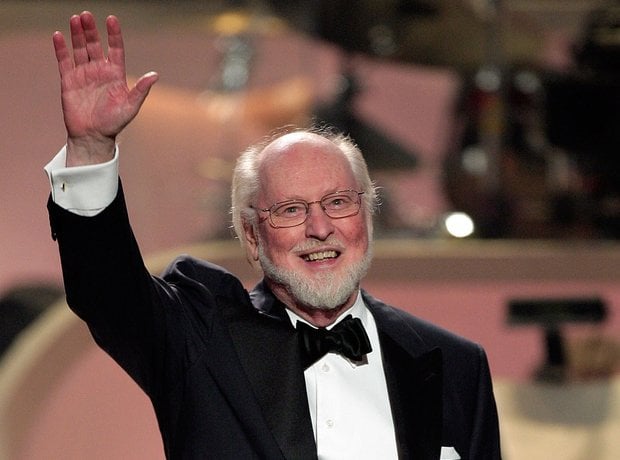
We’ll hear selections from the 2000 film “The Patriot,” in which slow-burning pacifist Mel Gibson is pushed too far by ruthless British officer Jason Isaacs and reverts to his bloody French and Indian War ways. Wow! Who knew Mel had a temper? By the end of the film, he is literally waving the flag to John Williams’ triumphant score.
In a somewhat gentler spirit, but no less subtle, we’ll also hear a suite from the 1942 Jack Benny-Ann Sheridan fixer-up comedy, “George Washington Slept Here,” based on the play by Moss Hart and George S. Kaufman – not really about the Revolution, beyond the fact that the ramshackle Pennsylvania farm house purchased by a transplanted New York couple is alleged to have been the resting place of the Revolution’s most famous general. The music is by Adolph Deutsch.
What happened with “Revolution?” The 1985 film seemed to have everything going for it. The director was Hugh Hudson, whose “Chariots of Fire” was the big winner at the 1981 Academy Awards; its star was Al Pacino; and its composer was John Corigliano, who went on to win the Pulitzer Prize for Music for his Symphony No. 2 and an Academy Award for “The Red Violin.” Yet “Revolution” bombed horribly – so horribly that Pacino gave up making movies for the next four years! James Galway plays the flute and penny whistle on the film’s soundtrack, as he would later for the more successful “The Lord of the Rings.”
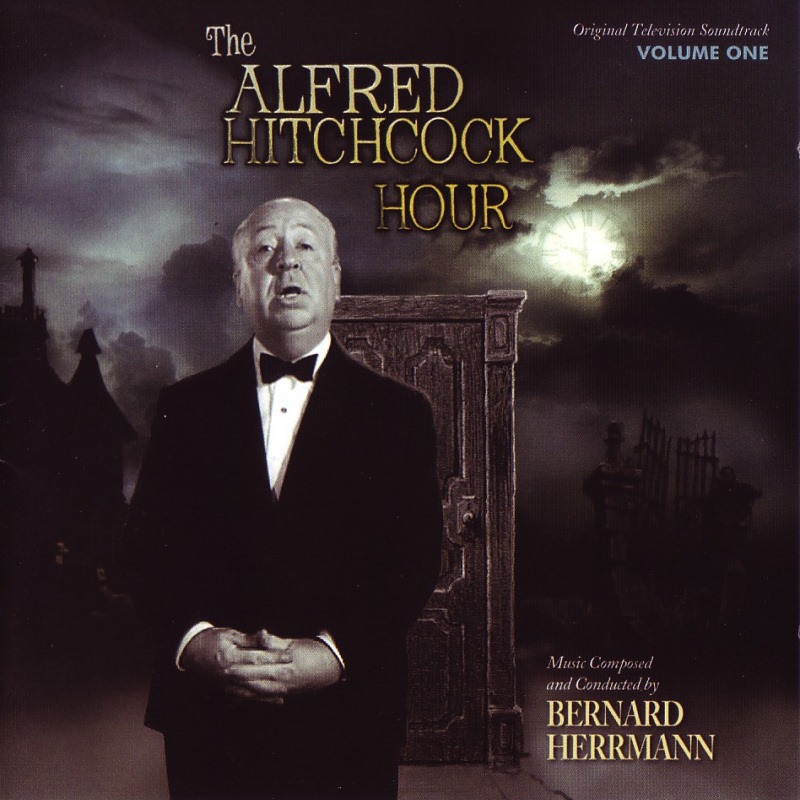
Finally, we’ll hear music from the longest continuously-shown film in cinematic history, “Williamsburg: The Story of a Patriot,” created exclusively for the tourist attraction of Colonial Williamsburg. The film features future “Hawaii Five-O” star Jack Lord, and the score is by none other than Bernard Herrmann.
Here’s a clip from “Williamsburg,” with some of Herrmann’s music:
We celebrate Independence Day this week – and ten years of “Picture Perfect,” music for the movies – this Friday evening at 6:00 EDT, on WWFM – The Classical Network and wwfm.org.
PHOTO: George Washington wagers he can crack a walnut with his bare hand in “Williamsburg: The Story of a Patriot”
Wait? John Williams was supposed to write the music for “Meteor?” Well, I suppose it makes sense, following on his association with “The Poseidon Adventure,” “Earthquake,” and “The Towering Inferno.” Thankfully, this was one disaster he was able to avoid.
Share that sense of relief, as we enter the weekend with another Classic Ross Amico double-feature.
First, it’s all about Father’s Day – with music from “The Godfather” (Nino Rota), “Field of Dreams” (James Horner), “Life with Father” (Max Steiner), and “To Kill a Mockingbird (Elmer Bernstein) – on “Picture Perfect,” music for the movies, at 6 p.m. EDT, on WWFM – The Classical Network and wwfm.org.
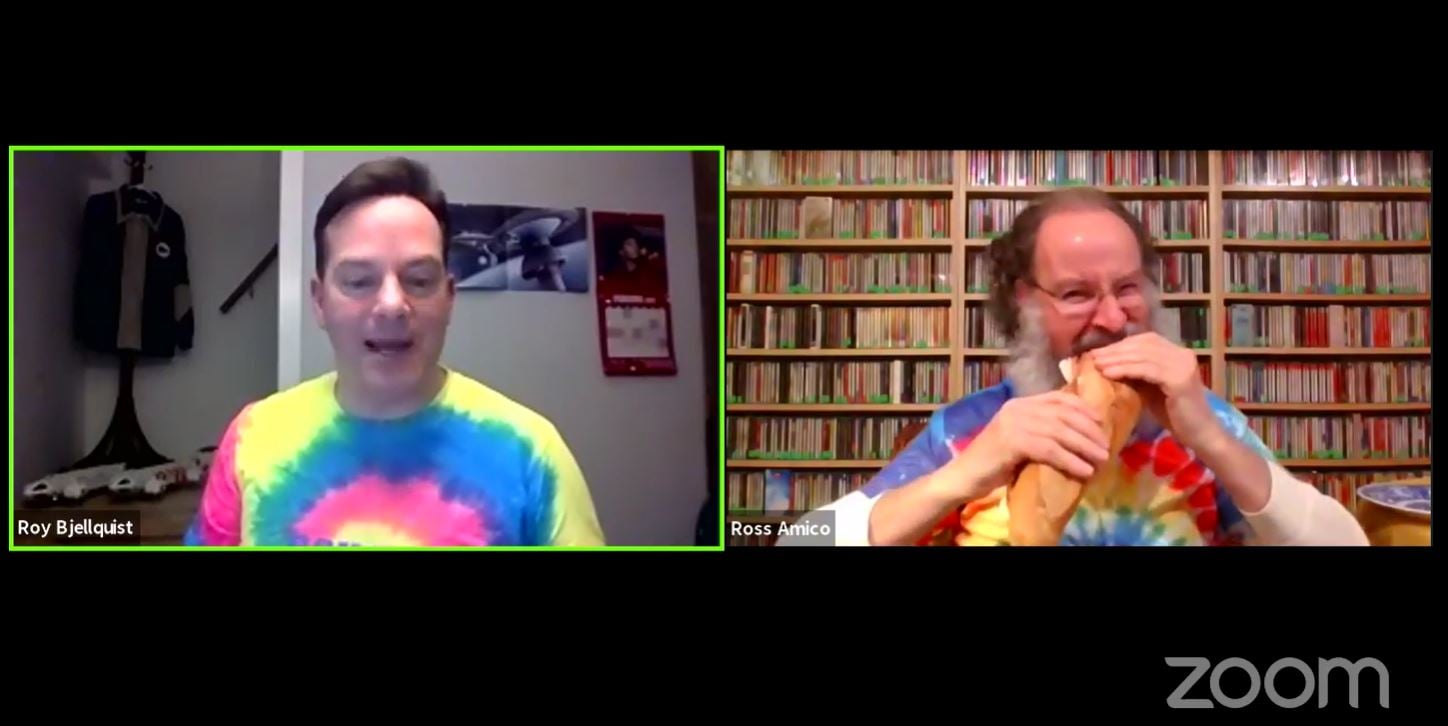
Then Roy Bjellquist and I will take on The Mother of All Asteroids, as we dissect “Meteor,” on the Facebook live-stream “Roy’s Tie-Dye Sci-Fi Corner” at 7.
This week on “Picture Perfect,” you’ll be spellbound (I hope) by an hour of musical selections from movies about wizards and sorcerers.
Gandalf and Saruman duke it out in Peter Jackson’s frenetic, yet somehow ponderous adaptations of J.R.R. Tolkien’s “The Lord of the Rings,” films so bloated and poorly paced that anyone who did not read the books probably wondered what all the fuss was about. Its abundant defects didn’t keep the screen trilogy from making over a billion dollars and garnering 30 Academy Award nominations. Three of those were bestowed upon composer Howard Shore. We’ll be sampling from his music to “The Fellowship of the Ring” (2001).
Made for a fraction of the budget, much less self-serious, and arguably way more fun is “The Sword and the Sorcerer” (1982), which holds no pretense to be anything beyond what it is: a schlocky B-movie sword and sandal swashbuckler. However, the composer, David Whitaker, aspired for something greater. Against tremendous time pressures, he turned in a marvelous score, which sounds like Erich Wolfgang Korngold on a shoestring. If this film had been made by George Lucas, Whitaker would be world famous.
After creating one of his greatest scores for Stanley Kubrick’s “Spartacus,” Alex North had his music for Kubrick’s “2001: A Space Odyssey” rejected – and not in a nice way. (North didn’t find out about it until the lights went down at the film’s premiere.) Fortunately, the composer was able to salvage the best material for “Dragonslayer” (1981). The plot, about a bumbling sorcerer’s apprentice who faces a seemingly impossible challenge, is serviceable at best, but the dragon may yet be the most amazing committed to film. Also, the score is terrific.
Finally, John Williams kicked off another billion dollar franchise with “Harry Potter and the Sorcerer’s Stone” (2001), which in England was released (as was the book) as “Harry Potter and the Philosopher’s Stone.” Who ever heard of a sorcerer’s stone? I guess the publishers were nervous that Americans would be put off by any association with philosophy.
Prepare to be charmed! It’s music for wizards and sorcerers this week, on “Picture Perfect,” this Friday evening at 6:00 EDT, on WWFM – The Classical Network and wwfm.org.
PHOTO: Saruman vexes Gandalf with the exquisite whiteness of his beard
I don’t think I ever anticipated a movie as much as I did “The Empire Strikes Back.” And, thankfully, no movie ever so completely fulfilled my expectations.
The second of the “Star Wars” films (referred to as Episode V by the insufferable) opened nationally on this date 40 years ago. In the spring of 1979, I remember, I created my own countdown calendar, which hung in my bedroom for a year. I anticipated the sequel’s release by inserting a new, hand-crafted number every morning, first thing, as I hopped out of bed.
As was the case for so many young people, “Star Wars” was a watershed experience for me. Every week, as a matter of course, my parents would allow me to tag along to the movies on Friday night. In May 1977, I was still a little over a month shy of my 11th birthday, at the height of my comic book phase, and I really only knew about “Star Wars” from having flipped through the first issue of the Marvel adaptation. What I saw did not impress me. I was more into Spider-Man and Captain America (and Devil Dinosaur and Super-Villain Team-Up). So I was astonished when we arrived at the box office and found that the showing had already sold out. I don’t recall that ever having happened before.
I can’t remember what we saw in its place, but the next week, we were able to get in, and the experience changed my life. The sublime special effects, myriad creatures, swashbuckling set pieces, mystic mumbo jumbo, devil-may-care exuberance, and, most significantly, the glorious music, were more vibrant and intoxicating than any of my primary-colored comics. We purchased a souvenir booklet on the way out, and I pored over that thing again and again. I won’t even tell you how many times I saw “Star Wars” in the movies.
It was a surprisingly long time (to me) before I finally convinced my parents to buy me the soundtrack. As a 2-LP set, “Star Wars” was an investment. I think that may have been a factor, as several times they tried to appease me with cheap knock-offs. (I even had a version for Moog.) Finally, they caved, and I was able to wallow in the full splendor of the London Symphony Orchestra. I probably listened to that record more than any other. I know over the years I managed to wear out two copies. But by then I was able to replace them myself, using my own allowance.
1977 to 1984 was a great time to grow up. All the movies I loved best in those days had music by John Williams. The soundtrack to “The Empire Strikes Back,” like the film itself, managed to equal, if not top the original. Yoda’s theme, the music for Han and the Princess, the Imperial March, all so artfully developed, expanded and deepened what had come before, into what for me is still one of the most satisfying film scores I have ever heard. It’s commonplace now for note-complete scores to be issued in collectors editions. “Empire” is one of the few I can listen to from beginning to end and not feel fatigued. It’s just so successful as MUSIC.
My best friend and I got on line for the 7:00 premiere, on May 20, 1980, at the theater with the biggest screen and the best sound system we could find, as soon as we possibly could. Fortunately, my uncle is a complete science fiction freak, so he was only too willing to drive. He was as crazy with anticipation as we were. I think everyone must have been. The line wound up snaking around the block.
Those were the days when it was exciting just to be able to sit in the movies and watch the trailers. My friend and I were pumped whenever we happened to encounter the PREVIEW for “Empire.”
The film itself pushed the series in directions that paralleled my own development, as a boy on the cusp of his teens. It tapped into extremely relevant concerns and longings, in its themes of friendship, romance, and adventure. From a pop cultural standpoint, Imperial Walkers, Yoda, Boba Fett, and Lando Calrissian would all enter the lexicon. And the Darth Vader paternity revelation was nothing short of seismic.
So sad that the original versions of these films are no longer available to the general public, and that their creator spent so many years retooling them to try to keep atop an ever-cresting wave of special effects technology. The movies were beautiful and inspiring as they were. Now much of the original craftsmanship — the models, matte paintings, and sound effects, the music, in some cases even the actual performances — has been altered or replaced using digital means. George Lucas has stated repeatedly over the years that the original elements are too far gone at this point to allow for a decent restoration. In this, I have always suspected he has not been entirely forthcoming.
I was happy to learn this week, then, that in 2010, when the Library of Congress selected “The Empire Strikes Back” as worthy of inclusion in the United States Film Registry, it politely declined Lucasfilm’s offer of a pristine copy of its latest bastardized “Special Edition,” opting instead to preserve the copyright deposit print of the film’s original theatrical release, already in its holdings. Thank you, Library of Congress, for this mighty blow against the Empire. May the original trilogy someday again be made available to the audience who first fell in love with it.
End credits to “The Empire Strikes Back”
The original trailer (before everything became so self-serious):
“Music is a moral law,” wrote Plato. “It gives soul to the universe, wings to the mind, flight to the imagination… and life to everything.”
That includes computer-generated imagery.
While my distaste for the overkill of CGI in alleged “live action” movies is quite well known, I have to concede that, when shelling out the clams for a big-budget movie, one stands a better chance these days of getting a quality ride if one banks on the solely computer-animated feature. Put an action hero in a computer-animated landscape, and everything looks incredibly fake. But integrate the characters, by creating them in the computer as well, and the result is often much more absorbing, imaginative, and even wittier than your run-of-the-mill Hollywood blockbuster.
Furthermore, in a day when so many movies sport scores made up of droning electronics punctuated by colorless action cues, the computer-generated feature seems to attract composers who still understand how to write music.
This week on “Picture Perfect,” we’ll listen to enlivening scores from four computer-generated films.
We’ll hear selections from the first installment in the “Ice Age” franchise, by David Newman (son of Golden Age heavy-hitter Alfred Newman, brother of Thomas Newman, and cousin of Randy Newman).
We’ll also have some of John Williams’ music from “The Adventures of Tintin,” after the comic book adventurer created by Belgian artist and writer Hergé. Tintin’s popularity in Europe failed to translate into big domestic box office, comparatively speaking, but the score is Williams’ best of its kind – an exciting adventure piece full of leitmotifs and great action cues – since the first of the Harry Potter films.
We’ll round out the hour with two projects scored by Michael Giacchino for Pixar Animation Studios. Giacchino’s break-out success was the sly superhero satire, “The Incredibles,” for which he composed in the swinging ‘60s espionage style popularized by John Barry when writing for the James Bond films.
We’ll also hear selections from Giacchino’s Academy Award-winning score to “Up.” “Up” was nominated for Best Picture at the 82nd Academy Awards, only the second animated feature ever to be included in the category.
We can all use a little animation right now. I hope you’ll join me for an hour of music from computer-animated adventures, on “Picture Perfect,” this Friday evening at 6:00 EDT, on WWFM – The Classical Network and wwfm.org.