Tag: John Williams

  • Korngold The Genius Behind John Williams’ Sound

    Korngold The Genius Behind John Williams’ Sound

    Before John Williams, there was Erich Wolfgang Korngold.

    Korngold’s music for “The Adventures of Robin Hood” (1938) was every bit as influential to me, in terms of introducing me to the wonders of orchestral music, as the score to “Star Wars.” Clearly, it also impacted John Williams, as the music for his biggest blockbusters adheres to the Korngold template of leitmotifs, lush orchestration, and swashbuckling action cues.

    Williams has cited Korngold’s main title music for “Kings Row,” in particular, as one of his inspirations for “Star Wars.” The bold, opulent, classic Hollywood imprint is obvious. Listeners coming cold to “Kings Row” detect the influence immediately. Which is interesting. It’s there in the orchestration, of course, and in the bold fanfares, but it isn’t so blatant as some of the other, more brazen allusions that occur throughout Williams’ score, which I’m sure I’m not alone in contending is a post-modern masterpiece. It’s only little minds that scream theft. Good artists copy; great artists steal! (I believe Stravinsky stole that from Picasso.)

    In case you are unfamiliar with his backstory, years before he came to Hollywood, Korngold was a child prodigy, the toast of Vienna. Gustav Mahler declared him a genius, and Richard Strauss claimed he was terrified by the amount of talent exhibited by one so young. His works were championed by the most esteemed musicians of the day. He was especially highly-regarded for his operas, with “Die tote Stadt” (“The Dead City”), given a double premiere in Hamburg and Cologne, the high-water mark of his success.

    Korngold first came to Hollywood to assist Viennese theatrical impresario Max Reinhardt in bringing “A Midsummer Night’s Dream” to the big screen for Warner Bros. This is the version with James Cagney, Olivia de Havilland, and Mickey Rooney (as Puck). So impressed was Warner with the score, freely adapted from the music of Mendelssohn, that they didn’t want to let this world-class composer go. He was a particularly nice fit for the pageantry and swagger of the Errol Flynn classics.

    Fortunately, Korngold was at work on “Robin Hood” when the Nazis marched into Austria. He and his family found refuge in the company of many other notable European exiles on the paradisal West Coast of the United States. But the luster soon dulled. Korngold vowed to compose no concert music while Hitler remained in power. After the war, he produced a Violin Concerto, which was savaged by one critic as “more corn than gold,” and a heart-breaking Symphony in F-sharp, which exudes longing for a lost world. Both assimilated themes from his film scores.

    He never lived to see his reputation rebound. However, since the 1970s, the popularity of his film music and critical esteem for his concert music have been on an upward trajectory.

    I’ve always loved “Kings Row,” even though the film is something of a curate’s egg. It’s actually a very grim story, anticipating the work of David Lynch, in some respects, as it gradually reveals the dark underbelly of small-town life in the Midwest. But it’s nowhere near as dark as the source material, a bleak-as-hell novel by Henry Bellamann.

    “Kings Row,” the book, is a massive downer. Somehow, it also became a runaway bestseller.

    Interestingly, Bellamann also had a musical background. Following his graduation from Westminster College (unrelated to the Princeton institution) in his hometown of Fulton, Missouri, he studied piano at the University of Denver. He went on to teach music at several girls’ schools in the South, while in the summers, he continued his studies in Europe with Charles-Marie Widor and Isador Philipp. Bellamann would hold several prominent administrative and teaching positions in the U.S., including director of the Juilliard Musical Foundation, dean of the Curtis Institute of Music, and professor of music at Vassar College.

    As you can imagine, the book caused quite a stir in Fulton, but not because of its success. Rather, a few too many people and institutions recognized themselves in the extremely unflattering narrative! Allegedly the book was banned from the town library, and Bellamann was the target of at least one indignant editorial in the local newspaper.

    “Kings Row” is one of the most subversive films of Hollywood’s golden age. How it managed to get around the Hays Code is anybody’s guess, but I’m putting my money on Korngold’s score, which breathes uplift and hope into what could have been an unrelentingly bleak story (as it is in the novel). Also, the ending was changed, such an obvious overcompensation, with the climax an almost ludicrous eruption of joy. It’s a neat trick, as somehow, in the film, not only is the wicked in human nature balanced by the good, but the whole is infused with an undercurrent of nostalgia for a passing world. It’s kind of like how people choose to remember “It’s a Wonderful Life,” even though you have to go through hell before you get to heaven.

    Amusingly, from the title, Korngold thought he was being assigned yet another historical adventure, which is why the theme is so wildly over the top. By 1942, Korngold could do pomp and braggadocio in his sleep. When he learned of his mistake, he just kept it. And what a happy accident! The film is so much better – and so much more bearable – than it would have been without it. After all, how much madness, suicide, amputation, and incest can one take, especially in the 1940s? It really is quite the sleight of hand. Now I want to watch it again!

    To this day, I waver as to whether Korngold or Williams is my favorite film composer. There are others I may revere more than either of them, but these two give me the most pleasure.

    May I obey all your commands with equal pleasure, Sire! Happy birthday, Erich Wolfgang Korngold!


    “Kings Row”

    John Williams talks Korngold with Leonard Slatkin

    Good nine-minute primer on E.W.K.

    Violin Concerto

    Music as good as spring itself: the Sinfonietta, composed at 15

    Marietta’s Lied from “Die tote Stadt”

    “The Sea Hawk”

    What say you to that, Baron of Loxley?

  • Star Wars Day John Williams on KWAX

    Star Wars Day John Williams on KWAX

    Looking for a good start to your “Star Wars Day?” Meet your recommended daily allowance of John Williams’ music by joining me for no less than 12 selections from the principal feature films of the “Star Wars” saga.

    The original “Star Wars” actually opened on May 25, 1977. But why let historical accuracy get in the way of a good pun? May the Fourth be with you!

    Strap yourselves in – we’re ready to make the jump to “Sweetness and Light” speed, this Saturday morning at 11:00 EDT/8:00 EDT, exclusively on KWAX, the radio station of the University of Oregon!

    Stream it, wherever you are, at the link:

    https://kwax.uoregon.edu/

  • Henry Mancini’s Pink Legacy A Centennial Celebration

    Henry Mancini’s Pink Legacy A Centennial Celebration

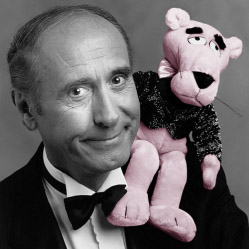
    Think “Pink.” It’s the 100th anniversary of Henry Mancini’s birth.

    Like any great film composer, Mancini always knew just how to set the tone – as demonstrated at the links below.

    Musical hook for grappling hook

    Perambulating with pachyderms

    Sunday night by flashlight

    Early morning elegance

    Gunning for Blake Edwards

    “CBS Sunday Morning” salute (featuring John Williams)

    Mancini medley led by the Master

    Thanks, Hank. You helped make it a great age.

  • Last Repair Shop Wins Oscar Williams Inspired

    “The Last Repair Shop” wins Academy Award for Best Documentary Short. John Williams gets acknowledged as inspiration in acceptance speech. “John Williams inspired me to become a composer,” says co-director Kris Bowers. “Music education isn’t just about creating incredible musicians. It’s about creating incredible humans.” Watch the film here:

  • John Williams Scores Presidents on Film

    John Williams Scores Presidents on Film

    In a career that’s spanned over 60 years, John Williams has had opportunities to score just about every kind of film. Inevitably, these would include several fictionalized accounts of the American presidents. This week on “Picture Perfect,” just in time for Presidents Day, we’ll exercise our executive power and sample music from four of them.

    “JFK” (1991) is one of three collaborations between Williams and director Oliver Stone. The film has more to do with conspiracy theories surrounding the Kennedy assassination than anything to do with his presidency. A controversial feature, no doubt – Walter Cronkite dressed down Roger Ebert after he gave it a positive review – still, a compelling piece of cinema. It certainly inspired an effective score.

    Kevin Costner plays New Orleans district attorney Jim Garrison, Sissy Spacek, his wife, and Gary Oldman, Lee Harvey Oswald. Tommy Lee Jones and Joe Pesci are unforgettable as a pair of outlandish conspirators (if you ever wanted to see Jones painted gold, then this is the movie for you), and Donald Sutherland delivers a virtuoso 16-minute monologue as a government whistleblower who identifies himself only as “X.”

    Williams and Stone had previously worked together on “Born on the Fourth of July.” Later, they would reunite for a second presidential collaboration, a character study of Richard Milhous Nixon – in a film called, well, “Nixon” (1995). Anthony Hopkins, as the president, leads another impressive cast, which includes Joan Allen, Powers Boothe, Ed Harris, Bob Hoskins, E.G. Marshall, David Hyde Pierce, Paul Sorvino, Mary Steenburgen, and James Woods.

    Williams also wrote the music for Steven Spielberg’s “Amistad” (1997). The film, about a mutiny on a slave ship in 1839 and the resulting courtroom drama, features two American presidents: Nigel Hawthorne plays Martin van Buren, the sitting president; and again, Anthony Hopkins appears, in a memorable supporting turn, as aging former president John Quincy Adams. Adams argues the defense of the Africans who took part in the mutiny.

    Finally, Daniel Day-Lewis plays the nation’s 16th president, in Spielberg’s “Lincoln” (2012). He’s lent strong support by Sally Field as Mary Todd Lincoln, David Strathairn as Secretary of State William Steward, and Tommy Lee Jones, this time as Thaddeus Stevens.

    It’s a bold assessment, but Day-Lewis elevates “Lincoln,” the film, to greatness, with arguably one of the most amazing performances in cinematic history. Day-Lewis’ gentle but shrewd Man of Destiny would go to any lengths to hold the country together. Williams taps into America’s proud musical heritage, clearly influenced by Copland and the folksier side of Ives, to create a score of stirring nobility.

    I hope you’ll join me, as the presidents take precedence this week on “Picture Perfect,” music for the movies, now in syndication on KWAX, the radio station of the University of Oregon!


    Remember, KWAX is on the West Coast, so there’s a three-hour difference for those of you listening in the East. Here are the respective air-times for all three of my recorded shows (with East Coast conversions in parentheses):

    PICTURE PERFECT, the movie music show – Friday on KWAX at 5:00 PM PACIFIC TIME (8:00 PM EST)

    SWEETNESS AND LIGHT, the light music program – ALL NEW! – Saturday on KWAX at 8:00 AM PACIFIC TIME (11:00 AM EST)

    THE LOST CHORD, unusual and neglected rep – Saturday on KWAX at 4:00 PM PACIFIC TIME (7:00 PM EST)

    Stream all three, at the times indicated, by following the link!

    https://kwax.uoregon.edu/


    PHOTOS: (clockwise from left) Day-Lewis as Lincoln; Hopkins as Nixon; poster for “JFK;” Hopkins as John Quincy Adams

Tag Cloud

Aaron Copland (93) Beethoven (95) Composer (114) Film Music (141) Film Score (143) Film Scores (255) Halloween (94) John Williams (195) KWAX (229) Leonard Bernstein (103) Marlboro Music Festival (125) Movie Music (156) Mozart (89) Opera (212) Philadelphia Orchestra (89) Picture Perfect (174) Princeton Symphony Orchestra (108) Radio (88) Ross Amico (244) Roy's Tie-Dye Sci-Fi Corner (290) The Classical Network (101) The Lost Chord (268) Vaughan Williams (103) WPRB (396) WWFM (881)

DON’T MISS A BEAT

Receive a weekly digest every Sunday at noon by signing up here


RECENT POSTS