Tag: KWAX

  • Black Composers Shine on KWAX Radio

    Black Composers Shine on KWAX Radio

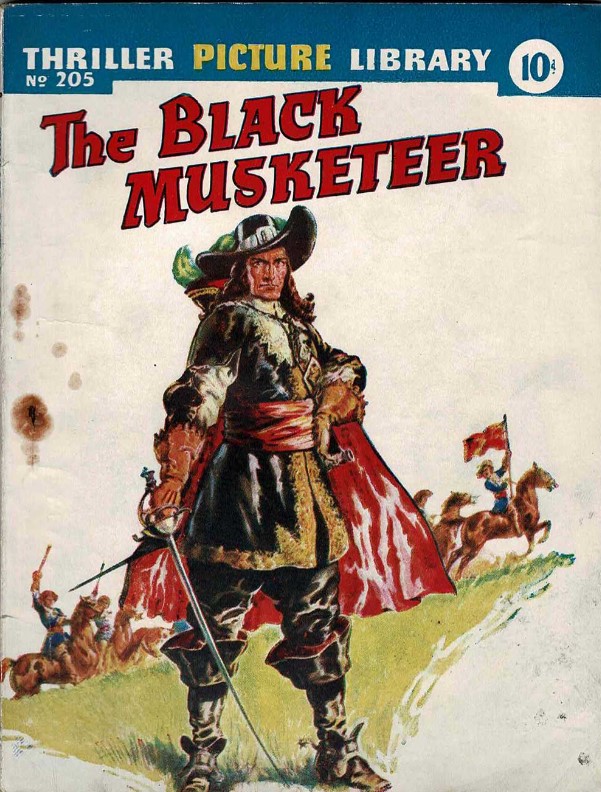
    Very little is known about the Chevalier de Meude-Monpas. Among what we DO know is that he was a musketeer in the service of Louis XVI, who went into exile with the onset of the French Revolution. He also studied music in Paris and published six concertos for violin in 1786. In 1997, violinist Rachel Barton (now Rachel Barton Pine) put together a revelatory album for Cedille Records, “Violin Concertos by Black Composers of the 18th and 19th Centuries.” Meude-Monpas’ Violin Concerto No. 4 will be among the featured works this morning on “Sweetness and Light,” cumulatively guaranteed to put a smile on your face.*

    Much better known, William Grant Still was regarded in his day as the “Dean of Afro-American Composers.” He the first composer of color to have a symphony performed by a major orchestra, the first to have a symphony widely performed, the first to conduct a major orchestra, and the first to have an opera televised nationally. A pupil of both George Whitefield Chadwick and Edgard Varèse, Still certainly had “serious” credentials, but he also worked in pit bands and wrote arrangements for Hollywood musicals. In many senses, he was the quintessential American composer. Also, he always knew how to write a good tune. This morning we’ll enjoy his “Danzas de Panama,” performed by the Oregon String Quartet.

    It took nearly 90 years for Florence Price to become an overnight success. Price was the first African American woman to have a symphony performed by a major orchestra. Her Symphony No. 1 was played by the Chicago Symphony, conducted by Frederick Stock, in 1933. But it’s only fairly recently, after decades of comparative neglect, that her music has finally begun to gain traction. From a 2-disc set devoted to her piano works on the Guild label, we’ll hear Kirsten Johnson play “Dreamboat.”

    Duke Ellington requires little introduction. He was a major figure in American music, especially in the field of jazz. But for the past hundred years or so, there has been quite a bit of “blurring of the lines” between genres of art music. In 1943, Ellington composed “New World a-Comin’,” a work for piano and 15-piece band. He never wrote down the piano part, so it was reconstructed by ear by Maurice Peress from a recording made of an Ellington concert at Carnegie Hall in 1943. Subsequently, Peress expanded the jazz band to full orchestra. The soloist on the recording we’ll hear, Jeffrey Biegel, obtained permission from Sir Roland Hanna to transcribe the improvised final cadenza from a recording Hanna made with the American Symphony Orchestra under Peress’ baton.

    So, yeah, it’s February 1 – Black History Month – not that any excuse is required to share these delights. But it does ensure that they will make it to the air waves and, hopefully, your ears. We’ll be enjoying our coffee black on “Sweetness and Light,” this Saturday morning at 11:00 EST/8:00 PST, exclusively on KWAX, the radio station of the University of Oregon!

    Stream it, wherever you are, at the link:

    https://kwax.uoregon.edu/


    • Please note: Meude-Monpas is not to be confused with that other swashbuckling composer, the Chevalier de Saint-Georges, whose music also appears on Barton Pine’s record.
  • Elizabeth I in Film Music Picture Perfect

    Elizabeth I in Film Music Picture Perfect

    This week on “Picture Perfect,” get ready to don your ruffed collars and codpieces. It’s an hour of music from films about Elizabeth I.

    “Fire Over England” (1937) is most notable, perhaps, for the first screen pairing of future husband-and-wife Laurence Olivier and Vivian Leigh. The couple play young lovers who face down the threat of Spanish invasion. Flora Robson is the queen (naturally). Robson would reprise her role a few years later in the Errol Flynn vehicle “The Sea Hawk.” Raymond Massey, Robert Newton, and James Mason also appear. Based on the novel by A.E.W. Mason, the film was produced by Alexander Korda, who would achieve even greater success when he spearheaded a classic version of Mason’s novel “The Four Feathers” in 1939. The music is by Richard Addinsell – yes, he of “Warsaw Concerto” fame.

    Following in the footsteps of Leigh and Olivier, Jean Simmons and Stewart Granger were paired both professionally and romantically during the making of “Young Bess” (1953). The film recounts Elizabeth’s early days, from her childhood to the eve of her accession to the throne. Simmons plays the title role and Granger is Thomas Seymour. As an unexpected bonus, Charles Laughton returns to reprise his Oscar-winning portrayal of Henry VIII. Laughton had received the award 20 years earlier, for his characterization in “The Private Life of Henry VIII.” “Young Bess” was also produced by Korda (who, in addition, directed Laughton in the earlier film!). The music is by Miklós Rózsa, composer of choice for so many wonderful period pictures of the 1950s and ‘60s.

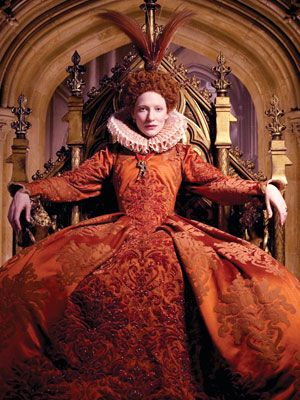
    As an interlude, we’ll enjoy some flavorful dances, heavily indebted to period models, from “Elizabeth” (1998). The composer, David Hirschfelder, is an Australian keyboardist, who has performed mostly with fusion jazz, rock, and pop ensembles. Cate Blanchett, who plays the title role, returned nine years later for a sequel, “Elizabeth: The Golden Age.”

    Finally, Bette Davis will bring it to a grand total of three actresses represented in the hour who portrayed Elizabeth twice. In 1955, Davis starred in “The Virgin Queen;” 16 years earlier, she appeared opposite Errol Flynn in “The Private Lives of Elizabeth and Essex” (1939). For the latter, Erich Wolfgang Korngold provided the characteristically opulent score.

    I hope you’ll join me in basking in the glory of Gloriana. Elizabeth I is our focus, on “Picture Perfect,” music for the movies, now in syndication on KWAX, the radio station of the University of Oregon!


    Clip and save the start times for all three of my recorded shows:

    PICTURE PERFECT, the movie music show – Friday at 8:00 PM EST/5:00 PM PST

    SWEETNESS AND LIGHT, the light music program – ALL NEW! – Saturday at 11:00 AM EST/8:00 AM PST

    THE LOST CHORD, unusual and neglected rep – Saturday at 7:00 PM EST/4:00 PM PST

    Stream them, wherever you are, at the link!

    https://kwax.uoregon.edu/

  • Sweetness & Light Solo Instrument Showcase

    Sweetness & Light Solo Instrument Showcase

    This week on “Sweetness and Light,” musicians step out to strut their stuff in a collection of lighter works for solo instrument and orchestra.

    Some of the pieces will be well-known, some perhaps not. We’ll enjoy a trumpet overture derived from a film score by Franz Waxman, a scherzo by the swashbuckling pianist and composer Henry Charles Litolff, a polka for bassoon and orchestra evocative of a grumpy old bear by Julius Fučík, and more.

    A highlight will surely be a cello concerto by Arthur Sullivan, later of Gilbert & Sullivan fame, that was destroyed by fire but reconstructed decades later, largely from memory, by Sir Charles Mackerras.

    One is the loneliest number, as the old song goes. So put your hands together for soloists stepping into the “light music” spotlight, on “Sweetness and Light,” this Saturday morning at 11:00 EST/8:00 PST, exclusively on KWAX, the radio station of the University of Oregon!

    Stream it, wherever you are, at the link:

    https://kwax.uoregon.edu/

  • Leif Kayser: Composer, Priest, & Organ Master

    Leif Kayser: Composer, Priest, & Organ Master

    Leif Kayser was certainly a multifaceted individual. This week on “The Lost Chord,” we’ll listen to some of his music, of course, but we’ll also talk about his many roles.

    Born in Copenhagen on 1919, Kayser began his studies at the Royal Danish Academy of Music in 1936. In Stockholm, he studied composition with Hilding Rosenberg and conducting with Tor Mann. In 1941, he made his debut as a pianist, in Copenhagen, and as a conductor, in Gothenburg.

    As a composer, he emerged as one of Denmark’s most promising young symphonists. However, following theological studies in Rome, Kayser was ordained in 1949. He largely abandoned concert music – but you can’t keep a good composer down.

    Over time, he began to write for the organ and gradually he produced another symphony. He served as pastor and organist of St. Ansgar Roman Catholic Cathedral until 1964. Then he left the Church to marry and to teach at his alma mater, the Royal Danish Academy of Music.

    Kayser died in 2001. He is still regarded as one of the leading organ composers of Denmark.

    We’ll hear one of Kayser’s gorgeous symphonies, from 1939. That will be prefaced by “Caleidoscopio,” a work for flute and organ, composed between 1974 and 1976. After a brief introduction, it gradually becomes apparent that the piece is constructed as a series of reflections on the familiar chorale “Von Himmel hoch.” Interesting that a former Catholic priest would write variations on a chorale associated with Martin Luther!

    But, like Whitman, Kayser contained multitudes, as composer, organist, pianist, conductor, priest, husband, and teacher. I hope you’ll join me for “Kayser Roles,” on “The Lost Chord,” now in syndication on KWAX, the radio station of the University of Oregon!


    Clip and save the start times for all three of my recorded shows:

    PICTURE PERFECT, the movie music show – Friday at 8:00 PM EST/5:00 PM PST

    SWEETNESS AND LIGHT, the light music program – ALL NEW! – Saturday at 11:00 AM EST/8:00 AM PST

    THE LOST CHORD, unusual and neglected rep – Saturday at 7:00 PM EST/4:00 PM PST

    Stream them, wherever you are, at the link!

    https://kwax.uoregon.edu/


    PHOTO: Kayser pulls out all the stops

  • Latin American Music Getaway on KWAX

    Latin American Music Getaway on KWAX

    With more snow and frigid temperatures on the way – at least where I’m typing, here in the Mid-Atlantic United States – I’m thinking it might be cheering for some to reflect that it’s actually summer in the Southern Hemisphere. Who am I to deny the pleasure? This week on “Sweetness and Light,” I invite you to think warm thoughts as we take a musical journey to Latin America.

    Argentina, Brazil, Chile, Paraguay, and Peru will be represented in works by Agustín Barrios, Theodoro Valcárcel Caballero, Camargo Guarnieri, Astor Piazzolla, and Heitor Villa-Lobos.

    We’ll cap the hour back in New York with more cowbell and Morton Gould’s vibrant “Latin-American Symphonette.”

    Join the conga line. It’s a South American getaway on “Sweetness Light,” this Saturday morning at 11:00 EST/8:00 PST, exclusively on KWAX, the radio station of the University of Oregon!

    Stream it wherever you are at the link:

    https://kwax.uoregon.edu/

Tag Cloud

Aaron Copland (92) Beethoven (95) Composer (114) Film Music (123) Film Score (143) Film Scores (255) Halloween (94) John Williams (187) KWAX (229) Leonard Bernstein (101) Marlboro Music Festival (125) Movie Music (138) Opera (202) Philadelphia Orchestra (89) Picture Perfect (174) Princeton Symphony Orchestra (106) Radio (87) Ralph Vaughan Williams (85) Ross Amico (244) Roy's Tie-Dye Sci-Fi Corner (290) The Classical Network (101) The Lost Chord (268) Vaughan Williams (103) WPRB (396) WWFM (881)

DON’T MISS A BEAT

Receive a weekly digest every Sunday at noon by signing up here


RECENT POSTS