Tag: KWAX

  • Charles Ives’ Concord Sonata Celebrates 150 Years

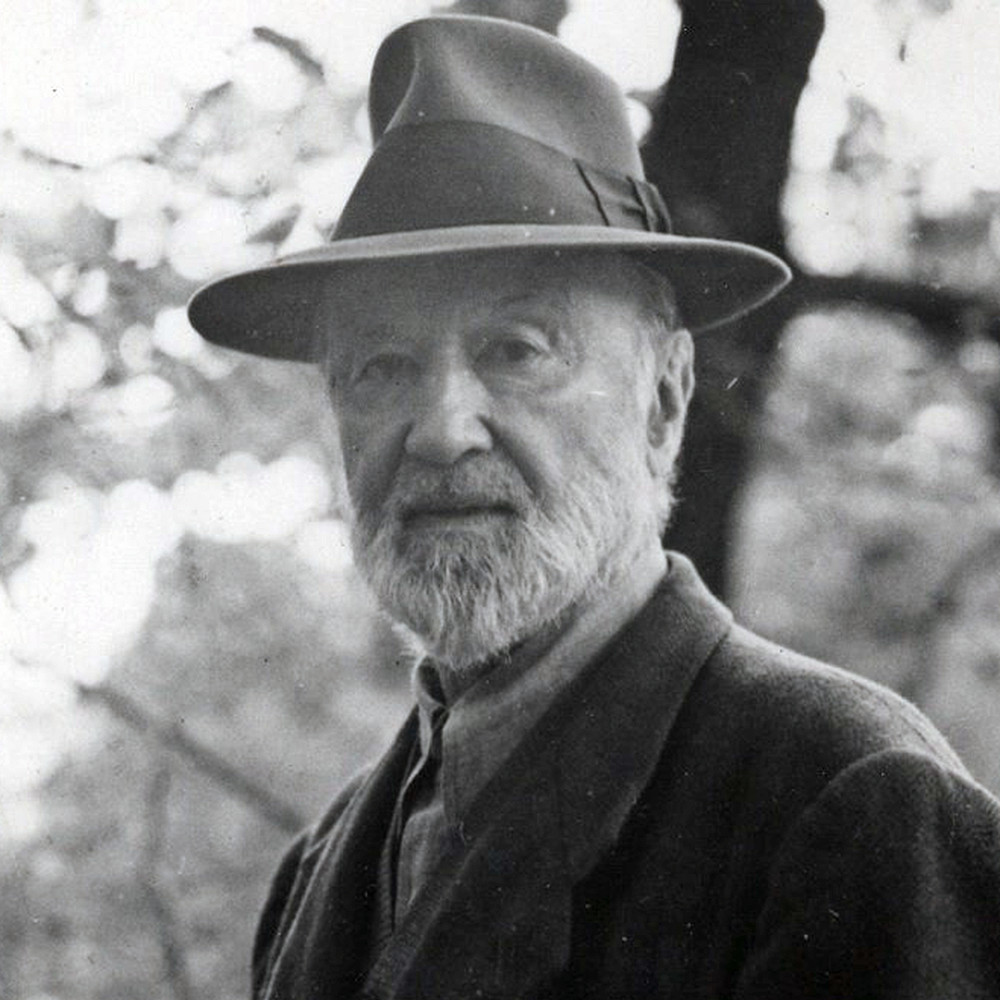
    Charles Ives’ Concord Sonata Celebrates 150 Years

    On the eve of the sesquicentennial of the birth of Charles Ives, I hope you’ll join me for a newly-recorded “The Lost Chord” and a fresh perspective on Ives’ “Concord Sonata.”

    An American original and an artist ahead of his time, Ives (born in Danbury, Connecticut, on October 20, 1874) labored largely in isolation, on evenings, weekends, and holidays, while he held his lucrative day job as an insurance executive. Many of his works were not performed publicly – or at all, for that matter – until decades after they were written. So he enjoyed the luxury of not having to compromise and the independence to devote himself wholeheartedly to serving his quirky muse.

    Ives’ Piano Sonata No. 2, subtitled “Concord, Mass., 1840–60,” for the most part was composed between 1909 and 1915; although, as was often the case with Ives, he began sketching some of the material years earlier and continued to tinker with it for some time after. The sonata was published in 1920 and revised in 1947.

    Each of the four movements was named for figures associated with the American Transcendentalist movement: musical impressions of Ralph Waldo Emerson, Nathaniel Hawthorne, the Alcotts, and Henry David Thoreau, all based in Concord in the mid-19th century.

    The work is Ives at his experimental best. It is harmonically advanced; the score was composed without bar lines; cluster chords are played by an open hand or a fist or even a piece of wood; and the music is full of characteristically Ivesian quotations, references to hymn tunes, patriotic songs and marches, and the famous motto from Beethoven’s 5th Symphony, among others.

    In the 1960s, the Canadian-born American composer Henry Brant undertook an orchestration of the “Concord Sonata.” In common with Ives’ remarkably progressive bandmaster father, who sent two marching bands simultaneously around town to play clashing pieces of music so that he could enjoy the “cheerful discord” and ever-shifting spatial effects, Brant was frequently occupied with spatial concerns in his own original works. “Ice Field,” for organ and spatially-arranged orchestral groups, was inspired by his experience as a 12-year-old, crossing the North Atlantic by ship in 1926, as it navigated through a field of icebergs. The piece was awarded the Pulitzer Prize for Music in 2002.

    Ives was recognized with his own Pulitzer in 1946, for his belatedly-performed Symphony No. 3, composed in 1904. Giving away half the prize money to Lou Harrison, who conducted the premiere, the notoriously cantankerous Ives commented, “Prizes are for boys, and I’m all grown up.”

    Film music aficionados may recognize Brant from his close association with composer Alex North. His bright, acerbic orchestrations lend zest to North’s music for “Spartacus,” “Cleopatra,” “Dragonslayer,” and so many others. In addition, he conducted the orchestra at the recording sessions for North’s rejected score for “2001: A Space Odyssey.”

    Less well known is that he also worked as an orchestrator on film scores of Aaron Copland, Virgil Thomson (including “Louisiana Story,” for which Thomson was awarded the Pulitzer Prize), George Antheil, Marc Blitzstein, Douglas Moore, and Gordon Parks.

    Brant said he wasn’t attempting to emulate Ives’ own orchestral style when searching for the right colors for “A Concord Symphony.” Rather, he approached the project in the manner Ravel or Schoenberg might in their own orchestrations of other composers’ works.

    The effort of some 30 years (since he worked at it very sporadically), Brant’s treatment was completed in 1994. If you have always had difficulty cracking the hard nut that is Ives’ epic sonata, Brant’s orchestration illuminates many details that may get swallowed up in a performance of the original piano version. It especially pays dividends in the “Hawthorne” section (the second movement), lending lift to the patriotic tunes (“Columbia, the Gem of the Ocean” and “Battle Cry of Freedom”) and the ragtime inflections.

    We’ll hear the Concertgebouw Orchestra conducted by Dennis Russell Davies, in this 2007 release on the innova Recordings label.

    I hope you’ll join me in opening up our ears for a salute to Charles Ives’ for his 150th birthday. That’s “Concord and Discord,” on “The Lost Chord,” now in syndication on KWAX, the radio station of the University of Oregon!


    Clip and save the start times for all three of my recorded shows:

    PICTURE PERFECT, the movie music show – Friday at 8:00 PM EDT/5:00 PM PDT

    SWEETNESS AND LIGHT, the light music program – ALL NEW! – Saturday at 11:00 AM EDT/8:00 AM PDT

    THE LOST CHORD, unusual and neglected rep – Saturday at 7:00 PM EDT/4:00 PM PDT

    Stream them, wherever you are, at the link!

    https://kwax.uoregon.edu/

  • Vaughan Williams Birthday Radio Celebration

    Vaughan Williams Birthday Radio Celebration

    Ralph Vaughan Williams was born on this date in 1872. Since he happens to be one of my favorite composers, I couldn’t be more delighted that the anniversary happens to coincide with one my radio shows. I hope you’ll join me this morning on “Sweetness and Light” for what I guarantee will be a lovingly-curated Vaughan Williams miscellany.

    This will not be the usual collection of greatest hits (although we’ll enjoy one or two of those, as well). Among the rarer works will be the “Bucolic Suite” of 1900, when the composer was still feeling his way toward his mature style; also the “Stratford Suite,” made up of incidental music RVW provided for a number of the Shakespeare plays during the brief period he was music director at Stratford-on-Avon (1912-13). If you’re a Vaughan Williams fanatic, I’m sure you’ll recognize some of the melodies, derived from early music and folk song, many of which the composer employed in other, better-known works. The “Stratford Suite” appears on a new release, “Royal Throne of Kings,” chock-full of Vaughan Williams’ uncollected Shakespeare music, on the Albion Records label, the recording branch of the Ralph Vaughan Williams Society.

    Some of the music will be dreamy and luminous and some of it will be boisterous and earthy. You’re always safe with Uncle “Rafe.”

    Pour yourself a cuppa and join me for “Sweetness and Light,” this Saturday morning at 11:00 EDT/8:00 PDT, exclusively on KWAX, the radio station of the University of Oregon!

    Stream it wherever you are at the link:

    https://kwax.uoregon.edu/


    PHOTO: Vaughan Williams takes a slug from the mug

  • Beer Barrel Polka a Czech Oktoberfest Classic

    Beer Barrel Polka a Czech Oktoberfest Classic

    When lyrics were added to the best-known polka of Czech composer Jaromir Vejvoda, it also became perhaps the most famous Czech song.

    Originally conceived as the “Modřanská Polka” – or “Polka of Modřany” – with words it took on a new life as “Škoda lásky” (“Unrequited Love”). It was also a hit in Germany as “Rosamunde.” World-wide popularity followed, as soldiers adopted it as a drinking song during World War II and introduced it at home as the “Beer Barrel Polka.”

    This week on “Sweetness and Light,” in this season of the harvest and Oktoberfest, it will be one of our featured works as we roll out the barrels for a salute to BARLEY AND THE GRAPE.

    The hour will include the “Revelry Overture” by Montague Phillips and Leopold Godowsky’s “Symphonic Metamorphosis on ‘Wine, Women and Song’” after Johann Strauss II. We’ll raise our goblets to the god of wine with ballet music from Jules Massenet’s rarely-heard opera “Bacchus” and the “Procession of Bacchus” from Léo Delibes’ ballet “Sylvia.”

    We’ll also quaff to drinking songs by Reginald De Koven (“Brown October Ale” from the comic opera “Robin Hood”) and Henry Purcell (himself a casualty of one too many pub-crawls).

    We’ve a powerful thirst for BARLEY AND THE GRAPE on “Sweetness and Light.” The taps are open, this Saturday morning at 11:00 EDT/8:00 PDT, exclusively on KWAX, the radio station of the University of Oregon!

    Stream it wherever you are at the link:

    https://kwax.uoregon.edu/

  • Sonatinas: A Light Music Program with Cascarino & Schmitt

    Sonatinas: A Light Music Program with Cascarino & Schmitt

    I was really scratching my head on this one. How to construct a unified light music program with such seemingly disparate pieces?

    This morning on “Sweetness and Light,” marvel at how gracefully I meet the challenge of marking the birthday anniversaries of composers Romeo Cascarino and Florent Schmitt and also including music from a too-long-deferred pleasure: a recent release of “Latin American Piano Gems” (Centaur 4083) performed by pianist Gila Goldstein.

    The unifying theme is sonatinas, or “little” sonatas.

    Philadelphia composer Romeo Cascarino’s Bassoon Sonata was written after World War II for his Army buddy Sol Schoenbach, who would go on to become principal bassoonist of the Philadelphia Orchestra. “Sonatina” may not be in the title, but the character is light, and the sonata is only seven minutes long!

    Florent Schmitt’s “Sonatine en Trio” is a very happy discovery indeed. There’s a certain neoclassic quality to the music, which we’ll hear in a version for flute, cello and piano, by a French composer whose orchestral works can be quite opulent. The title itself seems to harken back to an earlier time. In fact, the keyboard part was originally conceived for harpsichord. It’s cheering music, and I think you’ll agree, a great start to the day!

    “Latin American Piano Gems” is a transporting collection of works by Ernesto Lecuona, Astor Piazzolla, Manuel Ponce, and Heitor Villa-Lobos. We’ll enjoy a piece by Argentine composer Carlos Guastavino, who is largely remembered for his songs. Guastavino wrote his Sonatina while visiting Manuel de Falla, who spent his final years in self-imposed exile in Cordoba, Argentina, following the Spanish Civil War. All in all, a very enjoyable album. We’ll be dipping into it again soon!

    This morning’s program will also include delights by Federico Moreno Torroba, Eugène Bozza, Erik Satie, and Ludwig van Beethoven.

    I hope you’ll join me for “Small Pleasures” – an hour of sonatinas for varied instruments and instrumental combinations – on “Sweetness and Light,” this Saturday morning at 11:00 EDT/8:00 PDT, exclusively on KWAX, the radio station of the University of Oregon!

    Stream it wherever you are at the link:

    https://kwax.uoregon.edu/


    Think a sonatina for mandolin and piano is a bit far-fetched? Tune in to hear what Beethoven made of it.

  • Schoenberg’s Lighter Side on Sweetness and Light

    Schoenberg’s Lighter Side on Sweetness and Light

    This week on “Sweetness and Light,” the focus is on… Arnold Schoenberg?!!! That’s right, the High Priest of Dodecaphonic Music.

    Schoenberg was born on September 13, 1874, 150 years ago. But before you scroll to the next post, I hasten to add, there will be no twelve-tone music on the program. Instead, we’ll enjoy the LIGHTER SIDE of this 20th century master.

    And contrary to his many somber portraits and photographs, Schoenberg could indeed smile.

    We’ll hear arrangements of music by Johann Strauss II and Johann Sebastian Bach, a cello concerto freely adapted from a harpsichord piece by 18th century composer Georg Matthias Monn, and, since Schoenberg regarded himself as the artistic heir of Johannes Brahms, a German folk song setting – directed by Pierre Boulez, no less!

    We’re coming up on the 29th anniversary of my professional radio debut on September 28, 1995 (having honed my craft in the bush league of community radio for 9 years before that), so I thought I’d conclude with a Schoenberg cabaret song I programmed on that very first morning. The text is by none other than Emanuel Schikaneder, Mozart’s librettist for “The Magic Flute.”

    It’s Schoenberg for people who think they don’t like Schoenberg on “Sweetness and Light,” this Saturday morning at 11:00 EDT/8:00 PDT, exclusively on KWAX, the radio station of the University of Oregon!

    Stream it wherever you are at the link:

    https://kwax.uoregon.edu/


    Since yesterday’s post for Schoenberg’s actual birthday got no love, here it is again:

    https://www.facebook.com/photo?fbid=1381350726117320&set=a.883855802533484

    Then sample some Schoenberg paintings and drawings:

    https://www.schoenberg.at/index.php/en/schoenberg-2/bildnerischeswerk

    Schoenberg speaks (one of many such files on YouTube):


    PHOTOS (counterclockwise from top): Schoenberg on cello, horsing around with musician friends (including violinist Fritz Kreisler); with Charlie Chaplin; smiling with his daughter; and ready for a match (possibly with his frequent tennis partner, George Gershwin)

Tag Cloud

Aaron Copland (92) Beethoven (95) Composer (114) Film Music (124) Film Score (143) Film Scores (255) Halloween (94) John Williams (188) KWAX (229) Leonard Bernstein (101) Marlboro Music Festival (125) Movie Music (139) Opera (202) Philadelphia Orchestra (89) Picture Perfect (174) Princeton Symphony Orchestra (106) Radio (87) Ralph Vaughan Williams (85) Ross Amico (244) Roy's Tie-Dye Sci-Fi Corner (290) The Classical Network (101) The Lost Chord (268) Vaughan Williams (103) WPRB (396) WWFM (881)

DON’T MISS A BEAT

Receive a weekly digest every Sunday at noon by signing up here


RECENT POSTS