Tag: Leonard Bernstein

  • Louis Armstrong’s Real Birthday Surprise!

    Louis Armstrong’s Real Birthday Surprise!

    It’s not everyone who can choose the time and circumstances of their birth.

    One of the most important figures in American music really had no idea when he was born. So he and his manager settled on July 4. What could be more American than that? Furthermore, 1900 signified the start of a new century, the beginning of a new era. Thus it was that Louis Armstrong was “born” in New Orleans on July 4, 1900.

    It wasn’t until the 1980s, well after Armstrong’s death in 1971, that a researcher discovered Armstrong’s baptismal records and it was established that his actual birthdate was August 4, 1901. So Armstrong would have been 120 years-old today. He died fifty years ago, on July 6.

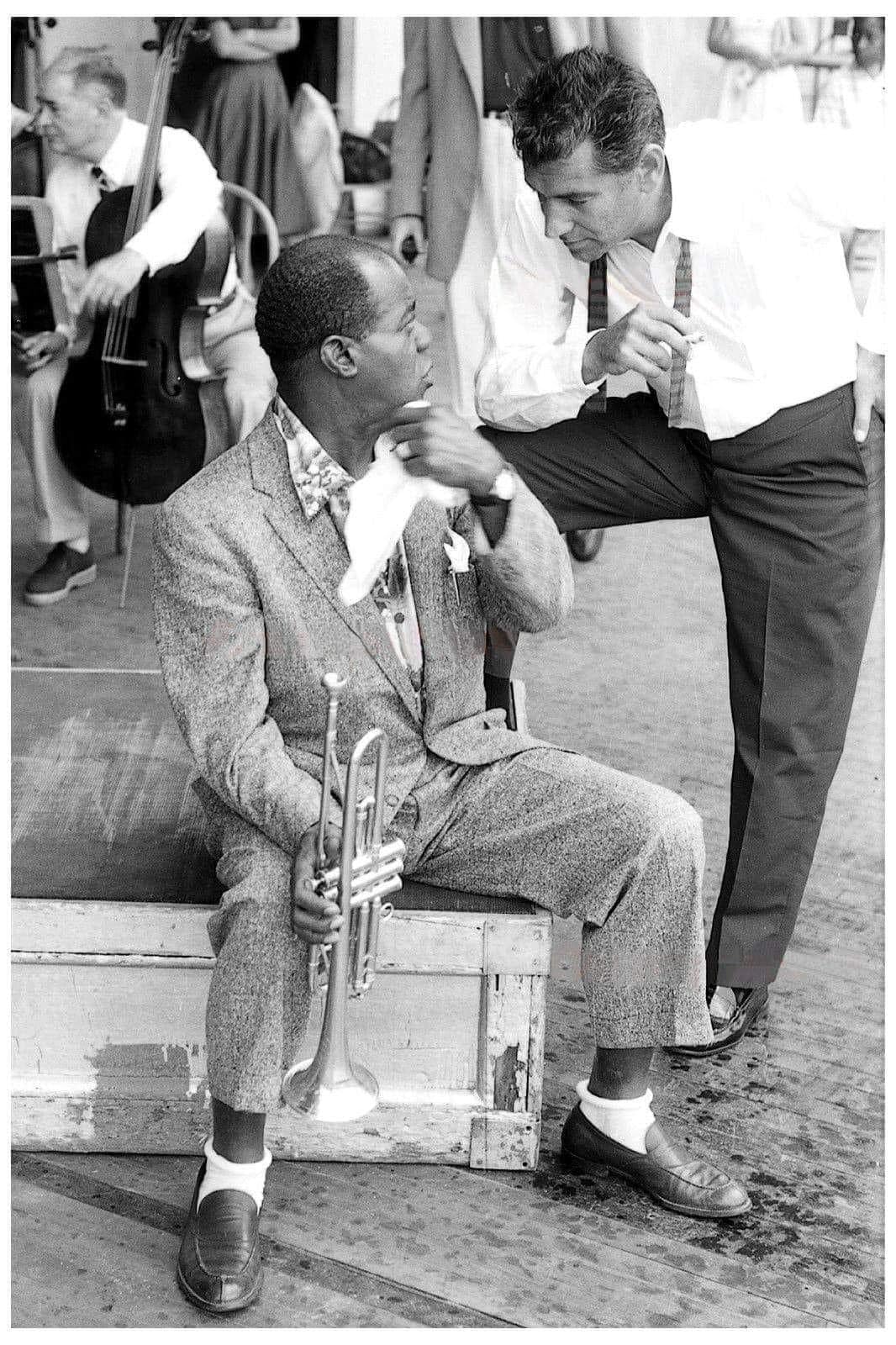
    Here is a special document, indeed. Armstrong and his All-Stars perform “St. Louis Blues,” with the New York Philharmonic conducted by Leonard Bernstein (Bernstein’s name mispronounced by Edward R. Murrow!) at Lewisohn Stadium on July 14, 1956. The composer, W.C. Handy, is in attendance.

    Happy birthday, Satchmo!

  • Carl Nielsen Awaits Rediscovery

    Carl Nielsen Awaits Rediscovery

    Great Dane or Ugly Duckling? In the case of Carl Nielsen, the two are not necessarily mutually exclusive.

    While Nielsen retains his status as Denmark’s most celebrated composer, internationally, he has had difficulty emerging from the shadow of that other great bard of the North, Jean Sibelius.

    This is a shame, since, far from being a Sibelius knock-off, Nielsen forged his own, immediately-recognizable style – which can’t always be said, with as much conviction, about a lot of other fin de siècle Scandinavian composers. Not that I don’t love their music.

    Leonard Bernstein believed Nielsen’s rightful place was as Sibelius’ equal.

    “I think many people are in for pleasant surprises as they get to know Nielsen,” he said at a centennial celebration of the composer’s birth, “his rough charm, his swing, his drive, his rhythmic surprises, his strange power of harmonic and tonal relationships – and especially his constant unpredictability – all these are irresistible. I feel confident that Nielsen’s time has come.”

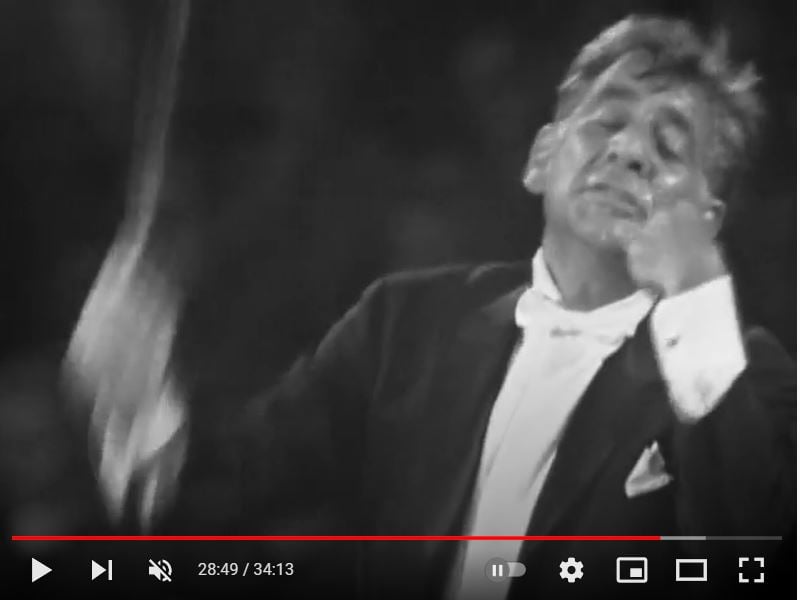
    Here’s Bernstein, conducting the Danes on their own turf, in what may be my favorite Nielsen symphony, the Symphony No. 3:

    That was in 1965. Sadly, fifty-six years on, with many more recordings and performances to choose from, Nielsen’s music remains, stubbornly, an acquired taste. But it is a rewarding one. There really is nothing else quite like it. The puckish wit, the ambiguity, the quirky juxtaposition of seemingly disparate melodies, harmonies, and key signatures, all very often shot through with a sense of hope and optimism that rises above the chaos.

    Next to Sibelius, Nielsen doesn’t really have that many imitators. The English composer Robert Simpson was evidently a great admirer of both. This is Simpson’s centenary year. (He was born on March 2, 1921.) His own symphonies often resemble Nielsen’s, but without the big moments.

    Simpson’s Symphony No. 2:

    Simpson introduces Nielsen:

    “Espansiva: A Portrait of Carl Nielsen” (featuring Simpson):

    Rare glimpses of Nielsen on film:

    Happy birthday, Carl Nielsen, and thanks for the advocacy, Robert Simpson.

  • Christa Ludwig Obituary: A Light Heart and Light Hands

    Christa Ludwig Obituary: A Light Heart and Light Hands

    In the words of Strauss’ Marschallin, “With a light heart and light hands, hold and take, hold and let.”

    The great mezzo-soprano Christa Ludwig has died.

    In a career that spanned four decades, Ludwig was a fixture in the world’s major opera houses.

    She was a principal artist at the Vienna State Opera during a golden age at mid-century. With the company, she sang 769 performances in 42 roles. She made her Metropolitan Opera debut in 1959. There she sang 119 performances in 15 roles.

    She was a versatile and remarkably consistent performer. Her repertoire embraced Amneris (“Aida”), Brangäne (“Tristan und Isolde”), “Carmen,” Charlotte (“Werther”), Dido (“Les Troyens”), Dorabella (“Così fan Tutte”), Eboli (“Don Carlo”), Klytämnestra (“Elektra”), Kundry (“Parsifal”), Ortrud (“Lohengrin”), Ulrica (“Un ballo in maschera”), and Waltraute (“Götterdämmerung”), to name a few.

    Her technique and upper register were such that she was able to tackle the Marschallin in “Der Rosenkavalier” and the Dyer’s Wife in “Die Frau ohne Schatten,” parts almost exclusively sung by sopranos. Among the roles she created was that of Claire in Gottfried von Einem’s “Besuch der alten Dame” (“The Visit of the Old Lady”).

    Her voice graced dozens of treasurable recordings. She sang Fidelio for Klemperer, Fricka in Solti’s landmark “Ring,” and Octavian in Karajan’s “Der Rosenkavalier,” with Elisabeth Schwarzkopf. She was Adalgisa opposite Maria Callas in “Norma.”

    She was a frequent collaborator of Leonard Bernstein. Together, they recorded much Mahler. On a lighter note, she also sang “I Am Easily Assimilated,” as the Old Lady in Bernstein’s “Candide,” in what the composer considered to be the work’s definitive recording.

    I only saw her live once, at Carnegie Hall, but it was a memorable occasion. She sang the lamentations in Bernstein’s “Jeremiah” Symphony, under the composer’s direction. (The two recorded the work for Deutsche Grammophon.) Also on the program was Mozart’s Symphony No. 29 and Sibelius’ Symphony No. 5.

    Ludwig died on Saturday at her home in Klosterneuburg, Austria. She was 93 years-old.


    “Das Abschied” (“The Farewell”) from Mahler’s “Das Lied von der Erde”

    Complete, with René Kollo – and subtitles

    https://www.youtube.com/watch?v=Npy4gjZ81F0

    As Fidelio

    The Recognition Scene from Strauss’ “Elektra”

    Rossini, of all things – in German!

    With her husband, Walter Berry, in “Des Knaben Wunderhorn”

    Brahms, with Bernstein at the piano (and André Previn as page-turner!)

    A bone to pick with Bernstein’s tempo in Mahler

    “I Am Easily Assimilated”

  • Beethoven’s Ninth Joy Freedom & 2020

    Beethoven’s Ninth Joy Freedom & 2020

    Needless to say, Beethoven’s 250th birthday year experienced something of a damper, thanks to a coronavirus curveball. A year ago, who’d a thunk that 2020 would have brought so few public concerts?

    Perhaps more dispiriting is how Beethoven was reduced to a straw man and political punching bag by angry axe-grinders who don’t seem to understand the first thing about the man or his music. Or indeed the very nature of classical music, beyond what is perceived as a kind of “gatekeeper” mentality – basically that there is a tradition of concert etiquette in place, so that people can actually listen to music. Essentially, this involves sitting quietly, which from long experience I assure you is hard to do even for the old white mummies they disdain. It’s a little sad, after all this time – when concertgoing is more open and democratic than ever – to be reminded that the broader perception of classical music is still of a type that believes in the exclusionary, stuffed-shirt, hoity-toity behavior once mocked in Three Stooges comedies.

    But this is far from the worst ignorance we’ve had to endure in 2020, so I shouldn’t let it get me down. As long as there are people who love and perform music, Beethoven is not going anywhere. In particular, the grandest of Beethoven’s symphonies, the Symphony No. 9, with its choral finale, has been something of a New Year’s tradition for decades, especially in the Far East.

    The practice of playing Beethoven’s Ninth in Japan has its roots in World War I, when German POWs rehearsed and performed the work during their internment. After the war, they carried it with them as they were absorbed into the nation’s orchestras. In an ordinary year, Beethoven’s Ninth now resounds throughout Tokyo, a city with more Western-style orchestras than Berlin.

    Also forever etched in my memory is an impromptu Christmas Day broadcast of the Ninth, with Leonard Bernstein conducting an international coalition of musicians, following the fall of the Berlin Wall in 1989. For the occasion, Schiller’s climactic text, “Ode to Joy,” was transformed into an ode to freedom – literally, as “freiheit” (freedom) was substituted for “freude” (joy). Schiller’s message, and Beethoven’s, after all, had always been one of universal brotherhood.

    Here is what activist and author Helen Keller wrote to the New York Symphony Orchestra following a Carnegie Hall broadcast of the Ninth in 1924. Keller, blind and deaf since she was a toddler, was able to experience the piece by placing her hands on a radio speaker. Of course, Beethoven never heard it himself, as he was stone deaf at the time of its premiere in 1824. He had to be turned around by one of the performers so that he could witness the audience’s wild applause. Here is Keller’s reaction, one hundred years later, to this inspiring gift that an alleged elitist, dead white male composer-of-privilege left to her and anyone else open to receive it.

    Dear Friends:

    I have the joy of being able to tell you that, though deaf and blind, I spent a glorious hour last night listening over the radio to Beethoven’s “Ninth Symphony.” I do not mean to say that I “heard” the music in the sense that other people heard it; and I do not know whether I can make you understand how it was possible for me to derive pleasure from the symphony. It was a great surprise to myself. I had been reading in my magazine for the blind of the happiness that the radio was bringing to the sightless everywhere. I was delighted to know that the blind had gained a new source of enjoyment; but I did not dream that I could have any part in their joy. Last night, when the family was listening to your wonderful rendering of the immortal symphony someone suggested that I put my hand on the receiver and see if I could get any of the vibrations. He unscrewed the cap, and I lightly touched the sensitive diaphragm. What was my amazement to discover that I could feel, not only the vibration, but also the impassioned rhythm, the throb and the urge of the music! The intertwined and intermingling vibrations from different instruments enchanted me. I could actually distinguish the cornets, the roil of the drums, deep-toned violas and violins singing in exquisite unison. How the lovely speech of the violins flowed and plowed over the deepest tones of the other instruments! When the human voices leaped up thrilling from the surge of harmony, I recognized them instantly as voices more ecstatic, upcurving swift and flame-like, until my heart almost stood still. The women’s voices seemed an embodiment of all the angelic voices rushing in a harmonious flood of beautiful and inspiring sound. The great chorus throbbed against my fingers with poignant pause and flow. Then all the instruments and voices together burst forth – an ocean of heavenly vibration – and died away like winds when the atom is spent, ending in a delicate shower of sweet notes.

    Of course this was not “hearing,” but I do know that the tones and harmonies conveyed to me moods of great beauty and majesty. I also sense, or thought I did, the tender sounds of nature that sing into my hand-swaying reeds and winds and the murmur of streams. I have never been so enraptured before by a multitude of tone-vibrations.

    As I listened, with darkness and melody, shadow and sound filling all the room, I could not help remembering that the great composer who poured forth such a flood of sweetness into the world was deaf like myself. I marveled at the power of his quenchless spirit by which out of his pain he wrought such joy for others – and there I sat, feeling with my hand the magnificent symphony which broke like a sea upon the silent shores of his soul and mine.


    Happy New Year, everyone, and may 2021 be a better one for music. And may it bring greater harmony and understanding between nations, between Americans, between races, and between all people.

  • Aaron Copland Birthday Celebration

    Aaron Copland Birthday Celebration

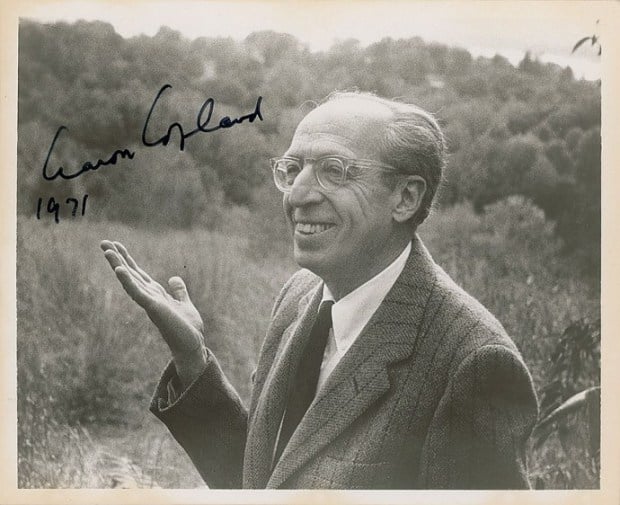
    How fortunate that one of our greatest composers lived through an era when so much could be documented on film. With Thanksgiving right around the corner, I’ve assembled a Copland cornucopia, for his birthday.

    Copland conducts “El Salón México,” for his 60th

    Bernstein introduces Copland’s Clarinet Concerto

    Copland conducts it in L.A., with Benny Goodman the soloist
    https://www.youtube.com/watch?v=iYwPJrRnGSE

    Copland plays his Piano Concerto, with Bernstein conducting

    Copland conducts “Appalachian Spring” in D.C. on his 80th

    Copland at home, playing the coda to “Appalachian Spring”

    “Aaron Copland: A Self Portrait”

    Seiji Ozawa conducts Copland’s arrangement of “Happy Birthday” for Bernstein’s 70th

    Happy birthday, Aaron Copland!

Tag Cloud

Aaron Copland (92) Beethoven (95) Composer (114) Film Music (123) Film Score (143) Film Scores (255) Halloween (94) John Williams (187) KWAX (229) Leonard Bernstein (101) Marlboro Music Festival (125) Movie Music (138) Opera (202) Philadelphia Orchestra (89) Picture Perfect (174) Princeton Symphony Orchestra (106) Radio (87) Ralph Vaughan Williams (85) Ross Amico (244) Roy's Tie-Dye Sci-Fi Corner (290) The Classical Network (101) The Lost Chord (268) Vaughan Williams (103) WPRB (396) WWFM (881)

DON’T MISS A BEAT

Receive a weekly digest every Sunday at noon by signing up here


RECENT POSTS