Tag: Leonard Bernstein

  • Carl Nielsen’s Symphony No. 5: A Century of Optimism

    Carl Nielsen’s Symphony No. 5: A Century of Optimism

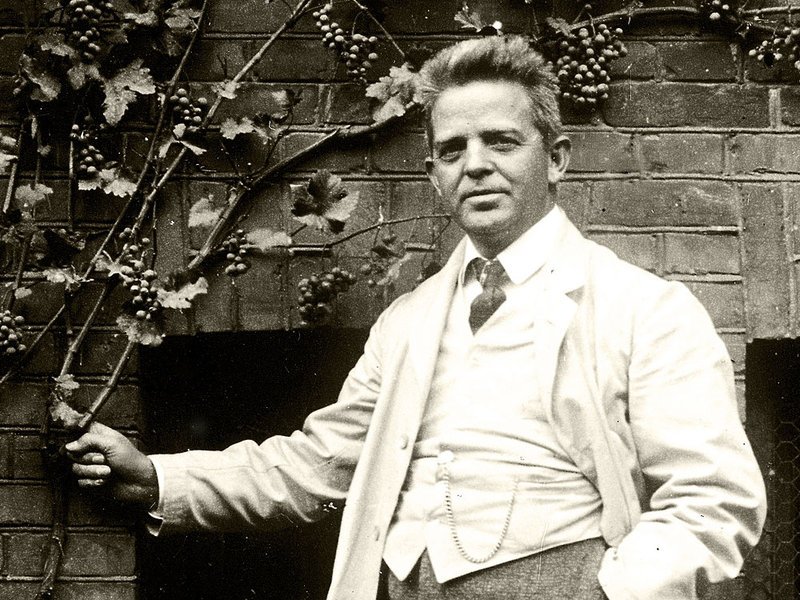
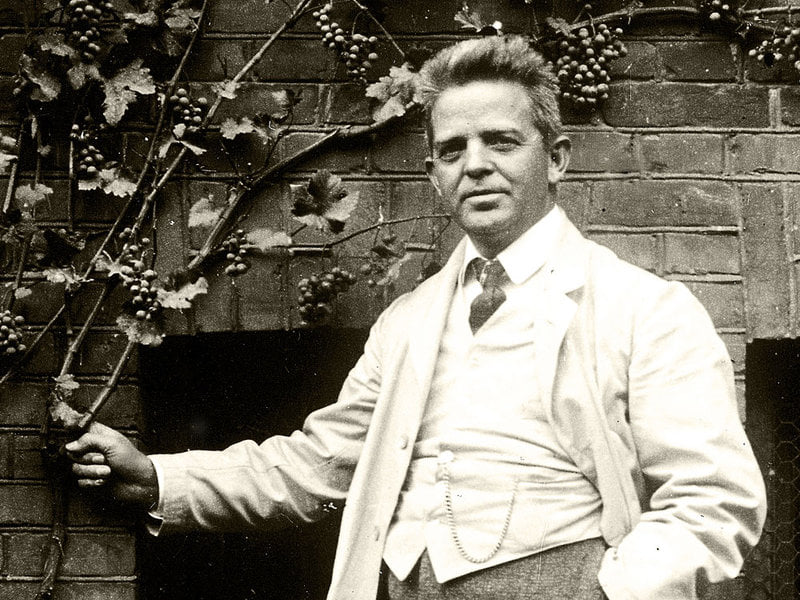
    I can’t claim to know how to solve the world’s problems, but more Carl Nielsen would be a good start.

    Nielsen was, of course, Denmark’s most celebrated composer. He experienced a lot of change in his lifetime (1865-1931), in a world of accelerating anxiety. There is plenty of struggle in his symphonies, to be sure. But to my ears, for the most part, they reflect a spirit of optimism and nobility, and they retain the power to inspire.

    Nielsen’s Symphony No. 5 was first performed in Copenhagen on this day 100 years ago. The work is built on an unusual structure, organized into two movements, as opposed to the customary four. We don’t know what inspired the composer to write his Fifth Symphony, but it’s a good guess that it is a reaction to the War to End All Wars.

    Already by four minutes in, an implacable snare drum appears, and the movement becomes a struggle of contrasts between martial and transcendent impulses. At the climax of the first movement, the composer instructs the drummer to improvise “as if at all cost he wants to stop the progress of the orchestra.” In this sense, the symphony acts almost as a second “Inextinguishable” (the subtitle of Nielsen’s Symphony No. 4, with its dueling timpani), with open wounds, but yearning for the attainment of nobler things.

    Nielsen claimed he was not conscious of the influence of recent world events in the writing of his symphony, but he conceded that “not one of us is the same as we were before the war.”

    A performance in Sweden in 1924 caused a commotion, when the audience rebelled against the cacophonous “modernism” of the first movement. There was a mass exodus from the concert hall, as about a quarter of those in attendance left. Those who remained attempted to hiss the orchestra to silence. It’s too bad they were insensible to the overarching grandeur and hard-won optimism of the piece.

    The symphony received its premiere the same week as the first performance of a very different work influenced by the war, Ralph Vaughan Williams’ “A Pastoral Symphony.” I’ll write more about that on Wednesday.

    In the meantime, here’s a classic performance of Nielsen’s Symphony No. 5, with Leonard Bernstein and the New York Philharmonic:

    Funny how the passage of the years modifies one’s perspective. At the time this recording was made, the symphony was only 40 years-old!

  • Stravinsky’s White House Dinner & JFK Tribute

    Stravinsky’s White House Dinner & JFK Tribute

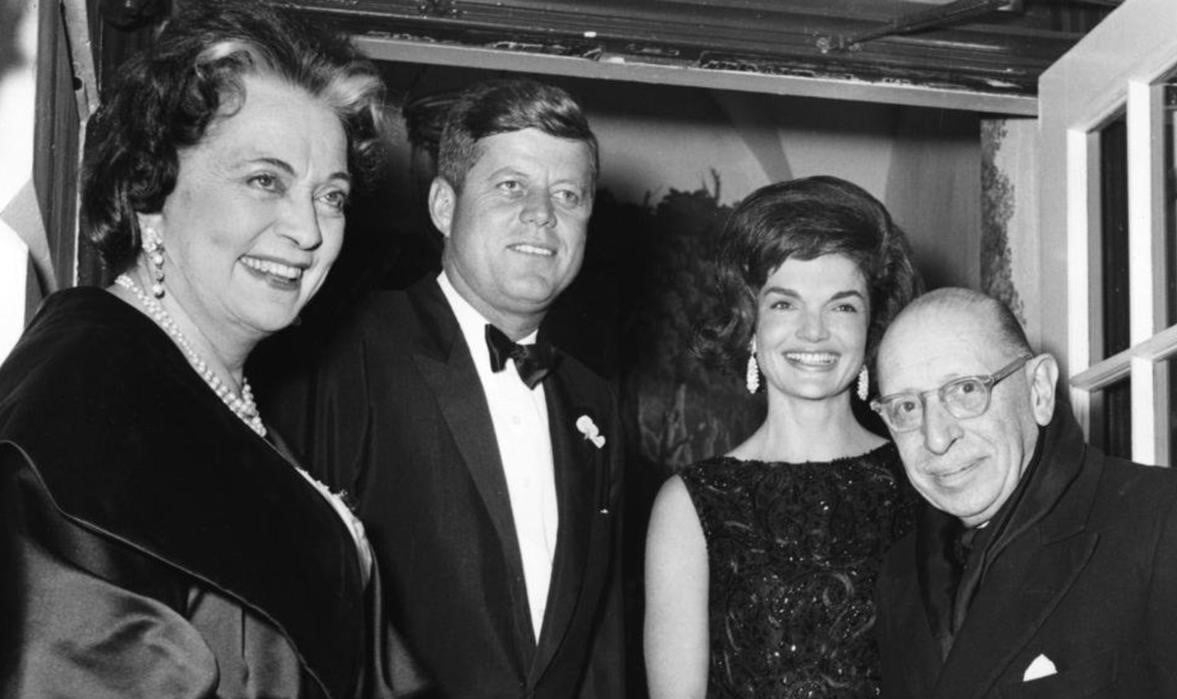
    On this date 60 years ago, Igor Stravinsky went to dinner at the White House. You’ll find an amusing account of the evening here:

    https://www.whitehousehistory.org/igor-stravinsky-at-the-white-house

    “Despite such criticism – which was entirely typical of Stravinsky’s unfiltered personality – he clearly remembered the visit with fondness and gratitude. In January, 1964 he commemorated John F. Kennedy – who had been assassinated on November 22, 1963 – by composing ‘Elegy for J.F.K.,’ a vocal piece with words by W.H. Auden. ‘I felt that the events of November were being too quickly forgotten,’ the composer told The New York Times, ‘and I wished to protest.’”

    Leonard Bernstein was also in attendance at the dinner. Bernstein’s “Fanfare for JFK” was heard for the first time on the eve of Kennedy’s inauguration, also on this date, though one year earlier. It’s only 40 seconds long, so if you blink, you’ll miss it.

    In 1978, Bernstein gave the opening speech at the first Kennedy Center Honors, at which the honorees included Marian Anderson, Richard Rodgers, George Balanchine, Fred Astaire, and Arthur Rubinstein:

    I’ll spare you the entirety of Bernstein’s “Mass,” commissioned by Jacqueline Kennedy for the opening of the Kennedy Center in 1971, but here’s the piece’s hit tune, “A Simple Song”

    Where are our Bernsteins and Stravinskys – or for that matter our Marian Andersons, Richard Rodgerses, George Balanchines, Fred Astaires, and Arthur Rubinsteins – and provided they can be identified, why are they not honored at the White House, or even on television?

  • Everett Lee, Pioneering Conductor, Dies at 105

    Everett Lee, Pioneering Conductor, Dies at 105

    Pioneering conductor Everett Lee has died at the age of 105. And what a lot he must have seen!

    Lee was the first African American to conduct on Broadway, rising from the pit orchestra as a substitute to direct “Carmen Jones,” and then employed by Leonard Bernstein as full-time conductor of “On the Town.” That was in 1945.

    Lee was also the first Black conductor of an established symphony orchestra below the Mason-Dixon Line (while guesting with the Louisville Orchestra) and the first to conduct a major American opera company (“La traviata” at New York City Opera in 1955, returning the following season to conduct “La bohème”).

    Lee received encouragement especially from Bernstein and Artur Rodzinski, and worked with such conductors as Leopold Stokowski and Serge Koussevitzky.

    Though regular employment seems not to have been an issue, Lee found that many of the best opportunities were closed to him on account of his race. Once, he was considered by Rodgers and Hammerstein to lead a national tour of one of their shows, but in the end, fearing trouble in the South, they decided to go with somebody else.

    To maintain his presence as a conductor, Lee organized the Cosmopolitan Symphony Orchestra. The orchestra, interracial and multiethnic, was staffed with underdogs in the field – Jews, Chinese, Slavs, Italians, and women.

    Eventually, like African American conductor Dean Dixon (born in 1915), Lee left America to seek better opportunities abroad. He moved to Munich in 1957 and was hired as music director in Norköpping, Sweden, in 1962.

    He returned to the U.S. to conduct the New York Philharmonic – orchestra of his former mentors Rodzinski and Bernstein – for the first time on January 15, 1976, a concert given in honor of Martin Luther King’s birthday. On the program was Sibelius’ Violin Concerto, Rachmaninoff’s Piano Concerto No. 3, and “Kosbro” by African American composer David Baker (Baker revealed the title was short for “Keep on Stepping, Brothers”).

    Lee’s first wife, Sylvia, was hired by the Met in 1953, becoming the first African American on the house’s staff. (Of course, Marian Anderson would be the first on stage, in 1955.) But for Everett Lee, despite invitations to guest conduct, a permanent position with a major orchestra in the United States or Europe remained elusive.

    In 1979, he became music director of the Bogata Philharmonic Orchestra of Colombia.

    Lee died on December 12 in Malmö, Sweden.


    A must-read account of Lee’s life and accomplishments:

    http://www.brooklyn.cuny.edu/web/academics/centers/hitchcock/publications/amr/v43-1/oja.php

    Everett Lee tribute, including footage of him conducting:

  • Sibelius Birthday Post: Bernstein’s Fifth

    Sibelius Birthday Post: Bernstein’s Fifth

    Longtime followers of this page know that I tend to go a little berserk around the time of Sibelius’ birthday. In fact, for the past few years, I’ve honored “Eight Days of Sibelius,” from the start of the month to December 8 – conveniently, the actual anniversary.

    Well, this year, somehow, it slipped by the wayside. I always have Sibelius’ birthday firmly in mind, but I forgot all about the “Eight Days.” Which is why you may have gotten slammed yesterday by multiple Sibelius posts, which I hope at least you found interesting or informative. There’s just so much Sibelius material to share, and I’m always setting it aside, making a mental note to save it for December. Trouble is, the memory isn’t so well-oiled as it used to be!

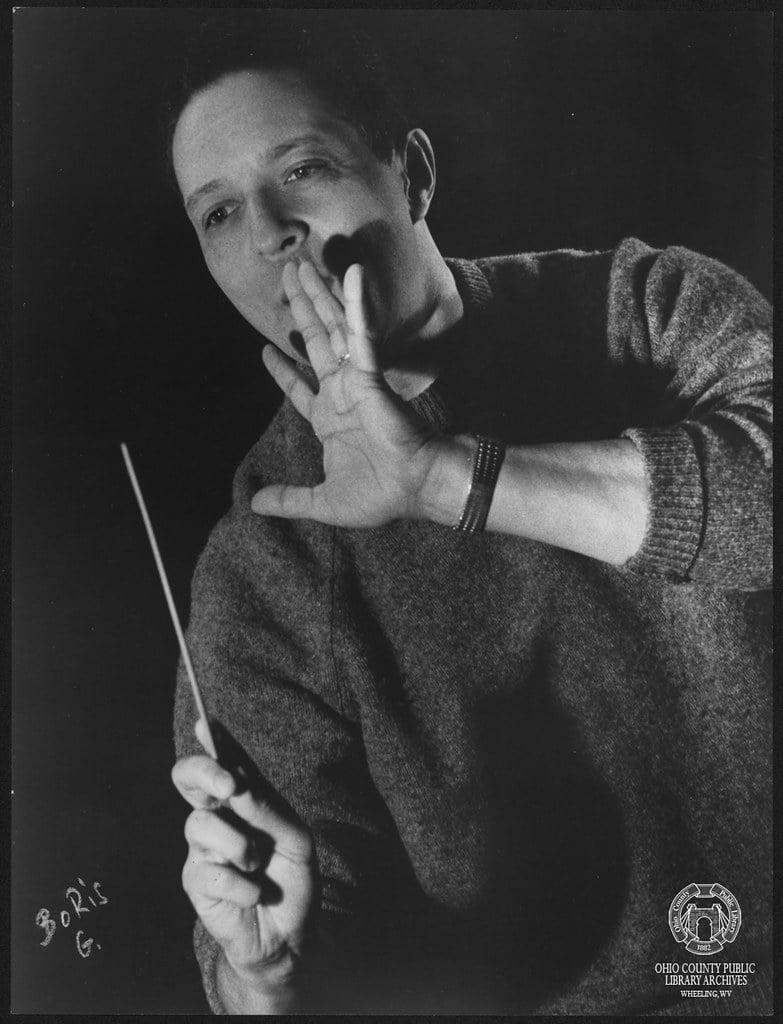
    With that in mind, I hope you won’t turn up your nose at a little leftover birthday cake. I mentioned in one of my posts yesterday that Sibelius’ Fifth Symphony is a personal favorite. I haven’t always found Leonard Bernstein to be the ideal interpreter of Sibelius’ symphonies, but I still can’t pass up a live performance. I saw Bernstein conduct it at Carnegie Hall once, back in the 1980s, and it was a fabulous occasion, to be able to hear Lenny work his magic like some grizzled Kalevala wizard.

    Here he is, with the London Symphony Orchestra, in 1966:

    A sublime, ennobling start to any day – even if the interpretation may not always be my particular glass of vodka.

  • Aaron Copland Birthday Celebration

    Aaron Copland Birthday Celebration

    The world was a better place with Aaron Copland in it. How fortunate that one of our greatest composers lived through an era when so much could be documented on film. With Thanksgiving right around the corner, here’s a Copland cornucopia, for his birthday.

    Copland conducts “El Salón México,” for his 60th

    Bernstein introduces Copland’s Clarinet Concerto

    Copland conducts it in L.A., with Benny Goodman the soloist
    https://www.youtube.com/watch?v=iYwPJrRnGSE

    Copland plays his Piano Concerto, with Bernstein conducting

    Copland conducts “Appalachian Spring” in D.C. on his 80th

    Copland’s 80th birthday concert (complete), hosted by Hal Holbrook; conducted by Rostropovich, Bernstein, and Copland himself. Just listening to the composer’s opening remarks… we don’t have people like this anymore.

    Copland interviewed and playing the coda of “Appalachian Spring” at the piano in his studio

    “Appalachian Spring,” complete 1958 television broadcast with Martha Graham

    “Aaron Copland: A Self Portrait”

    Seiji Ozawa conducts Copland’s arrangement of “Happy Birthday” for Bernstein’s 70th

    Happy birthday, Aaron Copland!

Tag Cloud

Aaron Copland (93) Beethoven (95) Composer (114) Film Music (129) Film Score (143) Film Scores (255) Halloween (94) John Williams (192) KWAX (229) Leonard Bernstein (103) Marlboro Music Festival (125) Movie Music (144) Mozart (88) Opera (206) Philadelphia Orchestra (89) Picture Perfect (174) Princeton Symphony Orchestra (108) Radio (88) Ross Amico (244) Roy's Tie-Dye Sci-Fi Corner (290) The Classical Network (101) The Lost Chord (268) Vaughan Williams (103) WPRB (396) WWFM (881)

DON’T MISS A BEAT

Receive a weekly digest every Sunday at noon by signing up here


RECENT POSTS